
What Are Tantric Temples? The Hidden Difference Between Ordinary and Tantric Temples in Tamil Nadu
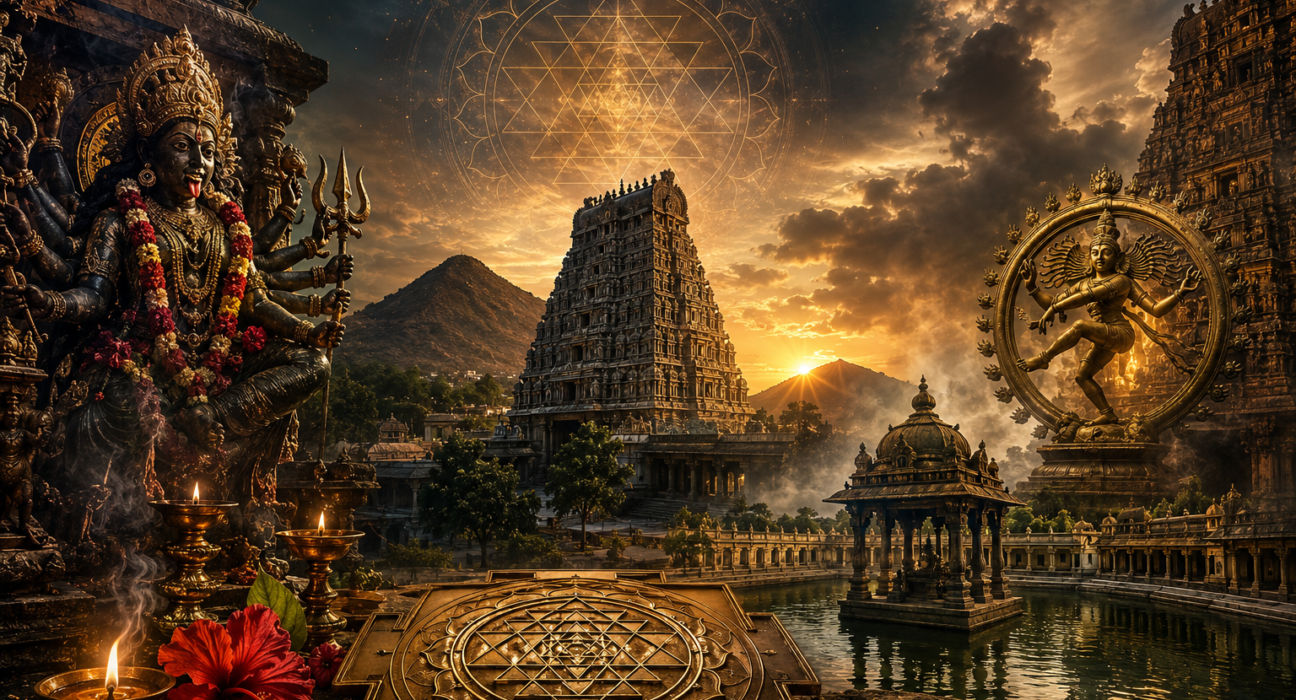
The Hidden Difference Between Ordinary Temples and Tantric Temples in Tamil Nadu
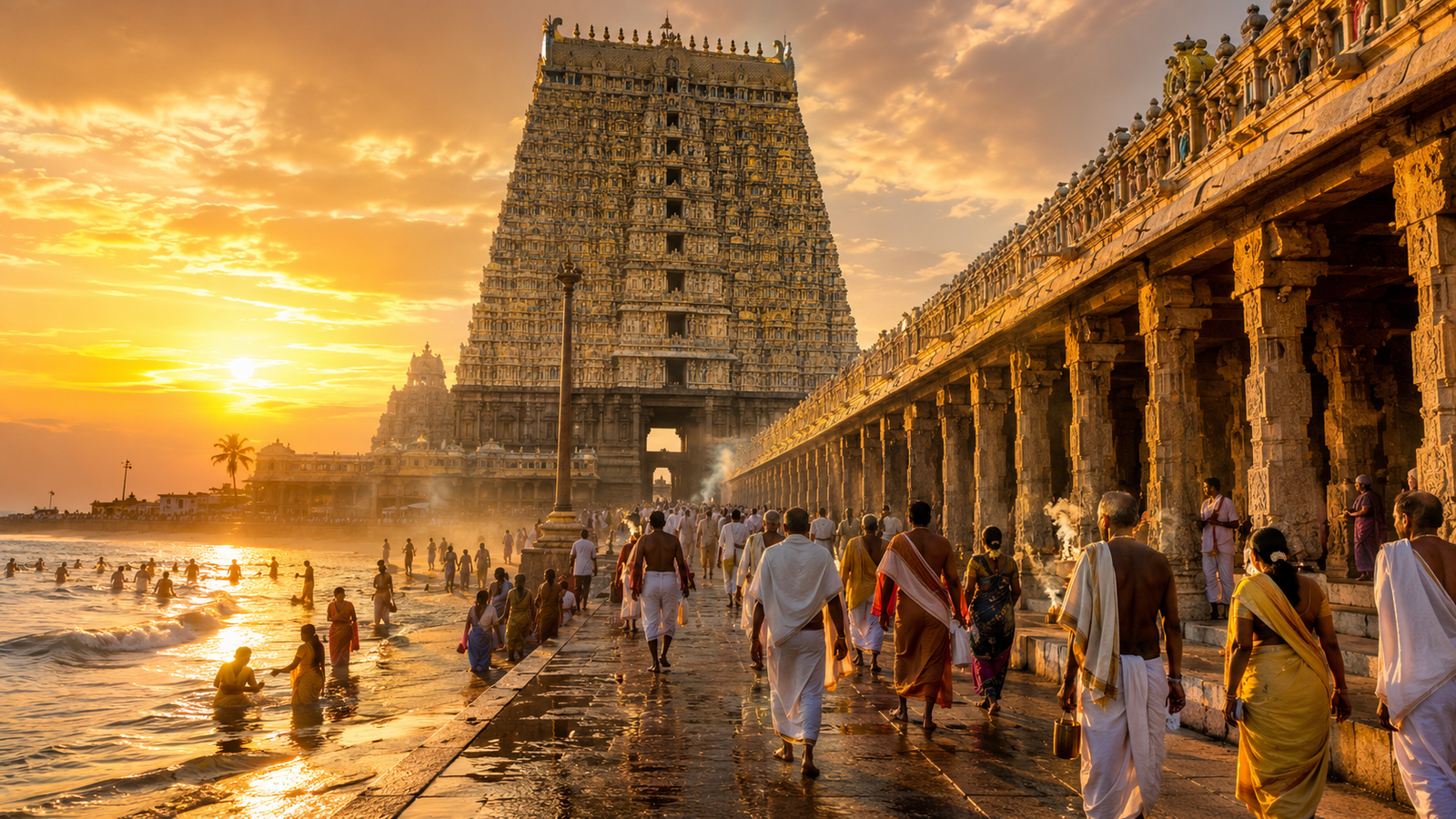
Tamil Nadu is home to thousands of temples. Almost every village, every town, and even every street has a temple that has served as a spiritual center for centuries. Each temple has its own history, divine energy, architectural uniqueness, and sacred traditions.
Yet, among these countless temples, a select few stand apart.
These are not merely places of public worship. They are ancient spiritual power centers where sacred energies are consciously awakened, preserved, and directed through highly sophisticated spiritual sciences. These extraordinary shrines are known as Tantric Temples.
At first glance, they may appear no different from any other Hindu temple. However, if you carefully observe their architecture, deity placement, rituals, worship timings, priestly traditions, and spiritual atmosphere, you will notice profound differences. These temples operate according to ancient Tantric principles that have been preserved for centuries.
In this article, we will explore:
- What is a Tantric Temple?
- How is it different from a traditional Hindu temple?
- What is Tantra in its true spiritual sense?
- Which famous Tantric temples exist in Tamil Nadu?
- How should devotees approach these sacred power centers?
What Is a Tantric Temple?
The word “Tantra” has unfortunately acquired many misconceptions over time.
Many people associate Tantra with dark rituals, black magic, occult practices, or frightening ceremonies performed in secrecy. Popular media has only strengthened these misunderstandings.
However, this image is far from the truth.
Tantra is fundamentally a spiritual science of energy.
It is an ancient system developed to understand how consciousness, life force, sound, geometry, breath, and subtle vibrations interact within the human body and the universe.
For thousands of years, sages, siddhas, yogis, and enlightened masters explored methods to awaken dormant spiritual energy through:
- Sacred mantras (vibrational sound)
- Yantras (sacred geometric diagrams)
- Meditation
- Breath control
- Ritual worship
- Inner awareness
Rather than being mystical superstition, Tantra is a sophisticated spiritual technology designed to transform human consciousness.
The Difference Between Ordinary Temples and Tantric Temples
Although both are sacred spaces dedicated to divine worship, their purpose and methods differ significantly.
1. Foundation of Worship
Most traditional Hindu temples follow the principles laid down in the Agamas and Vedas. Rituals such as Abhishekam (sacred bathing), Deeparadhana (offering of light), and Alankaram (decoration) are performed openly for all devotees to witness.
People may visit these temples throughout the day to pray for:
- Peace of mind
- Good health
- Prosperity
- Family well-being
- Success in life
The atmosphere is generally welcoming, devotional, and serene.
Tantric temples, however, function differently.
Here, worship is centered around the combined use of:
- Mantra – Sacred sound vibrations
- Yantra – Divine geometric energy patterns
- Tantra – The spiritual methodology that activates both
Many rituals are intentionally performed away from public view, following strict spiritual disciplines passed down through authentic guru lineages.
2. Nature of the Deities
In ordinary temples, the presiding deities are usually worshipped in their compassionate and benevolent forms.
Examples include:
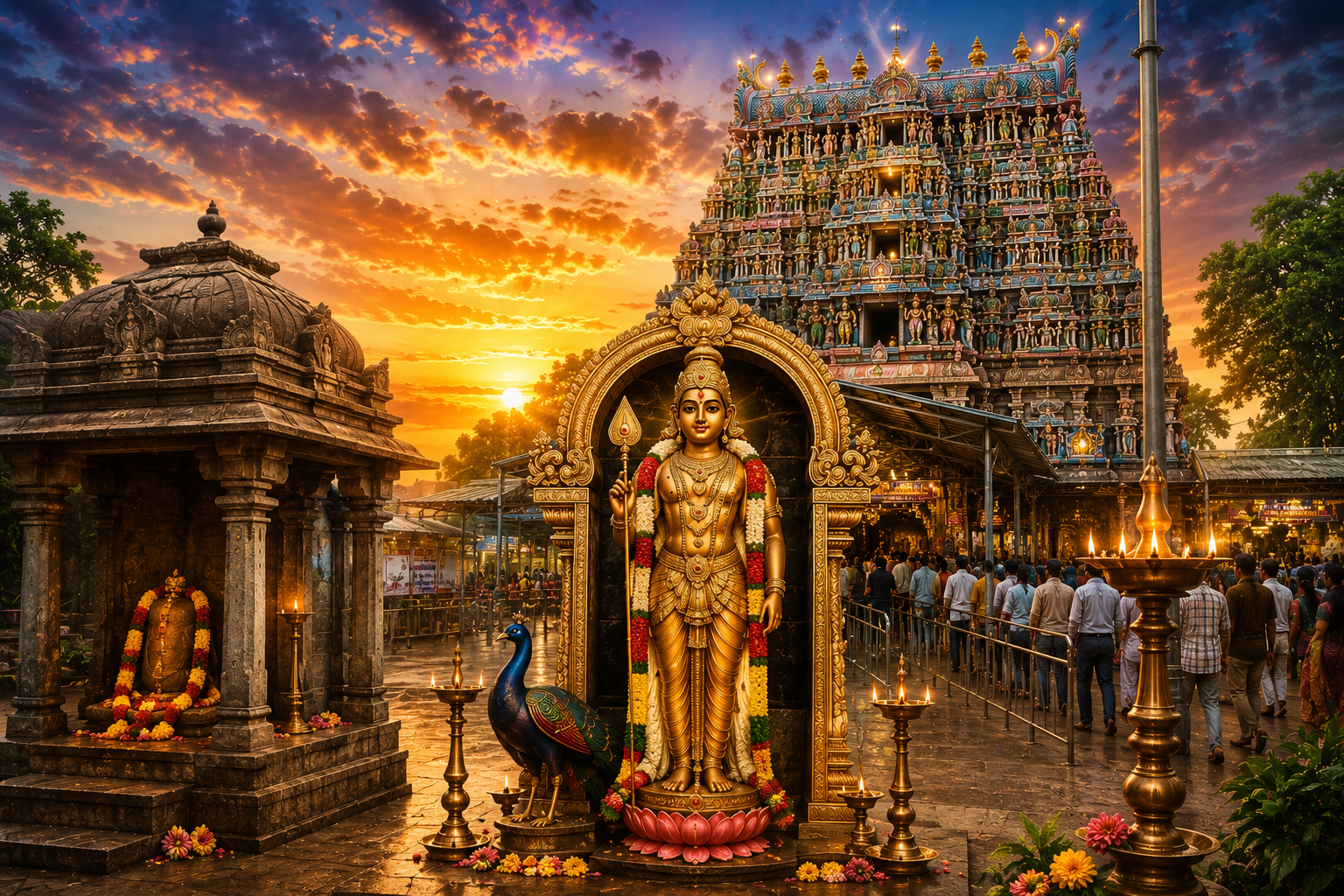
- Lord Murugan
- Lord Vishnu
- Goddess Lakshmi
- Lord Ganesha
Their blessings are sought for harmony, prosperity, protection, and spiritual growth.
Tantric temples often house deities representing the more powerful and transformative aspects of Divine Energy, such as:
- Goddess Kali
- Goddess Bhairavi
- Lord Bhairava
- Goddess Durga
- Ugra Narasimha
In some temples, the divine presence is established primarily through a Yantra, a Linga, or highly consecrated sacred symbols rather than elaborate idols.
These forms are not intended to inspire fear. Instead, they symbolize the immense transformative force capable of dissolving ignorance, fear, and negative tendencies.
3. The Purpose of Rituals
The primary purpose of rituals in ordinary temples is to invoke divine blessings for worldly and spiritual well-being.
Tantric rituals go a step further.
Their purpose includes:
- Awakening dormant spiritual energy
- Purifying the subtle body
- Enhancing meditation
- Removing deeply rooted energetic blockages
- Assisting advanced spiritual practices
- Accelerating inner transformation
Many of these rituals are conducted silently and according to precise spiritual timings, often invisible to casual visitors.
4. Worship Timings
Most public temples follow regular schedules with morning and evening pujas accompanied by devotional music, chanting, and large gatherings of devotees.
Tantric temples often place special emphasis on spiritually significant periods such as:
- New Moon (Amavasya)
- Full Moon (Pournami)
- Rahu Kalam
- Midnight worship
- Specific planetary alignments
The atmosphere is often quieter, more contemplative, and deeply meditative.
5. Priestly Tradition
Traditional temples are generally served by priests trained in Agamic rituals.
Tantric temples require practitioners who have undergone years of specialized initiation under authentic Guru traditions.
Only those properly initiated are permitted to perform certain advanced Tantric ceremonies.
The Spiritual Experience
One of the most noticeable differences lies in the experience itself.
When entering a traditional temple, many devotees naturally feel lighter, calmer, and emotionally peaceful.
The sacred chants, lamps, incense, and divine presence gradually dissolve mental stress, replacing it with hope and inner comfort.
A Tantric temple often produces an entirely different experience.
Some visitors report feeling:
- A heightened sense of awareness
- Deep silence
- Powerful stillness
- Intense concentration
- Unusual calmness
- A strong spiritual presence
These experiences should not be interpreted as supernatural phenomena but as deeply personal responses to an environment designed for concentrated spiritual practice.
Every individual may experience these sacred spaces differently.
The True Meaning of Tantra
The word “Tantra” continues to be misunderstood, even in modern times.
For many people, Tantra immediately brings to mind images of animal sacrifice, frightening rituals, dark ceremonies performed at midnight, or occult practices hidden from society. Popular culture has often portrayed Tantra through fear rather than understanding.
The reality, however, is very different.
Tantra is the science of awakening and directing energy.
It seeks to understand how human consciousness functions, how thoughts are formed, how breath influences the mind, and how sacred sound and geometry interact with the subtle energy system within the body.
Ancient masters discovered that every sound creates vibration, every geometric form generates a specific energetic field, and every conscious breath influences the movement of life force (Prana). Tantra brings these elements together into a complete spiritual system aimed at transforming human consciousness.
Rather than being a religion in itself, Tantra is a methodology—a practical science that helps seekers move from ordinary awareness toward higher states of spiritual realization.
Its primary tools include:
- Mantra – Sacred sound vibrations that influence consciousness.
- Yantra – Geometric energy diagrams designed to concentrate and channel divine forces.
- Mudra – Symbolic hand gestures that regulate subtle energy.
- Meditation – Practices that quiet the mind and awaken inner awareness.
- Pranayama – Conscious breath control to activate life energy.
Together, these disciplines form what many spiritual traditions consider one of the oldest systems of inner transformation.
Tantra in Tamil Nadu
When people think about Tantra, they often imagine the traditions of North India—especially those associated with Kali worship, cremation grounds, or the Aghori lineage.
Yet few realize that Tamil Nadu has preserved one of the richest Tantric traditions in India, though in a much quieter and more refined form.
Instead of existing outside mainstream temple worship, Tantra in Tamil Nadu became deeply integrated into Agamic temple traditions.
For centuries, sacred rituals involving Sri Chakra worship, Yantra installation, mantra initiation, meditation, and energy consecration have been performed within temple sanctums without attracting public attention.
These practices were never intended for display.
They were carefully preserved within Guru lineages and passed only to qualified practitioners.
Many of Tamil Nadu’s greatest temples continue to protect these traditions even today.
Why Did Siddhas and Yogis Choose Tamil Nadu?
Throughout history, countless Siddhas, Yogis, Sri Vidya practitioners, and accomplished spiritual masters chose Tamil Nadu as the place for their deepest spiritual practices.
This was not a coincidence.
According to traditional belief, the land itself possesses a remarkable ability to retain and amplify spiritual energy.
The temples were not constructed merely as architectural masterpieces—they were designed as living energy centers.
Every aspect of their construction, from the placement of the sanctum to the orientation of the deity, from the geometry of the temple corridors to the sacred measurements of the Garbhagriha (sanctum), was intended to support higher states of consciousness.
This is one reason why many visitors experience an unusual silence upon entering ancient South Indian temples.
It is not merely the absence of sound.
It is a profound stillness that naturally draws the mind inward.
For many spiritual traditions, this inner silence represents the very first step of Tantra.
Five Powerful Tantric Temples in Tamil Nadu
Many of Tamil Nadu’s most famous temples are known worldwide for their architecture and religious significance.
What is less widely understood is that some of them also preserve profound Tantric traditions beneath their familiar rituals.
To the ordinary visitor, these temples appear no different from other places of worship.
But beneath the daily pujas lies a sophisticated spiritual framework involving sacred geometry, mantra, yantra, meditation, and centuries of uninterrupted Guru traditions.
These are not simply temples where prayers are offered.
They are places where divine energy is consciously invoked, maintained, and experienced.
The following five temples are among the most significant examples of this ancient spiritual heritage.
1. Kamakshi Amman Temple, Kanchipuram
Among all the Shakti temples of India, Kamakshi Amman Temple occupies a unique place within the Sri Vidya tradition.
The very name Kamakshi is often interpreted symbolically:
- Ka – The Cosmic Principle
- Ma – Infinite Compassion and Motherhood
- Akshi – Divine Vision or Conscious Awareness
At the heart of this temple lies one of the most revered spiritual symbols in Tantra—the Sri Chakra.
Unlike ordinary ritual worship, the Sri Chakra Puja performed here represents an advanced system of sacred geometry and spiritual energy.
Every mantra recited, every offering made, and every ritual performed follows precise spiritual principles developed over centuries.
Within the Sri Vidya tradition, the Sri Chakra is regarded not merely as a diagram but as a complete representation of the universe and human consciousness.
Tradition also speaks of numerous esoteric teachings connected to Sri Vidya that are transmitted only through authentic Guru lineages.
For practitioners, worship here is not simply an act of devotion.
It is participation in a living spiritual science designed to awaken Divine Consciousness itself.
2. Arunachaleswarar Temple, Tiruvannamalai
The Living Yantra of Fire
Among all the sacred temples of India, Arunachaleswarar Temple in Tiruvannamalai holds a unique place in Tantric and Yogic traditions.
Unlike many temples that symbolize divine energy, Arunachala itself is revered as Divine Energy manifested in the form of a mountain.
According to the Pancha Bhoota Sthalams, Tiruvannamalai represents the Fire Element (Agni)—the force of transformation, purification, and spiritual awakening.
In Tantric philosophy, fire is not merely a physical element.
It symbolizes the inner flame that burns away ignorance, ego, and karmic impressions, allowing higher consciousness to emerge.
For this reason, Arunachala has attracted saints, siddhas, yogis, and enlightened masters for thousands of years.
More Than a Temple
Many spiritual teachers describe Arunachala not simply as a temple or even a sacred hill, but as a living Yantra.
A Yantra is a sacred geometric structure designed to concentrate and radiate spiritual energy.
Unlike metal or stone Yantras created by human hands, Arunachala itself is regarded as a naturally occurring cosmic Yantra.
Traditional belief holds that the eight sacred Lingams surrounding the hill—known as the Ashta Lingams—serve as energetic points that harmonize and protect this immense spiritual field.
Together, the mountain, the temple, and the eight Lingams form a sacred spiritual landscape unlike anywhere else in India.
The Mystery of Girivalam
One of Tiruvannamalai’s most profound spiritual practices is Girivalam (Giri Pradakshina)—the act of walking approximately 14 kilometers around the sacred hill.
To many visitors, it appears to be a devotional pilgrimage.
To spiritual practitioners, however, it is something much deeper.
Walking around Arunachala is believed to be equivalent to moving through an immense field of spiritual energy.
Many devotees describe unexpected experiences during Girivalam:
- A sudden feeling of inner peace
- Emotional release without any apparent reason
- Increased mental clarity
- A sense of profound silence
- An unexplained feeling of being drawn toward the mountain
While these experiences vary from person to person, countless pilgrims across generations have spoken of the hill’s remarkable spiritual influence.
Bhairava Worship and the Fire Principle
Within the temple complex, Lord Bhairava occupies an important place in traditional worship.
In many Tantric traditions, Bhairava represents fearless awareness—the force that destroys ignorance and protects spiritual seekers from inner obstacles.
Certain rituals associated with Bhairava emphasize discipline, purification, and the transformative symbolism of fire.
These practices are intended to cultivate courage, focus, and inner strength rather than to create fear or mystery.
The Teaching of Silence
Perhaps the greatest teaching of Arunachala is not found in words.
It is found in silence.
The great sage Sri Ramana Maharshi often described Arunachala as the Silent Guru—one that teaches without speech.
Many seekers believe that the mountain does not instruct through intellectual knowledge.
Instead, it quietly draws the mind inward, encouraging deep self-enquiry and direct spiritual experience.
As a traditional saying goes:
“Arunachala does not merely teach you—it awakens you.”
Whether understood literally or symbolically, this reflects the profound impact the sacred hill has had on spiritual seekers for centuries.
3. Renukambal Temple, Padavedu
The Temple of Fierce Compassion
Nestled amidst the hills of northern Tamil Nadu, the Renukambal Temple at Padavedu preserves one of the oldest traditions associated with the Divine Mother.
Although thousands of devotees visit the temple every year seeking blessings for health, family welfare, and protection, the temple also carries a deeper spiritual significance within certain Tantric traditions.
The presiding deity, Goddess Renukambal, is worshipped as a powerful manifestation of Shakti—the Divine Feminine Energy that sustains, protects, and transforms creation.
Understanding the Fierce Form of the Goddess
Visitors often notice that the deity’s appearance is more intense than that of many other goddess temples.
Her powerful expression is not meant to inspire fear.
Rather, it symbolizes the destruction of negativity, ignorance, ego, and inner limitations.
Across many Hindu traditions, fierce forms of the Divine Mother represent compassion expressed through transformation.
Just as fire removes impurities from gold, these forms symbolize the removal of obstacles that prevent spiritual growth.
Sacred Rituals and Symbolism
The temple’s worship traditions include sacred chanting, ritual offerings, homams (fire ceremonies), and devotional practices that have been preserved through generations.
Certain rituals emphasize:
- Purification of the mind
- Removal of negative influences
- Strengthening inner courage
- Seeking divine protection
- Spiritual discipline
Some traditions also associate the temple with sacred Yantras and symbolic forms of worship that reflect the deeper philosophy of Shakti.
While many aspects remain part of hereditary temple traditions, the visible rituals themselves are rooted firmly in devotion to the Divine Mother.
A Temple That Invites Inner Reflection
Visitors often describe Padavedu as peaceful despite the Goddess’s powerful form.
The quiet surroundings, ancient atmosphere, and deeply devotional environment encourage contemplation rather than excitement.
For many devotees, the temple becomes a place not merely to ask for blessings but to confront fear, surrender the ego, and reconnect with inner strength.
The journey to Renukambal Temple is therefore often described as both an outer pilgrimage and an inner transformation.
4. Chidambaram Nataraja Temple
The Cosmic Dance and the Secret of Emptiness
Among India’s most extraordinary temples, Chidambaram Nataraja Temple stands apart—not only for its magnificent architecture but also for the profound spiritual philosophy it embodies.
To millions of devotees, it is a temple dedicated to Lord Shiva as Nataraja, the Cosmic Dancer.
To spiritual seekers, however, Chidambaram represents something even deeper.
It is a temple that teaches one of the highest truths in Hindu philosophy—that the Ultimate Reality cannot always be seen, but it can be experienced.
This idea lies at the heart of what is famously known as the Chidambara Rahasyam—the “Secret of Chidambaram.”
The Secret Behind the Curtain
One of the temple’s most intriguing features is the Chidambara Rahasyam.
Unlike many sanctums where devotees worship a visible idol, one section of the sanctum is concealed behind a curtain. When the curtain is drawn aside, devotees witness what appears to be empty space, symbolized by sacred golden bilva leaves.
Rather than representing “nothing,” this sacred emptiness symbolizes Akasha (Space)—the infinite, formless aspect of Shiva.
It reminds devotees that the Divine is not limited to physical forms.
The highest reality exists beyond shape, beyond thought, and beyond the limits of the human mind.
This profound teaching makes Chidambaram unique among Hindu temples.
Nataraja: The Dance of the Universe
The magnificent bronze image of Lord Nataraja is one of the most recognizable symbols in Indian spirituality.
His cosmic dance is not merely artistic symbolism.
Every aspect of the image represents a universal principle:
- The drum (Damaru) symbolizes creation.
- The fire represents dissolution and transformation.
- The raised hand offers protection and fearlessness.
- The raised foot signifies liberation.
- The dwarf beneath His feet represents ignorance being overcome by wisdom.
Together, these elements illustrate the eternal cycle of creation, preservation, transformation, concealment, and grace.
In many philosophical traditions, the universe itself is understood as an eternal dance of energy.
A Temple of Sacred Vibration
Several spiritual traditions view Chidambaram as a center where sound, rhythm, movement, and consciousness converge.
The temple’s architecture, rituals, sacred chants, and symbolic geometry all point toward the idea that creation itself is vibration.
Modern science tells us that everything in the universe vibrates at some level.
Ancient Indian sages expressed this understanding spiritually through the concept of Nada—the primordial cosmic sound.
For this reason, many scholars and practitioners consider Chidambaram one of India’s greatest spiritual centers for contemplating consciousness rather than merely ritual worship.
5. Pariyur Kondathu Kaliamman Temple
The Temple of Fierce Divine Protection
Located near Gobichettipalayam in Tamil Nadu, Pariyur Kondathu Kaliamman Temple is one of the state’s most revered shrines dedicated to Goddess Kali.
To first-time visitors, the temple may appear similar to many other Amman temples.
Yet devotees have long regarded it as a place of extraordinary spiritual power, where the Divine Mother is worshipped in Her fierce yet compassionate form.
Understanding Kali’s Fierce Appearance
Goddess Kali is often misunderstood because of her intense iconography.
Her blazing eyes, flowing hair, weapons, and powerful stance are not symbols of destruction directed toward humanity.
Instead, they represent the destruction of:
- Fear
- Ignorance
- Ego
- Negative tendencies
- Spiritual obstacles
Her fierce form reminds devotees that compassion sometimes appears as strength rather than gentleness.
Just as a mother fiercely protects her child, Kali symbolizes divine protection against forces that hinder spiritual evolution.
Ancient Ritual Traditions
For generations, devotees have visited Pariyur seeking blessings for:
- Protection
- Courage
- Justice
- Removal of obstacles
- Inner strength
Traditional worship includes:
- Sacred fire rituals (Homam)
- Special Amavasya prayers
- Devi worship
- Chanting of powerful hymns dedicated to the Divine Mother
Certain ritual traditions at the temple preserve ancient methods of Shakti worship that have been handed down through hereditary priestly lineages.
Although many of these traditions have deep historical roots, their central purpose remains devotion to the Divine Mother and spiritual upliftment.
A Temple That Inspires Reverence
Unlike temples known primarily for celebration or festivals, Pariyur often leaves devotees with a sense of profound reverence.
Many visitors speak of an atmosphere filled with:
- Silence
- Strength
- Courage
- Humility
- Deep devotion
Whether one approaches the Goddess seeking protection, healing, or spiritual growth, the temple serves as a reminder that true strength begins within.
How Should You Visit a Tantric Temple?
Whether or not a temple follows Tantric traditions, every sacred space deserves respect.
However, many experienced spiritual practitioners recommend approaching traditional Tantric temples with a slightly different mindset.
Instead of arriving with curiosity alone, arrive with reverence, patience, and silence.
Some simple practices include:
- Spend a few moments in silence before entering the sanctum.
- Observe the atmosphere rather than rushing through the temple.
- Avoid loud conversations inside the temple premises.
- Pay attention to your breathing and remain mentally present.
- Respect local customs and the guidance of temple authorities.
- Avoid photographing or entering restricted ritual areas where prohibited.
Rather than trying to “experience something extraordinary,” simply allow yourself to be fully present.
For many devotees, the deepest spiritual experiences arise naturally in silence.
Conclusion
India’s temples are far more than architectural monuments or places of worship.
They are living repositories of philosophy, devotion, sacred geometry, symbolism, and centuries of uninterrupted spiritual tradition.
Tantric temples represent one of the most fascinating dimensions of this heritage.
They remind us that spirituality is not merely about asking for blessings—it is also about understanding ourselves, refining our awareness, and awakening the deeper potential that lies within.
Whether you visit the Sri Chakra of Kanchipuram, the sacred fire of Arunachala, the silent mystery of Chidambaram, the Divine Mother at Padavedu, or the fierce grace of Pariyur Kaliamman, each temple offers a unique doorway into India’s timeless spiritual wisdom.
Ultimately, the true power of any temple is not found in its walls or rituals.
It is found in the transformation it inspires within the heart of the seeker

Saxon Matney
July 23, 2026Grursus mal suada faci lisis Lorem ipsum dolarorit more a ametion consectetur elit. Vesti bulum nec odio aea the dumm ipsumm.
Dorothy Finley
July 23, 2026Grursus mal suada faci lisis Lorem ipsum dolarorit more consectetur elit. Vesti bulum nec odio aea the dumm ipsumm.
Imogene Martin
July 23, 2026Grursus mal suada faci lisis Lorem ipsum dolarorit more a ametion consectetur elit. Vesti bulum nec odio aea the dumm ipsumm.