
Sri Aurobindo: The Revolutionary Who Became a Yogi | The Extraordinary Journey of a Modern Sage
Sri Aurobindo: The Revolutionary Who Became a Yogi | The Extraordinary Journey of a Modern Sage
Introduction
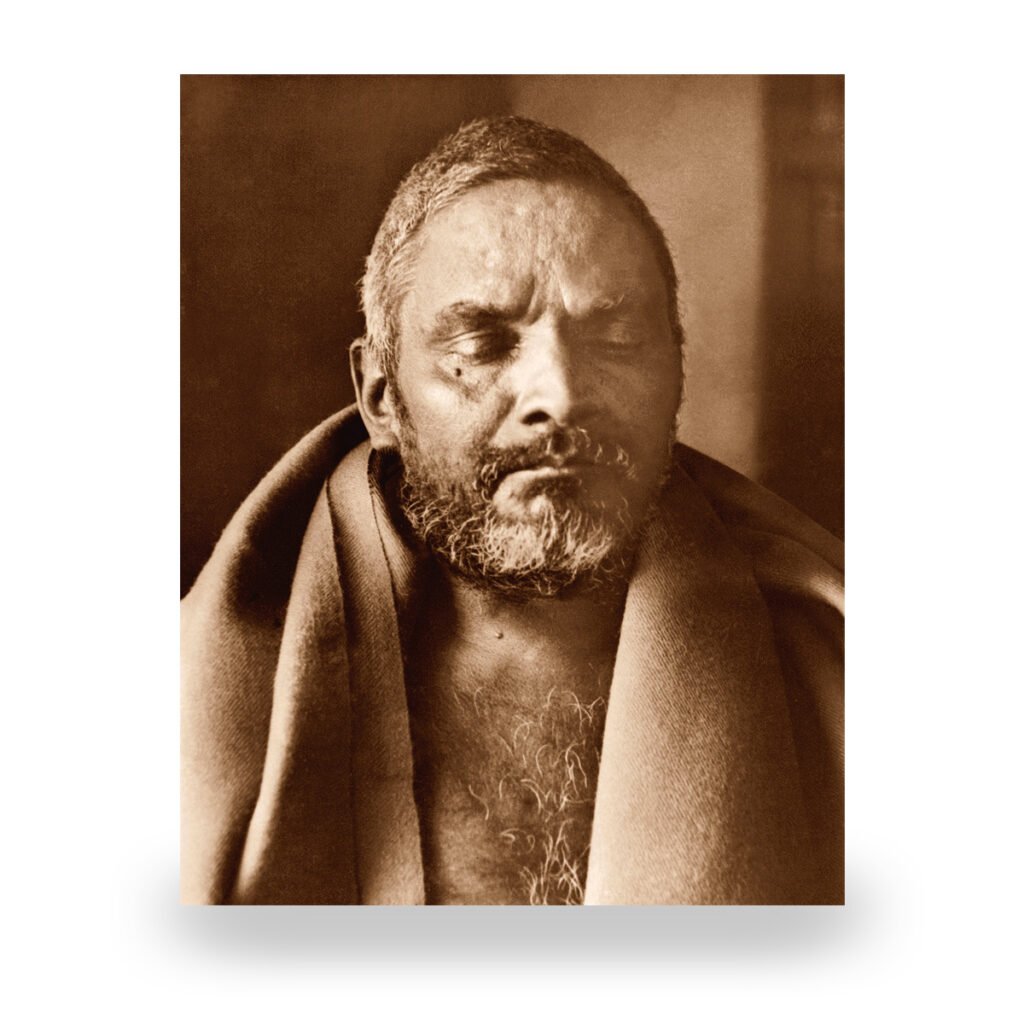
On the morning of 15 August 1872, as the first rays of dawn gently touched the streets of Calcutta, a child was born into a world that had no idea what destiny had prepared for him.
His name was Aurobindo Ghose.
At first glance, he appeared to be just another child born into a respected Bengali family.
But history would later remember him as far more than that.
He would become a fearless revolutionary who challenged the British Empire…
A visionary philosopher who redefined spirituality…
A poet whose words continue to inspire generations…
And a yogi whose spiritual discoveries opened an entirely new path for humanity.
Some people are born to change their own lives.
Some are born to change the destiny of a nation.
Very rarely, a soul is born to change the future of human consciousness itself.
Sri Aurobindo belonged to that rare category.
His life was unlike any ordinary biography.
It was the story of two revolutions unfolding within one man.
The first was a revolution for India’s political freedom.
The second—and far greater—was a revolution for the evolution of human consciousness.
The remarkable truth is that these two journeys were never separate.
His struggle for India’s independence eventually became a search for the liberation of humanity itself.
That transformation would forever alter modern spirituality.
A Childhood Unlike Any Other
When Aurobindo was just seven years old, his childhood took an extraordinary turn.
Unlike most children who grow up surrounded by the warmth of family, he was separated from his parents at an early age and sent to England with his brothers.
His father believed that the finest education could only be obtained in the West.
He wanted his son to become completely English in thought, language, and culture.
As a result, young Aurobindo spent his formative years in Manchester, living with an English family.
There, he was introduced to Western literature, European history, classical languages, and the intellectual traditions of Victorian England.
Although physically far from India, destiny was quietly preparing him for a much greater purpose.
A Brilliant Student
From childhood itself, Aurobindo displayed extraordinary intellectual abilities.
Learning came naturally to him.
Languages fascinated him.
Literature became his constant companion.
His remarkable academic talent soon earned him admission to the prestigious St. Paul’s School in London, where he excelled in Greek, Latin, history, poetry, and classical literature.
Teachers recognized that he possessed an exceptional mind.
His brilliance continued to grow.
In 1890, he entered King’s College, Cambridge, after receiving a scholarship.
There too, he distinguished himself as one of the finest students of his generation.
His command over classical studies was extraordinary.
He even qualified for the Indian Civil Service (ICS) examination—one of the most difficult and prestigious examinations under British rule.
For many Indians of that era, entering the ICS represented the highest possible achievement.
It promised power, prestige, and influence within the British administration.
The future seemed certain.
The young scholar appeared destined to become one of the Empire’s finest officers.
Destiny Had Other Plans
Yet life had prepared a completely different path.
Before completing the final requirements necessary to join the Civil Service, Aurobindo failed to appear for the mandatory horse-riding examination.
As a result, he was disqualified from entering government service.
To the outside world, this appeared to be a disappointing failure.
But history would later reveal something remarkable.
What looked like failure was actually liberation.
It freed him from serving the very Empire that ruled India.
Sometimes destiny closes one door only because it has prepared another far greater one.
For Aurobindo, this unexpected turn became the first major step toward his true life’s mission.
Returning to India
Around this time, Aurobindo came into contact with the Maharaja of Baroda, who immediately recognized the young scholar’s extraordinary intelligence.
The Maharaja offered him a position in the Baroda State Service.
It was more than employment.
It became the bridge that brought Aurobindo back to his motherland.
In February 1893, after spending nearly fourteen years in England, Aurobindo once again stepped onto Indian soil.
It was not simply the return of a young man.
It marked the beginning of a historic journey.
The revolutionary was about to awaken.
The yogi, though still hidden, had already begun his silent preparation.
The Beginning of Two Great Journeys
Looking back today, it is astonishing to realize how destiny unfolded.
England gave him the intellectual discipline of the West.
India would awaken the spiritual wisdom of the East.
One prepared his mind.
The other would transform his soul.
Within a few years, Aurobindo would emerge as one of the boldest voices demanding complete independence for India.
Later, he would transcend politics altogether and become one of the greatest spiritual masters of the modern age.
But before any of that could happen, thirteen remarkable years awaited him in Baroda.
Outwardly, they appeared to be the quiet years of a government official.
Inwardly, they were the years during which one of history’s greatest spiritual revolutions silently began.
The Baroda Years: Where a Revolutionary Was Born
When Sri Aurobindo returned to India in 1893, many believed his future had finally become clear.
He had received one of the finest educations in England.
He possessed extraordinary command over literature, philosophy, history, and classical languages.
A promising government career awaited him.
From the outside, it appeared that his life had settled into a peaceful rhythm.
But destiny was quietly writing a completely different story.
These would become the years that transformed a brilliant scholar into a revolutionary—and unknowingly prepared a future yogi.
A Quiet Life That Hid a Powerful Transformation
Sri Aurobindo accepted a position in the Baroda State Service, serving under the Maharaja of Baroda.
Over the next thirteen years, from 1893 to 1906, he held several important responsibilities.
He initially worked in the Revenue Department before moving to the Maharaja’s Secretariat. Later, he became a professor of English literature and eventually rose to the position of Vice-Principal of Baroda College.
To the public, he appeared to be an accomplished administrator and respected academic.
His colleagues saw an intelligent professor.
His students admired his extraordinary scholarship.
Everything about his life suggested stability.
Yet beneath this calm exterior, another life was unfolding.
The real work of Sri Aurobindo had already begun.
Rediscovering the Soul of India
One of the greatest ironies of Sri Aurobindo’s early life was this:
Although he was born in India, he knew very little about India’s own spiritual heritage.
His education in England had immersed him in Greek philosophy, Latin classics, and European literature.
He had mastered the wisdom of the West.
Now, India herself became his teacher.
Baroda marked the beginning of a profound inner awakening.
He immersed himself in Sanskrit, discovering the original language of the Vedas, the Upanishads, and the Bhagavad Gita.
He also studied Bengali more deeply and explored several other Indian languages.
For the first time, he encountered the immense depth of India’s ancient civilization—not merely as history, but as a living spiritual tradition.
The more he studied, the more he realized that India was not simply a geographical nation.
She was a civilization built upon the pursuit of higher consciousness.
What had once been an intellectual curiosity slowly became an inner calling.
It was as though a forgotten memory had awakened within him.
The Seeds of a Spiritual Vision
During these years, Sri Aurobindo was not yet known as a yogi.
He had not founded an Ashram.
He had not written The Life Divine or Savitri.
Yet the foundations of those future masterpieces were already being laid.
His intense study of the Upanishads, the Gita, and India’s philosophical traditions transformed the way he viewed human existence.
He became convinced that spirituality was not an escape from life.
It was the highest expression of life itself.
This realization would later evolve into what he called Integral Yoga—a path that sought not only personal liberation but the transformation of human consciousness itself.
At the time, however, these insights remained hidden within him.
History had another role waiting before the yogi could emerge.
A Fire Began to Burn
While one part of Sri Aurobindo’s mind explored India’s spiritual wisdom, another was increasingly disturbed by the political reality surrounding him.
India remained under British rule.
Millions lived under foreign domination.
The humiliation of an ancient civilization weighed heavily upon him.
Yet he was a government employee.
Open political activity was impossible.
So he chose another path.
Silently.
Patiently.
Secretly.
Behind the calm appearance of a college professor, Sri Aurobindo began establishing connections with emerging nationalist groups.
He believed that India’s freedom could not be obtained through petitions alone.
It required courage.
Sacrifice.
And an awakened national spirit.
Long before he became a public leader, he was already helping to shape the foundations of a revolutionary movement.
Bengal Was About to Erupt
Then history intervened.
In 1905, the British government announced the Partition of Bengal.
Officially, it was presented as an administrative decision.
But millions of Indians recognized it as an attempt to divide the people and weaken the growing national movement.
The announcement sent shockwaves throughout the country.
Protests erupted.
Public meetings multiplied.
A powerful wave of patriotism swept across Bengal.
For Sri Aurobindo, this was no ordinary political event.
It was a turning point.
The time for silent preparation had ended.
India needed voices that would speak without fear.
And he was ready.
Leaving Behind Security
Sri Aurobindo made a decision that surprised many around him.
He resigned from the secure and prestigious Baroda State Service.
He left behind professional stability, social status, and financial security.
He moved to Calcutta, the epicenter of India’s growing nationalist movement.
Soon he accepted the position of Principal of Bengal National College, an institution created to inspire a new generation of Indians through national education.
But teaching alone would not define this phase of his life.
The professor was about to become a revolutionary.
The quiet scholar would soon become one of the most influential voices in India’s struggle for independence.
Within just a few years, his writings and speeches would ignite a movement that challenged the foundations of British rule.
The man who had spent thirteen silent years preparing himself was finally stepping into history.
The Revolutionary Years: Sri Aurobindo and the Fire of India's Freedom Movement
When Sri Aurobindo arrived in Calcutta in 1906, he was no longer simply a professor or a scholar.
The years of silent preparation in Baroda had come to an end.
Now, he stepped into the heart of a nation that was beginning to awaken.
The air itself felt different.
Across Bengal, anger against British rule had reached a boiling point.
The Partition of Bengal had done something the British never expected.
Instead of dividing India, it united millions of Indians with a common purpose.
Sri Aurobindo immediately recognized that this was not merely a political protest.
It was the awakening of a nation’s soul.
The Birth of the Swadeshi Movement
The movement that emerged became known as the Swadeshi Movement.
To many people, it appeared to be a campaign encouraging Indians to use locally made goods.
But Sri Aurobindo saw something far deeper.
Swadeshi was not simply about economics.
It was about self-respect.
A nation that depended entirely upon its rulers could never become truly free.
Political independence had to begin with mental independence.
Every Indian had to believe once again in the strength of India.
Every village.
Every student.
Every worker.
Every family.
Only then could true freedom become possible.
A Different Vision of Freedom
At that time, the Indian National Congress largely followed a moderate approach.
Its leaders believed that gradual reforms, petitions, and negotiations would eventually persuade the British Government to grant greater rights.
Sri Aurobindo respected their patriotism.
But he believed their strategy would never achieve complete independence.
Freedom, he argued, was not something a foreign ruler could generously offer.
Freedom was the natural birthright of every nation.
It had to be claimed with courage.
Not through hatred.
Not through violence alone.
But through fearless conviction.
His ideas were revolutionary for their time.
Years before the demand for Purna Swaraj (Complete Independence) became India’s official goal, Sri Aurobindo was already declaring that nothing less than full freedom would satisfy the aspirations of the nation.
Many considered his views too radical.
History would later prove otherwise.
The Pen That Shook an Empire
Although he was a powerful speaker, Sri Aurobindo’s greatest weapon was his writing.
His articles possessed extraordinary clarity and force.
Every sentence challenged the psychology of colonial rule.
Every essay awakened confidence among Indians.
He reminded people that they were heirs to one of the world’s oldest civilizations.
A civilization that had produced the Vedas, the Upanishads, the Bhagavad Gita, and countless sages could not remain mentally enslaved forever.
His words spread rapidly across Bengal.
Students read them.
Young revolutionaries memorized them.
Ordinary citizens found new courage through them.
The British administration also noticed.
To them, these were not merely newspaper articles.
They were sparks capable of igniting a revolution.
Inspiring a Generation
Sri Aurobindo’s influence extended far beyond newspapers.
As the Principal of Bengal National College, he believed education should produce more than successful careers.
It should produce fearless citizens.
He inspired young people to love their country, cultivate discipline, and dedicate themselves to a higher purpose.
Many of the students who passed through his influence later became important figures in India’s freedom movement.
To them, he was not merely a teacher.
He was a guide.
A philosopher.
A source of courage.
He showed that patriotism was not driven by anger.
It was an expression of love for one’s motherland.
The British Strike Back
The growing nationalist movement deeply alarmed the British Government.
Sri Aurobindo’s influence continued to expand.
His speeches attracted large audiences.
His writings inspired thousands.
Secret revolutionary organizations grew stronger.
The colonial administration concluded that he had become one of the most dangerous leaders in India.
In 1907, the British decided to act.
They charged Sri Aurobindo with sedition—the serious accusation of inciting rebellion against the government.
At that time, even speaking openly about freedom could be treated as a criminal offense.
The trial attracted widespread public attention.
Many believed this would end his political career.
But the prosecution failed to produce convincing evidence.
Sri Aurobindo was acquitted.
Instead of weakening him, the trial elevated his stature.
Across India, people now viewed him as one of the foremost leaders of the nationalist movement.
The Surat Congress Split
Later that same year, another dramatic event unfolded.
The annual session of the Indian National Congress was held in Surat.
What was expected to be an ordinary political gathering soon turned into one of the most significant turning points in the history of the freedom movement.
The Congress had become deeply divided.
On one side stood the Moderates, who continued to advocate constitutional reforms and gradual negotiation.
On the other stood the Nationalists, who demanded stronger and more assertive action.
The disagreements quickly escalated.
Arguments turned into chaos.
The Congress session collapsed.
The organization itself split into rival factions.
To many observers, it appeared to be a political disaster.
Yet the split also revealed a deeper truth.
India’s struggle for freedom had entered a new phase.
The age of cautious compromise was giving way to an era of fearless resistance.
Sri Aurobindo had become one of the leading voices of this new awakening.
The Storm Was Only Beginning
While the nationalist movement gathered strength, the British Government intensified its surveillance.
Every speech was monitored.
Every article was scrutinized.
Every meeting was watched.
Officials were convinced that Sri Aurobindo was playing a central role in organizing revolutionary activity.
The pressure mounted steadily.
Then, in May 1908, everything changed.
He was arrested in connection with the Alipore Conspiracy Case, one of the most famous political trials in India’s freedom struggle.
To the British authorities, it appeared they had finally captured one of the Empire’s greatest enemies.
But neither they nor Sri Aurobindo himself could have imagined what would happen next.
For it was inside the walls of Alipore Jail that the revolutionary would encounter a far greater revolution—one that would transform not only his own life, but the future of modern spirituality.
Alipore Jail: Where the Revolutionary Became a Yogi
History remembers Alipore Jail as one of the most famous prisons of British India.
But for Sri Aurobindo, it was far more than a prison.
It was the place where one life ended…
…and another began.
To the outside world, his arrest appeared to be the collapse of a revolutionary.
The British believed they had silenced one of the strongest voices of India’s freedom movement.
Many feared his political career had come to an end.
But destiny had prepared something no one could have imagined.
Within the silent walls of a prison cell, Sri Aurobindo would experience a transformation that would change not only his own life—but also the future of modern spirituality.
The Alipore Conspiracy Case
In May 1908, British authorities arrested Sri Aurobindo in connection with the Alipore Bomb Case, also known as the Alipore Conspiracy Case.
The government accused him of participating in a revolutionary conspiracy against British rule.
The allegations carried the possibility of severe punishment, even death.
He was confined in Alipore Jail while the lengthy trial unfolded.
For nearly a year, he lived in almost complete isolation.
His companions disappeared.
Political meetings ceased.
Newspapers vanished.
The man who had once stood before thousands now sat alone inside a small prison cell.
To many, it appeared that everything had been taken away.
But in that solitude, Sri Aurobindo discovered something greater than freedom itself.
A Prison That Became a Hermitage
Most prisoners experience loneliness.
Sri Aurobindo experienced silence.
And in that silence, something extraordinary unfolded.
The prison gradually ceased to feel like a place of punishment.
It became a place of meditation.
A place of intense inner exploration.
A place where the restless mind slowly dissolved into profound peace.
Instead of resisting his circumstances, he turned inward.
He spent long hours in contemplation.
The walls that confined his body could not imprison his consciousness.
Day after day, the external world faded.
A vast inner world began to reveal itself.
The revolutionary who had fought an empire now began confronting the greatest challenge of all—the limitations of the human mind.
A New Teacher Appeared
Inside the prison, Sri Aurobindo immersed himself in India’s sacred scriptures.
The Bhagavad Gita became more than a philosophical text.
It became a living guide.
The Upanishads no longer appeared as ancient literature.
They became direct revelations.
The truths hidden within the Vedas unfolded before him with new clarity.
These were no longer ideas to be studied.
They became experiences to be lived.
He later explained that spiritual knowledge does not come merely through intellectual understanding.
It must become direct realization.
Alipore Jail became the classroom where that realization unfolded.
The Presence of Krishna
During this period, Sri Aurobindo described profound spiritual experiences that transformed his understanding of reality.
He later recounted that he experienced the living presence of Sri Krishna everywhere around him.
The prison walls…
The iron bars…
The guards…
The prisoners…
Even the judge presiding over his case…
He perceived the Divine present in all of them.
In his famous Uttarpara Speech, delivered after his release, he spoke of this realization:
“It was Vasudeva who surrounded me. It was Narayana whom I found in the jail.”*
For Sri Aurobindo, this was no symbolic vision.
It was a direct spiritual experience.
The world itself appeared transformed.
Where others saw separation, he perceived divine unity.
Freedom Received a New Meaning
Before his imprisonment, Sri Aurobindo had dedicated his life to India’s political freedom.
Inside Alipore Jail, his understanding of freedom expanded beyond politics.
Yes…
A nation must be free.
But what if the individual remains imprisoned by fear, anger, ignorance, and desire?
Political independence alone could never complete humanity’s journey.
The deeper bondage existed within.
Real freedom required the transformation of consciousness itself.
This realization became one of the central foundations of everything he would later teach.
The struggle for national liberation remained sacred.
But now he recognized an even greater mission.
The liberation of human consciousness.
A Divine Command
As the months passed, another profound experience emerged.
Sri Aurobindo felt an unmistakable inner guidance.
It was not an ordinary thought.
Nor was it merely imagination.
He experienced it as a clear and compelling divine direction.
The message was simple yet life-changing:
“Your work is no longer confined to politics. Your mission is spiritual.”
These words marked the turning point of his entire life.
Until then, he had believed his destiny lay in freeing India from colonial rule.
Now he understood that he had been prepared for something even greater.
His future would no longer belong solely to India.
It would belong to humanity.
Acquitted—but Forever Changed
After nearly a year in prison, the trial finally concluded.
The British prosecution failed to prove its case.
With the brilliant defense of Chittaranjan Das, Sri Aurobindo was acquitted and released in May 1909.
Crowds celebrated his freedom.
Many expected him to return immediately as the undisputed leader of the nationalist movement.
But those who welcomed him back did not realize something extraordinary.
The man walking out of Alipore Jail was not the same man who had entered it.
The revolutionary had not disappeared.
He had evolved.
Within him, a yogi had awakened.
His outward mission would continue for a short time.
But inwardly, the direction of his life had changed forever.
The Beginning of a Greater Revolution
History often celebrates political revolutions.
Sri Aurobindo’s greatest revolution happened in silence.
Not on a battlefield.
Not in a parliament.
Not before cheering crowds.
It happened inside a prison cell.
There, one man discovered that changing governments was not enough.
Human consciousness itself had to evolve.
That realization would eventually give birth to Integral Yoga, one of the most original spiritual philosophies of the modern age.
The prison that was meant to destroy him had instead become the birthplace of a new vision for humanity.
The Divine Call: From Revolutionary Leader to Spiritual Master
When Sri Aurobindo walked out of Alipore Jail in May 1909, India expected the return of its fearless revolutionary.
His acquittal had made him a national hero.
Thousands believed that he would once again lead the freedom movement with even greater strength.
But something profound had changed within him.
The fire of patriotism still burned.
Yet another flame—far deeper and infinitely brighter—had been lit during his year in prison.
From that moment onward, Sri Aurobindo’s life would move in two directions at once.
Outwardly, he continued serving the nation.
Inwardly, he was listening to a divine guidance that would soon transform everything.
A Nation Without Direction
The India that greeted Sri Aurobindo after his release was not the India he had left behind.
The great wave of nationalist enthusiasm had weakened.
Many revolutionary leaders had been imprisoned.
Others had gone underground.
Some had been exiled.
The movement that had once burned like a blazing fire now seemed scattered and uncertain.
Sri Aurobindo hoped to rekindle that spirit.
He believed that the struggle for freedom was not yet over.
But he also sensed that something deeper was missing.
Political action alone could not awaken a nation.
Its people first had to awaken from within.
Without inner courage, no external freedom could survive.
The Voice That Refused to Be Silenced
Determined to revive the national movement, Sri Aurobindo returned to writing.
He launched two influential journals:
- Karmayogin, published in English.
- Dharma, published in Bengali.
These were not ordinary newspapers.
They were manifestos for a new India.
Every editorial challenged fear.
Every article inspired self-confidence.
Every page reminded Indians that freedom was not merely a political demand.
It was a sacred duty.
Sri Aurobindo wrote with extraordinary clarity.
He urged his countrymen to develop strength, discipline, courage, and spiritual character.
For him, nationalism was never based on hatred.
It was rooted in love—for the Motherland and for the Divine working through her.
His writings once again attracted enormous attention.
But so did the British Government.
Officials watched his every move.
Another arrest appeared inevitable.
A New Understanding of Freedom
As Sri Aurobindo reflected on the condition of the country, a new realization became increasingly clear.
India’s freedom would eventually come.
He no longer doubted that.
But political independence alone would not solve humanity’s deepest problems.
A nation could become free while its people remained imprisoned by fear, selfishness, greed, and ignorance.
True freedom demanded something greater.
It required an evolution of consciousness.
This realization gradually transformed the direction of his work.
His revolutionary spirit remained unchanged.
Only its battlefield had shifted.
The enemy was no longer merely political oppression.
It was the ignorance that limited human consciousness itself.
The Mysterious Inner Command
Then came one of the most decisive moments of Sri Aurobindo’s life.
He later explained that an unmistakable inner voice spoke to him.
It was not a passing thought.
It carried the authority of a divine command.
The instruction was simple.
Leave immediately.
Do not delay.
Do not inform anyone.
Trust the guidance completely.
The message was so compelling that Sri Aurobindo obeyed without hesitation.
At a time when British intelligence closely monitored every movement of prominent nationalist leaders, disappearing without warning was an extraordinary decision.
To outside observers, it appeared as though he had fled.
But Sri Aurobindo understood it differently.
He believed he was following the direct guidance of the Divine.
Chandernagore: A Hidden Sanctuary
Obeying this inner command, Sri Aurobindo secretly left Calcutta and traveled to Chandernagore, then a French-controlled settlement beyond immediate British jurisdiction.
There, he lived quietly for several weeks.
The world knew almost nothing about his whereabouts.
Publicly, it seemed like a period of disappearance.
Internally, it became one of the most significant transitions of his life.
The silence of Chandernagore deepened his meditation.
The experiences that had begun inside Alipore Jail continued with even greater intensity.
Again and again, he felt the same divine Presence guiding every step.
The message that had transformed him in prison became unmistakably clear.
His life’s mission was no longer confined to India’s political freedom.
He had been called to serve the spiritual evolution of humanity.
Total Surrender
During this period, Sri Aurobindo gradually surrendered every aspect of his life to the Divine.
He no longer relied solely upon personal planning or intellectual calculation.
Instead, he allowed his actions to be guided by an inner certainty born of spiritual realization.
This surrender did not weaken him.
It made him fearless.
The anxiety that accompanies human ambition disappeared.
A profound peace settled within him.
Those who later met Sri Aurobindo often remarked upon the extraordinary stillness that surrounded him.
It was the stillness of someone who no longer acted from personal desire, but from complete trust in a higher will.
The Final Command
After spending several weeks in Chandernagore, another inner instruction came.
This one was equally clear.
“Go to Pondicherry.”
There was no argument.
No hesitation.
No uncertainty.
Sri Aurobindo recognized the command immediately.
Pondicherry, then under French administration, would provide the external safety he needed.
More importantly, it would become the place where his true work could begin.
The revolutionary who had challenged an empire was now preparing for an even greater mission.
A Journey That Changed Spiritual History
In 1910, Sri Aurobindo quietly departed for Pondicherry.
Few people realized the significance of that journey.
To the world, it seemed that one of India’s greatest nationalist leaders had withdrawn from politics.
Some even believed he had abandoned the freedom struggle.
History would eventually reveal the opposite.
Sri Aurobindo had not abandoned his mission.
He had expanded it.
The struggle for India’s independence would continue through countless patriots.
But Sri Aurobindo now dedicated himself to a different revolution—
The transformation of human consciousness.
The path from Calcutta to Chandernagore…
And from Chandernagore to Pondicherry…
Was far more than a change of location.
It marked the birth of one of the greatest spiritual movements of the twentieth century.
Pondicherry: The Birth of Integral Yoga and a New Vision for Humanity
When Sri Aurobindo arrived in Pondicherry in 1910, it appeared to the outside world that one of India’s greatest revolutionaries had withdrawn from public life.
Many believed he had abandoned politics.
Some even questioned why a man who had inspired an entire nation would suddenly choose silence over struggle.
But Sri Aurobindo knew something that history would only understand much later.
His work had not ended.
It had only just begun.
The revolution he was now preparing would not free a single nation.
It would seek to transform the future of humanity itself.
A Sacred Land Awaiting Its Master
During Sri Aurobindo’s time, Pondicherry was under French administration, making it beyond the immediate reach of British authorities.
Its peaceful atmosphere offered him something he had never truly possessed before—
Complete freedom to pursue uninterrupted spiritual practice.
Ancient traditions remember this land by another name—
Vedapuri.
Even today, the historic Vedapureeswarar Temple stands as a reminder of its spiritual heritage.
According to tradition, sages and seekers had performed intense tapas on this sacred soil for centuries.
Whether viewed historically or spiritually, Pondicherry became the perfect setting for the next chapter of Sri Aurobindo’s life.
Here, the noise of political revolution gave way to the silence of inner transformation.
A Life Dedicated Entirely to Yoga
After settling in Pondicherry, Sri Aurobindo gradually withdrew from all political activity.
This was not an escape from responsibility.
It was the fulfillment of the divine mission he believed had been entrusted to him.
He spent countless hours in meditation, contemplation, and deep yogic practice.
His daily life became one of extraordinary discipline.
Visitors often found him immersed in silence for long periods.
His attention was no longer focused on changing governments.
It was directed toward understanding the deepest mysteries of consciousness itself.
Sri Aurobindo believed humanity had not reached its final stage of evolution.
Just as life evolved from matter, and mind evolved from life, he proposed that human consciousness itself could evolve into something higher.
This revolutionary vision became the foundation of his life’s work.
The Birth of Integral Yoga
Most traditional systems of yoga emphasize liberation from the cycle of birth and death.
Many encourage seekers to renounce worldly life in pursuit of spiritual realization.
Sri Aurobindo offered a radically different perspective.
He believed that spirituality should not reject life.
Instead, life itself could become the field of spiritual transformation.
This vision became known as Integral Yoga.
Its purpose was not merely personal enlightenment.
Its aim was the transformation of the entire human being—mind, life, body, and soul.
According to Sri Aurobindo, the Divine was not separate from the world.
The Divine sought to manifest through the world.
Human evolution, therefore, was not complete.
A new stage of consciousness still awaited humanity.
This was one of the most original and influential spiritual philosophies of the modern era.
Extraordinary Yogic Discipline
Sri Aurobindo’s spiritual practices were often astonishing.
Those who lived near him observed his remarkable powers of concentration and endurance.
Traditional accounts describe periods during which he fasted for many consecutive days while continuing his intense yogic discipline without signs of physical exhaustion. Devotees regarded these episodes as expressions of his advanced spiritual practice.
Those around him frequently remarked upon the serenity that radiated from his presence.
His face reflected an unusual peace.
His words were few.
Yet his silence itself seemed to communicate wisdom.
For Sri Aurobindo, yoga was never about displaying miraculous abilities.
It was a scientific exploration of consciousness.
His own life became the laboratory.
The Arrival of Mirra Alfassa
In 1914, another extraordinary event unfolded.
A French spiritual seeker named Mirra Alfassa arrived in Pondicherry with her husband, Paul Richard.
From the moment she met Sri Aurobindo, she recognized something extraordinary.
Later, she wrote that she had inwardly known him long before their physical meeting.
She believed he was the spiritual guide she had encountered in profound inner experiences since childhood.
She also regarded him as a manifestation of the Divine guiding humanity toward a new future.
Sri Aurobindo, too, recognized the significance of her arrival.
Their meeting would become one of the most important partnerships in modern spiritual history.
The Mother
Over time, Mirra Alfassa became known simply as The Mother.
She assumed responsibility for organizing the growing community of seekers gathering around Sri Aurobindo.
While Sri Aurobindo devoted himself almost entirely to intense spiritual work and writing, The Mother guided the practical life of the community.
Her compassion, discipline, and spiritual insight earned the love and respect of countless disciples.
Together, Sri Aurobindo and The Mother laid the foundations of what would become the Sri Aurobindo Ashram.
The Ashram was unlike traditional monasteries.
It was not built upon renunciation.
It became a living experiment in spiritual evolution.
People from different countries, cultures, and backgrounds came together with one shared aspiration—
To transform life through yoga.
The Philosopher and Poet
Although Sri Aurobindo lived in relative seclusion, his pen never stopped working.
During these years, he produced some of the greatest works in modern spiritual literature.
Among his most influential writings are:
- The Life Divine – a profound exploration of consciousness, evolution, and the Divine purpose of existence.
- The Synthesis of Yoga – a comprehensive presentation of his Integral Yoga.
- Essays on the Gita – an illuminating interpretation of the Bhagavad Gita.
- The Human Cycle – examining the evolution of human society and civilization.
- The Ideal of Human Unity – exploring the future possibility of global unity.
- Savitri – his epic spiritual poem, regarded by many as one of the greatest mystical works written in English.
These were not merely philosophical books.
They were the distilled expression of decades of direct spiritual experience.
A Vision Beyond Liberation
Sri Aurobindo’s greatest contribution was perhaps his vision of humanity’s future.
He believed that spiritual realization should not end with personal liberation.
Human consciousness itself was destined to evolve into a higher state.
He described this future possibility as the manifestation of the Supramental Consciousness—a transformative principle that could fundamentally change human nature.
Whether one accepts this vision literally, philosophically, or symbolically, it remains one of the most distinctive ideas in twentieth-century spirituality.
His teachings continue to inspire seekers, philosophers, psychologists, educators, and scholars across the world.
A Legacy That Never Ended
On 5 December 1950, Sri Aurobindo entered Mahasamadhi.
For his disciples, this was not viewed as an end but as a conscious transition beyond the physical body.
He left behind far more than books.
He left behind a new vision of humanity.
He had lived as a revolutionary…
A philosopher…
A poet…
A nationalist…
A yogi…
And above all, as a seeker who believed that the highest destiny of humanity was not merely to survive—
But to evolve.
His influence continues through the Sri Aurobindo Ashram, The Mother’s work, Auroville, and the countless individuals whose lives have been transformed by his writings.
The child born in Calcutta on 15 August 1872 became one of the most extraordinary spiritual figures of the modern world.
His journey reminds us that the greatest revolutions are not always fought on battlefields.
Sometimes…
They unfold in the silent depths of human consciousness.
Conclusion: The Light of a Yuga Purusha
History remembers Sri Aurobindo in many ways.
Some remember him as a fearless revolutionary who challenged the might of the British Empire.
Some remember him as one of India’s greatest philosophers.
Others know him as the founder of Integral Yoga, a visionary who spoke of humanity’s future evolution.
Each of these descriptions is true.
Yet none of them alone captures the fullness of his life.
Sri Aurobindo was not merely a political leader who became a spiritual teacher.
He was a bridge between two worlds.
He united the strength of action with the silence of meditation.
He demonstrated that patriotism and spirituality are not opposing paths but complementary expressions of the same higher truth.
For him, India’s freedom was never an end in itself.
It was the beginning of something far greater.
He believed that just as nations evolve, human consciousness must also evolve.
Political liberation without inner transformation would always remain incomplete.
The greatest prison, he taught, is not built of iron bars.
It is built from fear, ignorance, ego, and desire.
True freedom begins only when the soul awakens.
A Legacy That Continues to Inspire
More than seventy years after his Mahasamadhi, Sri Aurobindo’s influence continues to grow across the world.
His books are studied by philosophers, psychologists, educators, scientists, and spiritual seekers alike.
The Sri Aurobindo Ashram in Puducherry remains a living center of spiritual practice.
The Mother carried forward his vision after his Mahasamadhi, and together their inspiration eventually gave birth to Auroville, an international township dedicated to human unity.
Thousands continue to practice Integral Yoga, seeking not an escape from life, but its transformation.
His writings—including The Life Divine, The Synthesis of Yoga, and Savitri—remain among the most profound works of modern spiritual literature.
They challenge readers not merely to believe, but to experience.
Not merely to worship the Divine, but to discover the Divine within themselves.
The Message of Sri Aurobindo
Sri Aurobindo left humanity with a timeless message:
The purpose of life is not merely survival.
It is evolution.
Every challenge we face…
Every hardship we endure…
Every victory we celebrate…
Can become part of our spiritual growth.
He believed that the Divine is not distant.
The Divine is actively working through every individual, guiding humanity toward a higher consciousness.
That journey begins not in temples or monasteries alone.
It begins within our own hearts.
An Eternal Light
On 15 August 1872, a child was born in Calcutta.
No one could have imagined that this child would one day inspire both a nation’s struggle for freedom and a new vision for humanity’s spiritual future.
He walked the path of a revolutionary.
He lived the life of a yogi.
He wrote as a philosopher.
He loved as a patriot.
And he realized the Divine as a seer.
Sri Aurobindo did not simply leave behind books or teachings.
He left behind a living invitation—
To rise beyond the limitations of the mind…
To awaken the soul…
And to participate consciously in the next stage of human evolution.
Perhaps that is why Sri Aurobindo can never be understood merely as a historical figure.
He is remembered as a Yuga Purusha—a great soul whose life continues to illuminate the path for generations yet to come.