
Sri Kalikambal Temple: The Divine Mother Protecting Chennai for Over 300 Years
Sri Kalikambal Temple: The Gentle Face of Goddess Kali Protecting Chennai for Over Three Centuries
“When we hear the name Goddess Kali, we imagine a fierce deity with blazing eyes, a garland of skulls, and a terrifying form that destroys evil. But in the heart of Chennai, Kali appears not as a fierce warrior—but as a compassionate mother, smiling with infinite grace. This is the story of Sri Kalikambal, the Divine Mother who has watched over Chennai for centuries.”
The Compassionate Form of the Supreme Goddess
According to Hindu tradition, Parashakti, the Supreme Divine Mother, manifests in countless forms to protect the universe and destroy evil.
Durga.
Bhadrakali.
Mahishasuramardini.
Lalitha Tripurasundari.
And among these powerful manifestations stands Goddess Kali, the ruler of Time itself and the foremost deity of the Dasa Mahavidyas, the ten great wisdom goddesses.
For most devotees, Kali is synonymous with immense power—a fierce form with dark complexion, disheveled hair, weapons in her hands, and a terrifying appearance that destroys ignorance and evil.
Yet…
In one sacred temple in Tamil Nadu, Kali reveals an entirely different aspect of herself.
Not as the fierce destroyer.
But as a loving mother overflowing with beauty, compassion, and divine grace.
That sacred place is the Sri Kalikambal Temple in Chennai.
The Ancient Guardian of Chennai
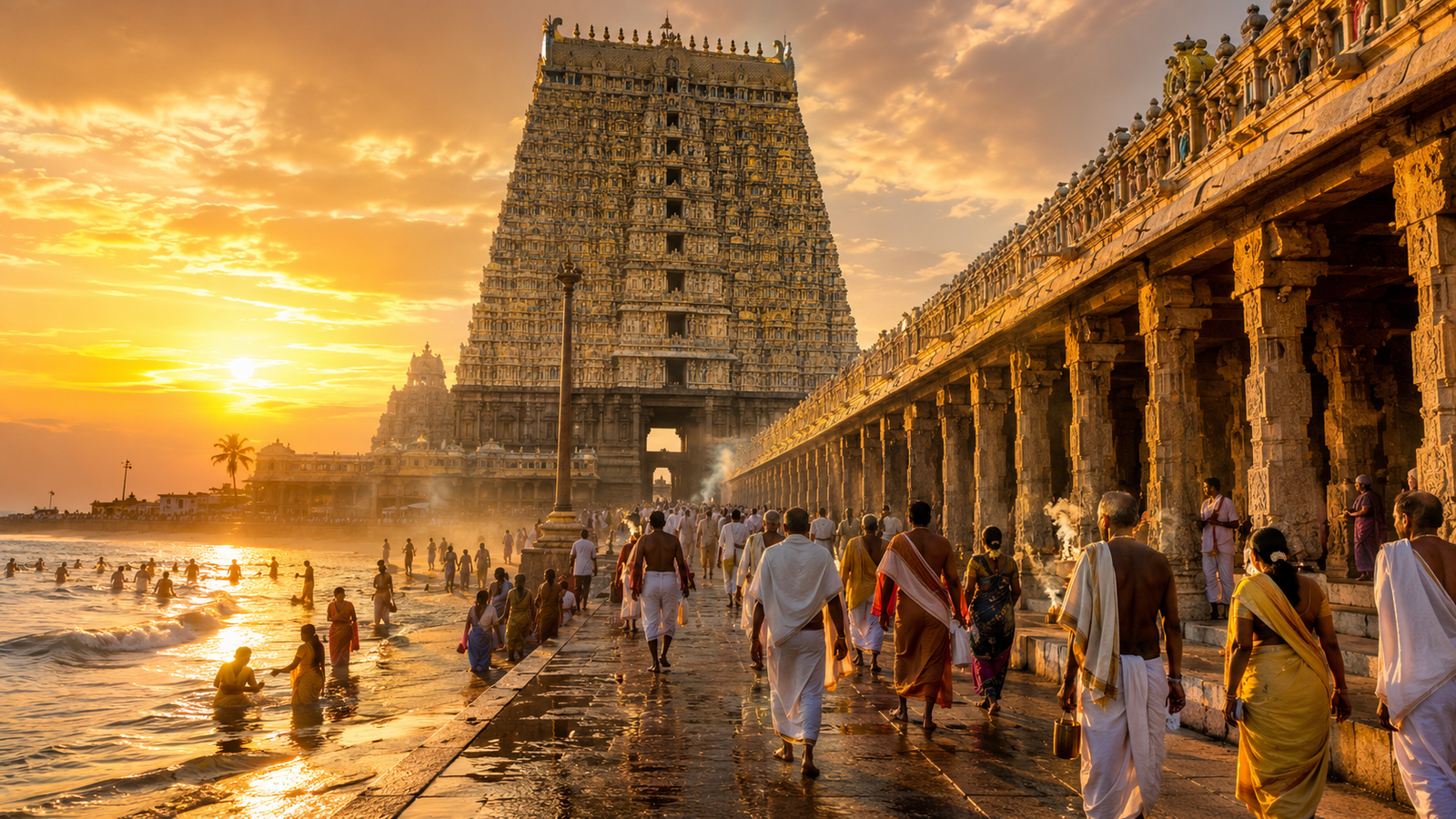
Hidden amidst the bustling commercial streets of Thambu Chetty Street in George Town, Sri Kalikambal Temple is one of Chennai’s oldest and most revered spiritual landmarks.
Today, thousands of devotees visit this temple every day.
But few know that the temple did not originally stand where it is today.
Long before the arrival of the British, this part of Chennai was nothing more than a small fishing village along the shores of the Bay of Bengal.
The local fishing community worshipped Goddess Kali as their protector.
They adorned her with vermilion (Sindoor) and prayed for safety before venturing into the sea.
Because she was regarded as the guardian deity of the settlement, she became affectionately known as Chenniamman.
According to one popular tradition, the name “Chenniamman Kuppam” eventually evolved into “Chennai.”
Although historians debate the exact origin of the city’s name, this belief remains deeply rooted in local tradition.
The Temple Built by the Vishwakarma Community
During the rule of the Nayak dynasty, members of the Vishwakarma community settled in Chennai to undertake the renovation and construction of the famous Parthasarathy Temple in Triplicane.
Tradition says they brought granite stones from Tiruvannamalai and built a magnificent temple dedicated to Goddess Kalikambal.
The temple quickly became an important center of worship for artisans, craftsmen, merchants, and local residents.
When the British Built Fort St. George
History took a dramatic turn in 1640, when the British East India Company began constructing Fort St. George.
The original Kalikambal Temple fell within the boundaries of the newly built fort.
For some time, the Goddess was worshipped inside the fort itself.
Because of this, devotees also came to call her “Kottai Amman”—the Goddess of the Fort.
However, as British commercial activities expanded, they requested that the temple be relocated outside the fort walls.
The shrine was respectfully moved to Thambu Chetty Street, where it stands to this day.
Although the location changed, the devotion of the people never diminished.
The temple continued to attract countless devotees from every walk of life.
Chhatrapati Shivaji’s Visit
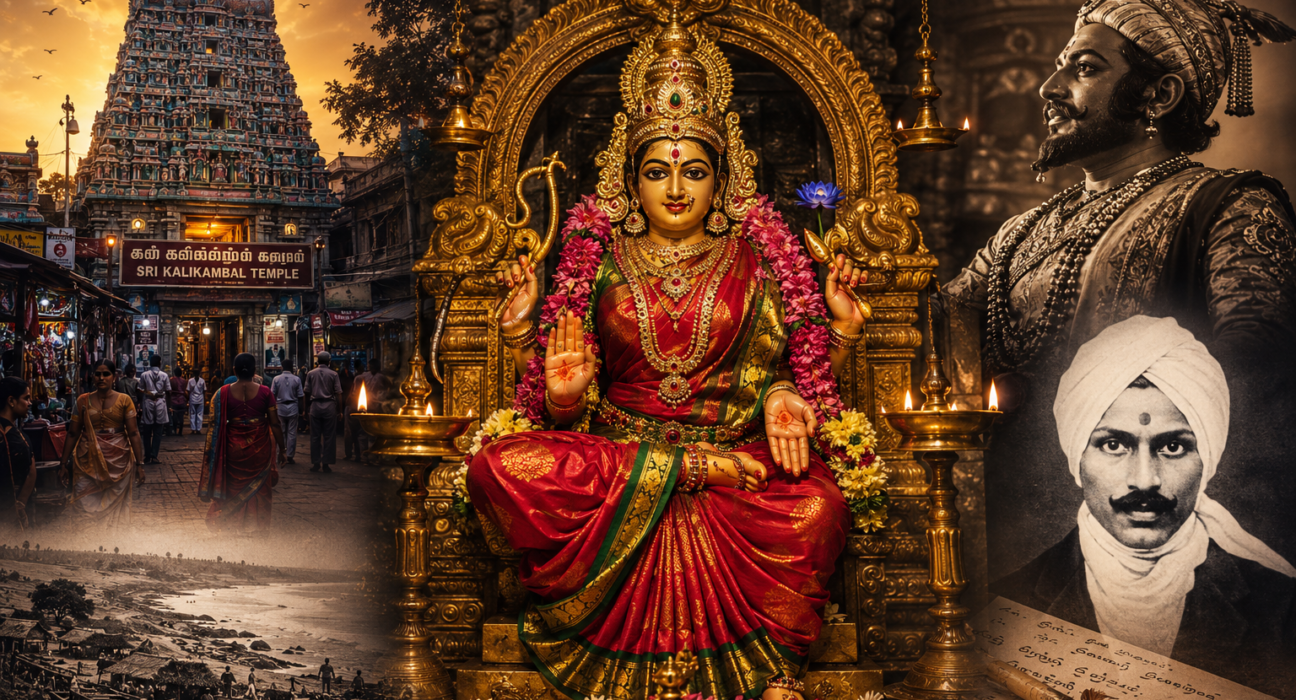
One of the temple’s most celebrated visitors was the legendary Maratha king Chhatrapati Shivaji Maharaj.
Historical records preserved within the temple state that Shivaji visited Sri Kalikambal Temple on October 3, 1677, before embarking on his southern military campaign.
A devoted worshipper of Goddess Bhavani, Shivaji is believed to have sought the blessings of Kalikambal for strength, courage, and victory.
Even today, devotees remember this historic visit with great reverence.
Mahakavi Bharathiyar’s Beloved Goddess
The temple also holds a special place in the life of Mahakavi Subramania Bharati, one of Tamil Nadu’s greatest poets and freedom fighters.
During the period when Bharati worked for the newspaper Swadesamitran, he lived in Broadway, close to the temple.
He frequently visited Sri Kalikambal to offer his prayers.
Many scholars believe that the Goddess praised in his famous hymn:
“Yaadhumaagi Nindraai Kaali…”
(You who have become everything, O Kali…)
is none other than Sri Kalikambal of Chennai.
For Bharati, she was not merely a deity.
She was the universal Divine Mother who existed in every form of creation.
The Story Behind “Ullam Urugudhaiyya”
For generations of Tamil devotees, the devotional song “Ullam Urugudhaiyya…”, immortalized by the legendary singer T. M. Soundararajan, has stirred hearts with its deep devotion to Lord Murugan.
Few people, however, know its fascinating connection to the Kalikambal Temple.
The original verses were inscribed on a stone within the temple.
They were composed by a remarkable woman known as Aandavan Pichchai.
Born as Maragatham, she endured immense hardship and neglect in her later years.
During one difficult phase of her life, she visited the Kanchi Kamakoti Mutt, where some people mistakenly mocked her as a beggar.
Witnessing this, the revered Kanchi Mahaperiyava compassionately called her near and blessed her, saying:
“Do not grieve. From today, you are Aandavan Pichchai—the one blessed by God.”
Inspired by his blessing, she spent the rest of her life traveling from temple to temple, composing devotional hymns.
One such hymn, first sung at Sri Kalikambal Temple, later evolved into the beloved version known today as “Ullam Urugudhaiyya.”
Why Does Kali Appear So Peaceful Here?
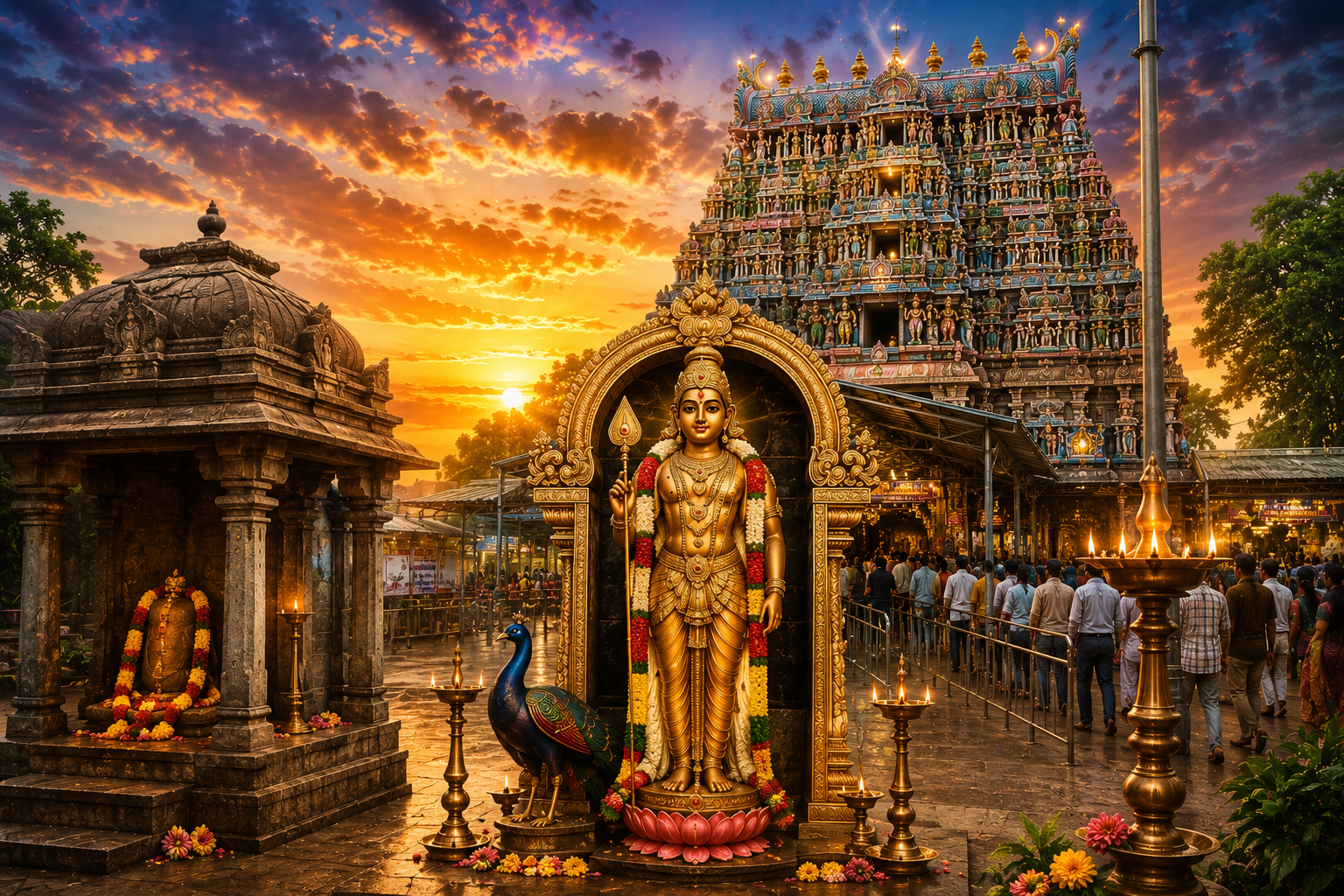
Perhaps the most remarkable feature of Sri Kalikambal Temple is the Goddess herself.
Traditionally, Kali is depicted holding weapons such as:
- The Trident (Trishula)
- The Sword
- The Drum (Damaru)
- The Skull Bowl
- The Shield
Her appearance symbolizes the destruction of evil and the annihilation of ego.
But Sri Kalikambal appears in an entirely different form.
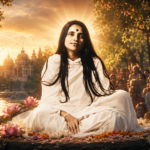
Here, she manifests as Sri Lalitha Tripurasundari, embodying serenity, beauty, and compassion.
She holds:
- The Ankusha (Elephant Goad) — symbolizing control over ego and pride.
- The Pasha (Noose) — representing her power to free devotees from the bondage of karma.
- The Blue Lotus — signifying prosperity, peace, and spiritual fulfillment.
- The Varada Mudra — the sacred gesture granting blessings, protection, and liberation.
Her three divine eyes represent:
- The Moon
- The Sun
- The Sacred Fire
She wears a magnificent crown adorned with precious gems and sits gracefully with her right leg gently lowered, welcoming every devotee with motherly affection.
Her very presence radiates peace.
The Sacred Kumkum Prasadam
A unique belief surrounds the temple’s Kumkum Prasadam.
According to ancient tradition, the Goddess’s two guardian energies—Jaya and Vijaya—reside within the sacred vermilion offered to devotees.
It is believed that wearing this Kumkum on the forehead invokes their divine protection.
Devotees firmly believe that the Goddess shields them from dangers, removes obstacles, and blesses them with courage, prosperity, and peace.
The Mother Who Grants Both Worldly Success and Liberation
Most devotees visit temples seeking health, wealth, marriage, career success, or relief from suffering.
Sri Kalikambal lovingly fulfills such prayers.
Yet her grace extends far beyond material blessings.
Those who approach her with genuine spiritual longing receive something far greater.
She removes the burden of accumulated karma.
She dissolves sorrow.
She grants inner peace.
And ultimately, she guides sincere seekers toward Moksha—the liberation of the soul.
This is why devotees often say that when you stand before Sri Kalikambal, it feels as though a compassionate mother is gazing directly into your heart.
Countless Miracles Through the Centuries
The miracles attributed to Sri Kalikambal are impossible to count.
For more than three centuries, she has protected the people of Chennai through times of war, colonial rule, natural disasters, and modern urban life.
Every day, thousands of devotees arrive carrying hopes, fears, and silent prayers.
Like a calf running instinctively toward its mother, people naturally seek refuge at her feet.
The Divine Mother understands every unspoken prayer.
She removes obstacles born of past karma.
She wipes away suffering.
She blesses her children with prosperity, wisdom, protection, and spiritual awakening.
Above all, she lovingly draws every soul closer to herself.
Conclusion
Sri Kalikambal is far more than the presiding deity of an ancient temple.
She is the spiritual heartbeat of Chennai.
While Goddess Kali is often worshipped as the fierce destroyer of evil, Sri Kalikambal reveals an equally profound truth—that the greatest power of the Divine Mother is not merely to destroy darkness, but to embrace her children with boundless love.
For centuries, kings, poets, freedom fighters, saints, artisans, and ordinary devotees have stood before her seeking strength, guidance, and grace.
Even today, anyone who enters her sacred shrine with faith leaves carrying something invisible yet invaluable—the comforting assurance that a Divine Mother is always watching over them.