
Kanakkanpatti Moota Swamigal: The Mysterious Siddhar of Palani | Life, Miracles & Jeeva Samadhi
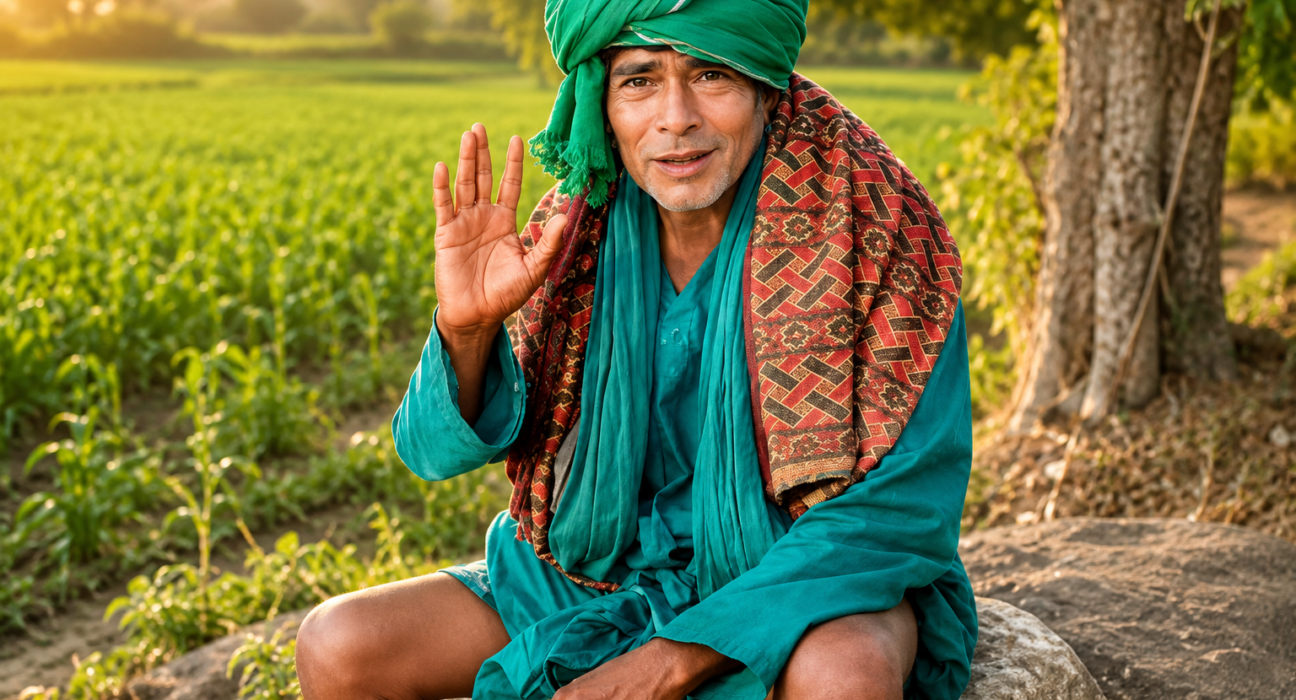
Kanakkanpatti Moota Swamigal: The Mysterious Siddhar of Palani Who Carried Humanity's Karma in a Sack
The Extraordinary Life, Miracles, Jeeva Samadhi, and Divine Grace of Palani’s Beloved Siddhar
“He never established an ashram. He never delivered spiritual discourses. He rarely smiled. He often scolded devotees and sometimes even chased them away. Yet ministers, doctors, scientists, businessmen, farmers, film stars, and ordinary villagers traveled hundreds of kilometers just to receive a single glance from him. Who was the mysterious Kanakkanpatti Moota Swamigal?”
A Siddhar Who Still Draws Thousands
Just eight kilometers east of Palani, in the quiet village of Kanakkanpatti, lies one of Tamil Nadu’s most extraordinary spiritual centers—the Jeeva Samadhi of Moota Swamigal.
On every Amavasya (New Moon), Pournami (Full Moon), and Punarpoosam Nakshatra, tens of thousands of devotees gather here seeking blessings.
Many pilgrims believe that their pilgrimage to Lord Murugan at Palani is incomplete unless they also bow before Kanakkanpatti Siddhar.
What makes this place even more remarkable is that the saint attained Mahasamadhi only in 2014, making him one of the rare Siddhars of modern India whose life was witnessed by lakhs of devotees.
The Ordinary Man Who Became an Extraordinary Saint
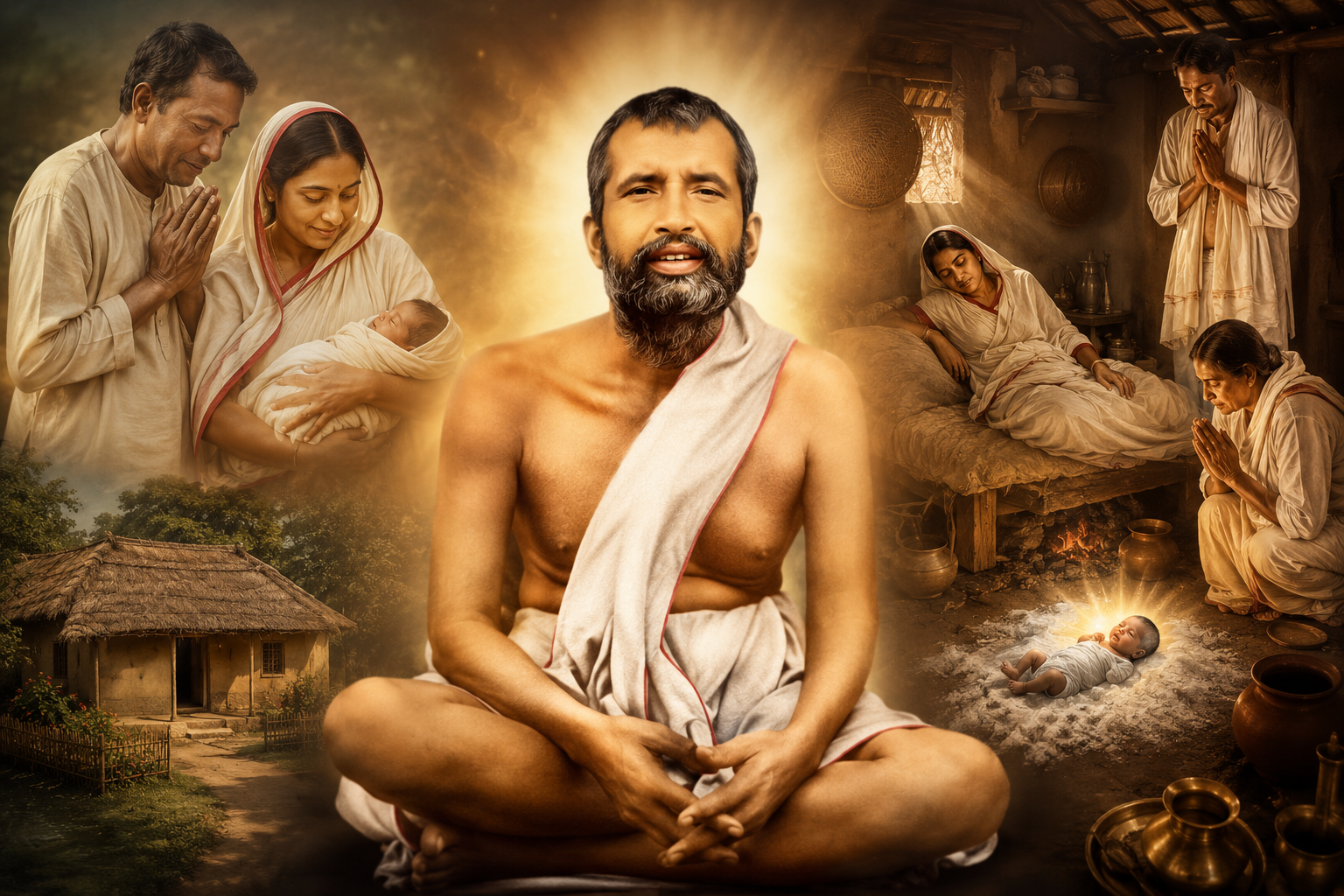
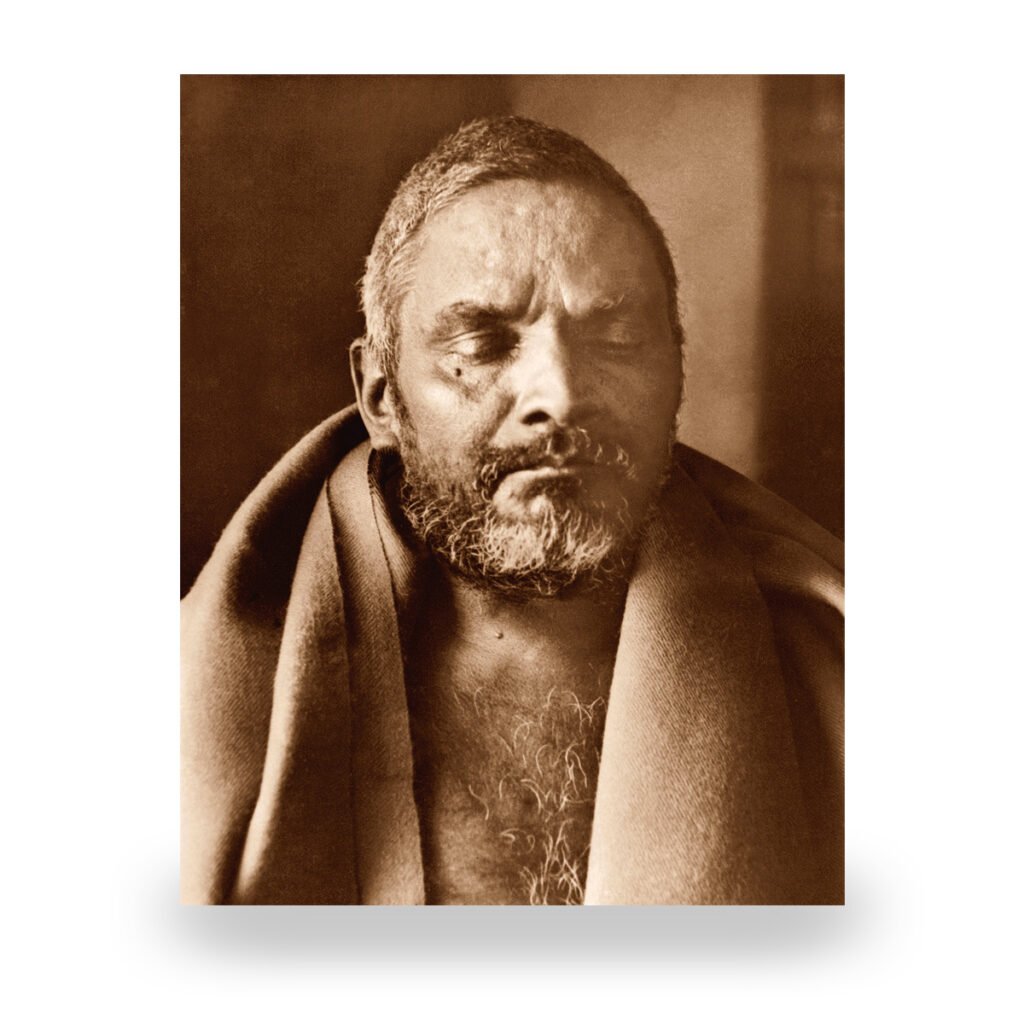
Kanakkanpatti Siddhar was born in 1937 in Kanakkanpatti village near Palani.
His parents, Thimman and Rengammal, named him Kalimuthu.
His childhood was filled with hardship.
He lost his mother at a young age.
His father remarried, and difficult family circumstances forced him to discontinue his education after the seventh standard.
Like many ordinary villagers, he later married and worked in agriculture.
But fate had another plan.
Within months of marriage, his wife passed away while pregnant.
Once again, life plunged him into unimaginable sorrow.
For years, he lived quietly as a farm supervisor, unnoticed by the outside world.
The Incident That Changed Everything
Everything changed in 1986.
One day, Kalimuthu was brutally attacked by a group of men and left critically injured.
He was rushed to the Government Hospital in Palani.
Doctors examined him.
They declared him dead.
His body was sent to the mortuary.
But just before the post-mortem examination began, something astonishing happened.
Hospital staff discovered that he was still alive.
Those present later spoke of strange and inexplicable events that had taken place inside the mortuary.
He was immediately shifted back to intensive care.
Yet, after only a few days, he quietly walked out of the hospital without informing anyone.
From that moment onward, the man known as Kalimuthu was never the same again.
The Mystery of the Sack
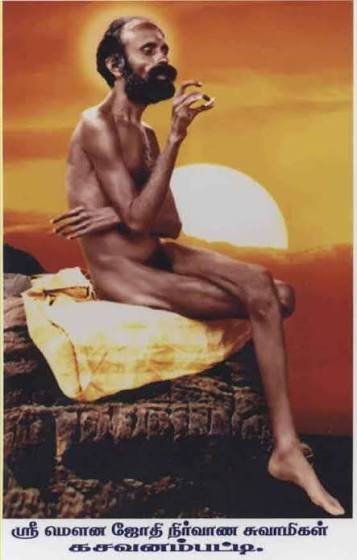
After leaving the hospital, he wandered through the streets of Palani carrying a large sack over his shoulder.
The sack was enormous.
It always appeared extremely heavy.
Yet no one ever knew what it contained.
Whenever he rested beneath a tamarind tree, he carefully hung the sack from a branch within sight.
If anyone attempted to approach it, he would shout loudly and drive them away.
Because of this mysterious bundle, people began calling him “Moota Swamigal”—the Saint with the Sack.
Later he became known as:
- Palani Swamigal
- Kanakkanpatti Siddhar
- Moota Swamigal
All referring to the same enigmatic saint.
A Transformation No One Could Explain
What happened after the hospital incident remains one of the greatest mysteries surrounding Moota Swamigal.
No one ever saw him practicing yoga.
No one witnessed him performing meditation.
He never claimed to have studied under a guru.
Yet something profound had happened within him.
Many devotees believe that during this period he received the divine grace of Sivaprabhakara Siddha Yogi of Omallur, Kerala, who had attained Jeeva Samadhi in 1986.
Some even believe that Moota Swamigal was a continuation of that great Siddha lineage.
Others regard him as an incarnation of Shirdi Sai Baba, Siddhar Bhogar, or even an embodiment of Lord Murugan of Palani.
Whether these beliefs can be historically verified or not, one fact remains undeniable:
His life defied ordinary explanation.
The Wandering Siddhar
From that time onward, Moota Swamigal became a wandering mystic.
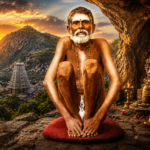
Sometimes he stayed on Idumban Hill, facing the sacred Palani Hills.
Sometimes he disappeared for days.
He sat under the scorching summer sun on bare rocks.
During heavy monsoon rains, he remained motionless, completely soaked, seemingly unaffected by nature itself.
He owned no property.
He accepted food only when he wished.
If someone offered him money or meals without being asked, he often chased them away.
But when he felt hungry, he would unexpectedly ask a particular devotee to buy him food.
Everything he did appeared mysterious.
Nothing followed ordinary logic.
The Strange Tasks Given to Devotees
Visitors expecting spiritual discourses were often shocked.
Instead of blessings, Moota Swamigal might ask them to:
- Move stones from one place to another.
- Dig up earth.
- Carry soil.
- Pour drainage water elsewhere.
- Perform seemingly meaningless physical tasks.
To outsiders, these actions looked irrational.
But devotees believed every instruction carried a hidden spiritual purpose.
Many later testified that after completing these strange tasks, longstanding obstacles disappeared, illnesses improved, family problems resolved, and their lives transformed.
According to his followers, these acts were ways of burning away accumulated karma.
Countless Miracles
Stories about Moota Swamigal spread rapidly across Tamil Nadu.
People came from every walk of life:
- Doctors
- Engineers
- Scientists
- Politicians
- Industrialists
- Film actors
- Farmers
- Students
- Spiritual seekers
Some came out of devotion.
Some came to test him.
Some came without any faith at all.
Many returned transformed.
Devotees attribute countless healings, unexpected recoveries, financial breakthroughs, and spiritual awakenings to his blessings.
While such accounts are matters of personal faith, they form an inseparable part of the living tradition surrounding Kanakkanpatti Siddhar.
Mahasamadhi
On March 11, 2014, Moota Swamigal attained Mahasamadhi.
Devotees describe the event poetically:
“Like a bubble merging into the air, his soul merged with the Infinite.”
His physical body was interred at Mohan Thottam, where he had lived.
Today, that sacred place has become the Kanakkanpatti Jeeva Samadhi Temple, attracting devotees from across India.
Why Did He Scold Devotees?
Perhaps the most misunderstood aspect of Moota Swamigal’s life was his behavior.
He rarely greeted devotees warmly.
He often shouted at people.
Sometimes he even chased them away.
To an outsider, this appeared harsh.
But longtime devotees insist there was always a hidden purpose behind his actions.
One remarkable incident involving a devotee named Sai Kumar illustrates this mystery.
When Sai Kumar first met the Siddhar, he was publicly scolded and humiliated without understanding why.
Heartbroken, he left the place believing he had been rejected.
Yet that very incident eventually led him to another enlightened saint, profound inner transformation, and a dramatic turnaround in his personal life.
Only much later did Sai Kumar realize that what felt like rejection had actually been divine guidance.
The Legacy That Lives On
More than a decade after his Mahasamadhi, Kanakkanpatti Moota Swamigal continues to inspire extraordinary devotion.
His Jeeva Samadhi remains a place where thousands come seeking relief from suffering, answers to life’s deepest questions, and the silent grace of a Siddhar whose methods were unlike any other.
He never preached philosophy.
He never wrote books.
He never sought fame.
Yet his life became a living scripture—one that continues to guide countless devotees through faith, surrender, and mysterious acts of divine compassion.
Conclusion
The life of Kanakkanpatti Moota Swamigal reminds us that true spiritual masters cannot always be understood through ordinary logic. Their actions may seem unconventional, their words may be harsh, and their methods may challenge our expectations—but beneath it all lies a deeper purpose known only to the Guru.
For those who approached him with sincerity, Moota Swamigal was more than a wandering saint carrying a mysterious sack. He was a compassionate Siddhar who silently bore the burdens of others, transformed lives in unseen ways, and left behind a sacred legacy that continues to bless devotees long after his Mahasamadhi.
Perhaps that is why, even today, thousands journey to Kanakkanpatti—not merely to visit a shrine, but to experience the living presence of a saint whose grace, many believe, never truly departed.