
Sri Ma Anandamayi: The Living Kali Who Transcended Religion, Caste, and Time | Complete Life Story
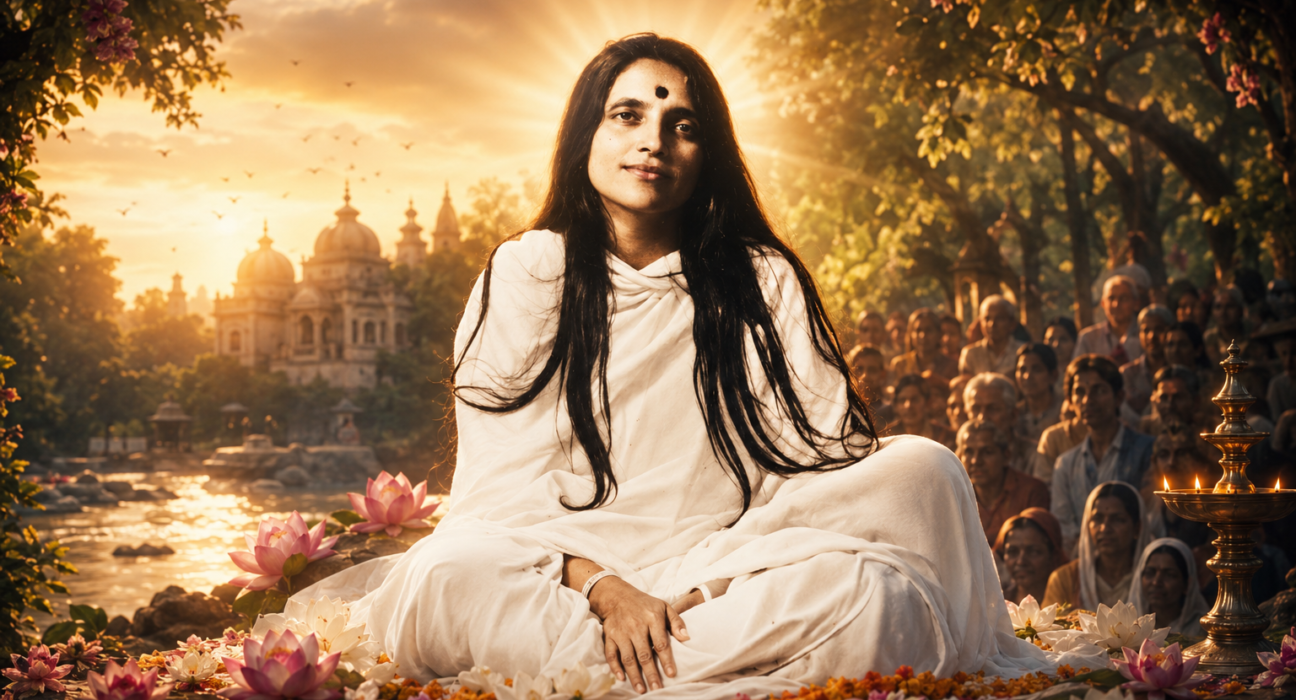
Sri Ma Anandamayi: The Living Kali Who Transcended Religion, Caste, and Time
The Extraordinary Life of India’s Divine Woman Saint – Birth, Childhood, and the Awakening of a Spiritual Master
“Some saints teach through words. Some transform through miracles. But a rare few simply exist—and their very presence changes the lives of everyone around them. Sri Ma Anandamayi was one such extraordinary being.”
A Presence Beyond Human Understanding
Throughout history, India has been blessed with countless saints, sages, yogis, and Siddhas who dedicated their lives to spiritual awakening. Some established great spiritual traditions. Others authored profound scriptures. Many guided seekers toward liberation.
Yet there are a handful of extraordinary souls who defy every category.
They did not come to establish a new religion.
They did not ask anyone to follow them.
They simply lived.
And their very presence became a living expression of the Divine.
Among these rare beings stands Sri Ma Anandamayi, one of the most revered female mystics of modern India.
To call her merely a saint would be incomplete.
To describe her as a yogini alone would not capture her greatness.
Even calling her a Siddha or enlightened master falls short.
Because those who met her experienced something far beyond any spiritual title.
Each person saw in her the form of the Divine they loved most.
To some, she was Mother Kali.
To others, she was Meenakshi.
Many devotees saw Radha in her.
Christians felt they had witnessed the love of Christ.
Muslims recognized in her the presence of Allah’s boundless compassion.
Yet regardless of their faith, everyone described the same experience:
Simply being in her presence brought an indescribable joy that words could never explain.
Why Was She Called the “Living Kali”?
Ancient scriptures describe Vrindavan during the lifetime of Lord Krishna as a place overflowing with divine bliss. Every tree, every river, every street seemed immersed in an atmosphere of sacred ecstasy.
Centuries later, many devotees claimed they experienced that same spiritual atmosphere once again—wherever Sri Ma Anandamayi lived or traveled.
Her presence transformed places.
People felt lighter.
Their minds became peaceful.
Their hearts opened effortlessly.
But it wasn’t only human beings who responded to her.
Birds gathered around her.
Animals approached without fear.
Plants seemed to flourish in her presence.
Children naturally gravitated toward her.
She never regarded anyone as a stranger.
Likewise, no one felt like a stranger around her.
Every place she visited became her home.
Every person she met became family.
A Spiritual Presence Beyond Religion
Perhaps the most remarkable aspect of Sri Ma Anandamayi’s life was that she never attempted to convert anyone or promote a particular religious tradition.
Yet followers of every faith recognized their own Divine in her.
Along the sacred banks of the River Narmada, devotees lovingly addressed her as “Devi Narmada.”
In Madurai, many experienced her as Goddess Meenakshi herself.
In Punjab, Sikhs revered her with the same devotion they offered to the Guru Granth Sahib.
One Muslim devotee reported seeing a crescent moon shining above her head during meditation.
A Christian who met her famously remarked,
“Now I know that God truly has a face.”
The mountain people of Almora once told her,
“As long as you are with us, we no longer feel the need to visit a temple.”
Back in Dhaka, where she spent much of her early life, people affectionately called her
“Manush Kali”—the Living Kali.
It was not because she claimed to be a goddess.
It was because people experienced divine motherhood through her.
The Birth of an Extraordinary Child
On April 30, 1896, in the quiet village of Kheora (now in Bangladesh), a baby girl was born into a humble Brahmin family.
Her parents named her
Nirmala Sundari Devi.
The name “Nirmala” means “pure.”
As the years passed, those who knew her would often say that no other name could have suited her better.
She seemed purity itself.
The Beloved Child of the Village
Young Nirmala possessed the innocence and playfulness of a young deer.
She laughed freely.
She loved helping others.
She willingly did whatever little work she could for family members and neighbors.
Helping others wasn’t something she was taught.
It was simply her nature.
Although the village had a large Muslim population, religious differences never affected how people felt about her.
Everyone loved Nirmala.
Children adored her.
Elders blessed her.
Neighbors welcomed her like one of their own.
Long before she became a spiritual figure, she had already become the heart of the community.
A Home Filled with Devotion
Her father was a deeply devoted Vaishnava whose devotional singing moved listeners to tears.
People often said that when he sang with complete surrender, it felt as though the Divine itself descended into the room.
Her mother embodied quiet compassion.
She was an ordinary homemaker with extraordinary kindness.
Those who met her remembered her warmth long after they had left.
Growing up in such an atmosphere of devotion and simplicity profoundly shaped young Nirmala’s inner world.
Yet even among such spiritually inclined parents, she remained unique.
A Child Who Confused Everyone
As Nirmala grew, one question repeatedly arose among relatives and neighbors:
“Why isn’t she like other children?”
She rarely displayed mischief.
She had no interest in quarrels.
She never seemed possessive.
She showed no jealousy.
She accepted everything with a quiet smile.
Even her parents sometimes wondered how such maturity could exist in a little girl.
Years later, her childhood friends admitted that it took them a long time to understand that Nirmala was unlike anyone they had ever known.
“Let Go of Whatever Has Passed”
Those who spent time with her during her youth often recalled one simple teaching she repeated throughout her life:
“Whatever has passed… let it pass.”
These few words contained a profound spiritual truth.
Do not cling to the past.
Do not carry unnecessary burdens.
Live fully in the present moment.
What appeared to be a simple sentence would later become one of the central themes of her spiritual guidance.
Compassion Without Boundaries
Nirmala’s love extended far beyond human beings.
She cared deeply for animals.
She showed tenderness toward birds.
She treated plants with the same reverence she offered people.
Everything around her seemed to respond to her limitless compassion.
Those who came near her felt genuinely seen, accepted, and loved.
It was this universal love that eventually inspired thousands to stop calling her Nirmala…
and begin calling her simply,
“Ma”—Mother.
Wisdom Hidden in Laughter
Despite her profound spiritual nature, Sri Ma Anandamayi possessed an extraordinary sense of humor.
She rarely criticized anyone directly.
Instead, if someone made a mistake, she gently revealed it through playful humor.
No one felt insulted.
No one felt judged.
Yet everyone understood.
This gentle way of correcting others became one of the qualities her devotees cherished most.
It reflected not only wisdom, but boundless compassion.
The Beginning of an Extraordinary Journey
At the age of thirteen, following the customs of the time, Nirmala was married.
To the outside world, she appeared to become an ordinary young housewife.
But beneath that seemingly ordinary life, something extraordinary had already begun to unfold.
Without ever studying yoga…
Her body spontaneously assumed advanced yogic postures.
Without receiving formal initiation…
Sacred mantras began arising naturally within her.
Without any teacher…
She entered states of deep meditation and samadhi that astonished everyone around her.
How did an uneducated village girl become one of the greatest spiritual figures of modern India?
That remarkable journey begins in the next chapter.
Sri Ma Anandamayi: The Living Kali Who Transcended Religion, Caste, and Time
Marriage, Divine Awakening, and the Extraordinary Spiritual Transformation That Defied All Human Understanding
“She had no guru. She never studied yoga. She had never read the scriptures. Yet the highest yogic states unfolded within her naturally, as though an unseen divine intelligence was guiding every movement of her body.”
A Marriage That Changed Nothing—Yet Changed Everything
In early twentieth-century Bengal, child marriage was a common social custom.
Following the traditions of the time, Nirmala Sundari Devi was married at the age of thirteen to Ramani Mohan Chakravarti, who would later become affectionately known as Bholanath.
To everyone around them, it seemed like the beginning of an ordinary married life.
No one could have imagined that this quiet village couple would one day become one of the most extraordinary spiritual partnerships in modern Indian history.
After the marriage, Nirmala initially lived with her husband’s elder brother, Revati Mohan, and his wife, Pramoda Devi, while Bholanath worked in another town.
The playful girl who had spent her childhood running freely through the fields now entered a world filled with responsibilities.
Cooking.
Cleaning.
Washing clothes.
Caring for children.
Serving every member of the household.
These duties filled every hour of her day.
Yet something about her stood out immediately.
She never complained.
She never appeared tired.
She never showed frustration.
Instead, she embraced every task with remarkable joy.
Even work beyond her physical strength was performed with effortless grace.
The Young Bride Who Astonished Everyone
The members of her new family quickly became captivated by her gentle nature.
Her smile never faded.
Her kindness never diminished.
Her patience seemed limitless.
But over time, their admiration slowly turned into curiosity.
How could such a young girl possess such extraordinary maturity?
Even when others behaved harshly toward her, she responded only with affection.
Nothing disturbed her inner balance.
This unusual behavior reminded her parents of the questions they had often asked during her childhood.
Why did she never behave like ordinary children?
Why did she never become angry?
Why did she never seek attention?
It was as though she had entered the world already complete.
A Heart That Embraced Everyone
Those who lived with Nirmala noticed that her compassion extended to every form of life.
She cared deeply for family members.
She showed equal concern for neighbors.
Household workers felt respected in her presence.
Animals naturally gathered around her.
Even plants seemed to receive her attention with unusual tenderness.
No distinction existed in her mind.
Everyone deserved love.
Everyone deserved care.
Her life quietly reflected a profound spiritual truth long before she ever spoke about it.
Humor That Healed Instead of Hurting
Despite her deep inwardness, Nirmala possessed a delightful sense of humor.
When friends made mistakes, she never embarrassed them.
Instead, she gently pointed out their errors through playful wit.
People laughed.
They reflected.
They corrected themselves naturally.
No one felt judged.
This unique ability to guide others without causing pain became one of the qualities her devotees treasured throughout her life.
Discipline Without Domination
Sri Ma Anandamayi deeply appreciated order and discipline.
Yet she never imposed rules through fear or authority.
If someone around her became careless or inattentive, she often corrected them with nothing more than a gentle smile, a subtle gesture, or a compassionate glance.
Remarkably, people immediately understood.
There was no need for criticism.
Her silent presence taught more effectively than lengthy lectures.
Moving to Ashtagram
A few years after their marriage, both families agreed that Nirmala should join her husband, who had been transferred to Ashtagram.
Before leaving home, her mother gave her a simple piece of advice:
“Serve your husband with the same respect and reverence you have always shown your father.”
Nirmala accepted those words wholeheartedly.
Throughout her married life, she treated Bholanath with unwavering respect, humility, and kindness.
Yet their relationship would gradually evolve into something far deeper than that of husband and wife.
The Husband Who Became Her First Disciple
Nirmala affectionately addressed her husband as Bholanath.
He, in turn, sensed that his young wife possessed something extraordinarily sacred.
Although he could not fully understand what he was witnessing, he instinctively felt responsible for protecting her.
Years later, many devotees would say that Bholanath’s greatest spiritual achievement was not becoming her husband—but recognizing her divinity.
From the very beginning, he treated her with unusual reverence.
He became her companion.
Her protector.
And eventually…
Her disciple.
Until his passing in 1938, he remained devoted to her with remarkable sincerity and humility.
The Beginning of the Great Mystery
After another transfer, the couple moved to Bajitpur.
Outwardly, life continued as before.
Nirmala fulfilled every household responsibility with complete dedication.
She cooked.
She cleaned.
She served meals.
She cared for Bholanath after his long days of work.
She even prepared his evening hookah, as was customary in those days.
Nothing about her external life suggested that one of history’s most extraordinary spiritual transformations was quietly unfolding.
Only after every household duty had been completed would she ask her husband for permission to spend some time in meditation.
He gladly agreed.
Night after night, she sat quietly on the floor in a corner of their room.
Then she softly began repeating one simple name:
“Hari… Hari… Hari…”
It was a sacred name she had learned from listening to her father sing devotional hymns during her childhood.
Yoga Without a Teacher
Within minutes of beginning her chanting, something extraordinary occurred.
Bholanath watched in amazement as his wife’s body gradually entered deep states of meditation.
Day after day, her posture became increasingly perfect.
Eventually, she began sitting naturally in what appeared to be Siddhasana, one of the most advanced meditation postures described in classical yoga.
This puzzled him deeply.
She had never studied yoga.
She had never received instruction from a guru.
She had never even shown interest in learning yogic techniques.
Yet her body seemed to know exactly what to do.
It was as though an invisible intelligence had taken complete control.
“Then Shall I Chant Shiva Instead?”
One evening, Bholanath asked an innocent question.
“Why do you keep chanting ‘Hari’? We are not Vaishnavas.”
Without hesitation, Nirmala smiled gently and replied,
“Then shall I chant ‘Shiva’ instead?”
He agreed.
From that day forward, she began chanting the name of Shiva.
But something astonishing became immediately clear.
Nothing changed.
The same spiritual states continued.
The same yogic movements appeared.
The same profound absorption unfolded.
The Divine, it seemed, responded not to the name…
but to the depth of surrender.
A Body Becoming an Instrument of the Divine
Years later, Sri Ma Anandamayi explained that during these experiences she was not visualizing any deity or consciously practicing meditation.
Rather, something entirely different was taking place.
Her body itself had become an instrument through which the cosmic rhythm expressed itself.
Those who witnessed her often felt as though the Lord of Dance—Shiva himself—was moving every part of her body.
Sometimes she remained motionless for hours.
At other times, spontaneous mudras and graceful movements emerged without conscious effort.
On certain occasions, witnesses even reported seeing a subtle radiance shining from her body while she remained immersed in deep samadhi.
No one could explain what they were seeing.
Least of all, Nirmala herself.
Beyond the Path of an Ordinary Seeker
As the months passed, Bholanath gradually realized something profound.
His wife was not progressing through spiritual practice in the usual way.
She appeared to have already reached the destination toward which other seekers struggled for decades.
Yet she continued performing spiritual disciplines as though she were still an ordinary aspirant.
It was a mystery that no one around her could fully comprehend.
Even when neighbors criticized or misunderstood these unusual experiences, Bholanath never abandoned his faith in her.
He simply watched.
Protected.
And silently wondered what divine purpose was unfolding before his eyes.
The Journey Has Only Begun…
During the next six years, Sri Ma Anandamayi’s inner transformation intensified dramatically.
Without a guru.
Without formal initiation.
Without studying sacred texts.
The highest dimensions of spiritual realization unfolded naturally within her.
She would eventually initiate herself, enter prolonged periods of silence, and attract seekers from across India who recognized that they were witnessing something never before seen.
The quiet housewife of Bajitpur was about to become one of the greatest spiritual luminaries of the twentieth century.
Sri Ma Anandamayi: The Living Kali Who Transcended Religion, Caste, and Time
Self-Initiation, Sacred Silence, and the Emergence of a Universal Spiritual Master
“No guru whispered a mantra into her ear. No teacher guided her through spiritual disciplines. Instead, the Divine itself became her Guru, and the highest spiritual realization unfolded naturally from within.”
A Spiritual Journey Unlike Any Other
Every spiritual tradition speaks of the importance of a Guru.
In Hinduism, Buddhism, Jainism, Sikhism, and even many mystical traditions across the world, a spiritual guide is considered essential.
A Guru transmits wisdom.
A Guru initiates the disciple.
A Guru removes ignorance.
But the life of Sri Ma Anandamayi challenged even this timeless understanding.
She had no human Guru.
No one initiated her into meditation.
No one taught her yoga.
No one instructed her in Tantra, Vedanta, or the scriptures.
Yet…
The highest spiritual states unfolded within her with astonishing precision.
Those around her gradually realized they were witnessing something almost unheard of in recorded spiritual history.
Six Years of Intense Inner Transformation
While continuing to perform every household responsibility with complete dedication, Sri Ma Anandamayi entered an extraordinary period of intense inner transformation.
Unlike traditional seekers who withdrew into forests or Himalayan caves, she continued living as an ordinary housewife.
She cooked.
She cleaned.
She served her husband.
She welcomed guests.
She fulfilled every social responsibility.
But inwardly…
An immense spiritual process was taking place.
Her entire life became a living laboratory of Divine consciousness.
Every day brought new experiences.
New yogic states.
New mystical revelations.
And all of it unfolded spontaneously.
The Mystery of Self-Initiation
One of the most astonishing events of this period was her self-initiation.
In almost every spiritual lineage, initiation is received from an enlightened master.
The Guru chants sacred mantras.
Performs rituals.
Blesses the disciple.
Only then does formal spiritual practice begin.
But in Sri Ma Anandamayi’s case…
There was no Guru.
One day, during a deep state of divine absorption, her entire body began performing an elaborate initiation ceremony entirely on its own.
Witnesses later described an unbelievable sequence of events.
Her hands formed sacred mudras she had never learned.
Her body assumed precise yogic postures.
Mantras emerged effortlessly from within.
The ritual completed itself exactly according to ancient scriptural traditions.
No external teacher participated.
No human being instructed her.
The Guru…
The disciple…
The mantra…
And the Divine Presence…
All appeared to be one.
“Everything Happened From Within”
Years later, when seekers asked her how she had learned these practices, Sri Ma Anandamayi gave an answer that puzzled even great scholars.
She simply said:
“Everything happened from within.”
There was no sense of personal achievement.
She never claimed spiritual greatness.
She never presented herself as someone who had mastered difficult disciplines.
Instead, she described herself as an instrument through which the Divine expressed itself naturally.
This humility remained one of the defining characteristics of her entire life.
When Silence Became Her Language
In 1922, another remarkable chapter began.
Sri Ma Anandamayi entered an extended period of Mauna, or sacred silence.
This silence was not a discipline imposed upon herself.
It arose naturally.
For months, she spoke very little.
Sometimes not at all.
Yet those around her noticed something extraordinary.
Although words disappeared…
Communication became deeper.
People understood her without conversation.
Her eyes conveyed compassion.
Her smile answered questions.
Her presence itself became a form of teaching.
Many devotees later confessed that they received life’s most important answers during those silent years—without hearing a single spoken word.
Silence as the Completion of Sadhana
In many yogic traditions, prolonged silence is considered one of the highest spiritual disciplines.
But in Sri Ma Anandamayi’s life, silence represented something different.
It was not merely another practice.
It was the natural expression of an inner state that had already matured.
Her silence reflected completeness rather than effort.
When the mind becomes perfectly still, words lose their necessity.
Her devotees felt that she was no longer speaking from the intellect.
She was radiating truth directly through her presence.
Bholanath’s Extraordinary Transformation
Throughout these remarkable events, one person witnessed everything from the closest possible distance.
Her husband, Bholanath.
At first, he had simply observed her unusual experiences with curiosity.
Later, curiosity became reverence.
Eventually, reverence transformed into surrender.
He realized that the woman he had married was no ordinary spiritual aspirant.
She was his Guru.
During this period, Bholanath himself received spiritual initiation—not from another monk or teacher, but directly from Sri Ma Anandamayi.
Their relationship entered an entirely new dimension.
Outwardly, she continued serving him with the same humility and respect she had always shown.
She still fulfilled her household duties.
She still honored him as her husband.
But inwardly…
The relationship had become that of Guru and disciple.
It was a rare spiritual partnership unlike almost anything described in modern religious history.
A House Filled with the Divine
Visitors to their home began noticing remarkable changes.
Whenever devotional singing filled the room, Sri Ma Anandandamayi would often enter profound states of bhava samadhi—ecstatic absorption in the Divine.
Sometimes her body became completely motionless.
At other times, subtle yogic movements emerged spontaneously.
Observers described the experience as breathtaking.
Her body appeared as light as a leaf dancing in the wind.
Then suddenly…
Every movement would stop.
Complete stillness.
Hours could pass.
She seemed entirely unaware of the external world.
Many wondered whether she was even conscious.
Some feared she had stopped breathing altogether.
Yet an unmistakable peace filled the room.
The Only Voice That Could Bring Her Back
During these deep states of samadhi, only one person consistently succeeded in bringing her back to ordinary awareness.
Bholanath.
He would gently call her name.
Slowly…
She would open her eyes.
Still absorbed in an indescribable inner state, she would softly ask,
“Shall I get up now?”
Her attendants would gently massage her hands and feet while Bholanath continued speaking to her calmly.
Gradually, she returned to normal awareness.
Those who witnessed these moments often felt they were watching someone move effortlessly between two worlds.
“This Cannot Be Called Trance”
Among Sri Ma Anandamayi’s closest disciples was Gurupriya Devi, affectionately known as Didi, who served her for nearly fifty years.
Describing these extraordinary states, Didi once explained:
“People may call it ecstasy or trance, but those words are inadequate. This was neither unconsciousness nor emotional excitement. It was a state beyond ordinary human experience.”
She added that all serious spiritual aspirants long for such a state, yet very few ever experience it.
According to her, Sri Ma appeared simultaneously majestic and utterly simple.
One could sense infinite transcendence while also feeling the warmth of an ordinary mother.
She beautifully summarized the experience:
“Being near Ma was like experiencing the warmth of the sun and the coolness of the moon at the same time.”
It was a paradox beyond explanation.
The Scholars Were Left Speechless
As news of these extraordinary events spread, increasing numbers of seekers, monks, scholars, and learned pandits came to meet her.
Many expected to test her knowledge.
After all, she had never received formal education.
She had not studied Sanskrit grammar.
She had not attended traditional scriptural schools.
Yet when profound questions about Vedanta, Tantra, Yoga, or Bhakti were placed before her, she responded with astonishing clarity.
Her answers did not sound like memorized quotations.
They flowed directly from lived experience.
Even great scholars admitted they had encountered something they could not explain.
“I Speak Only a Tiny Fraction”
Years later, while speaking with groups of monks and spiritual seekers, Sri Ma Anandamayi made a remarkable observation.
She said:
“Of everything that became known through this body during those years of sadhana, I speak only a tiny fraction.”
It was an extraordinary statement.
If the wisdom she shared throughout her lifetime represented only a small glimpse of her inner realization…
What depths remained forever unspoken?
Perhaps that mystery was never meant to be explained.
Only experienced.
The Dawn of a Spiritual Revolution
By the end of this period, it had become increasingly clear that Sri Ma Anandamayi was no longer simply an unknown village woman.
Her extraordinary life was beginning to attract seekers from every corner of India.
Saints.
Scholars.
Householders.
Government officials.
People of every religion and social background.
None came because she preached a philosophy.
They came because, in her presence, they experienced something that transformed them from within.
A new chapter in India’s spiritual history had quietly begun.
Sri Ma Anandamayi: The Living Kali Who Transcended Religion, Caste, and Time
From a Hidden Mystic to India’s Spiritual Mother: Miracles, Devotees, and the Journey Across a Nation
“She never advertised herself. She never founded a movement. She never sought followers. Yet people traveled thousands of miles just to spend a few moments in her presence—and many returned believing their lives had been transformed forever.”
The End of Silence, The Beginning of a New Mission
After years of profound spiritual absorption and extended periods of sacred silence, Sri Ma Anandamayi gradually began interacting more openly with those who came seeking her guidance.
Her silence had never been emptiness.
It had been preparation.
Now, without any formal announcement, a new chapter of her life began.
People arrived carrying questions about suffering, devotion, meditation, family life, and the meaning of existence.
She did not answer them as a philosopher.
She answered them as someone who had become one with the experience they were seeking.
Her words were simple.
Yet they carried extraordinary depth.
Many devotees later admitted that even years after meeting her, they continued discovering new meanings hidden within her seemingly ordinary conversations.
Moving to Dhaka
Nearly two years after the completion of her period of silence, Sri Ma Anandamayi and Bholanath moved to Dhaka, where Bholanath accepted a position as the manager of the Shahbag gardens.
At first glance, it appeared to be an ordinary relocation.
In reality, it marked the beginning of Sri Ma’s emergence onto the wider spiritual stage.
News about the mysterious young woman had already begun spreading through Bengal.
Relatives of those who had witnessed her remarkable states in Ashtagram and Bajitpur shared stories with friends and family in Dhaka.
Word traveled quickly.
People became curious.
Who was this young woman?
Why did everyone who met her speak of an indescribable peace?
Why were respected scholars, householders, and wandering monks equally drawn toward her?
One by one…
They came to see for themselves.
A Home That Became a Sanctuary
Visitors soon realized they were entering a home unlike any they had ever known.
There were no grand ceremonies.
No elaborate displays of spiritual authority.
No claims of miraculous powers.
Sri Ma lived with remarkable simplicity.
She dressed modestly.
She continued performing household responsibilities.
She remained deeply respectful toward her husband.
If Bholanath asked her to speak with visitors, she would do so.
Otherwise, she often remained quietly in the background.
Yet everyone felt the same mysterious attraction.
Women gathered around her throughout the day, finding comfort simply by sitting in her presence.
Many later confessed that even without speaking, they felt years of emotional burden disappear.
The Husband Who Protected a Growing Spiritual Family
As the number of visitors steadily increased, Bholanath assumed an important responsibility.
He welcomed newcomers.
He organized gatherings.
He gently guided those who wished to meet Sri Ma.
Far from feeling overshadowed by his wife’s growing reputation, he wholeheartedly supported her work.
Devotees admired his humility.
They affectionately began calling him “Baba Bholanath.”
His quiet dedication became one of the foundations upon which Sri Ma’s growing spiritual community was built.
Together, they demonstrated a partnership rooted not in worldly ambition but in mutual surrender to the Divine.
A Family Reunited Through Compassion
Around this time, members of Bholanath’s extended family, who had long been separated after the death of their father, gradually reunited in Dhaka.
Many believed this reunion was made possible through Sri Ma’s gentle influence.
Her kindness dissolved old misunderstandings.
Her compassion softened hardened hearts.
Family members who had lived apart for years found themselves drawn together once more.
It was one of many quiet miracles that characterized her life.
She rarely changed circumstances through dramatic intervention.
Instead, people themselves began changing in her presence.
The Miracles That Defied Explanation
As Sri Ma’s reputation spread, stories of extraordinary events began circulating across Bengal.
Many devotees believed that illnesses disappeared after receiving her blessings.
Others experienced profound emotional healing.
Some found answers to lifelong spiritual questions without even asking them aloud.
Sri Ma herself never claimed miraculous powers.
Whenever people praised her, she gently redirected their attention toward God.
She insisted that the Divine alone was the true source of all healing and transformation.
Yet those who encountered her often found it impossible to separate the blessing from the one through whom it flowed.
Ecstatic States During Kirtan
One of the most extraordinary experiences witnessed by devotees occurred during devotional singing.
Whenever kirtan filled the atmosphere, Sri Ma would often enter Bhava Samadhi—a state of complete absorption in Divine consciousness.
Observers described scenes unlike anything they had ever witnessed.
Her body sometimes moved with astonishing grace, perfectly synchronized with the rhythm of the sacred chants.
At other times, every movement ceased completely.
She would remain utterly still for hours.
Her breathing became almost imperceptible.
Her face radiated indescribable peace.
Many wondered whether she remained aware of the physical world at all.
Like a Leaf Dancing in the Wind
Those fortunate enough to witness these states struggled to describe what they had seen.
Some compared her movements to a leaf carried effortlessly by the breeze.
There was no tension.
No deliberate effort.
Every gesture appeared spontaneous.
Natural.
Graceful.
Then, without warning, complete stillness would return.
It was as though the body itself had become an instrument responding directly to a higher rhythm beyond human comprehension.
Returning From Samadhi
These profound states sometimes lasted for many hours.
Once again, it was usually Bholanath who gently guided her back to ordinary awareness.
He would softly call her.
Slowly, she would open her eyes.
Still immersed in divine consciousness, she would quietly ask,
“Shall I rise now?”
Those nearby would gently massage her hands and feet while Bholanath continued speaking with her until ordinary awareness gradually returned.
Witnessing this transition left a deep impression on everyone present.
Many later said they felt they had watched someone move effortlessly between the visible and invisible worlds.
“This Is Beyond Ecstasy”
Among those who observed these states most closely was Gurupriya Devi, lovingly known as Didi, who spent nearly fifty years serving Sri Ma.
Reflecting on these extraordinary experiences, she explained:
“People sometimes call these states ecstasy or trance. But neither word is adequate. This was a level of consciousness that cannot be explained through ordinary psychological or emotional experiences.”
She emphasized that advanced spiritual seekers dedicate their entire lives in pursuit of such realization.
For Sri Ma, however, it appeared completely natural.
Didi beautifully described her presence with a striking image:
“Being with Ma was like feeling the warmth of the sun and the coolness of the moon at the very same moment.”
Majestic.
Gentle.
Powerful.
Completely beyond comparison.
A Spiritual Home for Everyone
As word spread, Sri Ma attracted an astonishing diversity of visitors.
Scholars came seeking philosophical clarity.
Monks sought confirmation of their spiritual experiences.
Householders looked for peace amid family life.
The poor came for comfort.
The wealthy came searching for meaning.
People from different castes, languages, and religions sat together in her presence without division.
No one was asked to change their faith.
No one was encouraged to abandon their traditions.
Instead, Sri Ma gently reminded each person to become more sincere within the spiritual path they already followed.
It was a revolutionary message for a deeply divided society.
Beyond Religious Identity
One of Sri Ma Anandamayi’s greatest contributions was her refusal to define spirituality through labels.
She belonged to no single sect.
She established no exclusive doctrine.
She accepted everyone exactly as they were.
When people asked which religion was the highest, her life itself became the answer.
The Divine, she demonstrated, could never be confined within the boundaries of language, ritual, nationality, or belief.
Her presence became a living bridge connecting traditions that often viewed one another as separate.
The Journey Beyond Bengal
By the early 1930s, it had become increasingly clear that Sri Ma Anandamayi’s work would not remain confined to Bengal.
Devotees from distant regions pleaded with her to visit their towns and villages.
Although she never carefully planned her travels, she often followed an inner prompting that neither she nor her companions attempted to explain.
Soon, she would leave Dhaka behind.
The quiet mystic who had transformed countless lives in Bengal was about to begin a journey across India—one that would bring her into contact with great saints, national leaders, scholars, and thousands of seekers from every walk of life.
Her influence was no longer local.
It was becoming universal.
Sri Ma Anandamayi: The Living Kali Who Transcended Religion, Caste, and Time
The Pilgrimage Across India: Bhaiji, Great Saints, National Leaders, and the Mother Who Belonged to Everyone
“She never planned her journeys. She never announced where she would go next. Yet wherever she arrived, ordinary villages became places of pilgrimage, and strangers left feeling they had found their spiritual home.”
Following the Call of the Divine
Unlike most spiritual teachers, Sri Ma Anandamayi never organized missionary tours or established a carefully planned itinerary.
She did not decide her travels months in advance.
She did not send invitations.
She simply followed what she described as an inner prompting.
To those around her, her movements often appeared spontaneous.
One day she would be in Bengal.
Soon afterward, she might be found in the Himalayas.
Weeks later, she could be visiting a small village in North India.
When devotees asked where she intended to go next, her answer was usually simple:
“Wherever He takes this body.”
To Sri Ma, life was not something to be controlled.
It was something to be surrendered.
Leaving Dhaka Behind
By the early 1930s, thousands of devotees had gathered around her in Dhaka.
An ashram had been built for her.
People hoped she would settle there permanently.
But Sri Ma had never considered any place her permanent home.
She belonged to no city.
No community.
No institution.
She quietly made preparations to leave.
For many devotees, the news was heartbreaking.
They had built an ashram believing it would become her lifelong residence.
Instead, they gradually realized an important truth.
The ashram was never meant to contain Sri Ma.
It was meant to preserve the spiritual atmosphere she left behind.
Beginning the Great Pilgrimage
On June 2, 1932, Sri Ma Anandamayi departed from Dhaka with her husband Bholanath and one of her closest disciples, Jyotish Chandra Ray, affectionately known as Bhaiji.
This journey marked the beginning of one of the most remarkable spiritual pilgrimages in modern Indian history.
Together, they traveled through difficult terrain, remote villages, forests, mountains, and ancient pilgrimage centers.
Unlike wealthy travelers, they possessed almost nothing.
No luxury.
No elaborate arrangements.
No concern for comfort.
Wherever circumstances permitted, they stayed.
Sometimes in small homes.
Sometimes in temples.
Sometimes beneath the open sky.
Bhaiji—The Disciple Who Recognized the Mother
Among all of Sri Ma Anandamayi’s early disciples, Bhaiji held a unique place.
He first met her in 1924.
That single meeting transformed his life forever.
Unlike many others who gradually came to understand her spiritual greatness, Bhaiji immediately recognized something extraordinary.
He surrendered completely.
His devotion was absolute.
It was Bhaiji who lovingly gave her the name by which the world now knows her:
“Anandamayi Ma”
The name means:
“The Mother who is permeated with Divine Bliss.”
It perfectly captured the essence of her being.
She did not merely experience bliss.
She seemed to radiate it continuously.
Living in an Abandoned Shiva Temple
During their travels, the small group eventually reached the region of Dehradun and later a remote village called Raipur.
There they found shelter in an abandoned Shiva temple.
The conditions were extremely simple.
There were no modern facilities.
No servants.
No comforts.
Life became physically demanding.
For Bhaiji, who had previously lived a comfortable life, every day involved hard physical work.
He swept the temple.
Collected water.
Cooked meals.
Washed clothes.
Maintained the surroundings.
Everything had to be done by hand.
Yet he performed every task joyfully.
Service to the Mother had become his greatest spiritual practice.
The Simplicity That Inspired Everyone
Sri Ma never expected special treatment.
Whenever necessary, she quietly helped with the daily work herself.
At other times, she wandered peacefully through nearby fields or sat with village women, speaking to them with the same warmth she showed educated scholars.
She never created distance between herself and ordinary people.
Whether someone was a farmer, a laborer, a wealthy businessman, or a respected monk, she met each person with exactly the same affection.
For her, every soul carried the same Divine presence.
Bholanath’s Own Spiritual Journey
During this period, Bholanath’s spiritual life entered a new phase.
Feeling inwardly called to undertake deeper spiritual discipline, he traveled to Uttarkashi, where he devoted nearly three years to intense sadhana.
Meanwhile, Sri Ma remained near Dehradun with Bhaiji and other devotees who had gradually gathered around her.
Although temporarily separated, their bond remained unshaken.
Each respected the other’s spiritual journey.
Each trusted completely in the Divine unfolding of events.
Dehradun Becomes Another Spiritual Center
As news of Sri Ma’s presence spread through northern India, Dehradun began attracting increasing numbers of visitors.
What had once happened in Dhaka now happened again.
Families came seeking blessings.
Monks came seeking spiritual guidance.
Scholars came searching for answers.
Many left convinced they had encountered an extraordinary manifestation of Divine consciousness.
The city gradually became another important center in Sri Ma’s growing spiritual mission.
Kamala Nehru’s Meeting with the Mother
Among the many distinguished visitors who came during this period was Kamala Nehru, the wife of Jawaharlal Nehru.
She was deeply moved by Sri Ma’s presence.
Their meeting left a lasting impression on her.
Through Kamala Nehru, news of Sri Ma Anandamayi reached Mahatma Gandhi.
Curious to meet the remarkable woman who was inspiring people across religious and social boundaries, Gandhi later visited her.
Although both were deeply committed to spiritual values, their conversations were not political.
They centered on inner transformation, truth, devotion, and service to humanity.
In later years, Jawaharlal Nehru and Indira Gandhi also visited Sri Ma, joining countless national leaders who sought moments of quiet reflection in her presence.
Saints Recognized a Saint
As her travels continued, Sri Ma met many of India’s most respected spiritual masters.
Unlike public debates that sometimes occurred between religious leaders, these meetings were marked by mutual reverence.
There was no competition.
No attempt to establish superiority.
Many saints simply recognized in her the unmistakable signs of profound spiritual realization.
Some regarded her as a perfected yogini.
Others saw her as an embodiment of the Divine Mother.
Still others chose not to define her at all.
They simply bowed.
A Mother Beyond Every Boundary
By now, people from every background had become part of Sri Ma’s ever-growing spiritual family.
Hindus.
Muslims.
Sikhs.
Christians.
Scholars.
Illiterate villagers.
Royal families.
Government officials.
Children.
Ascetics.
Householders.
No one felt excluded.
No one felt judged.
She never asked anyone to abandon their religion.
Instead, she encouraged every seeker to deepen their sincerity within their own path.
This universal approach became one of the defining features of her life.
Long before interfaith dialogue became a global movement, Sri Ma was quietly demonstrating that genuine spirituality transcends religious identity.
The Quiet Revolution
Without writing manifestos…
Without delivering political speeches…
Without attempting to reform society directly…
Sri Ma Anandamayi inspired a silent revolution.
She reminded people that peace begins within.
That love requires no labels.
That God belongs to no single religion.
And that the highest spiritual realization is available to anyone whose heart is open.
Her greatest teaching was not delivered from a podium.
It was revealed through the way she lived every moment of her life.
The Journey Continues
As the years passed, Sri Ma’s influence spread across the length and breadth of India.
Ashrams began appearing wherever she traveled.
Thousands gathered for devotional singing, meditation, and spiritual discussions.
Yet she remained exactly the same.
Simple.
Joyful.
Completely unattached.
To her, every place belonged to God.
Every person was family.
Every moment was sacred.
Her journey was no longer that of a single saint.
It had become a movement of awakening that touched countless lives.
Sri Ma Anandamayi: The Living Kali Who Transcended Religion, Caste, and Time
Meeting India’s Greatest Saints, the Three-Year Savitri Mahayajna, and the Universal Teachings of the Divine Mother
“She never claimed to be a teacher. Yet philosophers, monks, political leaders, scientists, and ordinary villagers all found themselves sitting at her feet, searching for answers that books alone could never provide.”
A Mother Without Boundaries
By the 1940s, Sri Ma Anandamayi had become one of India’s most respected spiritual personalities.
Yet she remained exactly as she had always been.
She claimed no special powers.
She never declared herself an incarnation.
She never asked anyone to become her disciple.
If people called her a saint, she smiled.
If they worshipped her as the Divine Mother, she smiled.
If someone questioned her spiritual state, she smiled just the same.
Praise and criticism touched her equally little.
She lived in a state that seemed untouched by the dualities of the world.
Every Journey Became a Spiritual Festival
Sri Ma never traveled alone.
Without any formal invitation or organization, devotees naturally gathered around her wherever she went.
Her companions came from every imaginable background.
Scholars and professors.
Village farmers.
Government officials.
Monks.
Businessmen.
Artists.
Children.
People from different languages, cultures, and religions traveled together like one family.
It was a living demonstration of the unity she embodied.
There were no distinctions.
Only seekers.
Worship That United Communities
One of Sri Ma’s greatest joys was participating in sacred worship offered with sincerity.
Whenever devotees organized spiritual gatherings, they eagerly requested her presence.
Among the ceremonies frequently held in her presence were:
- Bhagavata Saptaha (seven-day recitation of the Bhagavata Purana)
- Durga Puja
- Chandi Path
- Continuous chanting of the Divine Name
- Large-scale devotional singing (Kirtan)
The moment word spread that Sri Ma would attend, thousands began arriving.
Small temples overflowed.
Village streets became crowded.
Fields were transformed into temporary gathering places.
People waited patiently for hours, sometimes days, simply to receive one glimpse of her.
Remarkably, despite these enormous crowds, those present often recalled an atmosphere of peace rather than chaos.
Ashrams Across India
As Sri Ma continued her travels, devotees began building ashrams in different parts of India.
These were never built because she requested them.
They arose naturally from gratitude.
People wished to preserve the spiritual atmosphere they had experienced in her presence.
Yet Sri Ma herself never became attached to any ashram.
She did not remain permanently in one place.
Whenever people assumed she would settle down, she quietly resumed her journey.
Her home was wherever God led her.
Meeting India’s Great Spiritual Masters
Throughout her travels, Sri Ma Anandamayi met many of the most respected saints of twentieth-century India.
These meetings were remarkable not because of debate or discussion, but because of mutual recognition.
One realized soul meeting another.
In 1940, she met the highly revered Prabhu Dutt Brahmachari, who held her in deep respect and later invited her to major gatherings of saints.
At a large conference of monks and spiritual leaders held in 1944, Sri Ma received an invitation to participate.
This was highly unusual.
At that time, women were rarely invited to such assemblies.
Many traditional religious gatherings were dominated entirely by male ascetics.
Yet Sri Ma’s spiritual stature transcended convention.
When she spoke, many learned monks were astonished by the depth of her understanding.
She had never studied the Upanishads formally.
Yet she answered subtle philosophical questions with remarkable clarity.
Her wisdom came not from scholarship, but from direct realization.
Wisdom Beyond Learning
Those who met Sri Ma often struggled to understand one extraordinary fact.
She had received very little formal education.
She had not attended prestigious schools.
She had not memorized volumes of scripture in the traditional way.
Yet when scholars asked questions about:
- Vedanta
- Yoga
- Tantra
- Bhakti
- The Upanishads
- The Bhagavad Gita
her responses reflected profound experiential knowledge.
Many distinguished Sanskrit scholars admitted they had encountered someone who seemed to embody the very truths they had spent decades studying.
The Three-Year Savitri Mahayajna
One of the most remarkable events associated with Sri Ma Anandamayi took place in Varanasi.
On January 14, 1947, she initiated the Savitri Mahayajna at a newly established ashram.
This was no ordinary Vedic ritual.
The sacred fire ceremony continued over an extraordinary period of three years, concluding on January 14, 1950.
The timing made the event even more remarkable.
India was passing through one of the most turbulent periods in its history.
The struggle for independence.
Partition.
Communal violence.
Political uncertainty.
Despite the turmoil surrounding the nation, the Mahayajna continued uninterrupted.
Thousands participated.
Monks.
Scholars.
Princes.
Artists.
Government officials.
Ordinary devotees.
All gathered with one shared purpose—to pray for peace, harmony, and spiritual awakening.
Those present later recalled that Sri Ma’s quiet presence gave the entire ceremony an atmosphere unlike anything they had previously experienced.
The Samyam Saptaha
Among the many spiritual programs inspired by Sri Ma, one became especially beloved:
Samyam Saptaha.
She often encouraged people to dedicate regular time to inner growth.
She would say,
“Set aside at least one day each week—or one day each month—for your spiritual life.”
Samyam Saptaha became the practical expression of that teaching.
For one week, participants immersed themselves in:
- Meditation
- Devotional music
- Scriptural reflection
- Silence
- Prayer
- Spiritual discussions
People from every walk of life attended.
Householders.
Students.
Monks.
Professionals.
Families.
One event, however, became the highlight of each day.
The Evening Satsang Everyone Waited For
Every evening, around 9:30 p.m., devotees gathered eagerly for Sri Ma’s satsang.
Questions flowed freely.
Some asked about meditation.
Others asked about suffering.
Many sought guidance on family life, death, karma, or God.
Sri Ma’s answers were never theoretical.
They were practical.
Simple.
Direct.
Often she answered profound questions with only a few words.
Yet those few words stayed with people for decades.
Many participants later said they spent the entire day waiting for those nightly conversations.
For them, they became the heart of the entire gathering.
Her Visit to South India
In 1952, Sri Ma Anandamayi undertook an important pilgrimage across South India.
During this journey she visited several of India’s greatest spiritual centers.
Among them were:
- Sri Aurobindo Ashram in Puducherry
- Sri Ramana Maharshi’s Ashram at Tiruvannamalai
- Rameswaram, one of Hinduism’s holiest pilgrimage sites
Wherever she went, local devotees welcomed her with deep reverence.
She never arrived as someone seeking recognition.
She came as a pilgrim among pilgrims.
Yet every place she visited seemed transformed by her presence.
Her Extraordinary Relationship with Food
Perhaps one of the most astonishing aspects of Sri Ma Anandamayi’s life concerned food.
For long periods, she ate remarkably little.
Sometimes she took food only once every two days.
When devotees expressed concern, she responded with characteristic simplicity:
“This body does not require food in the way people imagine. I eat only so that those around me will not feel uncomfortable.”
She never encouraged others to imitate her.
She understood that every individual follows a different path.
For her, eating or fasting held no spiritual importance in themselves.
Only awareness mattered.
Illness Without Fear
Like every human body, Sri Ma occasionally experienced illness.
Yet she viewed sickness differently from most people.
When devotees worried about her health, she gently asked:
“Why do you treat illness as an enemy? It too comes to this body, just as all of you come.”
To her, illness was simply another visitor.
Neither to be feared.
Nor resisted.
Sometimes, at the earnest request of close devotees, she appeared to recover through yogic practices and prayer.
But she never identified herself with the body.
Health and illness were passing experiences.
The Self remained untouched.
Politics Never Entered Her Conversations
Following India’s independence, many of the nation’s leading political figures visited Sri Ma Anandamayi.
Prime Ministers.
Chief Ministers.
National leaders.
Public servants.
Yet those expecting political discussions were often surprised.
Sri Ma had little interest in political debate.
Whenever such topics arose, she gently redirected the conversation toward something deeper.
Inner transformation.
Self-discipline.
Compassion.
Truthfulness.
God.
She believed lasting change in society begins with transformation within the individual.
“See God Within Yourself”
Although thousands considered her their Guru, Sri Ma repeatedly discouraged blind dependence on any external personality—including herself.
Her guidance was always inward.
She reminded seekers:
- Seek God sincerely.
- Purify your own heart.
- Perform your duties with love.
- Remember the Divine in every circumstance.
- Respect every path that leads to Truth.
She never asked people to worship her.
She encouraged them to discover the Divine already present within themselves.
Perhaps that is why her influence continues decades after her passing.
She did not build an empire.
She awakened hearts.
Sri Ma Anandamayi: The Living Kali Who Transcended Religion, Caste, and Time
Mahasamadhi, the Eternal Mother, and the Timeless Message That Continues to Inspire Millions
“Do not think I have gone anywhere. I am always with you. Why should you be afraid?”
— Sri Ma Anandamayi
The Final Phase of a Divine Life
By the late 1960s and early 1970s, devotees began noticing subtle changes in Sri Ma Anandamayi.
For decades, she had traveled tirelessly across India, visiting temples, ashrams, villages, and cities. She had comforted countless people, answered profound spiritual questions, and inspired seekers from every religion and background.
Now, however, something was changing.
Without making any public announcement, she slowly began withdrawing from the constant movement that had defined much of her life.
Her travels became less frequent.
Public appearances became fewer.
Long periods of silence returned.
To those who knew her well, it seemed as though another invisible spiritual process had begun.
A Withdrawal No One Could Understand
Many devotees assumed her reduced public life was simply the result of advancing age.
Others believed illness was the reason.
Sri Ma herself offered a very different perspective.
She never spoke of decline.
She never spoke of suffering.
She simply allowed events to unfold naturally.
Even when thousands longed for her darshan, she increasingly remained in seclusion.
Those closest to her sensed that she was gradually preparing for something beyond human understanding.
“Why Do You Fear Illness?”
As her physical health weakened, devotees became deeply concerned.
They prayed constantly for her recovery.
Some begged her to use her spiritual power to heal herself.
After all, many believed they had witnessed extraordinary recoveries through her blessings.
But Sri Ma gently declined.
Instead, she asked a question that revealed her profound understanding of life.
“Why do you regard illness as your enemy? Does it not come to this body just as each one of you comes?”
For her, disease was not a punishment.
Nor was it a failure.
It was simply another visitor passing through the body.
She never identified herself with physical existence.
To her, the body was only a temporary garment.
The Self remained forever untouched.
The Mother Who Refused to Save Herself
Throughout her life, there were occasions when close devotees witnessed her recovering from illness through intense yogic concentration or prayer.
Yet during her final years, she no longer wished to do so.
When asked why, she offered no elaborate explanation.
It appeared that she had completely surrendered even the fate of her own body to the Divine Will.
This puzzled many devotees.
If she possessed such extraordinary spiritual power, why would she not preserve her physical form?
Perhaps because her life had never been about demonstrating miraculous abilities.
It had always been about demonstrating perfect surrender.
Beauty Beyond the Body
Even as her health declined, visitors often remarked upon her extraordinary appearance.
She did not resemble someone suffering from severe illness.
Her face retained an unusual radiance.
Her eyes remained peaceful.
Her smile carried the same warmth that had comforted generations of seekers.
Those who came expecting to see physical weakness often left feeling they had encountered timeless serenity.
It was as though her inner light continued shining through every limitation of the body.
Her Last Major Public Ceremony
One of the final great spiritual events associated with Sri Ma Anandamayi was the Ati Rudra Mahayajna, one of the most sacred and elaborate Vedic fire rituals in the Hindu tradition.
Conducted under her guidance, the ceremony drew saints, scholars, monks, and devotees from across India.
Although physically frail, her presence infused the entire event with remarkable spiritual intensity.
Many participants later described it as one of the most powerful religious gatherings they had ever experienced.
No one realized it would be among her last major public appearances.
A Conversation with the Jagadguru
During her final years, the Jagadguru of the Sringeri Sharada Peetham expressed his heartfelt desire that Sri Ma recover from her illness and continue guiding humanity.
His concern reflected the feelings of millions.
India simply could not imagine life without “Ma.”
Her response was gentle.
Compassionate.
And unforgettable.
She said,
“There is nothing wrong with this body, Father. It has simply been called back to its Source. Whatever you now see belongs to that process. My Self will always remain with you.”
These words offered comfort while revealing one of the deepest truths of Advaita Vedanta.
The body comes.
The body goes.
The Self remains.
When Letters No Longer Needed Replies
For many years, devotees from around the world wrote letters seeking her blessings and guidance.
During her final years, she gradually stopped replying.
At first, some devotees felt disappointed.
But many later reported something extraordinary.
Although no written response ever arrived, they somehow received clarity regarding the very questions they had asked.
Some found answers during meditation.
Others through unexpected events.
Still others simply felt her silent presence guiding them from within.
It reinforced what countless followers had long believed:
Her real teaching had never depended upon words.
The Final Days
Sri Ma Anandamayi spent her last days primarily at the Kishenpur Ashram near Dehradun.
By then, she rarely participated in the daily activities that had once filled her life.
She gradually stopped eating.
Occasionally, she accepted only a little water offered by close attendants.
Those around her sensed that the end of her earthly journey was approaching.
Yet there was no atmosphere of fear.
Only reverence.
Only silence.
Only gratitude.
Mahasamadhi
On the evening of August 27, 1982, at approximately 8:00 p.m., Sri Ma Anandamayi quietly uttered the sacred name of Lord Shiva.
Moments later, she entered Mahasamadhi.
She was eighty-six years old.
News of her passing spread rapidly throughout India.
For millions, it felt as though they had lost a mother.
Yet those who truly understood her teachings knew she would never describe it as death.
She had often reminded them:
The Self is never born.
The Self never dies.
Only the body completes its work.
A Nation Pays Its Final Respects
Following her Mahasamadhi, saints and monastic orders from across India came together to oversee the final rites.
Her body was carried in a solemn procession from Dehradun to the Kankhal Ashram near Haridwar.
Thousands of devotees lined the roads.
More than a thousand vehicles joined the procession.
People stood silently with folded hands.
Some wept openly.
Others chanted the Divine Name.
Many simply watched in profound stillness.
It was not merely the farewell of a spiritual teacher.
It was the farewell of a Mother who had belonged to everyone.
“No One Is Ever Lost”
Throughout her life, Sri Ma repeatedly reminded devotees not to fear death.
When her husband Bholanath attained Mahasamadhi years earlier, many expected her to grieve deeply.
Instead, she gently asked:
“If someone in your house moves from one room to another, do you begin mourning?”
Then she continued,
“Death is simply a change of room. No one is ever truly lost.”
These words became even more meaningful after her own departure.
For her, death was never an ending.
It was simply another transition within the infinite journey of consciousness.
A Spiritual Legacy Beyond Institutions
Many saints leave behind organizations.
Some leave philosophical systems.
Others leave countless books.
Sri Ma Anandamayi left something far more difficult to describe.
She left an experience.
Those who met her rarely remembered complicated teachings.
They remembered how they felt in her presence.
They remembered a peace they had never known before.
A love that expected nothing.
A silence that answered questions words never could.
That living experience continues to inspire seekers across the world.
What Made Sri Ma Anandamayi Unique?
Among the countless saints who have appeared throughout India’s spiritual history, Sri Ma Anandamayi occupies a truly distinctive place.
She had no formal Guru.
She founded no new religion.
She never claimed spiritual authority.
She received little formal education.
Yet she spoke with profound clarity on every major spiritual tradition.
She embraced every religion without creating another.
She accepted everyone without asking them to change.
Her life itself became the teaching.
Perhaps that is why scholars, monks, philosophers, political leaders, scientists, and ordinary villagers all found themselves equally drawn toward her.
She belonged to everyone.
Her Timeless Message for Humanity
In an age increasingly divided by religion, politics, nationality, and identity, Sri Ma Anandamayi offered a message that remains as relevant today as it was during her lifetime.
She taught that the Divine cannot be confined within names or forms.
True spirituality begins with inner transformation.
Compassion is greater than ideology.
Love is greater than doctrine.
Silence often reveals more than argument.
And God is not someone far away.
God is the very essence of our own being.
The Mother Who Never Left
Many devotees continue to describe experiences of Sri Ma’s presence decades after her Mahasamadhi.
Whether one accepts such accounts as mystical experiences or expressions of deep devotion, they reflect the extraordinary impact she had on those who encountered her.
Her life continues to inspire meditation, compassion, selfless service, and sincere spiritual inquiry across the world.
Perhaps the greatest tribute to Sri Ma Anandamayi is not found in monuments or ashrams.
It is found in the quiet transformation of hearts that continue to draw strength from her life.
As she once reassured her devotees:
“I am always here. Why should you worry?”
For countless seekers, those words are not merely a comforting memory.
They remain a living realit
Conclusion
Sri Ma Anandamayi’s life cannot be understood through miracles alone, nor through philosophy, scholarship, or religious tradition. She transcended all labels while honoring every path to the Divine. In an era marked by division and uncertainty, she embodied a universal spirituality rooted in love, surrender, inner realization, and boundless compassion.
More than four decades after her Mahasamadhi, her message continues to resonate across cultures and faiths:
The Divine is not distant. It is alive within every heart.
Those who approach life with sincerity, humility, and love will discover that the journey toward God is, ultimately, a journey toward their own deepest Self.