

Peralassery Subramanya Temple: The Ancient Murugan Temple Consecrated by Lord Rama in Kerala

Peralassery Subramanya Temple: The Ancient Murugan Shrine Consecrated by Lord Rama in Kerala
Why Is Kerala’s Most Sacred Murugan Temple Hidden Away from Most Pilgrims?
When people think of Kerala, they often imagine mist-covered hill stations, tranquil backwaters, coconut groves, and Ayurvedic retreats.
Yet the true soul of Kerala lies elsewhere.
It lives in the ancient villages of North Malabar, where centuries-old temples, sacred forests, ritual traditions, Theyyam performances, and powerful spiritual centers continue to thrive.
Unlike the popular tourist destinations of Munnar, Kochi, or Alleppey, the districts of Kannur, Kasaragod, Thalassery, and the surrounding villages preserve one of India’s oldest living spiritual traditions.
Here, temples are not merely places of worship.
They are living repositories of history, mythology, and divine energy.
Among these sacred sites, one temple occupies a very special place in Murugan worship.
Peralassery Sri Subramanya Temple.
According to local tradition, this is one of the rare temples where Lord Rama Himself consecrated Lord Murugan.
If that legend is true, then this temple is not merely ancient—it is a sacred bridge connecting the Ramayana with the worship of Lord Murugan.
Let us journey into one of Kerala’s most fascinating spiritual destinations.
North Malabar – Kerala’s Hidden Spiritual Treasure
Northern Kerala is a land unlike any other.
Here you will discover:
- Ancient temples dating back centuries.
- Sacred rivers and lush forests.
- Magnificent beaches.
- Rich Malabar cuisine.
- Historic forts.
- Folk traditions preserved for generations.
- Mystical ritual performances known as Theyyam.
This region is also home to several powerful pilgrimage centers, including:
- Peralassery Subramanya Temple
- Trichambaram Krishna Temple
- Madayi Kavu Bhagavathy Temple
- Taliparamba Rajarajeshwara Temple
- Kottiyoor Mahadeva Temple
- Mridanga Saileswari Temple
- Parassinikadavu Muthappan Temple
- Papa Ramdas Ashram
- Bhagawan Nityananda’s Guruvanam
- Sivananda Paramahamsa Ashram
Each carries its own unique spiritual legacy.
The Mystical World of Theyyam
One of North Kerala’s greatest spiritual traditions is Theyyam.
Popularized internationally after the success of the film Kantara, Theyyam is far more than a cultural performance.
For devotees, it is a living form of divine manifestation.
During the ritual, it is believed that guardian deities descend into the performer, who then delivers blessings, guidance, and solutions to devotees gathered before them.
People speak directly to the deity, seeking answers to personal, family, and spiritual problems.
Among the most famous places where this tradition continues every day is the Parassinikadavu Muthappan Temple, where devotees experience an intimate form of divine communion.
A Murugan Temple Unlike Any Other
While most Murugan temples in Tamil Nadu are built atop majestic hills, Peralassery offers a completely different experience.
The temple stands peacefully on the banks of the beautiful Anjarakandy River.
Surrounded by lush greenery and flowing water, it radiates serenity instead of grandeur.
Many devotees affectionately refer to Peralassery as Kerala’s Palani because of its immense spiritual significance.
Unlike most temples, the sanctum faces west, a direction traditionally associated with extraordinary spiritual power.
According to temple belief, worshipping a west-facing Murugan bestows manifold blessings upon devotees.
Every year, thousands of pilgrims arrive during the seven-day annual festival held in the Malayalam month corresponding to Margazhi (December–January).
The Three Unforgettable Attractions
Visitors rarely leave Peralassery without remembering three remarkable features.
The Hanging Bridge
On the eastern side of the temple, a graceful suspension bridge stretches across the peaceful Anjarakandy River.
Its scenic beauty makes it one of the temple’s most photographed locations.
The Ancient Step Tank
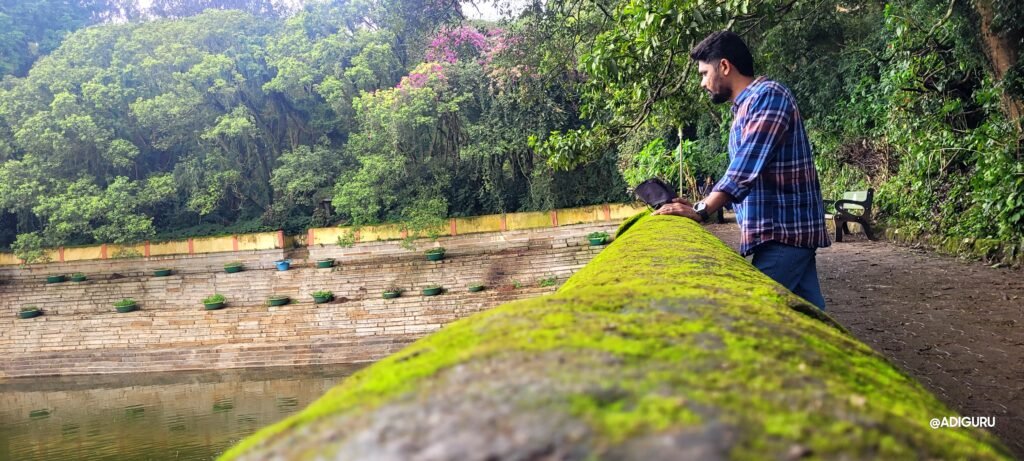
At the entrance lies an extraordinary stepped temple tank known as Ayanivayal Kulam.
Constructed according to ancient architectural principles, its geometric design is considered a masterpiece of traditional water engineering.
The tank underwent restoration in 2001.
In 2023, India’s Ministry of Jal Shakti included it among the country’s 75 Heritage Water Structures, recognizing its historical and architectural importance.
The Sacred Waters of Thula Sankramam
Every year during Thula Sankramam (October–November), devotees believe that the waters of the local Kaveri River spiritually unite with the temple tank.
Known as Kaveri Sankramam, this sacred event attracts large numbers of pilgrims seeking purification and blessings.
It is important to note that this refers to a local river bearing the name Kaveri, distinct from the famous Cauvery flowing through Tamil Nadu.
The Ramayana Connection
Perhaps the greatest mystery surrounding Peralassery is its connection with the Ramayana.
Temple tradition preserves two possibilities.
Some believe Lord Rama visited this place while searching for Sita after her abduction.
Others believe He came while returning to Ayodhya after defeating Ravana.
Whatever the timeline, local tradition agrees on one remarkable event.
When Rama arrived, the site was originally dedicated to Lord Ayyappa.
With Ayyappa’s permission, Rama chose this sacred location for the consecration of Lord Subramanya.
Why Murugan Performed Penance Here
The temple’s sacred legend narrates another fascinating episode.
After imprisoning Lord Brahma for failing to explain the true meaning of the Pranava Mantra (Om), Lord Murugan undertook penance here as an act of atonement.
He is believed to have meditated in the form of a serpent inside a dry well belonging to the ancient Ayyappa temple.
As Murugan meditated, countless serpents spread their hoods above Him, shielding Him from the scorching sun and rain.
When Lord Rama, accompanied by Lakshmana and Hanuman, arrived at Peralassery, they sensed this powerful divine presence.
Recognizing the sanctity of the place, Rama decided to establish Murugan there permanently.
The Legend of the Divine Bracelet
Rama instructed Hanuman to bring a suitable sacred stone for the deity.
Hanuman immediately departed.
However, before he could return, the auspicious moment for consecration had arrived.
Rather than delay the installation, Rama removed His own divine bracelet—known in local tradition as the Peruvazha—and through yogic power transformed it into the sacred image of Lord Subramanya.
The consecration was completed.
When Hanuman finally returned carrying a magnificent stone, he naturally attempted to replace the bracelet with the stone idol.
Despite his immense strength, he could not move it.
At that very moment, a serpent appeared and spread its hood over the sacred image.
Rama recognized this as Lord Subramanya revealing His acceptance of the consecration.
Thus, the deity remained exactly where Rama had installed Him.
According to tradition, the village eventually came to be known as Peruvazhacheri, which gradually evolved into Peralassery.
Hanuman’s Temple
Wondering what to do with the sacred stone he had brought, Hanuman established another shrine nearby.
Since the temple was associated with Markata (the Sanskrit word for monkey), the area later came to be known as Markadacheri, eventually evolving into the modern place name.
Even today, many devotees believe that a pilgrimage to Peralassery is complete only after visiting this nearby shrine as well.
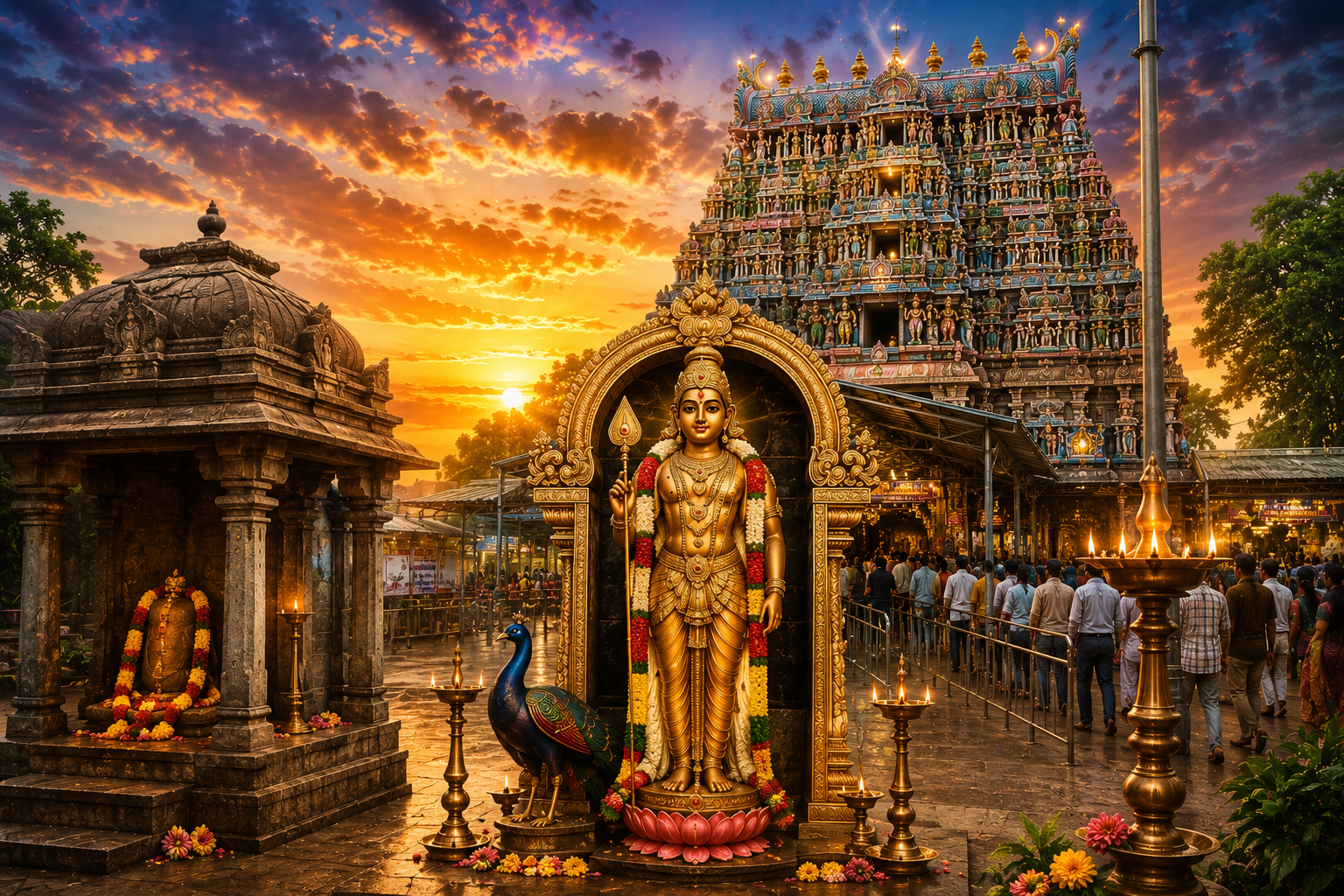
The Present-Day Deity
The original stone image installed after Rama’s era is believed to have stood nearly six feet tall.
During the invasions of Tipu Sultan, the idol is traditionally said to have suffered damage.
Today, devotees worship the deity adorned with a beautiful silver covering that preserves the sanctity of the original image.
Serpent Worship at the Temple
One of the temple’s unique features is its strong association with Naga worship.
Upon entering, visitors will notice:
- Sacred serpent shrines.
- An ancient Ashoka tree.
- Stone carvings of Pamban Swamigal’s Kumarasthavam.
Devotees often offer eggs to the serpent deities as part of traditional worship.
This practice is associated with prayers for relief from:
- Naga Dosha
- Marriage delays
- Childlessness
- Family obstacles
- Ancestral karmic issues
Many pilgrims also seek Lord Murugan’s blessings for prosperity, health, and spiritual growth.
Why Every Murugan Devotee Should Visit Peralassery
Peralassery is not simply another Murugan temple.
It is a place where multiple spiritual traditions converge.
Here, one encounters:
- The legacy of the Ramayana.
- The worship of Lord Murugan.
- Ancient serpent traditions.
- Kerala temple architecture.
- Sacred rivers.
- Heritage water structures.
- Living folklore preserved for centuries.
Every stone within the temple whispers an ancient story.
Every ritual reflects centuries of uninterrupted devotion.
Visitor Information
Temple: Peralassery Sri Subramanya Temple
Location: Peralassery, Kannur District, Kerala
Distance:
- Kannur Bus Stand – Approximately 15 km
- Kannur Railway Station – Approximately 16 km
- Kannur International Airport – Approximately 18 km
The temple is easily accessible by bus, taxi, and private vehicles throughout the year.