


Sri Sathru Samhara Moorthy Swamigal: The Court Saint of Trichy Who Destroyed Inner Enemies
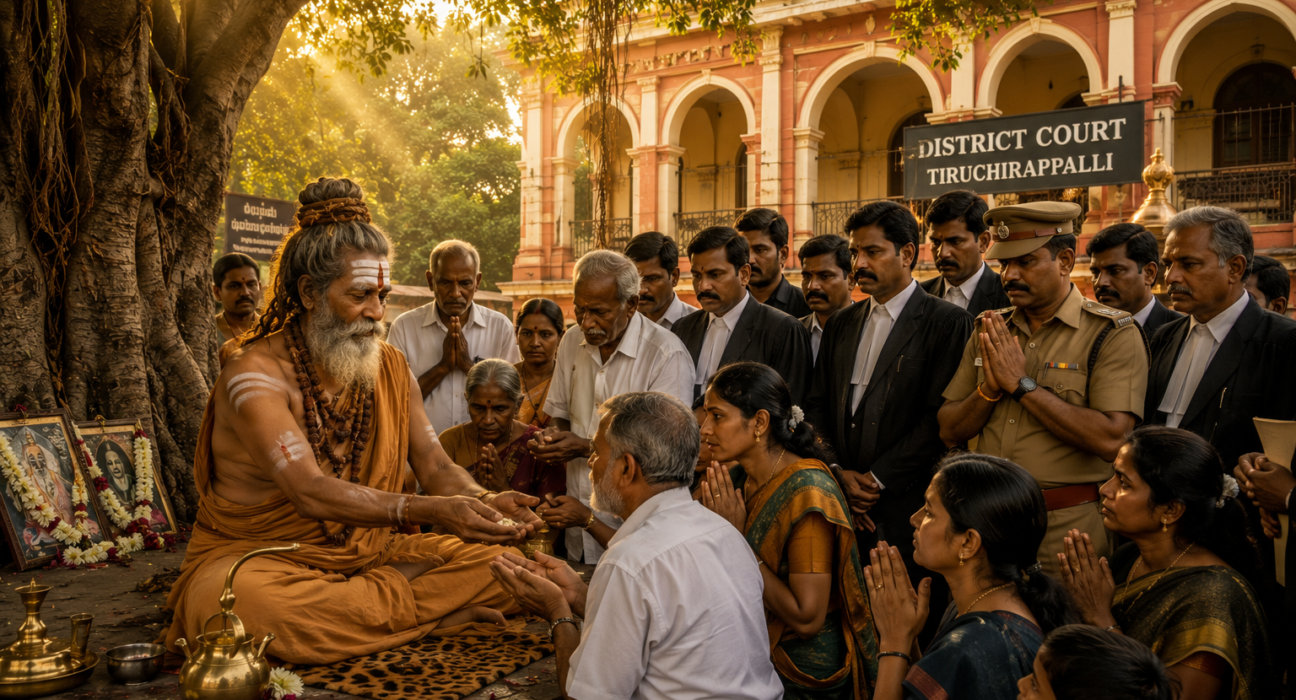
The Saint Who Meditated Beside a Courtroom: The Extraordinary Life of Sri Sathru Samhara Moorthy Swamigal
Most great saints choose remote mountains, dense forests, or silent cremation grounds for deep meditation. But one extraordinary Siddha chose a place filled with constant human activity—a busy courthouse. There, amidst the sounds of legal battles and daily life, he performed intense penance, manifested countless miracles, and transformed the lives of thousands.
He was Sri Sathru Samhara Moorthy Swamigal.
Known lovingly as “Court Swamigal” by the people of Tiruchirappalli (Trichy), he became renowned for removing not only the external enemies of his devotees but also the inner enemies that prevent spiritual growth. Even today, devotees visit his shrine seeking protection, justice, and divine grace.
But several fascinating questions remain…
- Why did a great Siddha choose a courthouse as his place of meditation?
- Why was he given the sacred title “Sathru Samhara Moorthy”, a name traditionally associated with Lord Murugan?
- What extraordinary miracles made him one of Tamil Nadu’s most revered saints?
Let us journey into the remarkable life of this hidden spiritual master.
What Does “Sathru Samharam” Really Mean?
Most people assume that Sathru Samharam simply means “destroying one’s enemies.”
However, the deeper spiritual meaning is far more profound.
According to Sanatana Dharma, our greatest enemies are not always the people around us.
They are the enemies that live within us.
These include:
- Ego
- Lust
- Anger
- Greed
- Jealousy
- Hatred
- Pride
- Attachment
These inner weaknesses prevent us from experiencing peace and spiritual liberation.
Therefore, true Sathru Samharam means conquering these internal enemies before attempting to overcome anything outside ourselves.
Lord Murugan: The Destroyer of Enmity
The title Sathru Samhara Moorthy originally belongs to Lord Murugan.
One of the greatest examples of Murugan’s compassion comes from His battle against the demon Surapadman.
After defeating him, Murugan did not destroy him completely.
Instead,
He transformed one half into His peacock mount…
and the other half into His rooster emblem.
Rather than annihilating His enemy, Murugan elevated him into an eternal symbol of divine service.
This teaches an extraordinary spiritual lesson:
True victory is not achieved by destroying others—it is achieved by transforming negativity into divine purpose.
This philosophy became the very foundation of Sri Sathru Samhara Moorthy Swamigal’s life and teachings.
From Kanagasabapathi to Sathru Samhara Moorthy
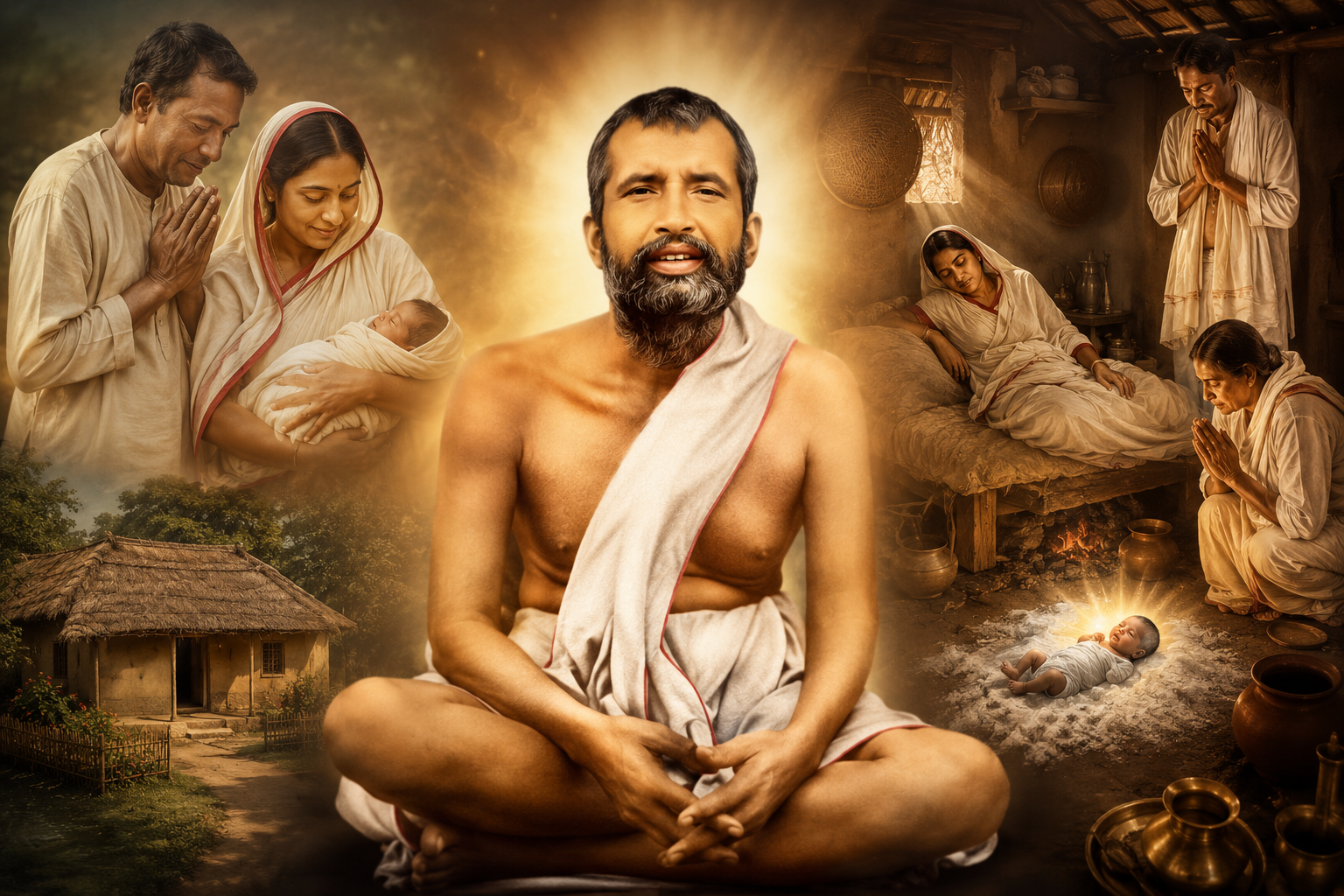
The saint was born as Kanagasabapathi in the village of Vadiripatti in present-day Tiruchirappalli district on 13 June 1880.
He was the third child of Muthupillai and Ponnammal and displayed remarkable devotion to God from an early age.
Life, however, was anything but easy.
His family experienced repeated hardships.
His father passed away while Kanagasabapathi was still young.
Financial struggles, personal losses, and family responsibilities followed one after another.
Despite these difficulties, his devotion to Lord Shiva and Lord Murugan only deepened.
A Householder Chosen by the Divine
Like many great saints of India, Kanagasabapathi did not begin life as a monk.
He married Sornathammal, became a family man, and was blessed with children.
Outwardly, he lived the life of an ordinary householder.
But inwardly…
the Divine had already begun preparing him for a much higher purpose.
The Turning Point
Everything changed after a transformative visit to Chidambaram Nataraja Temple.
The moment he had the darshan of Lord Nataraja, something profound awakened within him.
His entire outlook on life changed.
Without informing anyone, he quietly left home and wandered as a seeker of Truth.
A year later, relatives found him and brought him back.
He resumed family life for a time, but the pull of divine realization had become too powerful to resist.
The Birth of a Siddha
Years later, Kanagasabapathi disappeared once again.
This period remains one of the greatest mysteries of his life.
No historical records describe where he went…
Who initiated him…
Or what spiritual disciplines he practiced.
Only he knew what transpired during those years.
When he reappeared, he was no longer an ordinary devotee.
He had become a realized master.
Why This Story Matters
Sri Sathru Samhara Moorthy Swamigal’s journey reminds us that enlightenment does not belong only to those born in monasteries or forests.
He lived as a husband…
A father…
A teacher…
A man who experienced suffering like everyone else.
Yet he transformed every hardship into spiritual strength.
His life demonstrates that divine grace often arises not in comfort, but in adversity.
The Court Saint Who Changed Thousands of Lives: The Miracles of Sri Sathru Samhara Moorthy Swamigal
In the previous chapter, we explored the early life of Sri Sathru Samhara Moorthy Swamigal, the humble householder who transformed into one of Tamil Nadu’s most extraordinary Siddhas.
But the greatest mystery of his life was yet to unfold.
He did not choose a mountain.
He did not choose a forest.
He did not even choose a famous temple.
Instead…
He chose one of the busiest places imaginable—
The Trichy Court Complex.
Why would an enlightened saint choose a courthouse filled with arguments, disputes, and human suffering as his place of meditation?
The answer reveals the true purpose of his incarnation.
Why a Courthouse Became His Ashram
Every day, thousands of people entered the courthouse burdened with anxiety.
Some feared losing their homes.
Others worried about imprisonment.
Families fought over property.
Friends became enemies.
Truth and falsehood battled in the courtroom.
Swamigal silently observed all of it.
He understood something profound.
A courthouse was not merely a building where legal judgments were delivered.
It was a place where human karma unfolded before everyone’s eyes.
Every visitor carried invisible burdens far heavier than legal documents.
Fear…
Hatred…
Greed…
Revenge…
These were the real cases that needed resolution.
By meditating there, Swamigal became a silent beacon of peace amidst human conflict.
The Saint Who Never Asked for Anything
Unlike many spiritual teachers, Swamigal never established an organization.
He never accumulated wealth.
He never demanded offerings.
He owned almost nothing.
He would quietly sit within the court premises, absorbed in divine awareness.
Those who approached him experienced an indescribable sense of calm.
Many devotees later recalled that merely sitting near him dissolved the anxiety they had carried for years.
No elaborate rituals.
No lengthy sermons.
Just silence…
And grace.
The Miracle of Justice
As word of his spiritual power spread, people facing difficult court cases began seeking his blessings before entering the courtroom.
Some came after years of unsuccessful legal battles.
Others had lost all hope.
Swamigal rarely spoke about their cases.
Instead, he would simply bless them with sacred ash or offer a few gentle words.
Many devotees believed that impossible cases suddenly turned in their favor after receiving his blessings.
Those who were innocent found unexpected evidence emerging.
Long-pending disputes reached peaceful settlements.
Even judges and lawyers gradually came to respect the mysterious saint who quietly lived among them.
To his devotees, this was not magic.
It was divine justice working through a realized soul.
He Saw Beyond Human Judgment
One remarkable aspect of Swamigal’s life was his refusal to judge people based on appearances.
To the world, a person standing before the court might be an accused criminal.
To Swamigal…
That same person was still a child of God.
He often reminded devotees that every soul carries both mistakes and possibilities.
Punishment alone cannot transform a human being.
Only compassion can.
This perspective reflected the teachings of Lord Murugan Himself—the destroyer not of people, but of ignorance.
Compassion Even Toward Those Who Hurt Him
Many saints are remembered for performing miracles.
Swamigal became unforgettable because of something even greater.
His limitless compassion.
On several occasions, people insulted him.
Some mocked his appearance.
Others dismissed him as an ordinary wandering ascetic.
Yet he never reacted with anger.
Instead, he blessed them.
Many later returned seeking forgiveness after experiencing unexpected changes in their lives.
Swamigal welcomed them with the same smile, never reminding them of their past actions.
For him, there were no enemies.
Only souls waiting to awaken.
The Power of Silence
Those who met Swamigal often noticed something extraordinary.
He could remain completely silent for hours.
Sometimes days.
Yet his silence communicated more than words ever could.
People who came with restless minds found themselves becoming peaceful without understanding why.
It was as though the noise within them gradually disappeared.
Great Siddhas have often taught that true wisdom is transmitted not through speech but through presence.
Sri Sathru Samhara Moorthy Swamigal embodied that timeless truth.
The Living Meaning of Sathru Samharam
Many devotees initially approached him seeking victory over external enemies.
But they soon discovered that Swamigal’s greatest miracle was something entirely different.
He transformed the devotee.
A man consumed by anger learned forgiveness.
A family torn apart by bitterness found reconciliation.
Someone trapped in fear discovered courage.
Someone overwhelmed by greed rediscovered contentment.
This was the real destruction of enemies.
Not the defeat of another person…
But the conquest of one’s own lower nature.
Lessons for the Modern World
Today’s world is filled with legal disputes, workplace conflicts, family disagreements, and emotional struggles.
We often believe that our problems exist because of other people.
Swamigal’s life teaches a different lesson.
The greatest courtroom is the human heart.
The greatest judge is our own conscience.
The greatest victory is mastery over ourselves.
When anger becomes compassion…
When hatred becomes forgiveness…
When fear becomes faith…
The real Sathru Samharam has already taken place.
A Legacy That Continues
Although Sri Sathru Samhara Moorthy Swamigal left his physical body many years ago, his presence continues to inspire countless devotees.
People still visit his samadhi seeking:
- Relief from legal problems
- Protection from injustice
- Inner peace
- Courage during difficult times
- Freedom from fear
- Spiritual guidance
For them, he remains not merely a saint of the past…
But a living source of divine grace.
The Eternal Legacy of Court Swamigal: Why Devotees Still Seek His Blessings Today
Every great saint leaves behind more than memories.
Some leave scriptures.
Some leave temples.
Some establish spiritual organizations.
But a rare few…
Leave behind a living presence.
Sri Sathru Samhara Moorthy Swamigal belongs to that rare lineage of Siddhas whose grace, devotees believe, continues to guide seekers long after His Mahasamadhi.
Even today, countless people visit His sacred shrine with unwavering faith.
Not merely to ask for miracles…
But to find courage, clarity, and inner peace.
The Final Years of the Saint
As the years passed, Swamigal remained exactly as he had always lived.
Simple.
Detached.
Compassionate.
He never claimed supernatural powers.
He never declared himself to be a saint.
He simply continued serving everyone who came before him.
Lawyers…
Judges…
Police officers…
Businessmen…
Farmers…
Students…
Rich and poor alike sat before him without distinction.
To Swamigal, everyone was equal.
He never saw social status.
He only saw the Divine present within every soul.
A Master Who Never Stopped Giving
People often asked him for solutions to worldly problems.
Some wanted success in court.
Some prayed for relief from illness.
Others sought financial stability or family harmony.
Yet Swamigal rarely encouraged dependence on miracles.
Instead, he gently reminded devotees that God’s grace becomes fully effective only when one’s own actions are rooted in righteousness.
His blessings were never an escape from responsibility.
They were a source of strength to fulfill it.
The Meaning of Justice
Perhaps no place symbolizes justice more than a courthouse.
Yet Swamigal silently demonstrated that human justice alone is never complete.
Courts can judge actions.
But only the Divine can transform hearts.
Throughout his life, he taught without speaking that forgiveness is greater than revenge…
Compassion is stronger than anger…
Truth is more powerful than deception…
These timeless values became the foundation of his spiritual legacy.
His Mahasamadhi
Like many realized Siddhas, Sri Sathru Samhara Moorthy Swamigal eventually entered Mahasamadhi—the conscious departure from the physical body.
For ordinary people, death marks an ending.
For a Siddha, it is simply the completion of one phase of service.
Devotees believe that a realized master never truly leaves.
His physical form disappears…
But his spiritual presence continues to bless those who approach with faith.
That is why his Samadhi remains a place of deep silence, devotion, and inner transformation.
Miracles That Continue Even Today
Thousands of devotees continue to share personal experiences after praying at Swamigal’s Samadhi.
Many describe unexpected relief from prolonged legal disputes.
Others speak of emotional healing after years of anxiety.
Some experience renewed confidence during difficult periods of life.
These experiences are deeply meaningful to those who report them. As with many accounts of saints, they are matters of personal faith rather than events that can be independently verified.
For devotees, however, they are living reminders that a true Guru’s compassion does not end with physical life.
Why Lawyers and Judges Still Visit
One of the most unique aspects of Court Swamigal’s legacy is the continued devotion of people connected with the legal profession.
Advocates.
Judges.
Police personnel.
Government officials.
Many visit his shrine before beginning important responsibilities.
Not because they expect favoritism.
But because they pray for something far greater.
The wisdom to uphold truth.
The courage to act with integrity.
The clarity to make just decisions.
In that sense, Swamigal continues to inspire not only individuals but also the ideals upon which justice itself depends.
The Greatest Enemy
People often remember Court Swamigal as the saint who removed enemies.
Yet he consistently pointed toward a deeper truth.
The most dangerous enemy is not standing outside us.
It lives within.
Fear.
Pride.
Jealousy.
Hatred.
Greed.
These invisible enemies destroy more lives than any external opponent.
The real purpose of spiritual life is not to defeat another person.
It is to conquer ourselves.
Only then can lasting peace arise.
Lessons for Our Time
Modern life moves faster than ever.
People face stress, uncertainty, competition, and constant pressure.
In such a world, the life of Sri Sathru Samhara Moorthy Swamigal offers timeless guidance:
- Remain calm even in conflict.
- Choose compassion over revenge.
- Let truth guide every decision.
- Serve without expecting recognition.
- Trust that sincere effort and righteous conduct have lasting value.
These teachings remain as relevant today as they were during his lifetime.
Visiting the Samadhi
For devotees, visiting Court Swamigal’s Samadhi is not merely a pilgrimage.
It is an opportunity for quiet reflection.
Many sit in silence.
Some meditate.
Others offer simple prayers before returning to their daily lives with renewed strength.
The atmosphere itself encourages inward contemplation rather than outward display.
It reminds visitors that true spirituality begins in silence.
Final Reflection
The life of Sri Sathru Samhara Moorthy Swamigal teaches us that holiness is not defined by where one lives.
It is defined by how one lives.
He transformed a courthouse into a place of compassion.
He transformed fear into faith.
He transformed conflict into an opportunity for inner awakening.
Most importantly, he showed that the greatest victory is not winning a legal battle…
It is winning the battle within ourselves.
That is why, decades after his Mahasamadhi, devotees continue to remember him not only as Court Swamigal, but as a compassionate Siddha who stood beside humanity in its moments of greatest struggle—silently guiding every sincere seeker toward truth, justice, and the Divine.