
Puri Jagannath Temple: The Mysteries of Neela Madhava, Nabakalebara, and the Sacred Rath Yatra
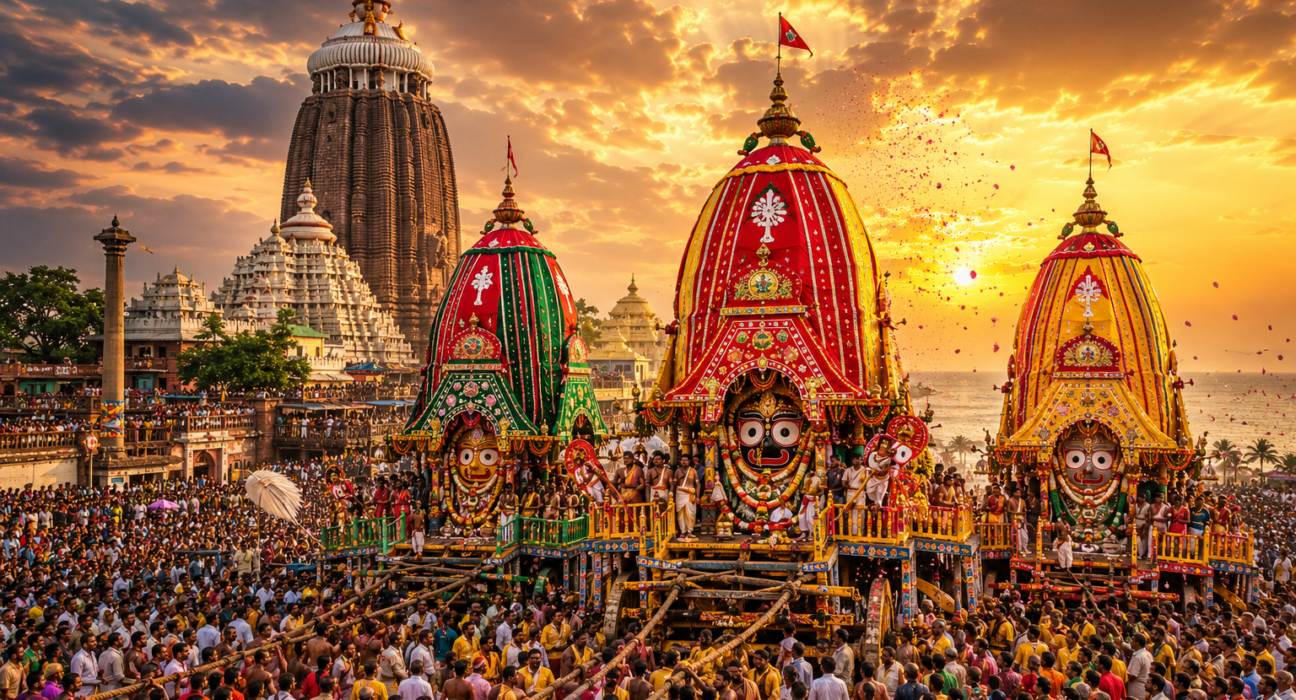
Puri Jagannath Temple: The Mystery of Krishna's Living Presence and the Sacred Rath Yatra
Why Do Millions Risk Everything Just to See Lord Jagannath?
Every year, an extraordinary event unfolds in the ancient city of Puri in Odisha.
Millions of devotees gather with a single purpose—to catch a glimpse of Lord Jagannath during the world-famous Rath Yatra.
For many, this is not merely a festival.
It is a once-in-a-lifetime opportunity to receive divine grace.
This year’s Rath Yatra once again witnessed an ocean of humanity. Nearly one million devotees participated in the grand chariot procession. Unfortunately, due to heavy crowding and extreme heat, hundreds of devotees required medical attention, several lost their lives, and the procession itself experienced delays.
Yet, despite these hardships, devotees continue to return year after year.
Why?
Because according to one of Hinduism’s most sacred traditions, Lord Krishna still resides in Puri.
Many devotees believe that merely beholding Lord Jagannath destroys accumulated karma and grants the blessings of liberation.
What makes this temple so extraordinary?
Why are its deities unlike any others in India?
And what is the mysterious power believed to dwell within them even today?
Let us uncover the fascinating story of the sacred Jagannath Temple.
The Earthly Vaikuntha
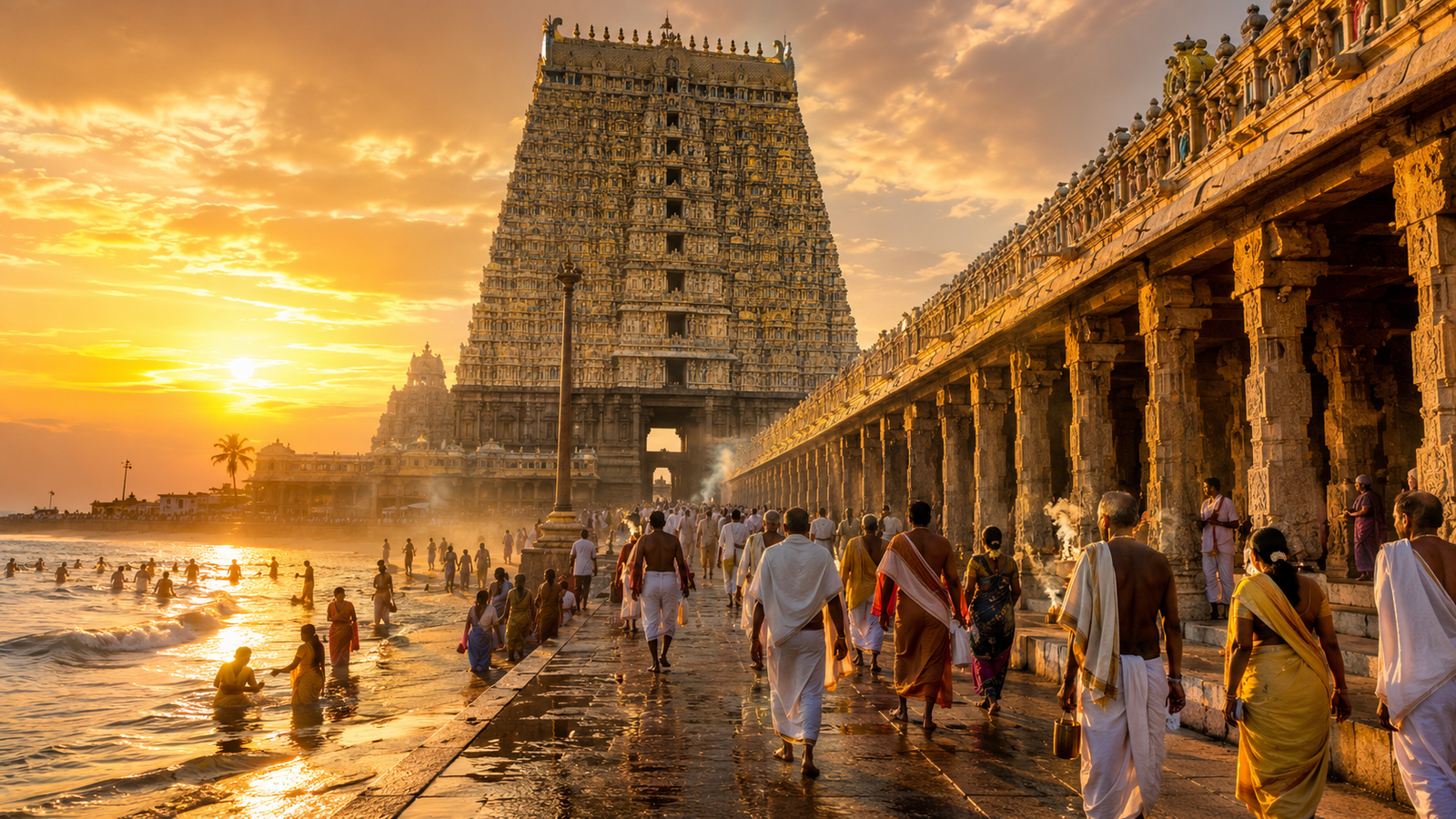
The Jagannath Temple of Puri is revered as Bhuloka Vaikuntha—the earthly abode of Lord Vishnu.
Dedicated to Lord Jagannath, along with Balabhadra and Subhadra, this temple is one of the Char Dham pilgrimage sites and has been a center of devotion for over a thousand years.
Unlike most Hindu temples, Puri preserves ancient traditions that have remained largely unchanged for centuries.
Its rituals, festivals, food offerings, and even the construction of its deities follow customs unlike anywhere else in the world.
The Story Begins After Krishna’s Departure
The origins of the temple are deeply connected with the final moments of Lord Krishna’s earthly incarnation.
According to the Mahabharata and later traditions, Krishna retired to a forest after the end of the Yadava dynasty.
As He rested beneath a tree, the hunter Jara mistook Krishna’s partially visible foot for a deer and released an arrow.
Realizing his mistake, Jara was overcome with grief.
Many traditional accounts narrate that after Krishna’s earthly departure, a sacred, indestructible divine essence associated with Him remained.
This mysterious relic would later become central to the worship of Jagannath.
The Secret Worship of Neela Madhava
Ancient traditions tell of a mysterious deity known as Neela Madhava, secretly worshipped by a tribal community deep within a forest.
Only members of the tribe knew the hidden location.
The deity was believed to radiate extraordinary spiritual power.
King Indradyumna, a devout worshipper of Lord Vishnu, heard rumors of this mysterious form of the Lord.
Determined to find Him, the king sent his trusted priest Vidyapati to investigate.
Vidyapati’s Extraordinary Discovery
Disguised as a traveler, Vidyapati entered the tribal settlement.
Despite his efforts, he could not discover the hidden shrine.
During his stay, he married the daughter of the tribal chief.
After much persuasion, her father finally agreed to take Vidyapati to the sacred cave where Neela Madhava was worshipped.
However, there was one condition.
His eyes would be blindfolded throughout the journey.
Knowing this beforehand, Vidyapati secretly dropped mustard seeds along the path.
When they later sprouted, they marked the route to the hidden shrine.
Inside a cave illuminated only by oil lamps, Vidyapati beheld the mysterious form of Neela Madhava and was overwhelmed with devotion.
The Vanishing of Neela Madhava
Upon returning, Vidyapati informed King Indradyumna.
The king immediately traveled to the forest with great anticipation.
Following the path marked by the sprouted mustard plants, they reached the sacred cave.
But when the king entered…
Neela Madhava had disappeared.
Heartbroken, Indradyumna prayed intensely to Lord Vishnu.
That night, the Lord appeared in his dream.
“Build a temple where your heart desires. I Myself shall reside there.”
Inspired by this divine command, the king constructed the magnificent temple that today stands in Puri.
The Three Sacred Logs from the Sea
Although the temple was complete, one question remained.
Where would the deity come from?
Once again, Lord Krishna appeared to the king in a dream.
He instructed him to visit the seashore at dawn.
There, three sacred wooden logs would float toward him.
These logs, Krishna said, were to become the divine images for the temple.
The next morning, exactly as foretold, three extraordinary logs drifted ashore.
The king summoned the finest sculptors in the kingdom.
Yet none could carve them.
Every attempt failed.
The Mysterious Carpenter
At that moment, an elderly carpenter appeared before the king.
He offered to carve the sacred images under one condition.
He must work alone inside the temple.
The doors were to remain closed for 21 days.
No one, under any circumstance, should disturb him.
The king agreed.
For nearly three weeks, the sounds of carving echoed from within the chamber.
Then…
On the twentieth day…
Silence.
Fearing something had happened to the old craftsman, the anxious king ordered the doors to be opened before the agreed time.
Inside stood three magnificent wooden deities.
But they were unfinished.
Their arms had not been fully carved.
The mysterious carpenter had vanished.
Only then did the king realize the truth.
The carpenter had been none other than Lord Vishwakarma, the divine architect, or according to some traditions, Lord Jagannath Himself in disguise.
Accepting this as the Lord’s divine will, the king installed the unfinished images exactly as they were.
These are the sacred forms worshipped today as:
- Lord Jagannath
- Lord Balabhadra
- Goddess Subhadra
Why the Deities Are Replaced
Unlike stone idols found in most temples, the deities of Jagannath are carved from sacred neem wood.
Over time, the wooden forms naturally deteriorate.
Rather than discarding them, an extraordinary ceremony known as Nabakalebara is performed during specific years determined by the Hindu lunar calendar.
New sacred neem trees are identified through elaborate scriptural guidelines.
Fresh images are carved following ancient traditions.
Then comes the temple’s most mysterious ritual.
The Secret of the Brahma Padartha
During Nabakalebara, a sacred essence known as the Brahma Padartha is ceremonially transferred from the old deities to the newly carved ones.
This ritual takes place at midnight under strict secrecy.
Only a handful of specially designated priests participate.
The exact nature of the Brahma Padartha remains one of Hinduism’s greatest mysteries.
After the transfer, the old deities are respectfully buried within the temple complex rather than immersed in water.
This unique tradition symbolizes that the divine essence continues while the physical form changes.
The Mahaprasad of Lord Jagannath
One of the temple’s most celebrated traditions is its Mahaprasad.
Every day, 56 varieties of food, known as Chappan Bhog, are lovingly prepared for Lord Jagannath.
The meals are cooked using:
- Traditional earthen pots
- Wood-fired ovens
- No onion or garlic
- Time-honored recipes preserved for centuries
Why exactly fifty-six offerings?
According to tradition, when Lord Krishna lifted Govardhana Hill to protect the people of Vrindavan from Indra’s storm, He went without His usual meals for seven days.
As Krishna is believed to have eaten eight times each day, the villagers later prepared:
7 days × 8 meals = 56 offerings
This sacred tradition continues at Puri to this day.
Many devotees believe Lord Jagannath still partakes of this offering before it is distributed as Mahaprasad.
The Grand Rath Yatra
Every year, during the Hindu month of Ashadha, the three deities leave the temple and travel in enormous wooden chariots to the Gundicha Temple, traditionally regarded as the home of their aunt.
For nine days, millions of devotees pull the massive chariots through the streets of Puri.
According to tradition, participating in or witnessing the Rath Yatra washes away accumulated sins, reduces karmic burdens, and brings devotees closer to liberation.
This profound spiritual belief explains why millions continue to undertake the pilgrimage despite immense crowds and physical hardship.
Mysteries That Continue to Fascinate
The Jagannath Temple has long been associated with many fascinating traditions and local beliefs.
Among the most frequently discussed are:
- The unique unfinished wooden deities unlike any other temple in India.
- The secretive Nabakalebara ceremony, during which the sacred essence is transferred to new images.
- The preparation of Mahaprasad in traditional earthen pots using centuries-old methods.
- The immense Rath Yatra, one of the largest religious gatherings in the world.
- Local traditions that speak of the temple’s sacred atmosphere, including beliefs about birds rarely perching atop the main temple spire.
While some of these accounts belong to living religious tradition rather than verifiable historical fact, they continue to deepen the devotion of millions of pilgrims.
Final Reflection
The Jagannath Temple of Puri is far more than an ancient monument.
It is a living tradition where mythology, devotion, ritual, and history merge into a unique spiritual experience.
From the mysterious disappearance of Neela Madhava…
To the unfinished wooden deities…
From the secret transfer of the Brahma Padartha…
To the world-famous Rath Yatra…
Every aspect of Puri reminds devotees that the Divine is not confined to stone or wood.
It lives in faith.
For millions of pilgrims, Lord Jagannath is not merely worshipped.
He is experienced as the ever-living Lord who continues to guide, nourish, and bless His devotees—just as He has for countless generations.