

Meenkulathi Bhagavathi Temple: The Sacred Temple Where Divine Fish Are Worshipped and Goddess Meenakshi Chose to Reside
Meenkulathi Bhagavathi Temple: The Sacred Temple Where Divine Fish Are Worshipped and Goddess Meenakshi Chose to Reside
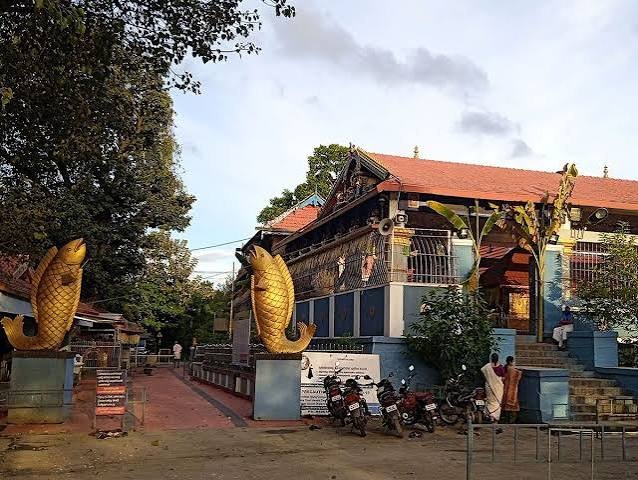
Hidden amidst the lush green landscapes of Kerala’s Palakkad district lies a temple unlike any other. Just about 60 kilometers from Coimbatore is a sacred pond where thousands of fish swim peacefully. Yet, despite their abundance, no one has ever attempted to catch them.
Why?
For centuries, local devotees have believed these are not ordinary fish but divine beings blessed by the Goddess herself. According to long-standing tradition, taking a dip in this sacred pond is believed to bring relief from chronic illnesses and restore physical well-being. As a result, these fish are revered as sacred manifestations of the Divine rather than mere aquatic creatures.
But the pond is only the beginning of the mystery.
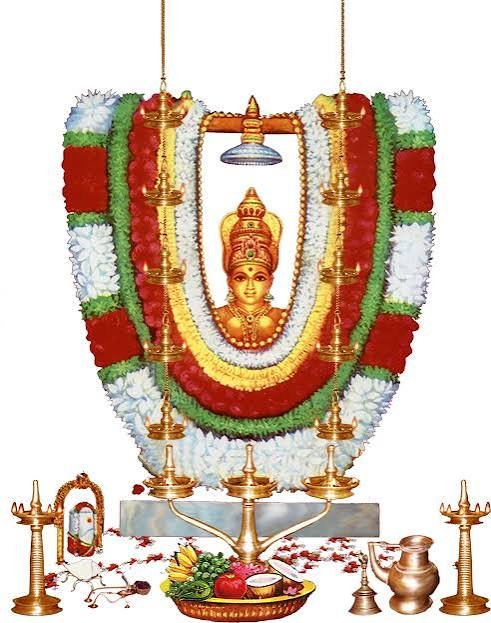
Standing beside these holy waters is the ancient Meenkulathi Bhagavathi Temple, one of Kerala’s most fascinating spiritual destinations. What makes this temple truly extraordinary is the belief that the presiding deity is none other than Goddess Meenakshi of Madurai, who is worshipped here as Meenkulathi Bhagavathi, a powerful manifestation of the Divine Mother.
This raises several intriguing questions.
How did the Goddess, who has been worshipped for centuries in the sacred city of Madurai, come to reside in a peaceful village in Kerala? Why is she known by the unusual name “Meenkulathi Bhagavathi”? And what miraculous events transformed this quiet village into one of the region’s most spiritually significant shrines?
The answers lie in a remarkable story that has been passed down through generations.
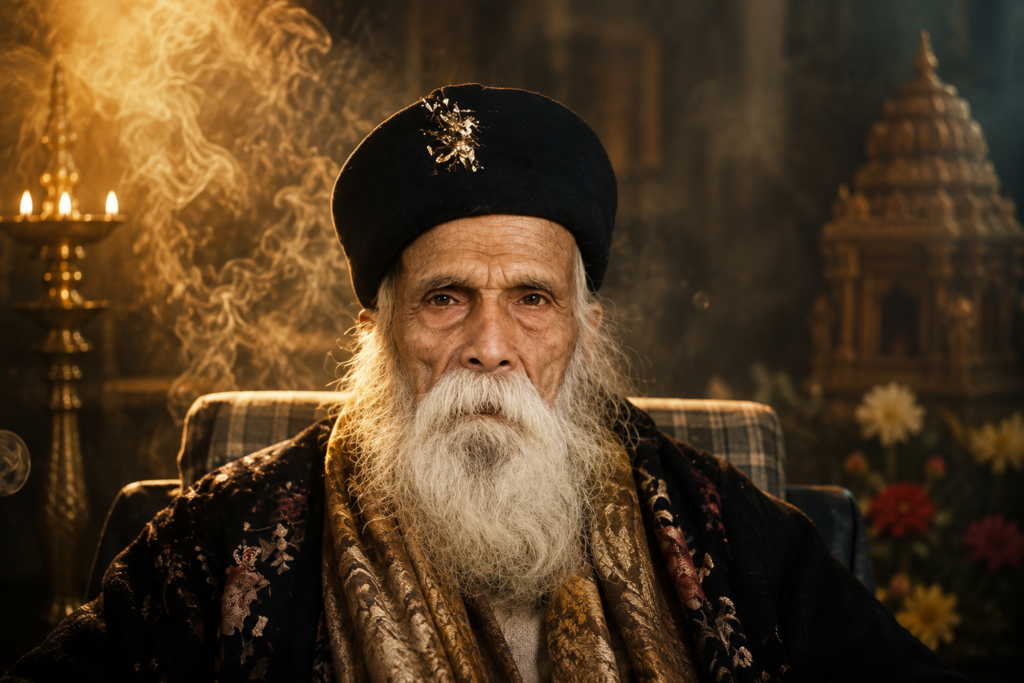
It is not merely the history of a temple. It is the story of a family forced to leave their homeland, an elderly devotee whose unwavering faith moved the Divine Mother, and a miraculous event that forever changed the spiritual landscape of Kerala. At its heart is a timeless message of compassion—a story of a Goddess who is believed to have told a devotee who could no longer travel to her shrine, “You need not come to me; I will come to you.”
The Sacred Pond Where No One Dares to Catch a Fish
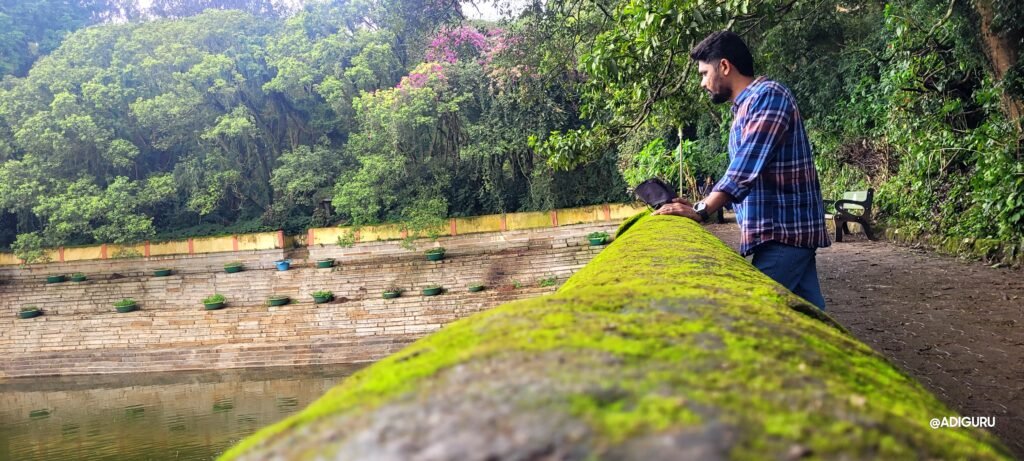
At first glance, the sacred pond at Meenkulathi Bhagavathi Temple appears no different from any other temple tank in South India. Its calm waters reflect the surrounding coconut trees, while thousands of fish swim freely beneath the surface. Yet, this tranquil pond has remained untouched for generations, preserving a tradition that continues to inspire awe among pilgrims and visitors alike.
Why Are the Fish Considered Sacred?
Unlike ordinary temple ponds, fishing is strictly avoided here—not because of legal restrictions, but because of unwavering faith.
The local community believes that the fish inhabiting these waters are divine fish, protected by the blessings of Goddess Meenkulathi Bhagavathi herself. They are not regarded as ordinary aquatic creatures but as sacred manifestations associated with the temple’s spiritual heritage. Out of deep reverence, devotees have never attempted to harm or catch them, allowing the fish to thrive peacefully for centuries.
A Pond Believed to Offer Healing
The sacred pond is also closely associated with healing and purification. According to local belief, bathing in its waters with sincere devotion can help devotees overcome long-standing illnesses and improve their physical well-being.
While these beliefs form an important part of the temple’s spiritual tradition and are cherished by countless devotees, they are matters of faith and should be understood within that religious context. For pilgrims, however, the pond represents far more than a body of water—it is a place where faith, hope, and divine grace come together.
More Than a Sacred Pond
As remarkable as the pond may be, it is not the greatest mystery surrounding this temple.
Beside its tranquil waters stands an ancient shrine whose origins have fascinated devotees for centuries. The temple is believed to have a profound connection with Goddess Meenakshi of Madurai, one of the most revered forms of the Divine Mother in Hindu tradition.
How did the Goddess of Madurai become the presiding deity of this peaceful village in Kerala? And why do devotees worship her here as Meenkulathi Bhagavathi instead of Meenakshi?
To uncover these answers, we must journey back several centuries and explore a remarkable story of migration, unwavering devotion, and what believers regard as divine intervention.
How Goddess Meenakshi Came to Reside in a Small Village in Kerala
One of the greatest mysteries surrounding Meenkulathi Bhagavathi Temple is its extraordinary connection to Goddess Meenakshi of Madurai. For centuries, devotees have believed that the Goddess worshipped in this peaceful Kerala village is none other than the divine Mother of the famous Madurai Meenakshi Temple, who chose this sacred place as her abode.
But how did this remarkable connection come into existence?
The answer lies in a story of hardship, unwavering devotion, and what devotees believe was a miraculous act of divine compassion.
A Journey That Began with Sorrow
Several centuries ago, a family living in Tamil Nadu was forced to leave their homeland due to difficult circumstances. Before beginning their journey to what is now Kerala, they made one final pilgrimage to the Madurai Meenakshi Temple to seek the blessings of their beloved Kuladeivam (family deity).
For them, this was more than a farewell visit. It was an emotional moment filled with uncertainty. They did not know if they would ever have the opportunity to return and worship their Goddess again.
A Small Stone That Carried Great Faith
After offering prayers, the eldest member of the family made a heartfelt decision.
He picked up a small stone from the temple premises as a sacred reminder of Goddess Meenakshi. To others, it appeared to be nothing more than an ordinary stone. But to him, it represented something far greater.
It became his Meenakshi.
It became his faith.
It became the spiritual foundation of his family’s future.
The family carefully carried the sacred stone with them throughout their long journey, never imagining that this simple act of devotion would one day become the foundation of an entirely new temple.
An Ordinary Journey That Was About to Become Extraordinary
When the family finally settled in the peaceful village of Pallasena in present-day Palakkad district, life gradually returned to normal. The sacred stone remained with them as a cherished symbol of their Kuladeivam, and they continued to worship it with the same devotion they had shown in Madurai.
Yet, unknown to the family, the stone they carried was destined to reveal a divine mystery.
What they believed to be a simple keepsake would soon become the center of an extraordinary event—one that would forever transform the spiritual history of the region.
According to temple tradition, the Goddess had not simply allowed the family to carry a sacred stone. She had chosen to accompany her devotees on their journey, preparing to reveal her presence in a way that no one could have imagined.
In the next chapter, we explore the astonishing miracle of the immovable sacred stone—the event that led to the birth of the Meenkulathi Bhagavathi Temple and established one of Kerala’s most revered shrines.
The Miracle of the Immovable Sacred Stone
Every ancient temple has a story.
Some begin with a king’s vision. Others with a saint’s penance. But the story of Meenkulathi Bhagavathi Temple begins with an ordinary family, a humble stone, and a miracle that no one could explain.
According to temple tradition, it was this extraordinary event that revealed the Divine Mother’s wish to remain in Pallasena forever.
The Day Everything Changed
One day, as was his daily custom, the elderly head of the family went to the sacred pond for his ritual bath. Before entering the water, he placed his palm-leaf umbrella and the sacred stone on the bank.
After completing his prayers, he returned to collect them.
He lifted the umbrella.
It did not move.
He tried to pick up the sacred stone.
It also refused to move.
Thinking he had made a mistake, he tried again with greater force. Still, neither the umbrella nor the stone could be lifted from the ground.
A Mystery That Left Everyone Speechless
Word of the strange incident spread quickly through the village.
Family members arrived first. Then curious villagers gathered around. Strong young men attempted to lift the umbrella and the stone using all their strength.
Everyone failed.
How could a lightweight palm-leaf umbrella and a small stone become impossible to move?
The event defied every logical explanation, leaving everyone present astonished and deeply puzzled.
A Mysterious Light Appears
As the crowd stood in disbelief, temple tradition recounts that an unusual radiance appeared over the very spot where the stone rested.
The atmosphere changed instantly.
Silence fell across the gathering.
The people watched in awe, wondering whether they were witnessing an ordinary natural occurrence or a divine sign.
For those present, it was a moment that would be remembered for generations.
The Divine Revelation
Seeking answers, the villagers performed Deva Prasannam, a traditional ritual conducted to seek divine guidance.
After the sacred proceedings, a remarkable revelation emerged.
According to temple tradition, the message declared that the sacred stone was not merely a stone at all—it represented the living presence of Goddess Meenakshi of Madurai herself. The Divine Mother had chosen that very place as her new abode and instructed the devotees to build a temple there.
For the gathered devotees, everything suddenly became clear.
The stone had not become immovable by accident.
It remained fixed because the Goddess had chosen to stay.
The Birth of Meenkulathi Bhagavathi Temple
Obeying the divine instruction, the villagers and the Mannadiyar family built a shrine on the very spot where the miracle occurred.
Over time, that humble shrine grew into the magnificent temple that stands today.
From that day onward, devotees believed that Madurai Meenakshi had established her presence in Pallasena, where she came to be lovingly worshipped as Meenkulathi Meenakshi and Meenkulathi Bhagavathi.
This remarkable story is more than the origin of a temple. It reflects a profound spiritual belief cherished by devotees—that sincere devotion can draw the Divine closer, and that the Goddess herself responds to the heartfelt prayers of those who seek her with unwavering faith.
However, the temple’s mysteries do not end with its miraculous origin.
Visitors soon discover another fascinating feature that sets Meenkulathi Bhagavathi Temple apart from almost every other Hindu temple in South India: the sanctum cannot be circumambulated.
Why is this sacred tradition followed?
The answer lies in the powerful guardians believed to surround the Divine Mother herself.
Why Devotees Cannot Circumambulate the Sanctum at Meenkulathi Bhagavathi Temple
In most Hindu temples, one of the most important acts of worship is Pradakshina—the sacred practice of walking clockwise around the sanctum (Garbhagriha). Devotees believe that circumambulating the deity is a symbolic expression of surrender, reverence, and spiritual devotion.
However, at Meenkulathi Bhagavathi Temple, visitors will notice something unusual.
The sanctum cannot be circumambulated.
This unique tradition often surprises first-time pilgrims, but according to temple tradition, there is a profound spiritual reason behind it.
The Temple Protected by Eight Divine Guardians
Approximately 400 years ago, when the Mannadiyar family expanded the temple, they consecrated eight powerful forms of Goddess Durga, known collectively as the Ashta Durgas, around the sanctum in all eight directions.
These eight guardian deities are:
- Brahmani
- Kaumari
- Maheshwari
- Indrani
- Vaishnavi
- Narasimhi
- Varahi
- Chamundi
In Hindu tradition, these divine manifestations represent different aspects of Shakti—the Supreme Divine Feminine—and are revered as powerful protectors against negative forces.
A Sanctum Guarded on All Eight Directions
Unlike most temples where the sanctum is surrounded by an open pathway, the presence of the Ashta Durgas around the Garbhagriha creates a sacred protective enclosure.
According to temple belief, these are not merely subsidiary shrines placed for decoration.
They are regarded as the eternal guardians appointed to protect the Divine Mother herself.
For this reason, devotees do not perform circumambulation around the sanctum, respecting the sacred arrangement established centuries ago.
A Spiritual Fortress
Many devotees describe the sanctum of Meenkulathi Bhagavathi Temple as more than just a shrine.
It is believed to be a spiritual fortress, protected by eight divine energies that constantly guard the presiding Goddess.
This belief has contributed to the temple’s reputation as one of the spiritually powerful Devi shrines in Kerala. Pilgrims often speak of experiencing a profound sense of peace, strength, and divine presence while standing before the sanctum, even without performing the customary Pradakshina.
An Architectural Feature with Spiritual Meaning
The absence of circumambulation is not considered a limitation but a reminder of the temple’s unique spiritual identity.
It symbolizes that the Divine Mother is eternally protected by eight manifestations of her own cosmic power. Every devotee who stands before the sanctum is invited to focus entirely on the Goddess herself, rather than on ritual movement around the shrine.
This rare tradition makes Meenkulathi Bhagavathi Temple distinct from most other temples in South India and continues to fascinate devotees, historians, and spiritual seekers alike.
Yet another mystery remains.
If the Goddess is worshipped here as Meenkulathi Bhagavathi, what exactly does the name “Meenkulathi” mean?
The answer reveals one of the most beautiful and symbolic aspects of this sacred temple’s history.
The Meaning Behind the Name "Meenkulathi Bhagavathi"
Every ancient temple carries a name rooted in history, faith, or symbolism. At Meenkulathi Bhagavathi Temple, the Goddess is worshipped under a name that has intrigued devotees for generations.
Why is she called “Meenkulathi Bhagavathi” instead of Meenakshi?
Over the centuries, several explanations have emerged through temple tradition. Each interpretation reflects a different aspect of the Goddess’s divine presence and offers a deeper understanding of the temple’s spiritual identity.
The First Interpretation: The Goddess of the Fish Pond
The most widely accepted explanation is closely connected to the temple’s sacred pond.
According to tradition, the miraculous event involving the immovable sacred stone took place beside a pond teeming with fish. After the divine revelation, the Goddess chose to remain at that very location, and a temple was built on its banks.
Because the Divine Mother came to reside beside this fish-filled pond, devotees began referring to her as “Meenkulathi Amman”—the Goddess who dwells by the sacred fish pond. Over time, this name became inseparable from the temple itself.
The Second Interpretation: The Goddess Who Lived as a Fish
Another fascinating legend is preserved in the oral traditions of the temple.
It is believed that the Goddess once appeared in the dream of a devotee and revealed a remarkable story. According to this tradition, she explained that, because of a divine curse, she had lived in the sacred pond in the form of a fish. After the curse was lifted, she chose to remain in that holy place to bless her devotees.
This beautiful legend is one of the reasons many devotees believe the Goddess came to be known as Meenkulathi Bhagavathi. Like many sacred temple traditions, this account is a matter of faith passed down through generations.
The Third and Most Symbolic Meaning
Among all the interpretations, the third holds a particularly special place in the hearts of devotees.
Fish never close their eyes.
Unlike many other creatures, they appear to remain constantly alert, moving through the water with unbroken awareness.
Devotees believe this characteristic beautifully symbolizes the Divine Mother herself.
Just as fish are always watchful, Meenkulathi Bhagavathi is believed to watch over her devotees every moment of every day, protecting them with boundless compassion and unwavering vigilance.
The Ever-Watchful Divine Mother
For countless devotees, Meenkulathi Bhagavathi is more than a powerful Goddess.
She is a compassionate mother who never turns away from those who seek her grace.
Whether they pray for health, prosperity, peace of mind, or protection, devotees believe the Goddess is constantly aware of their prayers and silently guides them through life’s challenges.
It is this enduring belief that has earned her the affectionate title “Meenkulathi Meenakshi”—the ever-watchful Divine Mother who, like the fish of her sacred pond, remains eternally awake in her care for her children.
A Name That Reflects Faith
The name Meenkulathi is therefore much more than a geographical reference.
It embodies the temple’s sacred pond, its miraculous origin, its enduring legends, and the profound faith of generations of devotees. Above all, it reminds pilgrims of a Divine Mother who is believed to remain ever-present, ever-watchful, and ever-ready to bless those who approach her with sincerity.
Beyond its fascinating legends, Meenkulathi Bhagavathi Temple continues to serve as a vibrant center of worship. Its sacred shrines, powerful rituals, and centuries-old traditions draw thousands of devotees seeking blessings, protection, and spiritual transformation.
In the next section, we will explore the temple’s unique shrines, special rituals, and the spiritual practices that continue to make this sacred place one of Kerala’s most revered Devi temples.
Temple Shrines, Sacred Rituals, and Spiritual Significance
Stepping into Meenkulathi Bhagavathi Temple is more than entering a place of worship—it is an immersion into centuries of living spiritual tradition. The serene atmosphere, the fragrance of incense, the glow of traditional oil lamps, and the rhythmic chanting of prayers create an environment where devotion and tranquility naturally come together.
Although the Divine Mother is the presiding deity, the temple is home to several other sacred shrines, each playing an important role in the spiritual life of devotees.
A Temple with Multiple Sacred Shrines
Within the temple complex, devotees can offer prayers at several important shrines, including those dedicated to:
- Lord Ganesha (Vinayagar), the remover of obstacles.
- The Naga Deities, worshipped for ancestral blessings, family well-being, and protection.
- Lord Bhairava, revered as the powerful guardian deity of the temple.
Each shrine follows its own traditional methods of worship, preserving rituals that have been practiced for generations.
The Powerful Bhairava Shrine
Among all the shrines within the temple complex, the Bhairava Shrine attracts a particularly large number of devotees.
According to temple tradition, Lord Bhairava is worshipped as a powerful protector who helps devotees overcome life’s obstacles, remove negative influences, and gain the courage to face difficult situations.
Many pilgrims visit this shrine seeking relief from persistent problems, opposition, and challenges that seem impossible to overcome through ordinary means.
The Special ‘Chandattam’ Ritual
One of the temple’s most significant observances is the special ritual known as Chandattam.
Devotees who pray for the removal of obstacles, protection from adversities, or relief from what they believe to be spiritual afflictions participate in this sacred worship with deep faith.
According to temple tradition, the ritual is performed on the first Tuesday of selected months, drawing devotees from different parts of Kerala and neighboring Tamil Nadu.
Sacred Vedic Chanting
The temple is also known for the regular recitation of sacred Vedic hymns, particularly:
- Bhagya Suktham, traditionally associated with prosperity and auspiciousness.
- Ekamathya Suktham, recited for harmony, unity, and collective well-being.
These chants are believed by devotees to fill the temple with positive spiritual vibrations, creating an atmosphere of peace and devotion.
A Temple of Spiritual Remedies
For many devotees, Meenkulathi Bhagavathi Temple is more than a place to offer prayers.
It is regarded as a sacred center where people seek divine guidance during life’s most difficult moments.
Pilgrims visit the temple praying for:
- Family harmony and unity.
- Prosperity and financial stability.
- Relief from long-standing hardships.
- Inner peace and emotional strength.
- Good fortune and success in life.
Because of these long-standing beliefs, the temple is widely regarded as a place where worship is combined with spiritual remedies intended to strengthen faith and bring emotional comfort.
A Place of Hope for Thousands
Every year, thousands of devotees visit Meenkulathi Bhagavathi Temple carrying different hopes and prayers.
Some seek blessings for prosperity.
Others pray for relief from long-term personal or family difficulties.
Many come after facing prolonged health challenges, while others arrive searching for peace during emotionally difficult periods of life.
The temple also attracts devotees who are uncertain about their Kuladeivam (family deity). Many of them offer their prayers here, believing that the compassionate Divine Mother accepts everyone who approaches her with sincere devotion.
The Divine Mother Who Welcomes Everyone
Perhaps the most cherished aspect of Meenkulathi Bhagavathi is how devotees perceive her—not merely as a powerful deity, but as a loving mother.
Local tradition holds that, just as a mother protects her children without discrimination, the Goddess lovingly embraces all who surrender at her feet with faith and humility.
This deep emotional connection has made Meenkulathi Bhagavathi Temple a place where people often leave not only with prayers offered, but with renewed hope, inner peace, and the comforting feeling that they have been heard by the Divine Mother.
After exploring its sacred history, miraculous legends, and vibrant traditions, one question naturally remains:
Why do thousands of devotees continue to return to this temple generation after generation?
The answer lies in the enduring faith that Meenkulathi Bhagavathi continues to guide, protect, and bless those who seek her with a sincere heart. In the final section, we will conclude our spiritual journey and provide practical information for pilgrims planning a visit.
Conclusion: A Temple Where Faith, History, and Divine Grace Come Together
Some temples are admired for their magnificent architecture.
Others are celebrated for their historical importance.
But Meenkulathi Bhagavathi Temple is remembered for something even more profound—a timeless story of unwavering faith and a Divine Mother who, according to temple tradition, chose to remain with her devotees rather than be separated from them.
The sacred pond filled with protected fish, the miraculous story of the immovable stone, the unique sanctum guarded by the Ashta Durgas, and the enduring belief that Goddess Meenakshi herself resides here as Meenkulathi Bhagavathi have transformed this temple into one of Kerala’s most revered spiritual destinations.
For countless devotees, this is far more than a place to perform rituals.
It is a sanctuary where they seek hope during difficult times, strength during personal struggles, healing during illness, and peace amid life’s uncertainties. Whether they arrive burdened by financial worries, family challenges, emotional distress, or simply a longing for spiritual guidance, many leave with renewed faith and a sense of inner calm.
According to local belief, the Divine Mother who once assured a devotee, “You need not come to Me; I will come to you,” continues to extend the same compassion to all who seek her with sincerity. While this belief is rooted in temple tradition and faith, it remains one of the most cherished aspects of Meenkulathi Bhagavathi’s spiritual legacy.
Temple Timings
The temple is generally open during the following hours:
Sunday, Tuesday, and Friday
- Morning: 5:30 AM – 12:30 PM
- Evening: 5:30 PM – 8:00 PM
All Other Days
- Morning: 5:30 AM – 10:30 AM
- Evening: 5:30 PM – 8:00 PM
Temple Location
Meenkulathi Bhagavathi Temple (Palayakav Bhagavathi Temple)
Pallasena P.O.,
Palakkad District,
Kerala – 678 505.
How to Reach the Temple
The temple is located approximately 22–23 kilometers from Palakkad and can be reached via Kodayanur, the Pollachi–Kollengode route, or Ettimadai. It is also about 60 kilometers from Coimbatore, making it an ideal pilgrimage destination for devotees from both Kerala and Tamil Nadu.
Final Thoughts
Whether you visit Meenkulathi Bhagavathi Temple to explore its remarkable history, admire its unique traditions, or offer heartfelt prayers, the experience leaves a lasting impression.
Its legends continue to inspire faith.
Its sacred traditions continue to be preserved.
And its Divine Mother continues to be worshipped with the same devotion that has drawn pilgrims here for centuries.
If you are planning a spiritual journey through Kerala, Meenkulathi Bhagavathi Temple is undoubtedly a destination worth experiencing—not only for its fascinating history but also for the profound sense of peace and devotion that countless pilgrims associate with this sacred shrine.