

Hidden Shrines of Arunachaleswarar Temple: Rare Darshans That Complete Your Tiruvannamalai Pilgrimage
Hidden Shrines of Arunachaleswarar Temple: Rare Darshans That Complete Your Tiruvannamalai Pilgrimage
Every year, millions of devotees travel to Tiruvannamalai, one of India’s most sacred Shaivite pilgrimage destinations. They perform the revered Girivalam (circumambulation of Arunachala Hill), worship the Ashta Lingams, seek the blessings of Lord Arunachaleswarar and Goddess Unnamulai Amman, and then return home believing their pilgrimage is complete.
But according to many spiritual masters and long-time devotees, there is much more to Tiruvannamalai than its famous shrines.
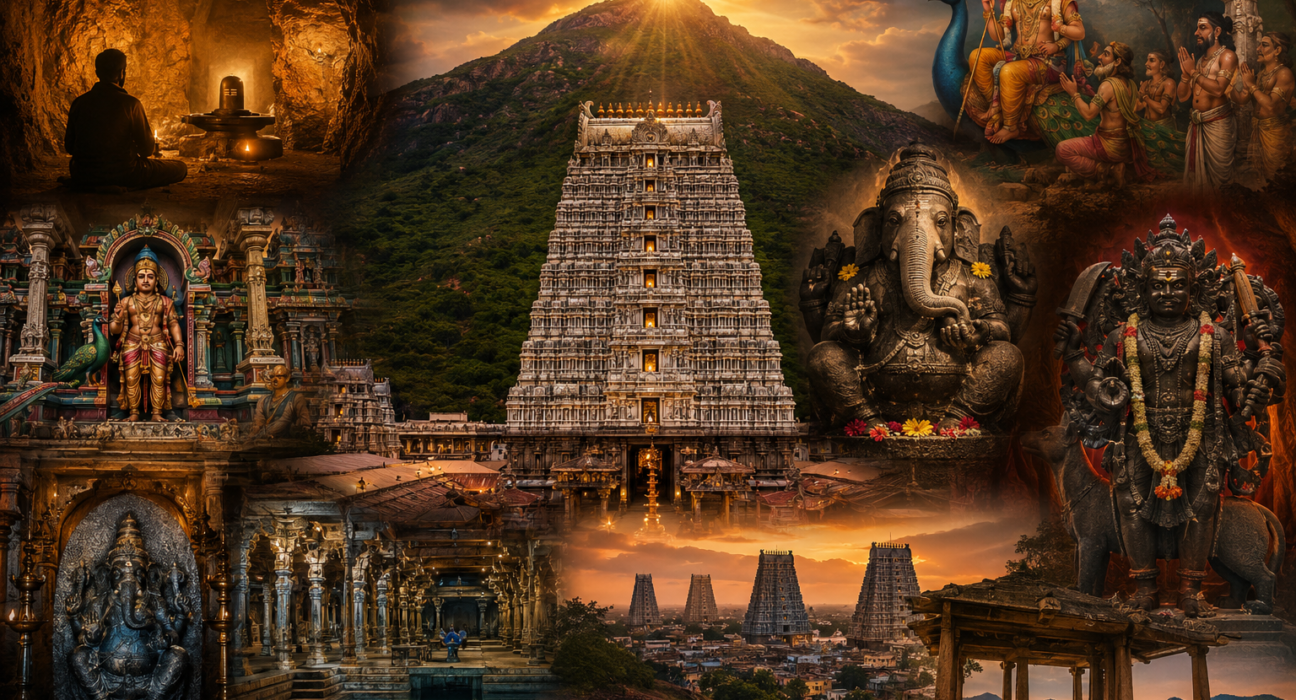
Hidden within the vast temple complex are several rare and powerful sanctums that most pilgrims unknowingly walk past. These lesser-known shrines are deeply connected with saints, siddhas, miraculous events, and profound spiritual experiences. Many believe that visiting these sacred places completes the true spiritual journey of Arunachala.
Did you know that the underground shrine where Ramana Maharshi entered a state of deep samadhi still exists inside the temple?
Who is the mysterious Vinayagar who is believed to have appeared in a king’s dream and transformed his life?
Which shrine marks the miraculous appearance of Lord Murugan from a temple pillar in response to the prayers of the great saint Arunagirinathar?
Where can you stand inside the temple and witness all nine temple towers (Gopurams) in a single breathtaking view?
And why do countless yogis quietly meditate inside a small mandapam that many visitors never even notice?
These are not merely forgotten corners of an ancient temple.
Each of these sacred places carries centuries of history, legends, and spiritual significance that continue to inspire seekers from around the world.
Tiruvannamalai: More Than a Temple
For devotees, Tiruvannamalai is far more than a magnificent temple or a sacred hill.
It is regarded as a living spiritual force.
For thousands of years, saints, siddhas, yogis, sages, and enlightened masters have journeyed to Arunachala in search of divine realization. Great spiritual figures such as Ramana Maharshi, Seshadri Swamigal, and Arunagirinathar were drawn not only to Lord Arunachaleswarar but also to the hidden spiritual centers scattered throughout the temple complex.
These sacred spaces continue to preserve the powerful vibrations of devotion, meditation, and divine grace.
In this article, we will explore the hidden shrines of Arunachaleswarar Temple, uncovering their fascinating legends, spiritual importance, and the rare darshans that many pilgrims unknowingly miss.
By the end of this journey, you may discover an entirely new dimension of Tiruvannamalai—one that transforms an ordinary temple visit into a deeply meaningful spiritual pilgrimage.
Sarva Siddhi Vinayagar: The Shrine That Blesses Every New Beginning
Among the many sacred shrines hidden inside the Arunachaleswarar Temple, one quiet sanctuary is often overlooked by thousands of devotees every day.
Located on the northwestern bank of the sacred Sivaganga Theertham, this small yet spiritually significant shrine is dedicated to Sri Sarva Siddhi Vinayagar.
Many pilgrims walk past this shrine without realizing its importance. Yet, its very name reveals its spiritual significance.
“Sarva Siddhi” literally means “the One who grants every success and accomplishment.”
For centuries, devotees have believed that Lord Ganesha here removes obstacles, blesses new beginnings, and grants success in righteous endeavors.
The Lord Who Removes Every Obstacle
In Hindu tradition, Lord Ganesha is always worshipped before beginning any important undertaking.
Whether it is:
- Starting a new business
- Beginning a career
- Purchasing a home
- Getting married
- Preparing for examinations
- Undertaking a pilgrimage
- Seeking spiritual progress
Devotees first surrender their prayers to Lord Vinayagar, believing that He clears the path ahead.
At the Sarva Siddhi Vinayagar Shrine, this belief becomes even more profound.
Unlike elaborate rituals that require complex ceremonies, devotees believe that sincere faith and heartfelt prayers offered before this deity are enough to invoke His blessings.
Many visit this shrine praying for:
- Success in new ventures
- Removal of long-standing obstacles
- Victory in legal or financial matters
- Good health and family harmony
- Spiritual progress
- Fulfillment of cherished wishes
For countless devotees, Sarva Siddhi Vinayagar represents hope at the beginning of every journey.
A Peaceful Corner Within a Vast Temple
Despite being situated inside one of India’s largest temple complexes, the atmosphere around this shrine feels remarkably serene.
The gentle breeze from the nearby Sivaganga Theertham, the sound of temple bells echoing in the distance, and the steady flow of devotees create a peaceful environment that encourages quiet prayer and reflection.
Many pilgrims spend a few moments here before proceeding deeper into the temple, believing that receiving Vinayagar’s blessings first makes the rest of their darshan spiritually complete.
It is one of those sacred places where silence itself becomes a form of worship.
A Shrine That Many Pilgrims Miss
Ironically, one of the temple’s most spiritually significant Vinayagar shrines is also one of its least noticed.
Visitors often head directly toward the main sanctum of Lord Arunachaleswarar or Goddess Unnamulai Amman, unaware that this small shrine has been a place of prayer for generations of devotees seeking success, protection, and divine guidance.
Those who know its significance rarely leave the temple without offering a prayer here first.
A Miracle Waiting Just a Few Steps Away
But this is only the beginning of our journey through Tiruvannamalai’s hidden sanctums.
Just a short distance from Sarva Siddhi Vinayagar lies one of the most extraordinary shrines in the entire temple—a place forever connected with the great saint Arunagirinathar and a miracle that continues to inspire devotees even today.
According to temple tradition, this is where Lord Murugan manifested directly from a stone pillar in response to the saint’s unwavering devotion.
Today, that sacred place is worshipped as the Kambathu Ilayanar Shrine, and its remarkable story is one of the greatest miracles associated with Arunachaleswarar Temple.
Kambathu Ilayanar: The Sacred Shrine Where Lord Murugan Appeared from a Pillar
Among the countless legends associated with Arunachaleswarar Temple, few are as extraordinary as the miracle of Kambathu Ilayanar.
Unlike most Murugan temples, where the deity is believed to have appeared on a hill, in a forest, or through divine visions, this shrine is unique because, according to temple tradition, Lord Murugan manifested directly from a stone pillar inside the temple itself.
Even today, thousands of devotees stand before this sanctum with awe, remembering the miraculous event that unfolded centuries ago.
The Saint Whose Devotion Changed History
To understand the significance of Kambathu Ilayanar, we must travel back to the 15th century and the life of one of Tamil Nadu’s greatest saint-poets—Arunagirinathar.
After receiving Lord Murugan’s divine grace, Arunagirinathar dedicated his entire life to singing the glory of the Lord through the immortal hymns of Tiruppugazh.
His devotional songs, filled with profound spiritual wisdom and poetic brilliance, earned him immense respect across the Tamil kingdom.
But admiration often attracts jealousy.
As Arunagirinathar’s fame continued to grow, not everyone welcomed his rising influence.
A Challenge Before the King’s Court
According to temple tradition, a court poet named Sambandhandan became deeply envious of Arunagirinathar’s growing reputation.
Determined to humiliate him, he approached the king and questioned the authenticity of the saint’s spiritual experiences.
“If Arunagirinathar truly enjoys the grace of Lord Murugan,” he declared, “let him summon the Lord here before everyone.”
It was an impossible challenge.
If Arunagirinathar failed, his reputation would be destroyed forever.
If he succeeded, the entire kingdom would witness a miracle unlike anything seen before.
The king accepted the challenge.
All eyes turned toward the saint.
A Prayer Offered with Complete Surrender
Arunagirinathar did not argue.
He did not attempt to defend himself.
Instead, he closed his eyes and prayed to Lord Murugan with complete faith and surrender.
There was no pride.
No desire to prove himself.
Only absolute devotion.
According to temple tradition, his heartfelt prayer echoed through the sacred halls of Arunachaleswarar Temple.
Then, something extraordinary happened.
The Miracle of the Pillar
In an instant, the impossible became reality.
Lord Murugan appeared, seated majestically upon His peacock, radiating divine brilliance.
But what astonished everyone was where He appeared.
Not from the sky.
Not from a sanctum.
Not from a celestial vision.
According to the temple legend, He emerged directly from a stone pillar.
A simple pillar became the gateway for divine manifestation.
The king, the scholars, and everyone present were left speechless.
The challenge had been answered—not by human effort, but by divine grace.
This miraculous event transformed that pillar into one of the most sacred places inside Arunachaleswarar Temple.
The Shrine That Preserves the Miracle
Today, that sacred location is worshipped as the Kambathu Ilayanar Shrine.
The name itself reflects the miracle:
- Kambam means pillar.
- Ilayanar is a revered Tamil name for Lord Murugan.
Thus, Kambathu Ilayanar means “Lord Murugan Who Appeared from the Pillar.”
For devotees, this is far more than a historical legend.
It is a powerful reminder that sincere devotion can invoke divine grace in the most unexpected ways.
Many pilgrims pray here seeking courage, wisdom, protection, and the strength to overcome life’s greatest challenges.
A Living Symbol of Unwavering Faith
Standing before Kambathu Ilayanar, one cannot help but reflect on the deeper meaning of this miracle.
The pillar symbolizes what appears ordinary.
Murugan’s manifestation reminds devotees that the Divine can reveal itself through even the simplest of places when approached with unwavering faith.
It is a lesson that continues to inspire spiritual seekers centuries after the event is believed to have taken place.
For countless devotees, this shrine stands as a timeless testament to the power of complete surrender and unwavering devotion.
An Even Greater Turning Point Awaits
Yet, this was not the only miraculous moment in Arunagirinathar’s life.
Soon after, he would face the darkest moment of his existence—a moment when despair brought him to the edge of death.
High atop one of Arunachaleswarar Temple’s towering Rajagopurams, his life was about to change forever.
The next hidden shrine, Gopurathu Ilayanar, commemorates that extraordinary moment when Lord Murugan’s divine grace not only saved a life but also gave Tamil literature one of its greatest spiritual treasures—the immortal Tiruppugazh.
Gopurathu Ilayanar: The Shrine That Marks Arunagirinathar's Divine Transformation
Among the many sacred shrines inside Arunachaleswarar Temple, Gopurathu Ilayanar occupies a unique place in the hearts of Murugan devotees.
This shrine is not merely associated with a miracle.
It commemorates the very moment when divine grace transformed despair into enlightenment, giving Tamil spirituality one of its greatest treasures—the immortal hymns of Tiruppugazh.
A Tower Witnessed a Life-Changing Moment
Today, thousands of pilgrims walk beneath the majestic Vallala Maharaja Gopuram without realizing the profound spiritual event that is believed to have unfolded high above them centuries ago.
According to temple tradition, this towering gateway once became the setting for one of the most dramatic moments in the life of Saint Arunagirinathar.
Different historical traditions describe this incident in different ways.
Some accounts state that Arunagirinathar, burdened by the consequences of his earlier worldly life, was overcome with deep despair.
Others suggest that he had climbed the tower seeking solitude for intense spiritual contemplation.
Whatever the historical details may be, one truth remains central to every version of the story.
That moment changed his life forever.
Standing at the Edge of Despair
Temple tradition recounts that Arunagirinathar stood atop the temple tower, overwhelmed by the suffering and emptiness he had experienced.
Feeling that life had lost its purpose, he decided to leap from the towering gopuram.
It was a moment when all hope seemed lost.
But according to the temple’s sacred history, divine compassion intervened before tragedy could unfold.
Lord Murugan Appears Once Again
Just as Arunagirinathar was about to fall, Lord Murugan is believed to have appeared before him in all His divine splendor.
Mounted upon His majestic peacock, the Lord extended His grace to the saint.
This was not merely a miraculous rescue.
It was a complete spiritual rebirth.
Murugan did not simply save Arunagirinathar’s physical life—He awakened the saint’s higher purpose.
From that moment onward, Arunagirinathar dedicated every breath of his life to singing the glory of Lord Murugan.
The divine inspiration he received eventually blossomed into Tiruppugazh, one of the greatest collections of devotional hymns in Tamil literature.
The Birth of an Immortal Legacy
The miracle associated with Gopurathu Ilayanar changed far more than the destiny of one individual.
It enriched Tamil spiritual heritage forever.
Arunagirinathar traveled across countless Murugan temples, composing thousands of soul-stirring hymns that continue to be sung by devotees even today.
His verses are celebrated not only for their poetic brilliance but also for their profound spiritual depth, rhythmic complexity, and unwavering devotion to Lord Murugan.
For generations, Tiruppugazh has guided seekers on the path of bhakti, reminding them that sincere surrender can transform even the darkest moments into divine opportunities.
The Shrine of Hope
The shrine known today as Gopurathu Ilayanar stands as a sacred reminder of that extraordinary transformation.
Devotees visit this sanctum believing that just as Murugan lifted Arunagirinathar out of despair, He continues to guide those who face seemingly impossible situations in life.
Many offer prayers here seeking:
- Relief from emotional suffering.
- Courage during difficult times.
- Freedom from fear and hopelessness.
- Spiritual guidance and inner strength.
- The grace to discover their life’s true purpose.
For many pilgrims, this shrine symbolizes the comforting truth that no life is beyond redemption when touched by divine grace.
A Lesson That Transcends Time
The story of Gopurathu Ilayanar carries a timeless spiritual message.
A single moment of faith can alter the course of an entire lifetime.
The miracle reminds devotees that when every worldly solution appears to have vanished, divine grace may still open a path that the human mind cannot foresee.
This profound message continues to inspire countless devotees who stand before the shrine with folded hands, praying not only for solutions to their problems but also for the wisdom to trust in the Divine.
A Journey Into Silence Awaits
If Gopurathu Ilayanar represents the miracle of divine intervention, the next hidden shrine reveals the power of absolute silence.
Deep beneath the temple, hidden below the surface of the earth, lies a sacred underground sanctum where one of India’s greatest sages entered an extraordinary state of meditation.
Known as the Pathala Lingam, this mysterious shrine is forever associated with Bhagavan Ramana Maharshi, whose life of silence and self-realization transformed modern spirituality.
In the next section, we will descend into this remarkable underground sanctuary and explore why it remains one of the most spiritually powerful places within Arunachaleswarar Temple.
Pathala Lingam: The Underground Shrine Where Ramana Maharshi Entered Deep Samadhi
Hidden beneath the magnificent halls of Arunachaleswarar Temple lies one of the most spiritually powerful places in Tiruvannamalai.
It is not marked by towering gopurams or elaborate sculptures.
Instead, it is a small underground shrine wrapped in silence, darkness, and an atmosphere unlike anywhere else within the temple.
This sacred place is known as the Pathala Lingam.
For countless devotees, it is more than just another shrine.
It is a living center of meditation, inner stillness, and spiritual awakening.
Descending Into Silence
After passing through the Thousand Pillared Hall (Aayiram Kaal Mandapam), a narrow staircase leads visitors downward into the earth.
With every step, the surroundings begin to change.
The bright temple corridors slowly disappear behind you.
The sounds of bells, chanting, and devotees become faint.
The air grows cooler.
The light becomes dim.
Almost instinctively, your mind begins to quiet itself.
Many visitors describe this experience as though the temple is gently inviting them to leave the outer world behind and enter a space of profound inner silence.
The Sacred Place Where Ramana Maharshi Lost Awareness of the World
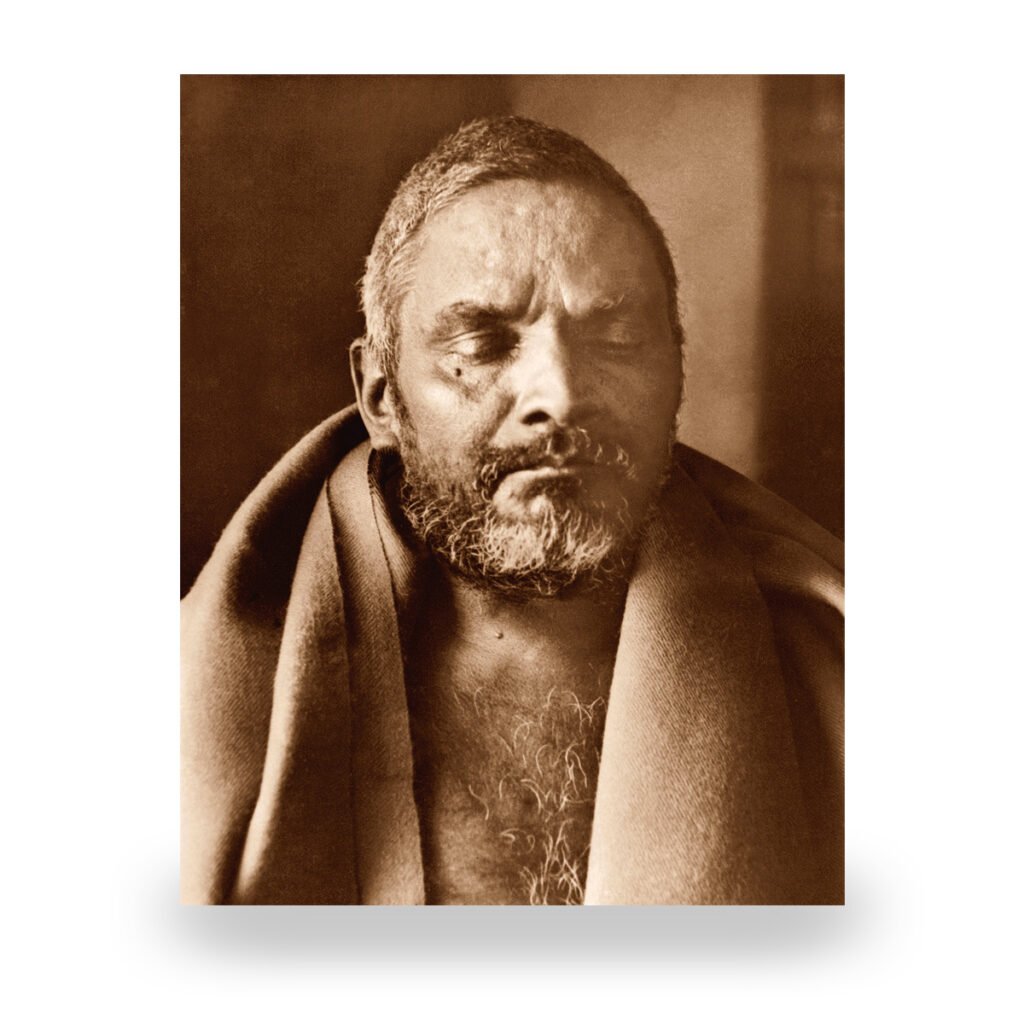
The Pathala Lingam holds a unique place in modern spiritual history because of its close association with Bhagavan Ramana Maharshi.
When Ramana Maharshi first arrived at Tiruvannamalai as a young seeker, he was completely absorbed in the experience of Self-realization.
According to historical accounts, he chose this underground shrine as one of the places for his intense meditation.
Here, he entered such a deep state of samadhi that he became entirely unaware of the external world.
He neither reacted to hunger nor noticed the passage of time.
So profound was his absorption that insects reportedly bit his body, causing wounds, yet he remained completely unmoved, immersed in the bliss of the Self.
It was only when Sri Seshadri Swamigal, recognizing the young sage’s extraordinary spiritual state, drew attention to him that devotees rescued Ramana Maharshi from the underground chamber and cared for him.
This remarkable episode became one of the defining moments in the life of the sage who would later inspire millions around the world.
A Shrine Revered by Spiritual Seekers
Because of this sacred history, the Pathala Lingam is regarded as one of the holiest meditation spaces within Arunachaleswarar Temple.
Many devotees believe that the intense spiritual practices performed here by Ramana Maharshi have left behind a subtle spiritual vibration that continues to be experienced even today.
Visitors often speak of feeling:
- Deep inner peace.
- A spontaneous calmness of mind.
- Reduced mental agitation.
- A powerful urge to remain silent.
- A heightened sense of spiritual awareness.
While these experiences vary from person to person, the atmosphere of the shrine itself naturally encourages introspection and meditation.
The Silent Presence of Seshadri Swamigal
The Pathala Lingam is also closely associated with Sri Seshadri Swamigal, another great saint of Tiruvannamalai.
Temple tradition recalls that it was Seshadri Swamigal who recognized the spiritual greatness of the young Ramana Maharshi when others failed to understand his extraordinary state.
His timely intervention ensured that the young sage survived, allowing the world to later receive the profound teachings of Self-enquiry for which Ramana Maharshi became renowned.
The spiritual connection between these two great saints has made the Pathala Lingam an especially revered destination for seekers following the path of meditation and self-realization.
A Place Where Words Lose Their Meaning
Unlike many temple shrines where devotees actively recite prayers or chant hymns, the greatest form of worship at the Pathala Lingam is often considered to be silence itself.
Many visitors instinctively lower their voices.
Some simply close their eyes.
Others sit quietly for a few minutes without asking for anything.
In this underground sanctum, silence becomes prayer.
Stillness becomes meditation.
And presence itself becomes worship.
Perhaps that is why so many spiritual seekers consider the Pathala Lingam not merely a place to visit, but a place to experience.
From Silence to Divine Justice
Yet Tiruvannamalai is not only a land of meditation and inner peace.
Its hidden shrines also preserve fascinating stories of justice, transformation, and divine intervention.
Just a short distance away stands a unique shrine dedicated to Yanai Thirai Konda Vinayagar—the Lord Ganesha who, according to temple tradition, appeared in the dream of a powerful king, humbled his arrogance, and transformed the course of his life.
In the next section, we will uncover the remarkable legend behind this rare and intriguing shrine.
Yanai Thirai Konda Vinayagar: The Lord Ganesha Who Humbled a King
Among the many hidden shrines inside Arunachaleswarar Temple, one stands out for its unusual name and the powerful legend associated with it.
Located near the Kili Gopuram, this sacred shrine is dedicated to Yanai Thirai Konda Vinayagar.
At first glance, the name itself sparks curiosity.
Why would Lord Ganesha be known as “The Vinayagar Who Received Elephants as Tribute”?
The answer lies in a fascinating temple tradition that speaks of divine justice, humility, and the transformation of a powerful king.
A Kingdom Burdened by an Unjust Ruler
According to temple tradition, there was once a king who ruled his kingdom with arrogance and cruelty.
His people suffered under heavy oppression.
Justice became scarce.
The cries of the helpless echoed throughout the land, and the people, unable to find relief through worldly means, turned to the Divine.
With unwavering faith, they prayed to Lord Vinayagar, seeking protection and justice.
Their prayers, it is believed, did not go unanswered.
A Dream That Changed Everything
One night, something extraordinary happened.
According to the temple legend, Lord Vinayagar appeared in the king’s dream.
This was not a gentle blessing or a symbolic vision.
The Lord confronted the king directly, warning him about the consequences of his actions and reminding him that power without righteousness cannot endure.
The dream was so vivid and overwhelming that the king awoke in fear.
For the first time, he realized the gravity of his mistakes.
The arrogance that had blinded him began to dissolve.
The King’s Repentance
Deeply shaken by the divine warning, the king hurried to Arunachaleswarar Temple at daybreak.
Standing before Lord Vinayagar, he confessed his wrongdoing and sought forgiveness.
As an expression of his repentance and gratitude, he is believed to have offered elephants as tribute to the deity.
From that day onward, the Lord came to be revered as Yanai Thirai Konda Vinayagar—“The Vinayagar Who Received Elephants as an Offering.”
Whether viewed as a historical event or a sacred legend passed down through generations, the story continues to inspire devotees with its timeless moral.
The Spiritual Message Behind the Legend
The true significance of this shrine extends beyond the miracle itself.
It reminds devotees that:
- Power should always be guided by humility.
- Leadership must be rooted in justice.
- Pride eventually leads to downfall.
- True greatness begins with repentance.
The legend teaches that no individual, regardless of wealth or authority, stands above Dharma.
When arrogance overshadows righteousness, divine wisdom gently—or sometimes firmly—restores balance.
A Shrine That Inspires Humility
Today, devotees visit Yanai Thirai Konda Vinayagar with prayers that extend far beyond worldly success.
Many seek:
- Wisdom before making important decisions.
- Humility in positions of authority.
- Relief from obstacles caused by ego and pride.
- Justice in difficult situations.
- Peace within family and professional life.
For many pilgrims, this shrine serves as a reminder that the greatest victory is not over others, but over one’s own ego.
An Important Stop During Your Temple Visit
Although this shrine is smaller than many of the temple’s major sanctums, its spiritual message has resonated with devotees for centuries.
Pilgrims who understand its significance rarely pass by without offering a prayer, believing that Lord Vinayagar not only removes external obstacles but also helps remove the inner obstacles of pride, anger, and ignorance.
It is yet another example of how Arunachaleswarar Temple preserves profound spiritual teachings through its hidden sanctums and sacred legends.
The Guardian Who Destroys Ego
But the journey through Tiruvannamalai’s hidden shrines does not end here.
Not far from this sacred Vinayagar shrine stands one of the most powerful guardian deities in Shaivism—Kala Bhairavar.
With eight powerful arms and a fierce yet compassionate presence, Kala Bhairavar is worshipped as the destroyer of fear, the guardian of time, and the remover of arrogance.
In the next section, we will explore the fascinating legend of Kala Bhairavar, why thousands of devotees visit Him on Krishna Paksha Ashtami, and the profound spiritual lesson hidden behind His fierce form.
Kala Bhairavar: The Fierce Guardian Who Destroys Ego and Protects Devotees
As we continue exploring the hidden sanctums of Arunachaleswarar Temple, we arrive at one of its most powerful and awe-inspiring shrines.
Situated near the Brahma Theertham, the shrine of Sri Kala Bhairavar commands immediate attention. Depicted with eight powerful arms, an intense gaze, and an unmistakable aura of divine authority, Kala Bhairavar is revered not only as the guardian of the temple but also as the protector of Dharma and the Lord who governs Time (Kala) itself.
For centuries, devotees have approached this shrine seeking courage, protection, and freedom from fear.
The Legend Behind Kala Bhairavar
According to Hindu tradition, Lord Brahma originally possessed five heads, just like Lord Shiva.
Over time, Brahma became consumed by pride, believing himself to be equal to the Supreme Lord.
To restore cosmic balance, Lord Shiva manifested His fierce aspect—Kala Bhairava.
According to the Puranas, Bhairava severed one of Brahma’s five heads, not out of anger alone, but to destroy the ego that had clouded wisdom.
Whether understood literally or symbolically, the story conveys a profound spiritual truth:
It is not our enemies that destroy us—it is our own ego.
This timeless lesson continues to resonate with devotees who visit the shrine today.
The Deeper Spiritual Meaning
The story of Kala Bhairavar is far more than a tale from ancient scriptures.
It is a reminder that:
- Pride blinds wisdom.
- Arrogance distances us from the Divine.
- Humility opens the door to spiritual growth.
- Time eventually humbles everyone.
In this sense, Kala Bhairavar is not merely a fierce deity.
He is a compassionate teacher who removes the inner impurities that prevent spiritual progress.
His fierce appearance symbolizes the destruction of ignorance, while His divine grace offers protection to those who walk the path of righteousness.
Why Thousands Visit on Krishna Paksha Ashtami
One of the most significant occasions for worshipping Kala Bhairavar is Krishna Paksha Ashtami (the eighth lunar day during the waning phase of the moon).
On this sacred day, thousands of devotees gather at the shrine to seek His blessings.
They pray for:
- Protection from negative influences.
- Freedom from fear and anxiety.
- Relief from persistent obstacles.
- Success in difficult situations.
- Mental clarity and spiritual strength.
Many devotees also believe that sincere worship of Kala Bhairavar helps them make wise decisions and move forward in life with confidence and discipline.
The Guardian of Time
Kala Bhairavar is often described as the Kshetrapalaka, the divine guardian of sacred spaces.
In many Shiva temples, no pilgrimage is considered complete without offering respects to Bhairavar before leaving.
As the Lord of Time, He reminds every devotee that life is precious, every moment is sacred, and spiritual growth should never be postponed.
Standing before this powerful deity, many pilgrims experience both reverence and introspection.
His fierce form does not inspire fear—it inspires self-reflection.
A Powerful Stop on the Spiritual Journey
Although many visitors focus only on the main sanctum of Lord Arunachaleswarar, experienced pilgrims make it a point to visit Kala Bhairavar before completing their temple darshan.
For them, the shrine represents more than protection.
It symbolizes the victory of humility over pride, wisdom over ignorance, and faith over fear.
It is yet another reminder that every hidden sanctum within Arunachaleswarar Temple carries a profound spiritual lesson waiting to be discovered.
Even More Hidden Shrines Await
Our journey through Tiruvannamalai’s hidden sanctums is still not complete.
Scattered throughout the temple are several lesser-known yet deeply revered shrines that many devotees unknowingly pass by—including Pichai Ilayanar, Kalatheeswarar, Pidari Amman, and Sambandha Vinayagar.
Though smaller in size, each of these sanctums possesses its own fascinating history, unique significance, and cherished place in the spiritual traditions of Arunachaleswarar Temple.
In the next section, we’ll explore these remarkable hidden shrines and discover why they deserve a place in every pilgrim’s itinerary.
Other Hidden Shrines You Should Never Miss Inside Arunachaleswarar Temple
While the major shrines of Kambathu Ilayanar, Gopurathu Ilayanar, Pathala Lingam, and Kala Bhairavar attract many spiritually inclined pilgrims, Arunachaleswarar Temple is home to several lesser-known sanctums that are equally significant.
These shrines may not receive the same attention as the main sanctums, yet generations of devotees have worshipped here with deep faith, believing each deity bestows unique blessings.
If you wish to experience the temple beyond the usual pilgrimage route, these hidden sanctums deserve a place on your itinerary.
Pichai Ilayanar: Lord Murugan Who Blesses Every Devotee
Hidden on the northern side of the Kili Gopuram is the third Murugan shrine inside the temple, known as Pichai Ilayanar.
Here, Lord Murugan graces devotees along with Valli and Deivanai, presenting a serene and compassionate form.
Although relatively small, this shrine enjoys immense devotion among Murugan worshippers.
According to local belief, sincere prayers offered here bring:
- Prosperity
- Family happiness
- Success in important endeavors
- Removal of obstacles
- Overall well-being
Many devotees quietly visit this shrine before leaving the temple, believing that Murugan’s blessings complete their Arunachala pilgrimage.
Kalatheeswarar Shrine: Where Fire Meets Air
Arunachaleswarar Temple is celebrated as the Agni Sthalam, representing the Fire Element (Agni) among the Pancha Bhoota Sthalas.
Yet, hidden within the same temple complex is a remarkable shrine dedicated to Sri Kalatheeswarar, the presiding deity of Sri Kalahasti, one of the most sacred Vayu (Air) Sthalams.
Located on the western side of the Vasantha Mandapam, this shrine offers devotees a rare spiritual opportunity.
By worshipping both Lord Arunachaleswarar and Kalatheeswarar during the same visit, pilgrims symbolically receive the blessings of both the Fire and Air elements without traveling to another temple.
For many devotees, this unique combination represents the harmonious balance of two powerful cosmic energies.
Pidari Amman: The Divine Guardian of the Temple
On the eastern side of the Vasantha Mandapam, facing north, stands the shrine of Ellai Pidari Amman, one of the temple’s important guardian deities.
In Tamil spiritual tradition, Pidari Amman is revered as a fierce protector who safeguards sacred spaces and shields devotees from negative influences.
The shrine also houses sacred forms associated with:
- Sapta Matrikas (Seven Divine Mothers)
- Nishumbasudani
- Renukambal
Devotees believe that worshipping Pidari Amman helps remove accumulated negative karma, protects the family from misfortune, and brings auspiciousness into one’s life.
Though many visitors unknowingly pass this shrine, local devotees consider it an essential stop during temple worship.
Sambandha Vinayagar: The First to Receive Worship
Near the temple’s Dwajasthambam (Flagstaff) is another fascinating shrine that many pilgrims overlook.
This is Sri Sambandha Vinayagar, whose striking reddish-colored idol immediately captures attention.
What makes this shrine truly unique is an ancient temple tradition.
Before the daily rituals begin for Lord Arunachaleswarar and Goddess Unnamulai Amman, the very first worship of the day is offered to Sambandha Vinayagar.
Only after seeking His blessings do the priests proceed to perform the main temple rituals.
This beautiful tradition highlights Lord Ganesha’s eternal role as the remover of obstacles and the deity who sanctifies every sacred beginning.
Many devotees therefore make it a point to worship Sambandha Vinayagar before visiting the main sanctums.
The Sacred Magizha Tree: A Symbol of Hope
Hidden within the Third Prakaram stands the temple’s sacred Magizha Tree, quietly witnessing the prayers of countless devotees.
For generations, childless couples have visited this tree with unwavering faith.
According to long-standing temple tradition, devotees tie small cradles to its branches while praying for the blessing of children.
Even today, this beautiful custom continues.
Whether viewed as an expression of faith or a cherished cultural tradition, the sight of hundreds of tiny cradles gently swaying in the breeze reflects the hopes and prayers of families who seek the Divine Mother’s grace.
A Secret View That Most Visitors Never Discover
Close to the sacred Magizha Tree lies one of the temple’s best-kept secrets.
Most pilgrims walk past without ever realizing what can be seen from this spot.
If you stand at the exact location and look toward the temple with careful attention, an astonishing sight unfolds before your eyes.
All nine gopurams of Arunachaleswarar Temple become visible in a single view.
It is an architectural marvel that few visitors know exists.
For devotees, witnessing all nine towers together is considered an especially auspicious experience, symbolizing the completeness of one’s pilgrimage and the all-encompassing grace of Lord Arunachaleswarar.
One Final Hidden Gem Remains
After exploring miraculous shrines, guardian deities, sacred traditions, and hidden architectural wonders, only one destination remains.
It is neither a grand sanctum nor an elaborate mandapam.
It is a simple, peaceful space where countless yogis, sages, and spiritual seekers have quietly sat in meditation for generations.
Known as the Yogeswarar Mandapam, many believe it offers one of the most serene spiritual experiences within the entire temple complex.
In the final section, we will discover why this humble mandapam has become a sanctuary for meditation and why many devotees consider sitting there in silence to be one of the greatest blessings of their Tiruvannamalai pilgrimage.
Yogeswarar Mandapam: The Silent Sanctuary Where Arunachala Speaks to the Soul
After exploring the miraculous shrines, sacred legends, and hidden sanctums of Arunachaleswarar Temple, our journey reaches its most peaceful destination.
There are no elaborate rituals here.
No long queues of devotees.
No grand temple towers dominating the skyline.
Instead, there is silence.
A gentle breeze.
And a simple stone mandapam that countless pilgrims unknowingly walk past every day.
This is the Yogeswarar Mandapam—one of the temple’s most spiritually profound yet least-visited places.
A Hidden Place of Meditation
At first glance, Yogeswarar Mandapam appears remarkably ordinary.
Unlike the magnificent halls and towering gopurams of Arunachaleswarar Temple, this mandapam possesses a quiet simplicity.
Yet those who know its significance often spend several minutes here—not offering elaborate prayers, but simply sitting in silence.
Many yogis, monks, and spiritual seekers have considered this mandapam an ideal place for meditation for generations.
Its greatest attraction is not what you see.
It is what you begin to experience.
A Direct View of Arunachala
One of the most remarkable features of Yogeswarar Mandapam is its alignment with the sacred Arunachala Hill.
When seated at the right spot inside the mandapam, the majestic summit of Arunachala appears directly before you.
The temple gradually fades into the background.
The sounds of pilgrims become distant.
The cool breeze gently flows through the stone pillars.
For many devotees, this creates a powerful feeling of connection between the temple and the sacred hill, which is itself revered as the visible form of Lord Shiva.
It is a moment that invites stillness rather than conversation.
Why Is It Called Yogeswarar Mandapam?
According to temple tradition, Lord Arunachaleswarar is believed to be present here in His subtle form as Yogeswara—the Supreme Yogi absorbed in eternal meditation.
This ancient belief has made the mandapam a favored place for seekers who wish to experience the silent aspect of Lord Shiva rather than His majestic temple form.
Unlike other shrines where devotees ask for blessings, many people come here with no requests at all.
They simply sit.
They observe.
They meditate.
And they allow the sacred atmosphere to quiet the mind.
The Power of Simply Being
Modern life constantly fills our minds with noise, distractions, and endless thoughts.
Yogeswarar Mandapam offers something increasingly rare.
Silence.
Many devotees describe an unusual sense of calm while sitting here.
Some close their eyes and meditate.
Others quietly gaze at Arunachala.
Some simply remain still, allowing the atmosphere itself to become their prayer.
Perhaps this is why many spiritual teachers say that not every prayer needs words.
Sometimes, simply being present before Arunachala is itself the highest form of worship.
The Hidden Jewel of Arunachaleswarar Temple
Although this mandapam receives far fewer visitors than the temple’s famous sanctums, those who discover it often remember it as one of the most meaningful parts of their pilgrimage.
There are no miracles to witness.
No dramatic legends to hear.
Only an opportunity to experience what countless saints have described as the true nature of Arunachala—silence, stillness, and inner awakening.
For many devotees, a few quiet minutes here become the most unforgettable moments of their entire visit
Conclusion: Completing the True Pilgrimage of Tiruvannamalai
A pilgrimage to Tiruvannamalai is far more than a visit to one of India’s greatest Shiva temples.
It is a journey through centuries of faith, miracles, meditation, and spiritual transformation.
While millions come to worship Lord Arunachaleswarar, perform Girivalam, and receive the blessings of Unnamulai Amman, the temple also safeguards countless hidden sanctums that preserve extraordinary stories of divine grace.
Each of these sacred places offers a unique spiritual lesson.
- Sarva Siddhi Vinayagar reminds us that every new beginning should start with faith.
- Kambathu Ilayanar teaches that sincere devotion can invoke divine grace in the most unexpected ways.
- Gopurathu Ilayanar shows how a single moment of divine compassion can completely transform a person’s destiny.
- Pathala Lingam reveals the immeasurable power of silence and meditation.
- Yanai Thirai Konda Vinayagar reminds us that no authority is greater than righteousness.
- Kala Bhairavar teaches that the greatest enemy we must conquer is our own ego.
- Pichai Ilayanar, Kalatheeswarar, Pidari Amman, and Sambandha Vinayagar each preserve ancient traditions that continue to inspire generations of devotees.
- The Magizha Tree stands as a symbol of hope for families praying for children.
- The hidden viewpoint where all nine gopurams can be seen together reminds us that sometimes the greatest treasures are hidden in plain sight.
- Finally, Yogeswarar Mandapam gently teaches the highest spiritual lesson of Arunachala—that true communion with the Divine often begins in silence.
These sacred places may not appear in every travel guide, and many pilgrims unknowingly walk past them.
Yet, for those who take the time to seek them, they reveal a deeper dimension of Tiruvannamalai—one that goes beyond rituals and architecture, leading instead toward inner transformation.
So, the next time you visit Arunachaleswarar Temple, don’t limit your pilgrimage to the main sanctums alone.
Take time to explore these hidden shrines.
Pause.
Sit in silence.
Absorb the sacred atmosphere.
Because sometimes, the smallest sanctums hold the greatest spiritual experiences.
And in Tiruvannamalai, every hidden corner whispers the eternal message of Arunachala:
The greatest journey is not around the hill—it is within yourself.