
Sri Seshadri Swamigal – The Saint Once Called Mad, Later Revered by the World
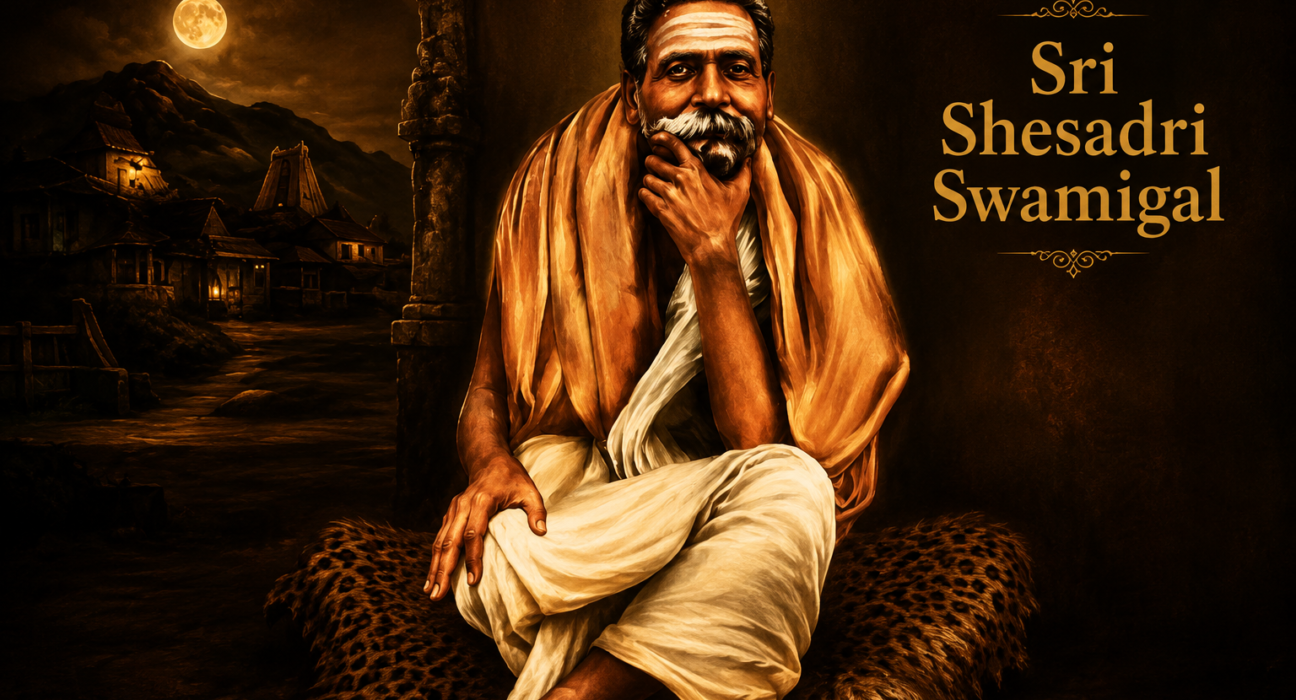
Sri Seshadri Swamigal – The Saint Once Called Mad, Later Revered by the World
Was He a Madman, a Siddhar, or Arunachaleswarar’s Divine Messenger?
Among the countless saints who have walked the sacred land of India, few remain as mysterious, fascinating, and spiritually influential as Sri Seshadri Swamigal. During his lifetime, many feared him. Some ridiculed him. Others believed he had lost his mind. Yet today, thousands of devotees from across India and around the world visit his Jeeva Samadhi in Tiruvannamalai, convinced that his divine presence continues to guide and bless sincere seekers.
How did a man once dismissed as a mad wanderer become one of the most revered saints in modern Indian spiritual history?
Was he merely an eccentric ascetic?
A realized Siddhar endowed with extraordinary spiritual powers?
Or was he a divine messenger sent by Lord Arunachaleswarar to awaken humanity?
The life of Sri Seshadri Swamigal cannot be understood through ordinary reasoning alone. Every incident in his life carries layers of spiritual symbolism, compassion, mystery, and divine grace.
In this article, we explore the remarkable journey of Sri Seshadri Swamigal—from his miraculous childhood in Kanchipuram to his lifelong devotion to Arunachala, the extraordinary incidents that transformed countless lives, and the timeless legacy that continues to inspire millions of devotees today.
Why Tiruvannamalai Can Never Forget Sri Seshadri Swamigal
The spiritual history of Tiruvannamalai is inseparable from two towering figures who transformed the sacred town into one of the world’s greatest centers of spiritual awakening.
One is Bhagavan Sri Ramana Maharshi.
The other is Sri Seshadri Swamigal.
Long before Ramana Maharshi became known throughout the world, another mysterious saint wandered silently through the streets of Tiruvannamalai.
He owned no land.
He established no ashram during his wandering years.
He never sought followers.
He delivered no public discourses.
He wrote no books.
His entire existence revolved around a single reality—Arunachala.
To ordinary people, his actions seemed irrational.
To sincere spiritual seekers, every action reflected profound wisdom beyond human understanding.
Over time, the people of Tiruvannamalai realized that behind every seemingly strange act was an expression of divine consciousness.
What once appeared to be madness slowly revealed itself as enlightenment.
Birth and Family Background
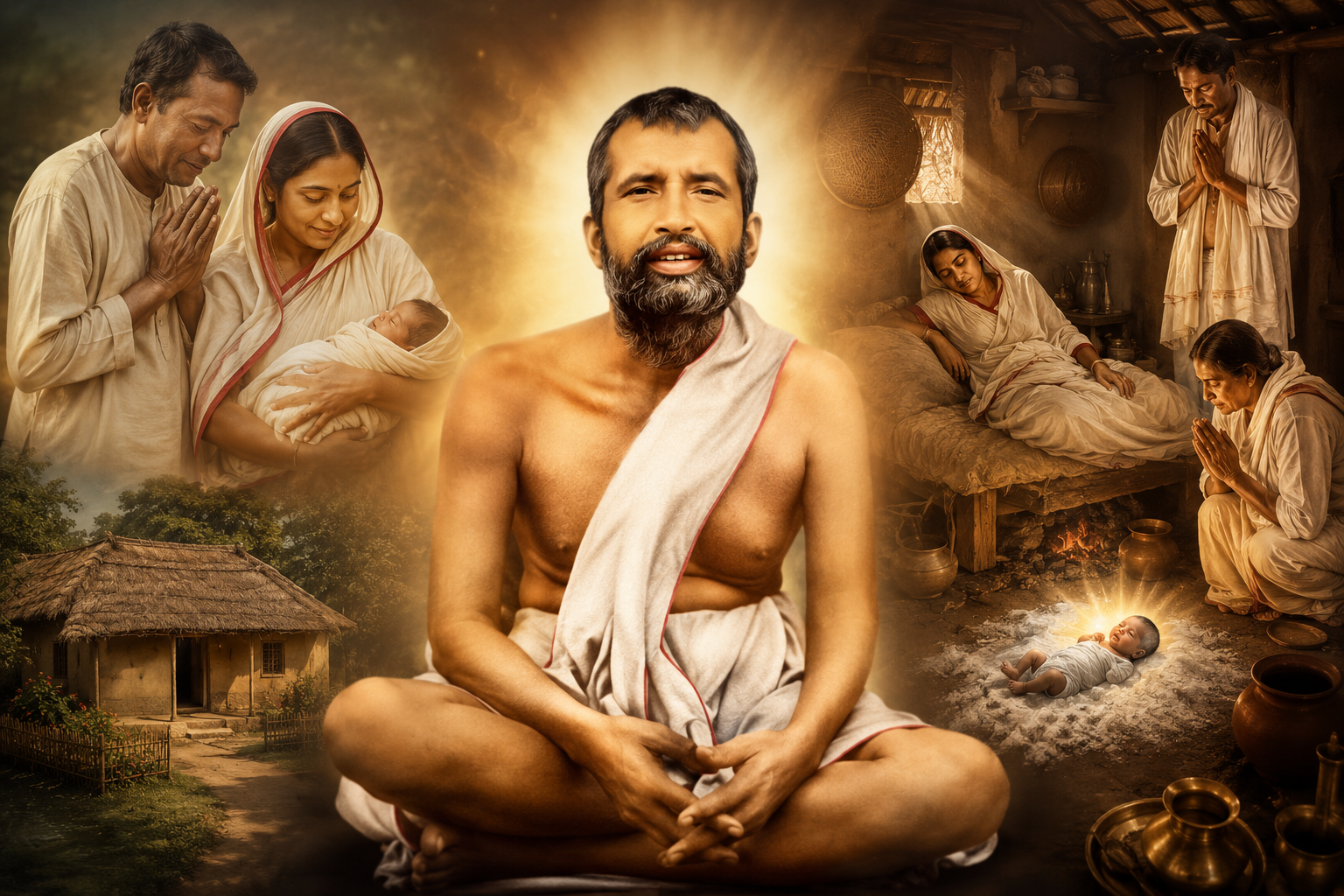
Sri Seshadri Swamigal was born in 1870 in the ancient temple city of Kanchipuram, one of the seven sacred cities (Sapta Puri) of Hindu tradition.
His parents, Varadaraja Josyar and Maragatham Ammal, belonged to a deeply religious family devoted to Vedic traditions and temple worship.
They named their son Seshadri.
At the time, no one imagined that this quiet child would one day become one of India’s greatest saints.
Yet from his earliest years, there were unmistakable signs that he was unlike other children.
While boys of his age spent their days playing games and chasing friends through the streets, young Seshadri often sat in complete silence.
Sometimes he gazed at the sky for hours.
At other times, he closed his eyes and entered deep states of meditation.
There was an extraordinary stillness about him—a serenity that was difficult to explain.
Everyone around him sensed that something divine rested within the child.
Divine Signs During Childhood
Unlike most children, Seshadri showed little interest in worldly entertainment.
Instead, he was naturally drawn toward temples, devotional hymns, Vedic chanting, and the company of holy men.
Whenever he entered a temple, he became completely absorbed in the presence of the deity.
His family initially regarded these qualities as signs of exceptional devotion.
However, a remarkable incident soon convinced the entire town that this child was destined for greatness
The Story Behind "Golden Hand Seshadri"
One day, during the grand annual festival of the Varadaraja Perumal Temple in Kanchipuram, the streets were overflowing with devotees.
Temple bells echoed through the air.
Traditional musicians filled the streets with sacred melodies.
Young Seshadri walked beside his mother through the crowded marketplace when his attention was drawn to a roadside stall displaying clay idols of Hindu deities.
Among them, one small image of Baby Krishna captured his heart.
Holding his mother’s hand gently, he said,
“Mother… I want that Krishna idol.”
Before Maragatham Ammal could respond, the shopkeeper noticed the peaceful expression on the boy’s face.
Something about the child deeply moved him.
Without asking for payment, he smiled warmly and said,
“Please take it. Let this child have it as my gift.”
The boy joyfully accepted the idol.
To everyone watching, it seemed like a simple act of kindness.
No one realized that this ordinary moment would soon become one of the most famous stories in the saint’s life.
The Toy Seller Whose Life Changed Forever
The following morning, something extraordinary happened.
The same shopkeeper who had gifted the Baby Krishna idol came running through the streets in search of Maragatham Ammal. His eyes were filled with tears, and before anyone could understand what was happening, he fell at her feet.
Startled, she immediately asked him why he was doing this.
With folded hands and a trembling voice, the merchant replied,
“Your son is no ordinary child. He has golden hands.”
Curious and confused, Maragatham Ammal asked what had happened.
The merchant explained that after young Seshadri had touched the Baby Krishna idol the previous day, an unbelievable transformation had taken place in his business.
For weeks, his clay idols had remained unsold.
Customers had walked past his stall without showing much interest.
But on that very day, everything changed.
Devotees began arriving continuously. One after another, every idol in his shop was purchased. By the end of the festival, his entire stock had been sold.
The merchant had never witnessed such prosperity in his life.
Was it merely coincidence?
Or had the touch of the young boy brought divine grace?
No one could answer with certainty.
Yet the incident spread rapidly throughout Kanchipuram.
People affectionately began calling the child “Golden Hand Seshadri.”
What began as a local story soon became a cherished legend, and the title remained with him throughout his life. Decades later, merchants in Tiruvannamalai would experience similar blessings whenever Sri Seshadri Swamigal entered their shops, reinforcing the belief that wherever he went, prosperity mysteriously followed.
But this was only the beginning. A far greater turning point was about to shape the course of his destiny.
A Mother's Final Blessing
Years passed, and the quiet child of Kanchipuram grew into a deeply spiritual young man.
While others of his age were preparing for careers, marriage, and family life, Seshadri’s heart moved in a very different direction.
His days were filled with meditation.
He immersed himself in the study of sacred scriptures.
He delighted in singing devotional hymns and spent countless hours contemplating the Divine.
Worldly ambitions held little attraction for him.
His mother, Maragatham Ammal, silently observed these changes.
As only a mother could, she sensed that her son had been born for a purpose far beyond ordinary life.
Then came the day that would change everything.
Maragatham Ammal became seriously ill.
Realizing that her earthly journey was nearing its end, she asked for Seshadri to be brought to her bedside.
Family members gathered around, expecting her to offer final advice or words of comfort.
Instead, she uttered only a single word.
“Arunachala…”
Silence filled the room.
A few moments later, she repeated it.
“Arunachala…”
For the third and final time, with her remaining strength, she softly whispered,
“Arunachala…”
Moments later, she breathed her last.
To those standing around her, these were simply the final words of a dying mother.
But to Seshadri, they carried a far deeper meaning.
They were not merely the name of a sacred hill.
They were not a passing remembrance of Lord Shiva.
They were a divine command.
From that moment onward, the name Arunachala echoed continuously within his heart.
It became an irresistible spiritual call that would eventually draw him away from worldly life and lead him to the sacred hill where his destiny awaited.
Little did anyone know that those three simple words would alter not only Seshadri’s life but also the spiritual history of Tiruvannamalai forever.
The Irresistible Call of Arunachala
After his mother’s passing, Seshadri was no longer the same.
The ordinary rhythms of life gradually faded away.
Sleep became scarce.
Silence became his closest companion.
His longing for Arunachala grew stronger with each passing day.
His relatives watched with increasing concern.
They believed that marriage would help him return to a normal household life and free him from his growing detachment.
Plans were quietly made.
But destiny had chosen another path.
Sensing that Seshadri might renounce the world altogether, his family reportedly confined him to a locked room in an attempt to prevent him from leaving.
Hours later, they unlocked the door.
To their astonishment, the room was empty.
There was no sign of escape.
No broken window.
No opened door.
Yet Seshadri had vanished.
Around the same time, several people claimed they had seen him peacefully praying at a nearby Shiva temple.
Whether viewed as a miracle, a mystery, or a story preserved through oral tradition, the incident strengthened the belief that divine grace was already guiding his life.
From that day onward, Seshadri never returned to ordinary worldly living.
Instead, he set out on the journey that would define the rest of his existence.
A journey toward the sacred Hill of Fire.
A journey toward Arunachala.
The Day Sri Seshadri Swamigal Reached Arunachala
Leaving behind the comforts of home, Seshadri embarked on a journey with no destination except the one that called him from within.
He walked for days through villages, forests, temple towns, and dusty roads across South India. He carried no possessions of value, sought no recognition, and had no desire for worldly success.
His heart was fixed on a single name.
Arunachala.
The sacred hill his mother had uttered with her final breath had become the guiding force of his life.
Then, one unforgettable day, it happened.
As he continued his journey, a majestic hill appeared on the distant horizon.
It was unlike any mountain he had ever seen.
This was Arunachala—the sacred Hill of Fire, worshipped for centuries as the earthly manifestation of Lord Shiva Himself. Unlike ordinary mountains, Arunachala is revered in the Hindu tradition not merely as a place where God resides, but as God in physical form.
The moment Seshadri saw the hill, he stopped walking.
His entire body trembled.
Tears streamed down his face.
He stood motionless, unable to take another step.
For years, the word “Arunachala” had echoed within his heart like an unanswered prayer. Now, the source of that divine call stood before him.
It was more than the fulfillment of a journey.
It was the reunion of a soul with its eternal home.
In that profound moment, the restless search within him came to an end.
He bowed before the sacred hill, overwhelmed by devotion and gratitude.
The world behind him faded into insignificance.
From that day onward, Tiruvannamalai became his permanent abode.
For nearly forty years, Sri Seshadri Swamigal would rarely leave the sacred town.
Every street, every temple, and every corner of Arunachala became part of his spiritual life.
What the world saw as the wandering of a strange ascetic was, in reality, the silent pilgrimage of a soul completely absorbed in the Divine.
Little did the people of Tiruvannamalai know that the quiet saint who had just arrived would one day become one of the greatest spiritual masters ever to walk their streets.
Why Did People Think Sri Seshadri Swamigal Was Mad?
Today, Sri Seshadri Swamigal is revered as one of India’s greatest saints.
His Jeeva Samadhi attracts thousands of devotees every year.
His life is studied by spiritual seekers around the world.
Yet, when he first arrived in Tiruvannamalai, very few recognized his greatness.
Instead…
People avoided him.
Some laughed at him.
Children mocked him.
Others threw stones at him.
Many dismissed him with a single word.
“Madman.”
But why?
The answer lies in the extraordinary way he lived.
Sri Seshadri Swamigal paid no attention to social conventions or worldly expectations.
One day he would spend hours sitting inside the Arunachaleswarar Temple, absorbed in silence.
The next day he would wander aimlessly through crowded marketplaces without speaking to anyone.
Sometimes he remained standing beneath the scorching summer sun for hours, seemingly unaware of the intense heat.
At other times, he stood motionless in heavy rain without attempting to find shelter.
He never appeared concerned about hunger.
He rarely cared about sleep.
He showed no attachment to clothing, comfort, or possessions.
Praise did not make him happy.
Insults did not disturb him.
Whether people bowed before him or mocked him, his expression remained unchanged.
To ordinary eyes, such behavior seemed irrational.
But in the lives of many great saints and Siddhars, complete freedom from worldly attachment often appears incomprehensible to those who judge reality only through external appearances.
Sri Seshadri Swamigal lived in a state where the mind had transcended ordinary likes and dislikes.
He was not indifferent because he lacked compassion.
Rather, he had gone beyond the constant pull of pleasure and pain that governs ordinary human life.
What looked like madness was, for many devotees, the natural expression of someone who had realized the Divine.
Unfortunately, very few people understood this during his early years.
Instead of recognizing a saint, they saw only an eccentric wanderer.
History has repeated this pattern many times.
Many of the world’s greatest spiritual masters were misunderstood during their lifetimes because their lives challenged conventional ideas of success, status, and normalcy.
Sri Seshadri Swamigal was no exception.
Yet, as time passed, the very people who mocked him would become his greatest admirers.
The Saint Who Saw God Everywhere
Among the countless incidents preserved in the memories of devotees, one event beautifully illustrates Sri Seshadri Swamigal’s spiritual vision.
Curious about his unusual lifestyle, a few villagers decided to follow him secretly one day.
They wanted to know what this mysterious ascetic actually did when no one was watching.
To their surprise, he walked calmly out of the town toward a large garbage heap.
The place was filthy.
Rotting waste lay scattered everywhere.
The smell was unbearable.
Even passing near it was unpleasant for most people.
Yet without the slightest hesitation, Sri Seshadri Swamigal sat down in the middle of the garbage heap.
He closed his eyes.
Within moments, he entered deep meditation.
The villagers watched in disbelief.
How could anyone meditate in such a place?
Why would a holy man choose filth instead of a temple?
The answer lay in the way Sri Seshadri Swamigal perceived reality.
For him, God was not confined to temples, rituals, or sacred spaces.
The Divine existed everywhere.
A temple belonged to God.
A forest belonged to God.
A marketplace belonged to God.
Even a garbage heap belonged to God.
The distinctions between purity and impurity existed only in the human mind.
To an enlightened soul who sees the same Divine Presence in all creation, no place is spiritually inferior to another.
Sri Seshadri Swamigal was not rejecting temples.
He was revealing a deeper truth—that the presence of God cannot be limited by human concepts of clean and unclean.
Unfortunately, those who witnessed this incident lacked the spiritual understanding to grasp its meaning.
Instead of seeing a realized master immersed in divine consciousness, they concluded that he had lost his sanity.
Ironically, the very incident that convinced some people he was mad became one of the clearest demonstrations of his spiritual realization.
His life silently reminded everyone of an eternal truth:
When the Divine is seen everywhere, nothing in creation remains ordinary.
The Miracles That Changed the Merchants' Lives
Among the countless stories associated with Sri Seshadri Swamigal, none are more widely remembered than the extraordinary incidents involving the merchants of Tiruvannamalai.
These stories were passed down from one generation to another, not because they promised wealth, but because they revealed a profound truth: divine grace often works in ways the human mind cannot comprehend.
In the bustling markets of Tiruvannamalai, Sri Seshadri Swamigal would often appear without warning.
He never asked permission before entering a shop.
He never announced his arrival.
Nor did he behave like an ordinary customer.
Sometimes he would walk straight to the cash box and throw coins onto the floor.
On other occasions, he rearranged merchandise, scattered goods across the shop, or quietly walked away without speaking a single word.
To any shopkeeper, such behavior seemed shocking.
Many became angry.
Some tried to stop him.
Others wondered why this strange ascetic kept disturbing their businesses.
To them, he appeared to be causing inconvenience rather than offering blessings.
But by the end of the day, something remarkable often happened.
Customers who had not visited for weeks suddenly began arriving.
Business became unusually brisk.
Items that had remained unsold for months were quickly purchased.
Sales exceeded expectations.
Again and again, the same pattern repeated itself.
At first, merchants dismissed these events as coincidence.
But after witnessing similar experiences in numerous shops across the town, many began to believe that Sri Seshadri Swamigal carried an unseen blessing wherever he went.
The man they once chased away slowly became someone they eagerly waited to welcome.
Soon, merchants would stand outside their shops hoping for a glimpse of the saint.
They prayed that he would step inside their business.
Even if he scattered their money…
Even if he rearranged their goods…
Even if he spoke not a single word…
His presence alone was considered a sign of prosperity.
This remarkable transformation reflected something far greater than commercial success.
It revealed how public perception of Sri Seshadri Swamigal had begun to change.
The same people who once called him a madman were now convinced that he was a vessel of divine grace.
The Restaurant Miracle
Among the many incidents preserved in the oral traditions of Tiruvannamalai, one story became especially famous.
It involved a small restaurant struggling to survive.
The owner had invested everything he had into the business.
Yet customers rarely visited.
Day after day, he watched his hopes slowly fade.
One afternoon, as preparations for the day’s meals were underway, Sri Seshadri Swamigal unexpectedly entered the establishment.
Without greeting anyone, he walked directly toward a large vessel filled with freshly prepared batter.
The staff watched him in confusion.
Then, to everyone’s horror, he poured water into the batter.
Within moments, the carefully prepared mixture appeared completely ruined.
The restaurant owner was devastated.
His heart sank.
He believed the day’s business had been destroyed.
The ingredients were wasted.
The food could no longer be served as planned.
Some employees became upset.
Others wondered why the saint would spoil the livelihood of a struggling family.
Yet Sri Seshadri Swamigal simply walked away without offering any explanation.
Hours later, something completely unexpected happened.
Customers began arriving one after another.
The restaurant became unusually crowded.
The kitchen worked continuously to keep up with the growing demand.
By the end of the day, everything that had been prepared was sold out.
Business remained strong not only that day but also in the days that followed.
For the owner, what had initially appeared to be a disaster became the beginning of unexpected prosperity.
Stories like this spread quickly throughout Tiruvannamalai.
Whether viewed as miracles or remarkable coincidences, they strengthened the faith of countless devotees.
Many came to believe that Sri Seshadri Swamigal’s actions could never be judged by outward appearances alone.
What seemed like destruction often became the doorway to blessing.
His life repeatedly reminded people that divine grace does not always arrive in the form we expect.
Sometimes it first shatters our assumptions before revealing a greater purpose.
Even His Anger Was Considered Divine Grace
Unlike many saints who are remembered for their gentle smiles and comforting words, Sri Seshadri Swamigal could be completely unpredictable.
There were moments when he appeared quiet and compassionate.
At other times, he spoke with startling intensity.
He occasionally scolded devotees.
On rare occasions, he struck someone lightly with his hand or a small stick.
To those meeting him for the first time, such behavior seemed impossible to reconcile with the image of a holy man.
Many asked,
“How can a saint behave like this?”
It was a fair question.
Yet those who had spent years observing him noticed something extraordinary.
Many individuals who were rebuked by Sri Seshadri Swamigal later escaped serious accidents.
Others recovered from prolonged illnesses.
Some experienced unexpected breakthroughs in their lives.
Families burdened by hardship found relief.
Individuals trapped in destructive habits discovered new direction.
Again and again, devotees recalled that what initially felt like harshness eventually revealed itself as compassion.
They began to see his actions through a different lens.
A loving parent may discipline a child to prevent greater harm.
A skilled surgeon may cause temporary pain in order to save a life.
Likewise, devotees believed that Sri Seshadri Swamigal’s stern behavior was never motivated by anger in the ordinary human sense.
Instead, they saw it as an expression of divine concern.
His rebukes were understood as corrections intended to protect, awaken, or transform those who approached him.
For this reason, many devotees considered themselves fortunate even to be scolded by him.
To receive his attention in any form—whether through a smile, silence, or stern words—was regarded as a blessing.
From Ridicule to Reverence
Time has a remarkable way of revealing truths that people initially fail to recognize.
This was especially true in the life of Sri Seshadri Swamigal.
Years earlier, people had laughed at him.
Children mocked him.
Some even threw stones at him as he wandered through the streets of Tiruvannamalai.
But slowly, everything changed.
The merchants who once drove him away now waited outside their shops, hoping he would visit.
Parents brought their sick children, praying that he might bless them.
Pilgrims traveled from distant towns simply for the chance to see him.
Many believed that even a brief glance from the saint carried immeasurable spiritual power.
Remarkably, throughout all this growing fame, Sri Seshadri Swamigal himself remained unchanged.
He never established an organization.
He founded no religious institution.
He appointed no successor.
He delivered no formal philosophy.
He made no effort to build a following.
His life itself became his greatest teaching.
Through silence, simplicity, complete surrender to God, and unwavering devotion to Arunachala, he demonstrated that spirituality is not measured by words but by one’s state of being.
Without seeking recognition, he had become one of the most revered spiritual figures in Tiruvannamalai.
Yet the greatest chapter of his life was still waiting to unfold.
A young sixteen-year-old seeker had recently arrived in the sacred town after undergoing a profound spiritual awakening.
Lost in absolute silence, he had withdrawn into deep meditation within the dark underground chamber known as Patala Lingam.
The world did not yet know his name.
But history soon would.
That young ascetic would later become one of the greatest spiritual masters of the modern era—
Bhagavan Sri Ramana Maharshi.
The extraordinary meeting between these two saints would forever change the spiritual history of Tiruvannamalai and inspire millions of seekers across the world.
A Life Filled with Miracles
By the dawn of the twentieth century, Sri Seshadri Swamigal had become one of the most mysterious spiritual figures in Tiruvannamalai.
People no longer dismissed him as a madman.
Instead, they spoke of him with awe, reverence, and curiosity.
Everywhere he went, extraordinary stories seemed to follow.
Some believed that a single glance from him could alter a person’s destiny.
Others experienced unexpected prosperity after receiving his blessings.
Many claimed that their lives changed forever after just one encounter with the saint.
Whether one viewed these incidents as miracles or remarkable coincidences, there was no denying the profound impact Sri Seshadri Swamigal had on the lives of countless people.
Yet, among all the stories associated with him, one event stands above the rest.
It was not merely another miracle.
It was an incident that would shape the spiritual history of modern India.
It involved a silent sixteen-year-old boy who had recently arrived in Tiruvannamalai.
The world did not yet know his name.
But history would remember him as Bhagavan Sri Ramana Maharshi
The Discovery of a Young Sage
The year was 1896.
A sixteen-year-old boy named Venkataraman, who had undergone a profound spiritual awakening, quietly left his home and journeyed to Tiruvannamalai.
The moment he reached the sacred town, he went straight to the Arunachaleswarar Temple.
Without introducing himself to anyone…
Without seeking food or shelter…
Without speaking to a soul…
He entered the temple and descended into the dark underground chamber known as Patala Lingam.
There, he sat in complete absorption.
Days passed.
Then weeks.
The young ascetic remained utterly unaware of the world around him.
He neither ate nor responded to those nearby.
Ants crawled over his body.
Insects bit his skin.
His legs developed painful wounds.
Blood flowed unnoticed.
Yet he remained immersed in profound samadhi.
His awareness was turned entirely inward.
Completely absorbed in the experience of the Self, he had lost all consciousness of the physical body.
To anyone who happened to see him, he appeared almost lifeless.
Few realized that one of India’s greatest spiritual masters sat silently in that dark chamber.
Had no one discovered him, history might have unfolded very differently.
When One Great Saint Recognized Another
During those same days, Sri Seshadri Swamigal unexpectedly entered the Arunachaleswarar Temple.
Without hesitation, he walked directly toward Patala Lingam.
No one knew why.
No one had informed him about the young ascetic.
Yet, as though guided by an unseen force, he made his way to the underground shrine.
Standing at its entrance, he sensed something extraordinary.
Looking into the darkness, he saw the motionless figure of the young boy seated in deep meditation.
Sri Seshadri Swamigal immediately understood what others could not.
This was no ordinary seeker.
Here sat a soul immersed in the highest state of spiritual realization.
Without wasting a moment, he called nearby devotees and temple attendants.
“Come quickly,” he urged.
“There is a great soul inside.”
Together, they carefully entered the chamber.
They gently lifted the young ascetic from the underground shrine and carried him to safety.
His wounds were cleaned.
His body was cared for.
Most importantly, his life was preserved.
That silent young seeker would later become known throughout the world as Bhagavan Sri Ramana Maharshi.
Many spiritual historians regard this moment as one of the defining events in the modern spiritual history of India.
Had Sri Seshadri Swamigal not recognized the greatness of the young Ramana and drawn attention to him, Ramana Maharshi’s life—and perhaps even his global influence—might have taken a very different course.
It was one enlightened master recognizing another.
Without words.
Without introductions.
Without ceremony.
Soul recognized soul.
Two Saints, One Divine Mission
Although Sri Seshadri Swamigal and Bhagavan Sri Ramana Maharshi lived very different outward lives, both pointed humanity toward the same eternal truth.
Sri Seshadri Swamigal wandered through the streets, often behaving in ways that ordinary people struggled to understand.
His teachings were expressed through silence, spontaneous actions, and mysterious acts of grace.
Ramana Maharshi, on the other hand, spent much of his life seated in stillness at the foot of Arunachala, guiding seekers through the direct path of Self-Enquiry.
Their methods appeared different.
Yet their destination was the same.
Both taught that lasting peace cannot be found in the external world.
Both demonstrated complete surrender to the Divine.
Both revealed that the highest spiritual realization lies not in acquiring something new but in discovering the eternal Self that already exists within.
Above all, both lived under the silent grace of Arunachala, which they regarded not merely as a sacred hill but as the living presence of Lord Shiva.
Even today, pilgrims visiting Tiruvannamalai often visit both the Sri Seshadri Swamigal Ashram and Sri Ramanasramam, recognizing that the lives of these two saints are forever intertwined.
Their relationship reminds us that true saints do not compete with one another.
They complement each other.
Each becomes an instrument of the same Divine Will.
The Saint Who Communicated with Nature
Among the many remarkable incidents preserved by devotees, one beautifully illustrates Sri Seshadri Swamigal’s deep harmony with all forms of life.
One evening, several devotees were seated quietly around him.
Some watched him with devotion.
Others still carried doubts about his spiritual greatness.
Without saying a word, Sri Seshadri Swamigal slowly looked toward the sky.
Then he gently raised one hand.
Within minutes, birds began arriving from every direction.
Sparrows.
Pigeons.
Mynas.
Crows.
Dozens of birds gathered peacefully around him.
Some landed on the ground nearby.
Others perched on tree branches.
A few came so close that they rested without fear only a short distance from the saint.
No bird appeared frightened.
No sudden movement disturbed the remarkable stillness.
The devotees watched in amazement.
After a few quiet moments, Sri Seshadri Swamigal slowly lowered his hand.
As though responding to an invisible command, the birds rose together into the sky and disappeared.
For those who witnessed it, the incident was unforgettable.
Some regarded it as a miracle.
Others saw it as evidence of the saint’s perfect harmony with creation.
To Sri Seshadri Swamigal himself, however, it may have seemed entirely natural.
One who experiences the same Divine Presence in every living being naturally lives in harmony with all of creation.
The birds simply responded to a love that knew no boundaries.
A Source of Hope for the Sick
As Sri Seshadri Swamigal’s reputation spread across South India, people from every walk of life began making the journey to Tiruvannamalai.
Some came seeking spiritual guidance.
Others sought relief from worldly suffering.
Many arrived carrying burdens that no physician, friend, or family member could ease.
There were those suffering from chronic illnesses.
Parents brought children weakened by disease.
Families struggling with financial hardship came seeking hope.
Others arrived with broken hearts, emotional pain, or unanswered questions that had troubled them for years.
Each person hoped for a blessing.
Yet Sri Seshadri Swamigal never responded to everyone in the same way.
That was one of the greatest mysteries surrounding his life.
Sometimes he remained completely silent.
At other times, he simply looked at a person for a few moments before walking away.
Occasionally he offered sacred ash or kumkum.
Some devotees received only a brief touch on the head.
Others were unexpectedly scolded.
To an outsider, his responses appeared random.
But those who returned later often shared remarkable experiences.
Some reported unexpected recoveries from illness.
Others found peace after years of mental turmoil.
Families on the brink of collapse found harmony once again.
Many spoke of an inner transformation that no words could adequately describe.
Whether these events are understood as miracles, the power of faith, or deeply personal spiritual experiences, they remain an enduring part of the living tradition surrounding Sri Seshadri Swamigal.
Even today, pilgrims continue to visit his Jeeva Samadhi, believing that the saint’s compassionate presence still blesses sincere seekers.
The Mystery of Being Seen in Two Places
Among the many stories associated with Sri Seshadri Swamigal, one of the most fascinating concerns his apparent ability to appear in more than one place at the same time.
Several devotees claimed they had seen him meditating peacefully on the slopes of Arunachala Hill.
At that very same time, others insisted they had spoken with him in the busy streets of Tiruvannamalai.
Some reported seeing him near the Arunachaleswarar Temple.
Others claimed he had visited their homes miles away during the very same hour.
Such accounts were repeated by numerous devotees over many decades.
How could one person be seen in different places simultaneously?
No ordinary explanation seemed sufficient.
Within the yogic traditions of India, realized masters are sometimes believed to possess extraordinary spiritual attainments known as the Ashta Siddhis, or the eight great yogic powers.
Among these is the ability to manifest in multiple places according to divine will.
Whether these accounts are interpreted literally, symbolically, or as expressions of profound devotion, they reveal the immense reverence people held for Sri Seshadri Swamigal.
Significantly, the saint himself never claimed such powers.
He never performed miracles to attract followers.
He never encouraged people to worship him because of supernatural abilities.
His sole purpose was always the same—to direct every seeker toward God.
For Sri Seshadri Swamigal, miracles were never the destination.
Spiritual awakening was.
"A New House Is Being Prepared for Me"
As the years passed, Sri Seshadri Swamigal’s physical body gradually weakened.
Age had begun to take its natural course.
Yet those who met him noticed something remarkable.
His body may have grown frail, but the radiance in his eyes remained unchanged.
His compassion continued to touch everyone who came before him.
One day, while speaking quietly with a few close devotees, he made a mysterious statement.
“A new house is being prepared for me.”
Those who heard him assumed he was referring to a new place where he intended to live.
Perhaps, they thought, an ashram was being built.
Or maybe a devotee had arranged a more comfortable residence for the aging saint.
Sri Seshadri Swamigal offered no explanation.
He simply smiled.
Only later did his devotees understand the deeper meaning behind those words.
The “new house” was not another dwelling on earth.
It was the sacred place where his physical body would rest after he attained Mahasamadhi.
Like many realized masters of India, Sri Seshadri Swamigal seemed to know that his earthly mission was approaching its completion.
He faced the future with complete serenity.
There was no fear.
No attachment.
Only peaceful acceptance of the Divine Will.
Mahasamadhi – The Final Union
On 4 January 1929, Sri Seshadri Swamigal peacefully entered Mahasamadhi.
For ordinary people, death often brings fear and uncertainty.
For an enlightened master, it is neither an end nor a tragedy.
It is the final merging of individual consciousness with the Infinite.
Those present during his final moments witnessed extraordinary peace.
There was no struggle.
No anxiety.
No resistance.
The saint who had spent his entire life surrendered to God now surrendered even the physical body with the same effortless grace.
News of his passing spread rapidly throughout Tiruvannamalai.
Thousands gathered to offer their final respects.
Merchants.
Pilgrims.
Ascetics.
Village children.
The wealthy and the poor.
People from every background came together in mourning.
Among them were many who had once ridiculed him during his early years.
Those who had mocked him now stood with folded hands and tear-filled eyes.
Only after his passing did they fully realize that the strange ascetic who had wandered through their streets had been one of the greatest saints of their generation.
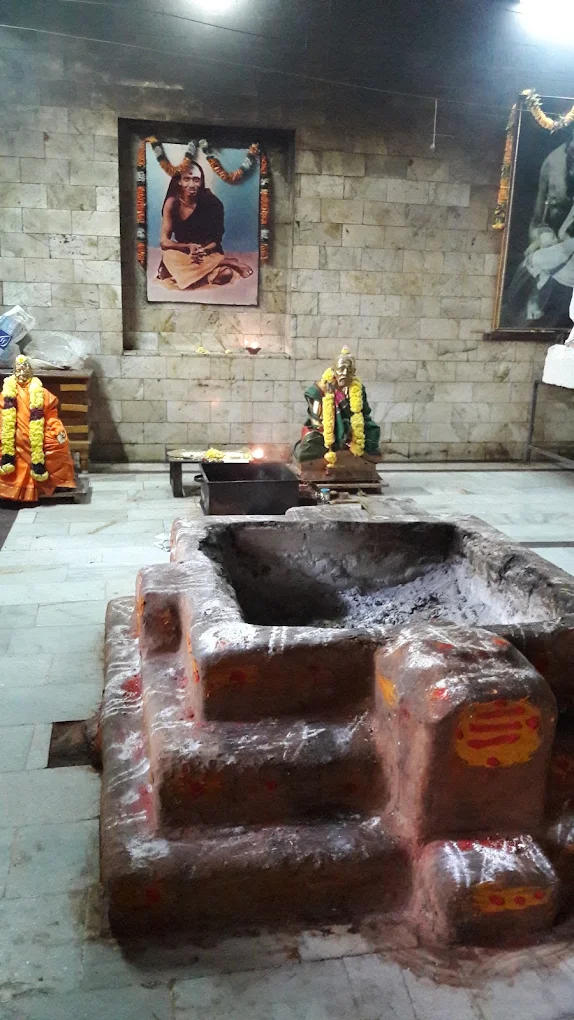
His sacred body was interred at the site where the Sri Seshadri Swamigal Ashram stands today.
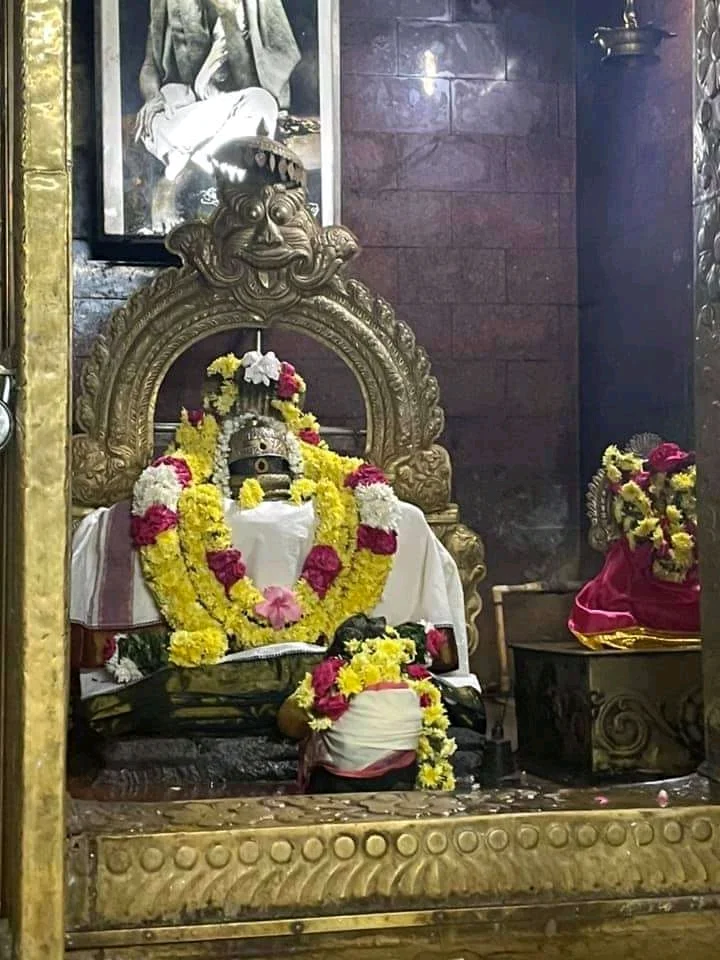
A Shiva Lingam was consecrated above his Jeeva Samadhi, transforming it into one of the most sacred places in Tiruvannamalai.
Even today, thousands of pilgrims bow before the Lingam, believing that the saint’s blessings continue to flow through his eternal spiritual presence
His Presence Lives On
For devotees, the story of Sri Seshadri Swamigal did not end in 1929.
His Mahasamadhi marked the conclusion of his earthly journey, but not the end of his spiritual influence.
Every year, pilgrims from across India and around the world visit his Jeeva Samadhi.
Many arrive with unanswered questions.
Some seek healing.
Others come searching for inner peace.
Many simply wish to sit in silence where one of India’s greatest saints once walked.
Countless devotees describe experiencing an indescribable stillness within the ashram.
Some leave with renewed faith.
Others find clarity during life’s most difficult moments.
Many speak of an invisible compassion that seems to embrace everyone who enters the sacred space.
These experiences are deeply personal.
They cannot be measured by science or explained through logic alone.
Yet generation after generation, such testimonies continue to inspire seekers to visit Tiruvannamalai.
Whether one approaches Sri Seshadri Swamigal as a historical figure, a Siddhar, a realized master, or simply a saint devoted to Arunachala, one truth remains undeniable:
His life continues to awaken spiritual longing in countless hearts.
His Silent Teaching
Unlike many spiritual teachers, Sri Seshadri Swamigal left behind no books.
He founded no religious movement.
He established no formal philosophy.
He never sought to create an institution that would preserve his name.
Instead, his life itself became his greatest scripture.
Every moment of silence…
Every unexpected action…
Every act of compassion…
Every mysterious miracle…
Pointed toward one timeless truth.
The Divine is not distant.
It is not confined to temples, rituals, or sacred mountains alone.
It already dwells within every human heart.
Sri Seshadri Swamigal demonstrated that true spirituality is not measured by outward appearances but by inner realization.
He taught without preaching.
He transformed without claiming credit.
He guided without demanding followers.
His message continues to echo through the sacred streets of Tiruvannamalai:
“Do not merely search for God outside yourself. Discover the Divine that already shines within.”
Conclusion – The Saint Who Taught Through Silence
The life of Sri Seshadri Swamigal reminds us that true spiritual greatness is rarely recognized immediately.
History is filled with saints, sages, and mystics who were misunderstood during their lifetimes. Their actions often challenged society’s understanding of what was considered normal, respectable, or wise.
Sri Seshadri Swamigal was one such soul.
He walked barefoot through the streets of Tiruvannamalai with no concern for wealth, comfort, or recognition.
He never sought fame.
He never claimed miraculous powers.
He never asked anyone to become his disciple.
Instead, he allowed his life itself to become the message.
Those who judged him by his outward appearance saw only an eccentric wanderer.
Those who looked beyond appearances discovered a realized master whose every action reflected compassion, wisdom, and complete surrender to the Divine.
The same people who once mocked him eventually stood before him with folded hands.
The merchants who had once driven him away prayed for him to enter their shops.
The children who laughed at him grew into adults who brought their own children to receive his blessings.
His transformation from being called “mad” to becoming one of India’s most revered saints serves as a timeless reminder that spiritual truth often lies beyond ordinary perception.
A Living Legacy That Continues Today
Nearly a century has passed since Sri Seshadri Swamigal attained Mahasamadhi.
Yet his presence continues to be deeply felt by thousands of devotees.
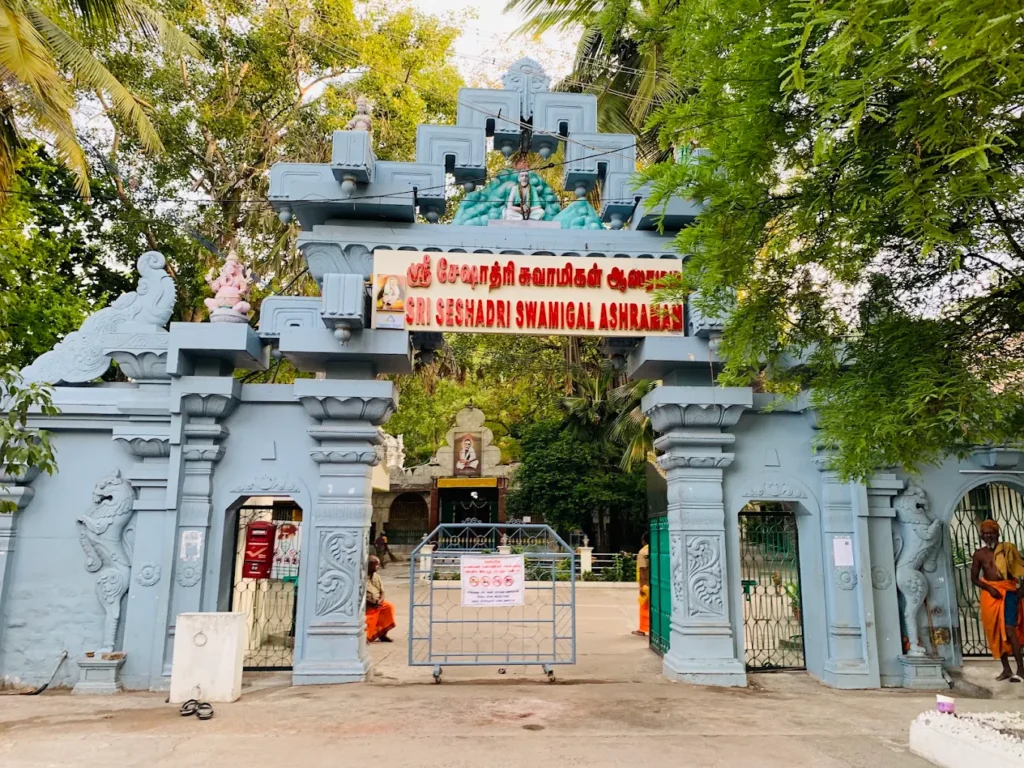
Every day, pilgrims from across India and around the world visit the Sri Seshadri Swamigal Ashram in Tiruvannamalai.
Some come seeking peace.
Some pray for guidance.
Others simply wish to spend a few quiet moments near his Jeeva Samadhi.
Many visitors describe experiencing an extraordinary stillness that is difficult to explain.
Some leave with renewed faith.
Others find clarity after years of confusion.
Many speak of an inner peace that remains with them long after they leave the ashram.
Whether one attributes these experiences to faith, devotion, or the continuing grace of a realized master, they form an important part of the living spiritual tradition that surrounds Sri Seshadri Swamigal.
His life continues to inspire seekers from every background.
His silence continues to teach.
His compassion continues to uplift.
And his unwavering devotion to Arunachala continues to illuminate the path for countless pilgrims.
A Pilgrim's Reflection
If you ever visit Tiruvannamalai, your pilgrimage should not end with the darshan of Lord Arunachaleswarar alone.
Take time to visit the peaceful ashram where Sri Seshadri Swamigal’s Jeeva Samadhi is located.
Walk slowly.
Leave behind the noise of the outside world.
Sit quietly before the sacred Shiva Lingam installed above his Jeeva Samadhi.
Do not rush.
Do not expect dramatic experiences.
Simply allow yourself to become still.
Perhaps, in that silence, you may begin to understand why thousands continue to revere the saint who rarely spoke.
You may realize that the greatest spiritual teachings are not always delivered through words.
Sometimes…
They are experienced in silence.
For Sri Seshadri Swamigal spent his entire life pointing humanity toward one eternal truth:
God is not far away. The Divine is already present within you.
That simple yet profound realization remains his greatest gift to the world.
Frequently Asked Questions (FAQ)
Who was Sri Seshadri Swamigal?
Sri Seshadri Swamigal (1870–1929) was one of India’s most revered saints and Siddhars. Born in Kanchipuram, he later settled in Tiruvannamalai, where he spent nearly four decades guiding devotees through his unique, unconventional, and deeply spiritual way of life. He is affectionately remembered as “Golden Hand Seshadri.”
Why is he called “Golden Hand Seshadri”?
According to tradition, while still a child, Seshadri accepted a Baby Krishna idol from a toy merchant during a temple festival in Kanchipuram. Soon afterward, the merchant’s entire stock of idols was sold. Believing the boy’s touch had brought divine grace, people began calling him “Golden Hand Seshadri.”
Why did people once think Sri Seshadri Swamigal was mad?
Sri Seshadri Swamigal lived beyond conventional social norms. He wandered barefoot, meditated in unexpected places, entered shops without warning, and often remained silent for long periods. His unusual behavior puzzled many people, who mistook his spiritual detachment for madness. Over time, countless devotees came to recognize the profound spiritual wisdom behind his actions.
What was his relationship with Bhagavan Sri Ramana Maharshi?
Sri Seshadri Swamigal played a significant role in the early life of Bhagavan Sri Ramana Maharshi. He recognized the young Ramana deep in meditation inside the Patala Lingam shrine and alerted nearby devotees, ensuring that the young sage was brought to safety. This event is regarded as one of the defining moments in the spiritual history of modern India.
Where is Sri Seshadri Swamigal’s Jeeva Samadhi?
His Jeeva Samadhi is located within the Sri Seshadri Swamigal Ashram on Chengam Road, Tiruvannamalai, approximately 1.5 kilometers from the Arunachaleswarar Temple.
What are the Ashram visiting hours?
The ashram is generally open during the following times:
Morning: 6:00 AM – 12:30 PM
Afternoon & Evening: 2:00 PM – 8:30 PM
Visitors are encouraged to verify timings during festivals or special occasions before planning their visit.
What can devotees do at the Ashram?
Visitors can:
- Offer prayers at the Jeeva Samadhi.
- Meditate in the peaceful surroundings.
- Attend daily pujas and Vedic chanting.
- Visit the temple dedicated to Sri Seshadri Swamigal.
- Explore the spiritual library and publications.
- Experience the serene atmosphere that has inspired pilgrims for generations.
Did Sri Seshadri Swamigal perform miracles?
Many devotees believe Sri Seshadri Swamigal performed numerous miracles throughout his lifetime. Stories include merchants whose businesses prospered after his visits, devotees recovering from illness following his blessings, and accounts of extraordinary spiritual experiences. These stories continue to inspire pilgrims and remain an integral part of his spiritual legacy.
What was his central teaching?
Although Sri Seshadri Swamigal wrote no books and delivered very few formal discourses, his life conveyed one timeless message:
“God is not separate from you. Seek the Divine within yourself.”
His entire life demonstrated complete surrender to God, boundless compassion for all living beings, and unwavering devotion to Arunachala.
Sri Seshadri Swamigal – Life Timeline
| Year | Event |
|---|
| 1870 | Born in Kanchipuram to Varadaraja Josyar and Maragatham Ammal. |
| Early Childhood | Displayed extraordinary devotion, meditation, and spiritual awareness. |
| Childhood | Earned the title “Golden Hand Seshadri” after the Baby Krishna idol incident. |
| Youth | Immersed himself in scriptures, devotional hymns, meditation, and worship. |
| After His Mother’s Passing | Inspired by her final words, “Arunachala,” he renounced worldly life. |
| 1890s | Arrived in Tiruvannamalai and dedicated his life entirely to Arunachala. |
| 1896 | Recognized the young Ramana Maharshi in Patala Lingam and helped bring him to safety. |
| 1890–1929 | Guided thousands through his unconventional spiritual life, silent teachings, and acts of compassion. |
| 4 January 1929 | Attained Mahasamadhi in Tiruvannamalai. |
| Present Day | His Jeeva Samadhi continues to attract pilgrims from India and around the world. |
Final Reflection
Sri Seshadri Swamigal did not leave behind a philosophy to debate.
He did not establish an organization to preserve his name.
He did not ask the world to remember him.
Yet, through a life of complete surrender, unwavering devotion to Arunachala, and limitless compassion for all beings, he became one of India’s most beloved saints.
His story is not merely a biography—it is an invitation.
An invitation to look beyond appearances.
To discover the sacred within the ordinary.
To seek God not only in temples and pilgrimages, but in the stillness of one’s own heart.
Perhaps that is why, even today, those who sit in silence at his Jeeva Samadhi often leave with something more valuable than answers.
They leave with peace.