


Devipattinam Navapashanam Navagraha Temple: Rama’s Sacred Shrine
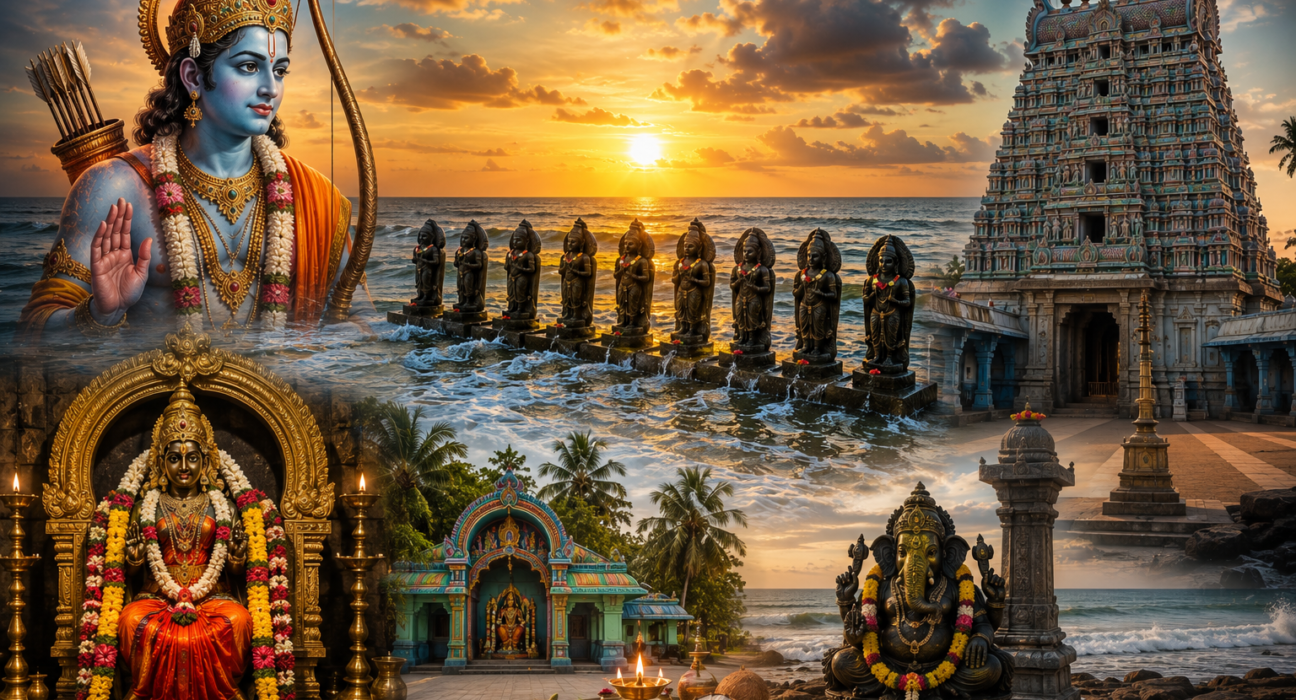
Devipattinam Navapashanam Navagraha Temple: Where Lord Rama Installed the Sacred Nine Planets Before the Battle of Lanka
Introduction
Among the countless sacred sites associated with the Ramayana, few are as mysterious and spiritually significant as Devipattinam, a serene coastal village in Tamil Nadu’s Ramanathapuram district.
Most devotees know Devipattinam for its Navapashanam Navagrahas—the unique Nine Planet deities installed in the sea by Lord Rama himself. But very few know that before beginning his legendary battle against Ravana, Rama worshipped three divine powers here: Lord Ganesha, Goddess Ulaganayagi, and finally the Navagrahas that he personally consecrated.
This ancient pilgrimage site continues to attract thousands of devotees seeking relief from planetary afflictions, ancestral karmas, and obstacles in life.
Lord Rama – The Ideal Human Being
For millions of Indians, Lord Rama is not merely a deity but the very embodiment of righteousness.
As a son, brother, husband, king, and warrior, Rama demonstrated unwavering integrity throughout his life.
Despite being an incarnation of Lord Vishnu, Rama chose to live as an ordinary human, never misusing his divine powers or deviating from the path of Dharma.
His life was filled with hardships:
- Leaving Ayodhya just before his coronation.
- Spending fourteen years in exile.
- Losing Sita to Ravana.
- Waging a difficult war in Lanka.
- Sending Sita away despite his personal anguish.
- Facing his own sons in battle without recognizing them.
Yet through every challenge, Rama remained calm, truthful, and devoted to righteousness.
It was this extraordinary life that inspired Sage Valmiki to compose the immortal Ramayana, ensuring future generations would forever remember the ideals of Lord Rama.
The Tamil Nadu Connection to the Ramayana
Tamil Nadu shares a deep and sacred connection with the Ramayana.
After reaching southern India in search of Sita, Lord Rama arrived at the shores of Rameswaram.
With the help of the Vanara army, he built the legendary bridge to Lanka, defeated Ravana, rescued Sita, and later installed the famous Shiva Lingam at Rameswaram to atone for the sin of killing Ravana.
However, before crossing the ocean, Rama undertook another equally important spiritual journey—one that led him to Devipattinam.
Why Did Lord Rama Visit Devipattinam?
Before beginning the war against Ravana, Rama wanted to ensure that every divine force blessed his mission.
He first worshipped:
- Lord Vinayaka
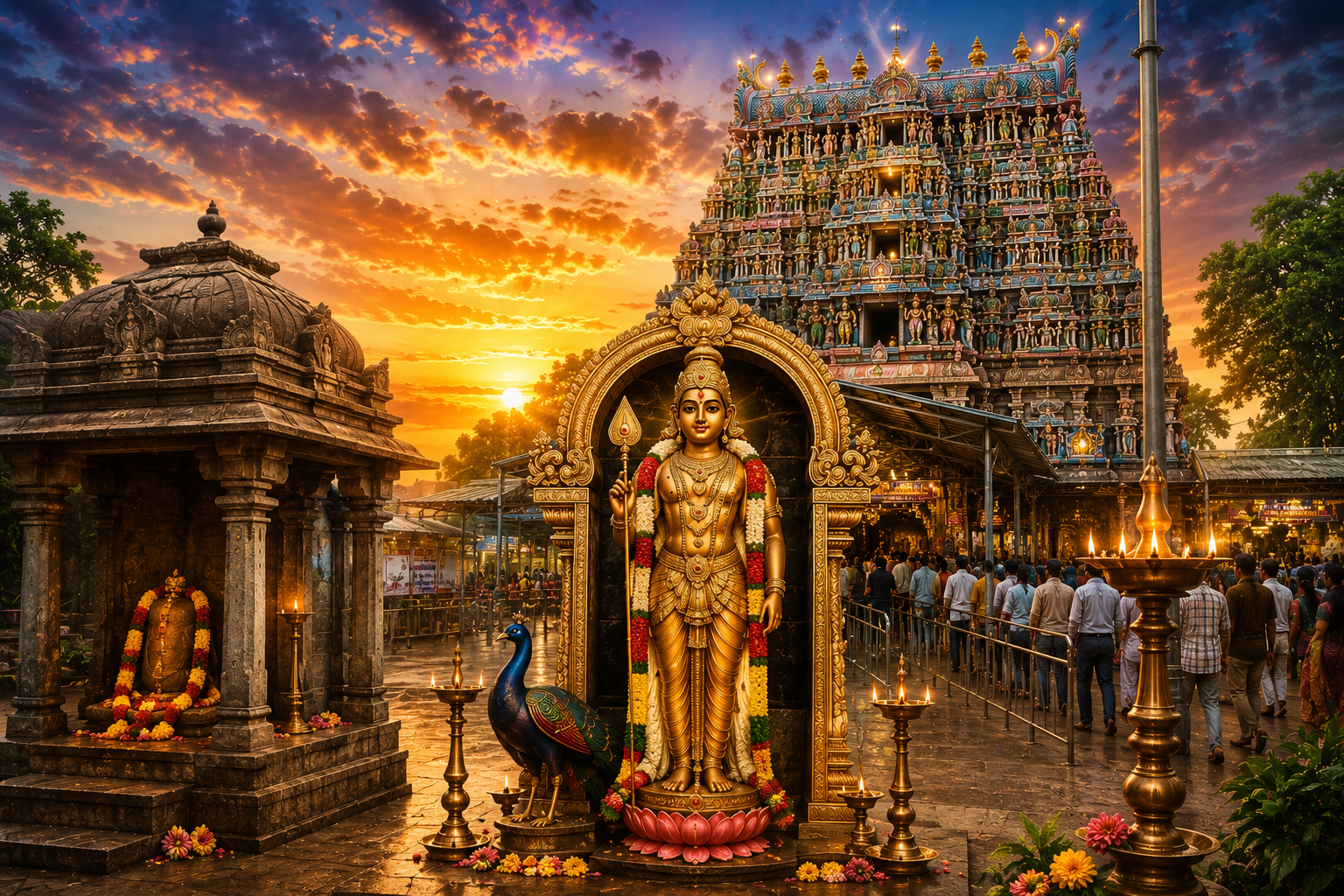
- Goddess Ulaganayagi
- The Navagrahas
His purpose was clear.
Even though he was an incarnation of Lord Vishnu, Rama demonstrated that success comes through humility, devotion, and respect for cosmic order.
Worship of Ulaganayagi Amman
Devipattinam derives its name from Goddess Ulaganayagi, the Divine Mother who is believed to have rested here after defeating the buffalo demon Mahishasura.
According to temple tradition:
The Goddess fought Mahishasura for nine days and achieved victory on the tenth day, a tradition celebrated today as Navaratri.
After her victory, she chose Devipattinam as her place of divine rest.
Hence the village came to be known as Devipattinam—the town of the Goddess.
She is worshipped here as Ulaganayagi, the Mother of the Universe.
One of the 51 Shakti Peethas
The temple is regarded as one of the sacred 51 Shakti Peethas and is especially revered as the Veera Shakti Peetham.
Devotees believe the Goddess grants:
- Courage
- Victory over enemies
- Fearlessness
- Mental strength
- Prosperity
- Family welfare
Recognizing her immense power, Lord Rama sought her blessings before marching towards Lanka.
Lord Vinayaka of Uppoor
Before reaching Devipattinam, Lord Rama visited Uppoor to worship Lord Ganesha.
In Hindu tradition, every auspicious undertaking begins with the blessings of Ganapathi.
Only after worshipping Vinayaka did Rama proceed to seek the blessings of Goddess Ulaganayagi.
This sequence continues to guide devotees even today.
Why Rama Installed the Navagrahas
Although Rama had worshipped Ganesha and the Divine Mother, he realized that the blessings of the Nine Planetary Deities were equally important before embarking on such a monumental mission.
However, there was one problem.
No Navagraha shrine existed at Devipattinam.
Rather than abandoning the worship, Rama created the Navagrahas himself.
The Creation of the Navapashanam Navagrahas
Using sacred herbs, medicinal minerals, and clay collected from the seashore, Lord Rama fashioned nine Navapashanam idols, each representing one of the Navagrahas.
He infused them with divine energy and consecrated them in the shallow waters of the sea.
These are the very Navagrahas that devotees continue to worship today.
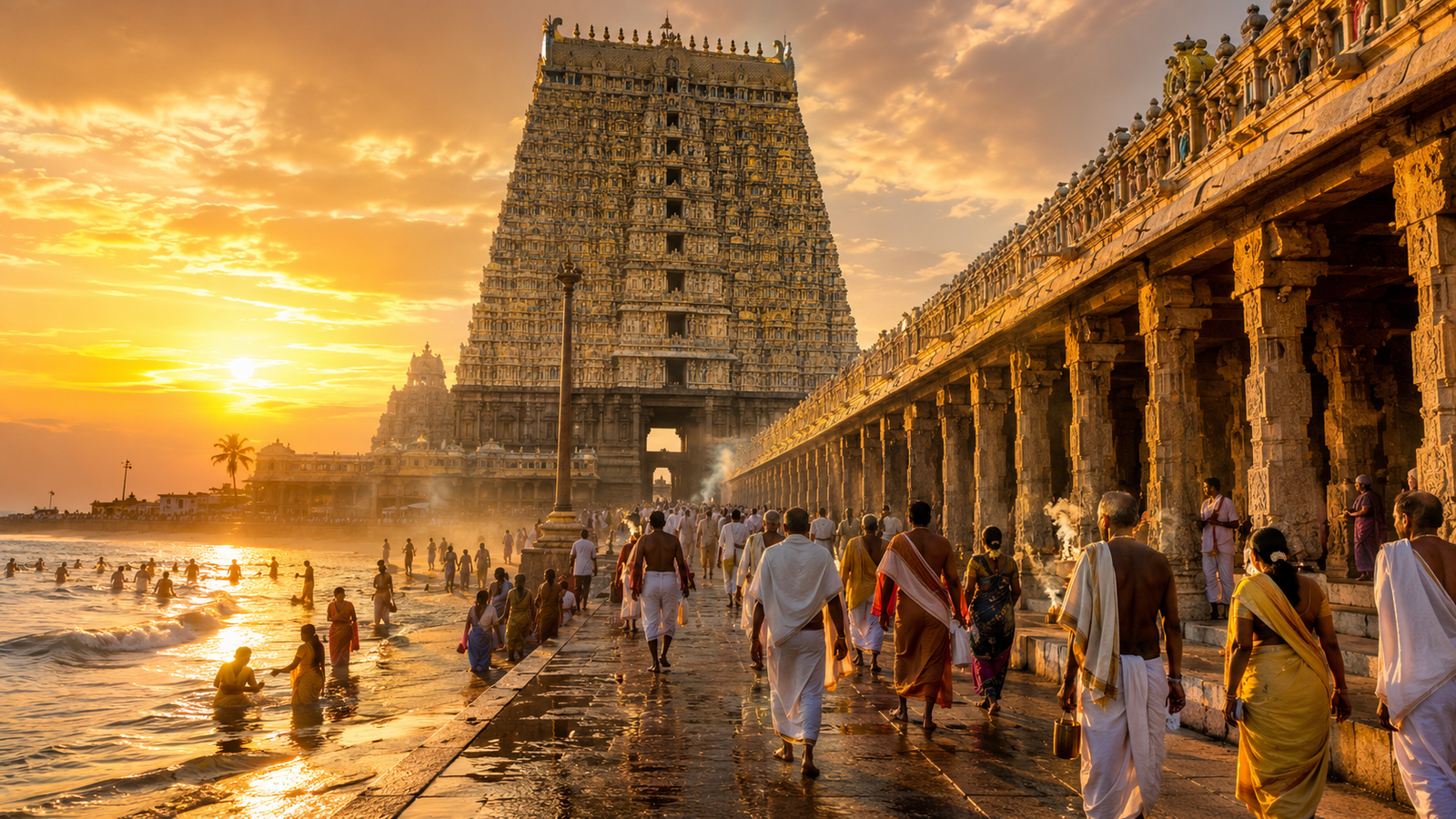
Unlike conventional Navagraha shrines inside temple complexes, these sacred deities stand amidst the sea, creating one of India’s most unique pilgrimage experiences.
What is Navapashanam?
Navapashanam refers to a mystical combination of nine medicinal minerals believed to possess extraordinary spiritual and healing properties.
Ancient Siddha traditions describe Navapashanam as possessing unique physical and chemical characteristics capable of absorbing and transmitting divine energy.
It is believed that idols made from Navapashanam become powerful spiritual conductors capable of radiating the energy of the deity they represent.
A Rare Navapashanam Shrine
Tamil Nadu is home to only a few Navapashanam consecrations.
Two are the famous Murugan idols created by Siddhar Bogar.
The third—and perhaps the oldest—is the Navagraha installation at Devipattinam, traditionally believed to have been consecrated by Lord Rama thousands of years ago.
This makes Devipattinam one of the most historically and spiritually unique Navagraha shrines in India.
Why Devotees Visit Devipattinam
Thousands of pilgrims visit the temple seeking relief from:
- Navagraha Doshas
- Planetary afflictions
- Ancestral karmas (Pitru Dosha)
- Delayed marriage
- Childlessness
- Financial obstacles
- Educational challenges
- Poor health
- Mental stress
Many also perform Tarpanam and rituals for their ancestors along the seashore, believing these ceremonies bring peace to departed souls and remove karmic burdens.
The Spiritual Significance
Perhaps the greatest miracle of Devipattinam is that the Navagrahas remain standing in the sea even after countless centuries.
Surrounded by calm ocean waters, these sacred stones continue to receive worship every day, preserving a tradition believed to have begun during the time of the Ramayana.
Standing before these ancient Navagrahas, devotees experience a profound sense of peace, humility, and faith.
Temple Highlights
- Lord Rama’s Navapashanam Navagrahas
- Ulaganayagi Amman Temple
- Veera Shakti Peetham
- Sacred seashore pilgrimage
- Pitru Dosha Parihara
- Navagraha Dosha Remedies
- Ramayana Heritage Site
- Spiritual rituals for prosperity and well-being
How to Reach Devipattinam
Devipattinam is located in Ramanathapuram District, Tamil Nadu, approximately 15 km from Ramanathapuram and around 70 km from Rameswaram. The temple is well connected by road, and buses and taxis are readily available from both towns.
Conclusion
Devipattinam is far more than a Navagraha temple. It is a living chapter of the Ramayana, where Lord Rama demonstrated that even divine beings seek the blessings of Ganesha, the Divine Mother, and the cosmic forces before undertaking great responsibilities.
The Navapashanam Navagrahas standing amidst the sea continue to inspire faith in millions of devotees. Whether one seeks relief from planetary afflictions, freedom from ancestral karma, courage to overcome life’s challenges, or the grace of Lord Rama himself, Devipattinam remains one of India’s most extraordinary spiritual destinations—a sacred place where mythology, history, devotion, and timeless faith meet.