
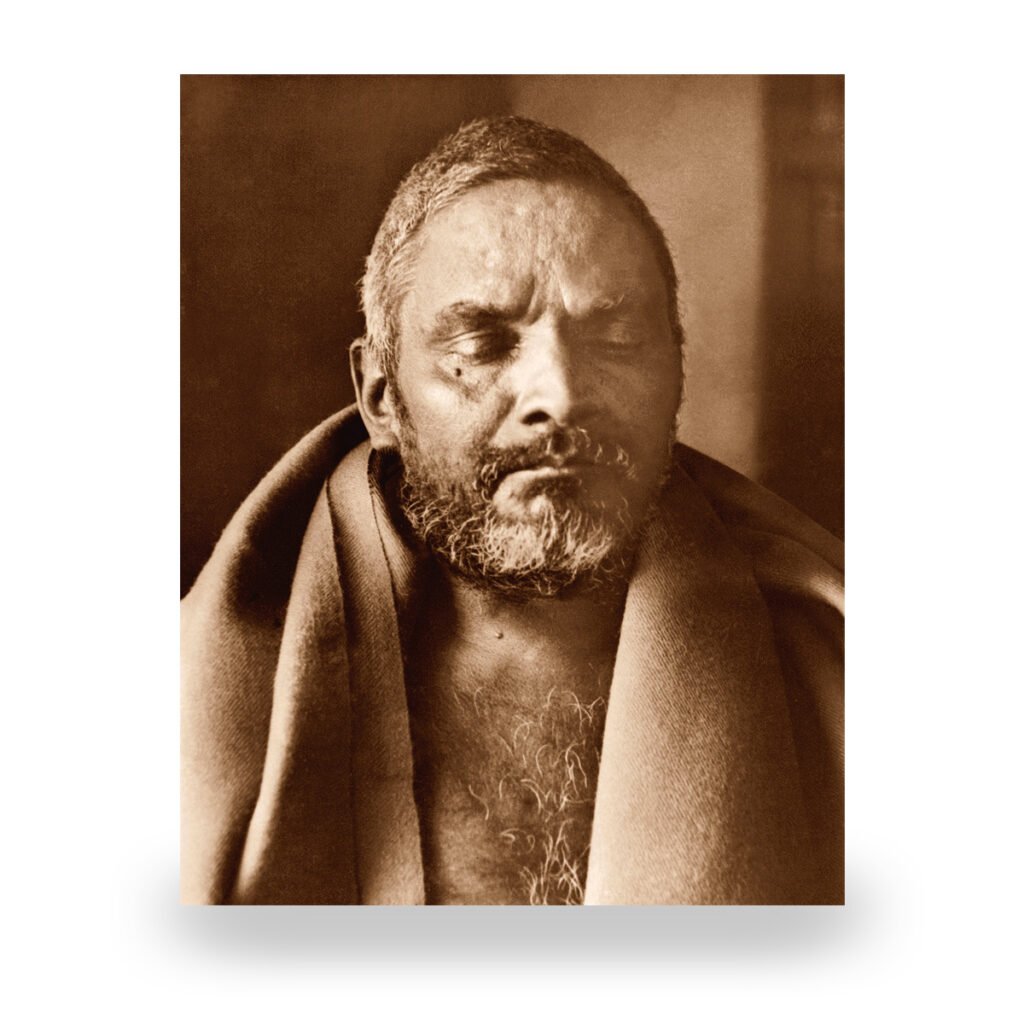
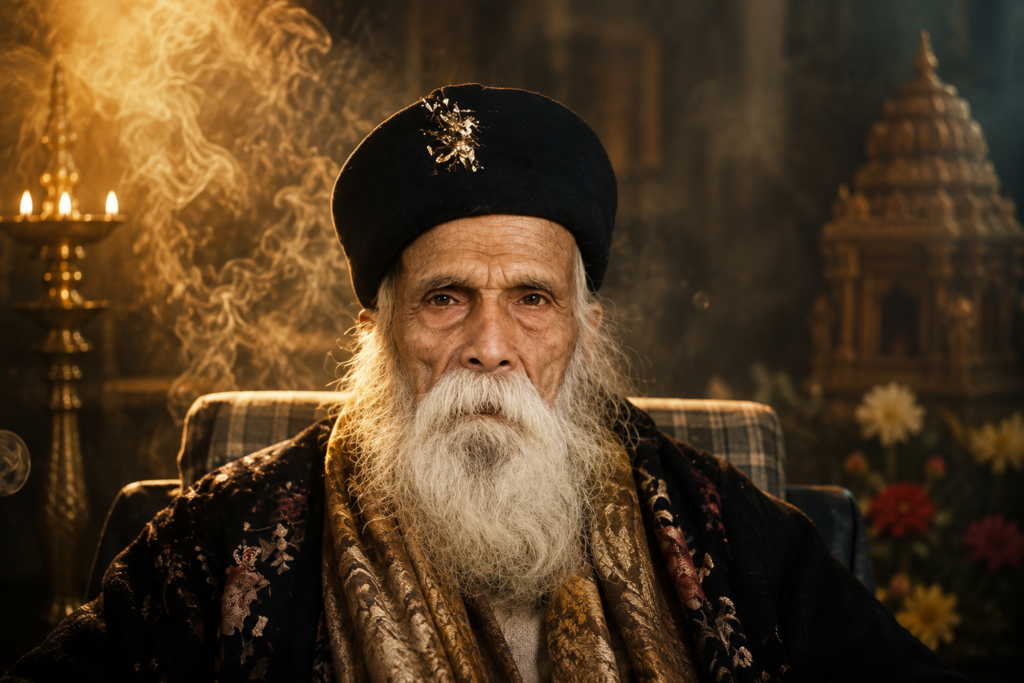
Vadakara Sivananda Paramahamsar: The Saint Who Destroyed His Own Biography and Transformed Society
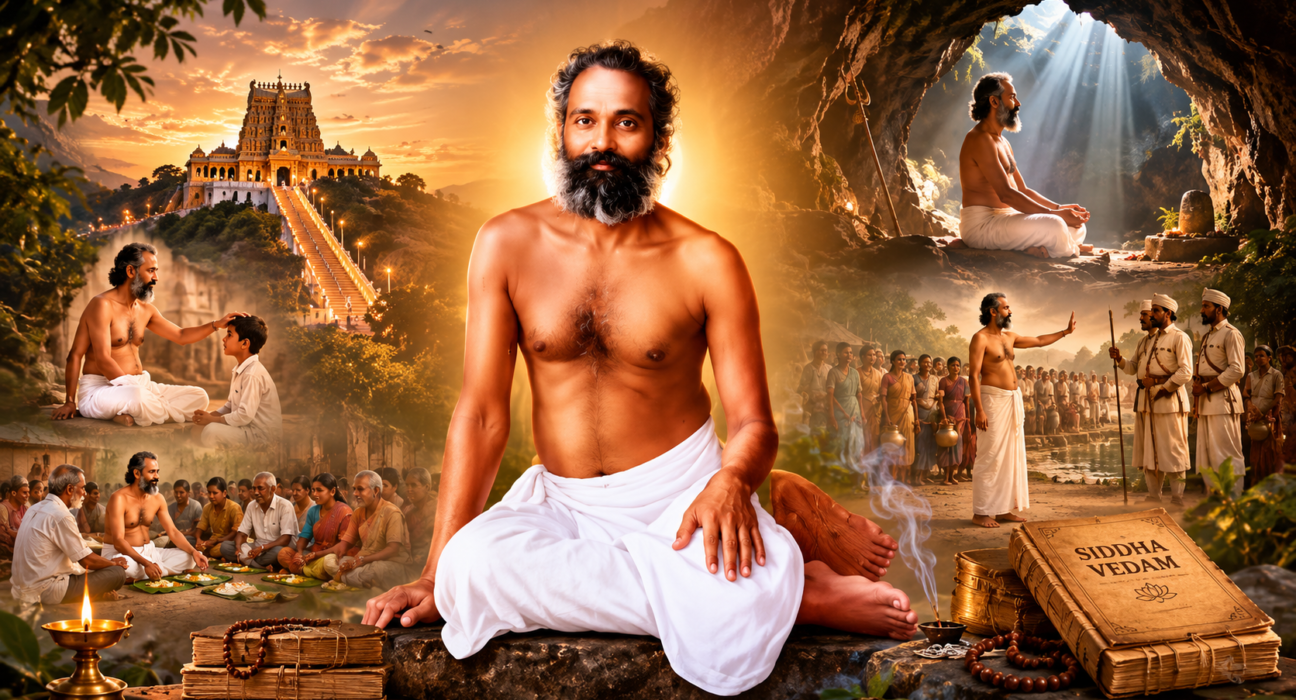
Vadakara Sivananda Paramahamsar: The Saint Who Destroyed His Own Biography to Protect the Truth
Introduction
Throughout India’s spiritual history, countless enlightened masters have walked this sacred land, transforming lives through their wisdom, silence, and divine presence. Yet, surprisingly, the lives of many of these extraordinary yogis and siddhas were never fully documented. Some faded into obscurity, while others left behind only scattered stories passed down through generations. This absence of historical records was not always due to neglect or the passage of time. In many cases, it was a conscious choice made by the saints themselves.
These realized beings believed that spiritual wisdom was never meant to be preserved merely as words in books or celebrated through biographies. According to them, enlightenment is not an intellectual achievement that can be understood by reading another person’s experiences. It is a living truth that each seeker must discover through personal experience, inner transformation, and sincere spiritual practice. Their lives served as silent demonstrations of this timeless principle, proving that true knowledge must be lived rather than merely learned.
Some saints embraced this philosophy so completely that they refused even the smallest trace of personal recognition. They would not allow photographs to be taken, avoided public praise, and rejected any attempt to immortalize their names in history. This was not born out of arrogance or secrecy. Instead, it reflected a profound realization that fame, identity, and historical recognition could become subtle obstacles on the path to liberation. Their deepest wish was that, after the body had disappeared, not even a single trace of personal identity would remain for the world to cling to.
Among these rare spiritual giants stands an extraordinary saint whose humility reached a level almost impossible to comprehend. Out of boundless devotion to his Guru and complete freedom from ego, he personally destroyed the biography that his own devotees had lovingly written about him. He believed that attention should never be directed toward the individual but always toward the eternal truth that the Guru reveals. Such an act remains one of the most powerful examples of self-effacement in modern Indian spiritual history.
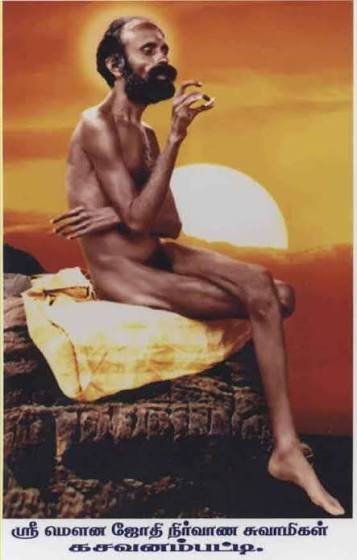
That saint was Vadakara Sivananda Paramahamsar.
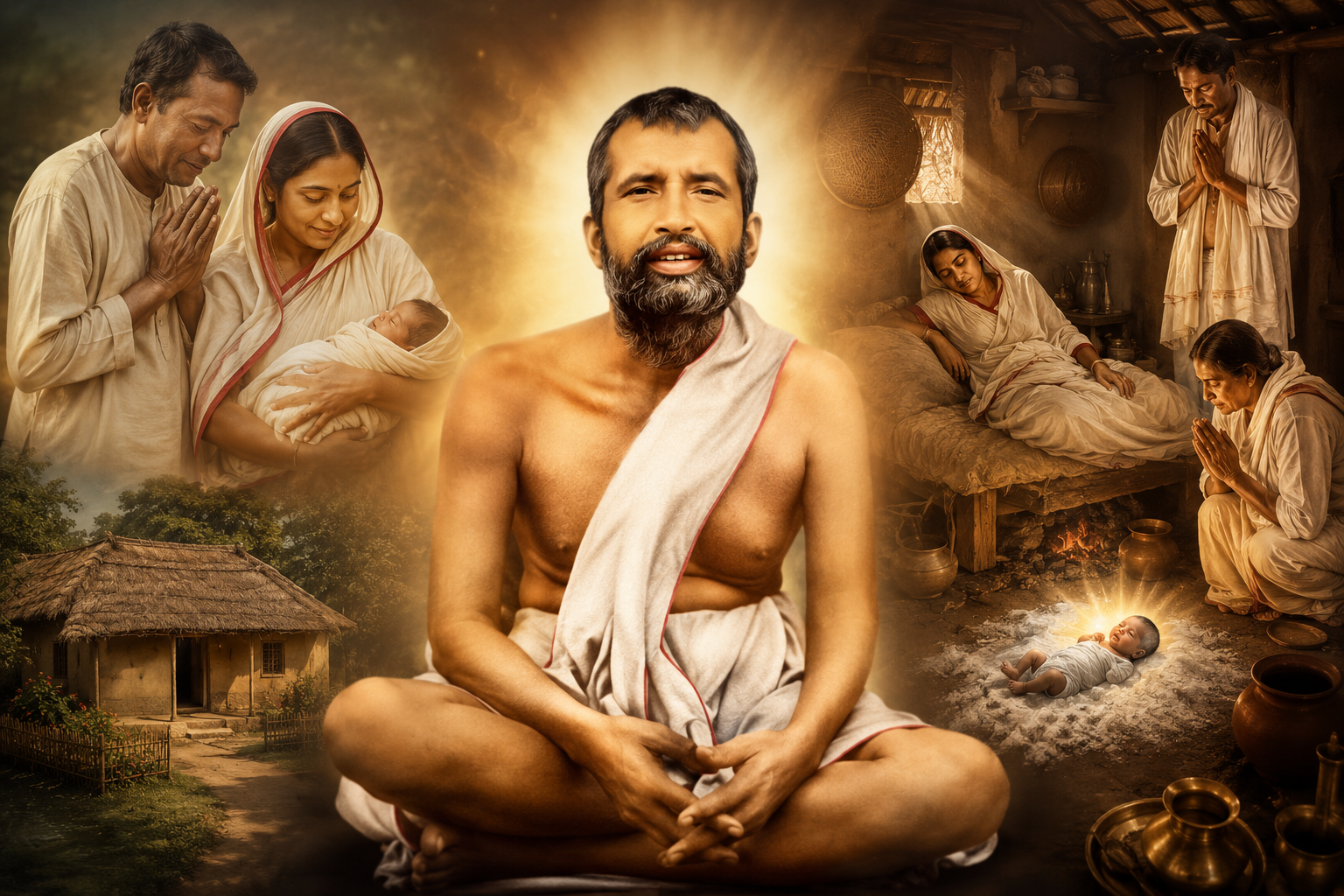
Born on 8 December 1879, on the auspicious festival of Karthigai Deepam, in the quiet town of Vadakara in present-day Kerala, he entered the world as Raman, the son of an ordinary family. Yet, beneath this seemingly ordinary beginning lay the destiny of a seeker who would eventually become one of the most remarkable yogis of the twentieth century. His life would be filled with intense tapas, mystical experiences, social reform, miraculous events, and unwavering compassion for humanity.
Unlike many saints whose greatness is measured solely through miracles, Vadakara Sivananda Paramahamsar’s legacy extends far beyond supernatural experiences. He challenged rigid social discrimination, established movements dedicated to equality, taught profound Siddha wisdom, inspired future spiritual masters, and demonstrated that authentic spirituality must transform both the individual and society. His journey reminds us that enlightenment is not an escape from the world but a force capable of reshaping it through love, courage, and selfless service.
His story is one of loss, relentless seeking, divine initiation, extraordinary yogic attainment, fearless social revolution, and complete surrender to the Absolute. It is a life that continues to inspire sincere seekers across generations, even though the saint himself wished to leave behind no personal legacy at all.
In this article, we explore the remarkable life of Vadakara Sivananda Paramahamsar—from his early years and transformative spiritual quest to his miraculous experiences, revolutionary social work, and the timeless wisdom that continues to illuminate countless hearts even today.
Early Life of Vadakara Sivananda Paramahamsar: A Child Destined for a Higher Calling
Every great spiritual journey begins with a silent inner calling—a longing that cannot be explained by logic or understood through ordinary human experience. In the lives of many enlightened masters, this mysterious pull toward the Divine appears long before the world recognizes their greatness. Vadakara Sivananda Paramahamsar was no exception.
Born as Raman on 8 December 1879, during the sacred festival of Karthigai Deepam, in the peaceful town of Vadakara in Kerala, his birth appeared ordinary to those around him. There were no grand proclamations or public signs announcing the arrival of a future saint. Yet history would later reveal that this child was destined to become one of India’s most extraordinary spiritual masters.
A Childhood Unlike Others
From an unusually young age, Raman displayed qualities that set him apart from other children. While most boys of his age found joy in games, friendships, and the simple pleasures of childhood, his heart was drawn toward something far deeper. There was an unexplainable silence within him—a yearning that words could never fully describe.
As the years passed, this inner attraction toward spirituality grew stronger. Instead of being captivated by worldly ambitions, his mind naturally gravitated toward meditation, solitude, and contemplation. It was as though an invisible force was gently guiding him toward a path that had already been written long before his birth.
Many saints have spoken about this mysterious spiritual awakening—a call that cannot be resisted because it does not originate from the mind but from the soul itself. For Raman, that call became impossible to ignore.
Leaving Home at the Age of Nine
Driven by this overwhelming inner urge, Raman made an astonishing decision that few children could ever imagine.
At just nine years of age, he left his family and travelled to the Kannur Swamigal Mutt, hoping to dedicate himself entirely to spiritual life. Such a decision, especially for a young child, reflected an extraordinary level of spiritual maturity rarely witnessed in ordinary human lives.
However, destiny had not yet prepared him for complete renunciation.
Concerned for their young son, his family eventually persuaded him to return home. Obeying their wishes, Raman resumed his education and completed his schooling. Though outwardly he returned to the routine of ordinary life, the fire of spiritual longing within him never diminished. It continued to burn quietly beneath the surface, waiting for the right moment to emerge once again.
Living an Ordinary Life… Outwardly
After completing his education, Raman accepted employment as a Kalaripayattu instructor in a school in the Malabar region. Later, he also served for a period in the police department. Eventually, he entered married life and accepted the responsibilities that society expected of a householder.
To anyone observing from the outside, his life seemed perfectly ordinary.
He worked diligently.
He fulfilled his family responsibilities.
He lived like any other respectable member of society.
Nothing in his outward appearance suggested that he would one day become a revered yogi whose life would inspire countless seekers across India and beyond.
Yet beneath this ordinary existence, another story was quietly unfolding.
The same spiritual hunger that had led him to leave home as a child had never disappeared. It remained hidden in the depths of his heart, patiently waiting for the moment when destiny would once again call him onto the path of total renunciation.
The Calm Before the Great Transformation
History shows that the lives of many enlightened beings are transformed not gradually, but through a single life-altering event.
One unexpected moment.
One devastating experience.
One question that refuses to leave the mind.
For Raman, that defining moment was approaching rapidly.
The peaceful rhythm of his family life was about to be shattered by a tragedy so profound that it would completely alter the direction of his existence. The questions born from that loss would eventually lead him away from the comforts of ordinary life and into one of the most remarkable spiritual quests in modern Indian history.
In the next part, we will explore the heartbreaking incident that transformed Raman forever—a personal tragedy that awakened an intense search for the truth behind life, death, and the eternal nature of the soul.
The Tragedy That Changed Raman's Life Forever
There are moments in life that divide a person’s existence into two chapters—everything that came before, and everything that followed.
For many enlightened masters, the doorway to spiritual awakening was not opened by comfort or success. It was opened by suffering. A single moment of unbearable loss shattered their understanding of life and compelled them to seek answers that the world could not provide.
For Raman, that moment arrived in the most heartbreaking way imaginable.
A Loss Beyond Words
Without warning, Raman’s wife fell seriously ill.
Despite every hope that she would recover, her condition rapidly deteriorated. Then came the moment that would forever remain etched into his heart.
Resting her head gently on his lap, she breathed her last.
In a matter of moments, the woman who had shared his life, spoken with him, and dreamed beside him was gone. One instant she was alive, and the next, only her lifeless body remained.
To those around him, it was the death of a loved one.
To Raman, it was the beginning of a profound spiritual crisis.
Questions That Changed Everything
As he looked upon the still body before him, his mind became consumed by questions that no physician, scholar, or philosopher could fully answer.
What had actually happened?
Only moments earlier, life had flowed effortlessly through her body.
Now that mysterious force had vanished.
Where had it gone?
What is this invisible presence that we call life?
If it exists, why can’t it be held inside the body forever?
Why must death come at all?
What truly separates a living body from a lifeless one?
And perhaps the greatest question of all…
What is the real nature of life itself?
These were no longer philosophical ideas.
They became burning questions that refused to leave him.
The Beginning of an Inner Revolution
Day and night, those questions echoed within his mind.
They followed him into silence.
They disturbed his sleep.
Every quiet moment became an opportunity for the same unanswered mysteries to rise again.
He could no longer accept the explanations that society offered about birth, life, and death. Rituals alone were no longer enough. Religious beliefs alone could not satisfy the intensity of his search.
He needed direct experience.
He wanted to know—not merely believe—the truth behind existence.
This marked the true birth of the spiritual seeker.
The grief that could have broken an ordinary man instead awakened an extraordinary determination to uncover the deepest secrets of creation.
Leaving Everything Behind
Realizing that the answers he sought could never be found within the routines of ordinary life, Raman made one of the most courageous decisions of his life.
He left Vadakara.
Not in search of wealth.
Not in search of fame.
Not even in search of religious status.
He left with only one purpose—to discover Truth.
His journey would take him across sacred lands, ancient monasteries, remote caves, and the company of great sages. Every step was driven by a single unwavering resolve: to experience the reality that lies beyond birth and death.
A Journey Without a Destination—Only a Purpose
Unlike ordinary travellers, Raman did not know exactly where his search would end.
He only knew that somewhere, someone—or something—held the answer.
His travels led him from one sacred place to another, from one spiritual tradition to the next. He met teachers, meditated in holy places, and immersed himself in silence, yet he refused to settle for partial understanding.
He was not searching for miracles.
He was not searching for followers.
He was searching for an experience that would dissolve every doubt forever.
This relentless pursuit would eventually lead him to one of the most sacred centres of Siddha tradition in South India—Palani, where destiny had arranged an encounter that would transform his spiritual journey forever.
The seeker who had begun his journey through grief was now approaching the moment when divine guidance itself would enter his life.
In the next part, we will follow Raman’s pilgrimage through ancient spiritual centres, his intense meditation in Palani’s Panchavarna Cave, and the extraordinary initiation he is believed to have received from the legendary Siddhar Bogar—an event that would forever change the course of his spiritual destiny.
The Pilgrimage That Led Raman to Palani: A Seeker's Journey Toward Divine Initiation
Once Raman left behind the familiar world of family life, there was no turning back.
The grief that had shattered his heart had also awakened an unshakable determination. He was no longer searching for temporary comfort or philosophical explanations. His only desire was to directly experience the truth that lies beyond birth, death, and the changing circumstances of life.
With unwavering faith, he began travelling from one sacred place to another, believing that somewhere along his journey, the answer he sought would reveal itself.
Seeking Wisdom at Ancient Spiritual Centres
One of the earliest destinations in his pilgrimage was the monastery associated with Thunchaththu Ramanujan Ezhuthachan, the revered sixteenth-century saint, scholar, and poet who is celebrated as the father of modern Malayalam literature.
This was not merely a historical site.
For generations, it had been regarded as a place sanctified by intense tapas and spiritual realization.
Raman immersed himself completely in its atmosphere of silence. Days passed in deep meditation, away from distractions and worldly conversations. Every moment was dedicated to inner observation, hoping that the stillness surrounding him would unveil the mysteries that had haunted his heart since his wife’s passing.
Yet despite the profound peace he experienced there, he sensed that his journey was not complete.
The answers he sought still lay beyond the horizon.
The inner call that had guided him this far now urged him onward once again.
Drawn to the Sacred Land of the Siddhas
His next destination was Palani, one of South India’s most revered spiritual landscapes.
To millions of devotees, Palani is known as the sacred abode of Lord Murugan. But for seekers of Siddha wisdom, it holds an even deeper significance. It is revered as one of the principal centres of the Tamil Siddha tradition and is inseparably connected with the immortal Siddhar Bogar, the legendary master believed to have created the Navapashana idol of Lord Dhandayuthapani.
For Raman, Palani was not merely another pilgrimage destination.
It was a place where ancient yogic energies had been preserved for centuries.
It was here that destiny had prepared the next chapter of his spiritual evolution.
Years of Meditation Inside the Panchavarna Cave
Among the many sacred locations in Palani, Raman chose the Panchavarna Cave as his place of meditation.
Far removed from ordinary human activity, the cave offered the solitude he had long sought.
Inside its silent depths, he entered a life of uncompromising spiritual discipline.
Days became weeks.
Weeks turned into months.
The outside world slowly disappeared from his awareness.
There were no comforts.
No conversations.
No recognition.
Only uninterrupted meditation.
With extraordinary determination, he gathered every movement of his body, every thought of his mind, and every breath into a single-pointed awareness. His entire being became absorbed in the search for ultimate truth.
The Vision of Siddhar Bogar
During this period of intense tapas, Raman experienced an event that would permanently alter the course of his spiritual life.
Years later, he himself acknowledged that while meditating in the Panchavarna Cave, he received the divine vision of Siddhar Bogar.
According to his own account, the great Siddhar not only appeared before him but also bestowed diksha—a sacred spiritual initiation.
For seekers of the Siddha tradition, such an initiation is not merely a ritual or ceremonial blessing. It represents the direct transmission of spiritual energy, awakening hidden dimensions of consciousness that cannot be attained through intellectual study alone.
This was the moment when Raman’s search found its true direction.
A Tradition That Links Two Great Siddhas
Within certain spiritual lineages, an even more extraordinary belief continues to be preserved.
Some traditions hold that Raman was none other than the reincarnation of Sivavakkiyar, one of the celebrated Eighteen Siddhas of Tamil Siddha philosophy. According to these accounts, Siddhar Bogar personally initiated him because of this profound spiritual connection that transcended lifetimes.
While such claims belong to the realm of spiritual tradition and devotion rather than historical verification, they reflect the immense reverence with which later generations regarded Raman’s spiritual stature.
Whether understood symbolically or literally, these traditions portray him as a seeker whose realization belonged to a lineage extending far beyond a single lifetime.
The Cave That Slowly Disappeared
Even after receiving this extraordinary initiation, Raman did not emerge from the cave.
His meditation continued.
His quest had deepened rather than ended.
As months passed, nature itself began to reclaim the secluded retreat.
Anthills gradually formed around the entrance.
Bushes and wild vegetation spread across the surrounding landscape.
Slowly, almost imperceptibly, the Panchavarna Cave vanished beneath the embrace of the forest, concealing the yogi who remained absorbed in profound meditation.
The world had almost forgotten him.
But destiny had not.
Soon, an unexpected visitor would discover the hidden ascetic beneath the overgrown anthills—a discovery so astonishing that it would mark the beginning of Vadakara Sivananda Paramahamsar’s emergence from obscurity and lead him toward an even greater spiritual mission.
In the next part, we will explore how a forest officer discovered Raman after his prolonged meditation, his transformative journey to the Himalayas, and the remarkable events that eventually earned him the title “Sivananda Paramahamsar.”
The Hidden Yogi of Palani: Discovery, the Himalayan Journey, and the Birth of Sivananda Paramahamsar
For many spiritual seekers, receiving divine initiation marks the culmination of their quest.
For Raman, it was only the beginning.
The grace of Siddhar Bogar had given his search a clear direction, but he refused to mistake a profound spiritual experience for the final destination. Instead of returning to society, he remained inside the Panchavarna Cave, continuing his intense tapas with even greater determination.
Nature Slowly Concealed the Meditating Saint
Days merged into months.
Months passed in complete silence.
Inside the cave, Raman remained immersed in deep meditation, seemingly unaware of the passage of time.
Outside, nature quietly transformed the landscape.
Anthills slowly rose around the cave.
Bushes and wild vegetation spread across the entrance.
The forest gradually reclaimed the sacred space until the cave itself was almost hidden from human sight. It was as though nature had become the guardian of a yogi whose consciousness had withdrawn far beyond the ordinary world.
To passing travellers, nothing unusual could be seen.
But beneath the overgrown anthills sat a seeker whose inner journey was reaching unimaginable depths.
An Astonishing Discovery
One day, fate intervened.
A forest officer named Kalam, who was surveying the region, happened to pass through the area surrounding the Panchavarna Cave.
What he discovered was unlike anything he had ever witnessed.
Hidden beneath the anthills, seated motionless inside the cave, was Raman.
His body remained completely still.
His eyes reflected profound inward absorption.
He appeared untouched by the passage of time, immersed in an extraordinary state of meditation.
The anthills covering him were carefully removed, and he was gently brought out of the cave.
According to traditional accounts, Raman was around thirty-one years old at that time.
The discovery of the hidden yogi marked the end of one chapter of his life and the beginning of another that would carry him far beyond South India.
The Great Himalayan Pilgrimage
In January 1910, Raman embarked on a journey that countless yogis throughout Indian history have regarded as the ultimate pilgrimage—the journey to the Himalayas.
For centuries, the Himalayas have been revered not merely as a mountain range but as the living heart of India’s spiritual tradition.
Ancient scriptures describe these snow-clad peaks as the abode of sages who transcend ordinary human existence. Many seekers believe that countless realized beings continue to perform tapas in these remote regions, hidden from the eyes of the world.
It was into this sacred landscape that Raman now entered.
Years Among the Great Masters
Raman spent several years living in the Himalayan regions.
During this period, he encountered numerous siddhas and realized masters, each contributing to the deepening of his spiritual realization.
His experiences in the Himalayas were not limited to meditation alone.
Traditional accounts state that he attained profound states of spiritual realization and acquired various yogic siddhis during this period. Yet, remarkably, he never sought to display these extraordinary abilities for personal recognition.
His focus remained fixed on the ultimate goal of Self-realization rather than supernatural powers.
A Divine Command
While residing in the Himalayas, Raman is believed to have received an extraordinary inner command.
He was instructed to travel to the Sringeri Sharada Peetham in present-day Karnataka.
This was no ordinary instruction.
According to tradition, he was inwardly guided to receive four sacred objects that had been carefully preserved through the lineage of Adi Shankaracharya.
Among these were the revered Yoga Danda and Rudraksha, treasured symbols associated with one of India’s greatest spiritual teachers.
A Vision at Sringeri
What makes this episode especially remarkable is that, according to traditional accounts, events were simultaneously unfolding at the Sringeri monastery.
The 32nd Jagadguru, Sri Narasimha Bharati, reportedly experienced a dream in which he received a divine instruction.
The dream revealed that a highly accomplished yogi would soon arrive at the monastery and that the sacred possessions associated with Adi Shankaracharya should be entrusted to him.
Neither Raman nor the Jagadguru had knowledge of the other’s experience.
Yet both were being guided toward the same meeting.
The Meeting That Changed His Destiny
When Raman finally reached the Sharada Peetham, the remarkable events described in the dream unfolded exactly as foretold.
Recognizing the extraordinary spiritual stature of the visiting yogi, Jagadguru Narasimha Bharati entrusted him with the sacred relics associated with Adi Shankaracharya.
It was during this historic meeting that Raman received the title by which he would forever be remembered:
Sivananda Paramahamsar.
The title was far more than an honorific.
In India’s spiritual tradition, the designation Paramahamsa is reserved for those who are regarded as having attained the highest realization of the Absolute—a state beyond ego, duality, and worldly identity.
From this moment onward, Raman became known to the world as Vadakara Sivananda Paramahamsar.
The Return of a Realized Master
After years of intense tapas, divine initiation, Himalayan austerities, and recognition by one of India’s foremost spiritual institutions, Sivananda Paramahamsar returned to Kerala.
But he did not return seeking worship or personal glory.
He returned with a mission.
The realization he had attained in silence would now begin to express itself through spiritual teaching, Siddha wisdom, and courageous social reform.
His life was about to demonstrate that true enlightenment is not measured merely by mystical experiences—it is measured by the transformation it brings to humanity.
In the next part, we will explore how Sivananda Paramahamsar authored the Siddha Vedam, revived ancient Siddha practices, challenged caste discrimination, founded revolutionary social movements, and proved that spirituality must ultimately manifest as compassion and equality in everyday life.
Sivananda Paramahamsar: The Siddha Master Who United Spiritual Realization with Social Revolution
After years of intense meditation, divine initiation, and spiritual discipline, Sivananda Paramahamsar returned to Kerala as a transformed being.
He had experienced the silence of sacred caves.
He had wandered through the Himalayas.
He had received recognition from one of India’s highest spiritual institutions.
Yet none of these achievements became reasons for self-glorification.
Unlike many spiritual teachers who established institutions centered around their own personalities, Sivananda Paramahamsar dedicated his life to awakening the divine potential within every human being. His teachings reflected a simple but profound truth: genuine spirituality is incomplete unless it transforms the lives of others.
The Creation of ‘Siddha Vedam’
One of the most significant contributions of Sivananda Paramahamsar came in 1923, when he authored Siddha Vedam, a remarkable work containing profound teachings drawn from the Siddha tradition.
The book was far more than a collection of spiritual ideas.
It represented the distilled wisdom of a seeker who had personally walked the path of tapas, meditation, and inner realization.
Unlike theoretical philosophy, Siddha Vedam reflected knowledge born from direct spiritual experience. Through its teachings, Sivananda sought to preserve ancient Siddha wisdom while making it accessible to sincere seekers who wished to understand the deeper dimensions of yogic life.
Alongside this work, he began teaching rare spiritual disciplines, including Siddha Vidya and Vasi Yoga, guiding earnest disciples toward inner transformation rather than mere intellectual understanding.
Spirituality Must Change Society
For Sivananda Paramahamsar, meditation alone was never the final goal.
He believed that authentic spiritual realization should naturally express itself through compassion, justice, and service.
If years of meditation failed to make a person more loving, more humble, and more compassionate toward fellow human beings, then that spirituality remained incomplete.
This conviction shaped every aspect of his public life.
He boldly challenged the rigid caste discrimination that dominated society during his time, declaring through both words and actions that every human being possessed the same divine essence.
His message was revolutionary—not because it relied on political ideology, but because it emerged from direct spiritual realization.
To him, discrimination based on birth was fundamentally incompatible with the vision of divine unity.
The Revolutionary ‘Samabandhi Bhojanam’
At a time when caste divisions dictated where people could live, work, worship, and even eat, Sivananda Paramahamsar introduced a practice that challenged the very foundation of social inequality.
In 1921, he established the movement known as Samabandhi Bhojanam.
Its purpose was beautifully simple.
People from every caste, social background, and economic status would gather together, work together, sit together, and share the same meal without distinction.
Today such an idea may appear ordinary.
But in the early twentieth century, it was nothing short of revolutionary.
By inviting everyone to dine together as equals, Sivananda demonstrated that spiritual realization cannot coexist with prejudice. Every shared meal became a living declaration that humanity is one family.
The Birth of the Siddha Samajam
The impact of this movement extended far beyond communal dining.
What began as a practical expression of equality gradually evolved into a much larger social and spiritual movement known as the Siddha Samajam.
Its vision extended beyond religious instruction.
It sought to cultivate a society founded upon spiritual wisdom, mutual respect, human dignity, and service.
Under Sivananda Paramahamsar’s guidance, the movement inspired people to look beyond inherited divisions and rediscover the unity that lies at the heart of India’s spiritual heritage.
A Saint Who Refused to Separate God from Humanity
Many saints dedicate themselves entirely to meditation.
Many social reformers dedicate themselves entirely to changing society.
Sivananda Paramahamsar accomplished something far rarer.
He united both paths.
For him, serving humanity was itself an expression of divine realization.
Every act of compassion became worship.
Every effort to remove injustice became a form of spiritual practice.
His life demonstrated that enlightenment is not measured by mystical experiences alone, but by the ability to relieve suffering wherever it exists.
This philosophy would soon be tested in dramatic fashion.
One courageous act at a temple tank would challenge centuries-old caste discrimination, reveal the extraordinary spiritual power attributed to Sivananda Paramahamsar, and establish his reputation across South India as a saint who stood fearlessly for justice.
In the next part, we will explore the remarkable incident at the Loparnakav Temple Tank, the miracle that humbled a powerful landlord, the praise he unexpectedly received from Periyar E.V. Ramasamy, and the extraordinary events that transformed Sivananda Paramahamsar into one of the most respected spiritual reformers of his era.
The Saint Who Challenged Caste Discrimination: The Miracle That Changed South India
Sivananda Paramahamsar believed that spirituality had little meaning if it remained confined to meditation halls and sacred texts.
To him, the highest realization was reflected not only in inner peace but also in the courage to stand beside those who suffered injustice.
This conviction would soon lead him into one of the most remarkable episodes of his life—an event that challenged centuries-old social customs and revealed the extraordinary spiritual power that countless devotees attributed to him.
The Temple Tank Reserved for the Privileged
A few kilometres from Vadakara stood the Loparnakav Temple Tank, a large reservoir that supplied water to the surrounding communities.
Although the tank contained abundant water, access to it was strictly controlled.
Only members of the so-called upper castes were permitted to draw water.
People belonging to oppressed communities were forbidden even from entering the tank.
The order had been enforced by the local feudal ruler, known as the Thampuran. Anyone who dared to violate it risked severe punishment.
For generations, countless families endured humiliation simply because of the circumstances of their birth. Every day they walked past water they were not allowed to touch.
A Fearless Decision
When Sivananda Paramahamsar learned of this injustice, he refused to remain silent.
One day, he gathered the oppressed villagers and led them directly to the temple tank.
Standing calmly on the stone steps, he looked at them and spoke with quiet authority.
“Go down into the water and draw what you need. Even if the Thampuran’s men arrive and try to stop you, do not resist. Simply continue peacefully.”
His words carried neither anger nor hatred.
There was only unwavering conviction that every human being possessed an equal right to dignity.
Violence Meets Silence
News of the incident quickly reached the Thampuran.
Enraged by what he considered an act of defiance, he sent his men to punish the saint.
The attackers surrounded Sivananda Paramahamsar and began striking him.
He did not defend himself.
He did not retaliate.
He remained completely still.
Those who witnessed the event expected the saint to collapse beneath the assault.
Instead, something astonishing was said to have occurred.
The Miracle That Stunned Everyone
According to traditional accounts, every blow delivered to Sivananda Paramahamsar mysteriously affected the Thampuran himself.
As the attackers struck the saint, the pain was experienced by the man who had ordered the violence.
The Thampuran reportedly began suffering each injury as though he himself were being beaten.
Whether viewed as a literal miracle by devotees or as a sacred tradition preserved within his spiritual lineage, the incident profoundly transformed those who witnessed it.
Realizing the gravity of what had happened, the Thampuran recognized his mistake.
Overwhelmed with remorse, he approached Sivananda Paramahamsar with humility and sincerely sought his forgiveness.
A Reputation That Spread Across South India
The extraordinary event soon spread far beyond Vadakara.
People no longer spoke of Sivananda Paramahamsar merely as a yogi or spiritual teacher.
Many began regarding him as an Avatar Purusha—a divine being who had descended to uplift humanity.
His reputation expanded throughout South India, not simply because of the miracle itself, but because of the compassion and fearlessness with which he defended the oppressed.
Even those who disagreed with religious beliefs found it difficult to ignore his integrity, courage, and unwavering commitment to human dignity.
Praise from an Unexpected Voice
Perhaps one of the most remarkable acknowledgements came from a person whom few would expect.
During the Vaikom movement, E.V. Ramasamy “Periyar”, one of India’s most influential rationalist and social reform leaders, heard about Sivananda Paramahamsar’s work.
Deeply impressed, Periyar is traditionally reported to have declared before a public gathering:
“I am not the great one. Sivananda is the true Periyar.”
According to traditional accounts, this statement was later recorded in Viduthalai, the newspaper associated with Periyar’s movement.
The admiration carried profound significance.
Here was a rationalist leader known for challenging religious orthodoxy expressing respect for a spiritual master—not because of miracles, but because of his courage in confronting social injustice.
It demonstrated that Sivananda Paramahamsar’s influence extended beyond religious communities.
His commitment to equality earned admiration across ideological boundaries.
Spirituality in Action
For Sivananda Paramahamsar, compassion was never a philosophy.
It was action.
He did not preach equality while remaining silent before discrimination.
He stood where suffering existed.
He protected those who had no voice.
He challenged systems that denied basic human dignity.
His life became living proof that the highest spiritual realization naturally blossoms into fearless service.
Yet, remarkable as these social reforms were, they represented only one dimension of his extraordinary life.
There were also countless personal encounters that revealed the depth of his spiritual insight—moments when he recognized the future greatness of unknown seekers, healed those who had lost hope, and quietly transformed lives without seeking recognition.
In the next part, we will explore Sivananda Paramahamsar’s extraordinary meeting with a young boy who would later become Bhagavan Nityananda, the miraculous healing of a man suffering from elephantiasis, his mission in Malaysia, and the final years that culminated in his serene Mahasamadhi.
The Living Legacy of Sivananda Paramahamsar: Miracles, Bhagavan Nityananda, and His Final Journey
By the time Sivananda Paramahamsar had become widely known across Kerala and South India, people no longer came to him merely for spiritual instruction.
Some sought answers to life’s deepest questions.
Others came seeking healing.
Many simply wished to experience the presence of a man whose silence itself seemed to radiate peace.
Yet, despite the growing reverence surrounding him, Sivananda Paramahamsar never claimed to perform miracles. Throughout his life, he remained a humble servant of the Divine, allowing compassion—not supernatural power—to define his actions.
The Boy Who Would Become Bhagavan Nityananda
One of the most extraordinary moments in Sivananda Paramahamsar’s life occurred during a spiritual discourse at the home of Eswara Iyer.
As he delivered his teachings, the audience listened with complete attention.
But Sivananda’s gaze was fixed elsewhere.
Away from the gathering stood a quiet young boy.
The child spoke no words.
He simply stood silently, watching the saint with unwavering attention.
Something about the boy immediately captured Sivananda Paramahamsar’s awareness.
After completing the discourse, Sivananda called Eswara Iyer aside and made an astonishing prediction.
“This boy will one day become a great renunciate whom the entire nation will revere.”
He then invited the child to come near, bestowed spiritual initiation upon him, and offered sacred instructions that would shape his future path.
That young boy would later be known throughout India as Bhagavan Nityananda, one of the twentieth century’s most revered spiritual masters.
For devotees, this meeting was not merely an encounter between teacher and disciple.
It was the symbolic passing of spiritual light from one realized master to another.
The Healing of a Man with Elephantiasis
Another incident, preserved in the traditions surrounding Sivananda Paramahamsar, illustrates the extraordinary compassion that defined his life.
One day, while walking along a road, he was approached by a man who fell at his feet in desperation.
For many years, the man had suffered from elephantiasis, a debilitating disease that had left him in constant pain and despair.
With tears in his eyes, he begged the saint to save him.
Sivananda Paramahamsar quietly looked at him for a moment.
Without performing any elaborate ritual, he bent down and picked up a handful of ordinary soil from the roadside.
He divided it into two portions.
One portion he instructed the man to swallow.
The remaining soil he gently sprinkled over the diseased leg.
Having done this, Sivananda simply smiled and continued walking, speaking no further words.
According to traditional accounts, within a few days the man’s elephantiasis disappeared completely.
The man, later known as Swami Saranananda, became one of Sivananda Paramahamsar’s most devoted disciples.
Whether understood as a miraculous healing or an event preserved through devotional tradition, the story reflects the deep faith that countless followers placed in the saint’s spiritual presence.
Taking Siddha Wisdom Beyond India
Sivananda Paramahamsar’s mission was never limited to the Indian subcontinent.
In 1937, responding to the heartfelt requests of devotees, he travelled to Kuala Lumpur, Malaysia.
At a time when many Indian spiritual traditions remained geographically confined, he carried Siddha teachings across the sea, sharing both spiritual wisdom and practical healing methods with overseas communities.
There he established the Siddha Vaithiya Sangam, an institution dedicated to integrating three inseparable dimensions of human well-being:
- Siddha medicine
- Spiritual knowledge
- Service to humanity
Rather than separating physical healing from spiritual growth, Sivananda viewed them as complementary expressions of the same Divine reality.
His work eventually led to the establishment of five Siddha Samajams across Kerala and Tamil Nadu, ensuring that his teachings would continue inspiring future generations.
The Final Days
By the late 1940s, Sivananda Paramahamsar had spent decades transforming lives through teaching, service, and silent spiritual guidance.
Unlike ordinary people who fear death, realized masters often regard it as the natural completion of the body’s journey.
Traditional accounts describe Sivananda Paramahamsar as fully aware that the time had come to leave his physical form.
On 23 June 1949, at his residence along the sacred Girivalam path near the Dhandayuthapani Temple in Palani, he calmly prepared for his final transition.
There was no fear.
No agitation.
No sorrow.
In complete inner stillness, he consciously relinquished his mortal body and entered Mahasamadhi.
A Silence That Continues to Speak
For ordinary people, death marks an ending.
For realized masters, it marks a union.
A return to the limitless consciousness from which individual existence arises.
Following his Mahasamadhi, Sivananda Paramahamsar’s physical body was taken back to his birthplace, Vadakara, where a Samadhi shrine was established.
To this day, devotees visit the sacred site not merely to remember a historical figure, but to experience the peace that continues to surround his presence.
Unlike many celebrated saints, Sivananda Paramahamsar left behind no grand monuments, no elaborate temples dedicated to personal glorification, and no desire for worldly remembrance.
Instead, he left something far more enduring.
He left ideas.
He left compassion.
He left courage.
He left the living example of a person who dissolved his own identity so that others might discover the truth within themselves.
His footsteps may have faded from the earth.
But the seeds he planted—in spirituality, equality, and human dignity—continue to quietly take root in the hearts of seekers around the world.
Conclusion: The Silent Saint Who Chose Truth Over Immortality
History remembers many saints for the temples built in their honor, the books they authored, or the miracles attributed to them.
Yet, Vadakara Sivananda Paramahamsar stands apart for an entirely different reason.
He lived a life so free from ego that he wished even his own story to disappear.
While most people long to leave behind a legacy, he sought to leave behind only Truth.
His greatest message was never, “Remember me.”
It was, “Discover the Divine within yourself.”
His life teaches us that spirituality is not measured by how many followers we gather, how many books we write, or how famous we become.
Instead, true realization is reflected in:
- The courage to question the deepest mysteries of life.
- The willingness to surrender everything in search of Truth.
- The humility to erase one’s own identity before the Divine.
- The compassion to serve every human being without discrimination.
- The strength to challenge injustice while remaining rooted in love.
Vadakara Sivananda Paramahamsar embodied every one of these ideals.
His journey began with the grief of losing his wife, but rather than allowing sorrow to consume him, he transformed it into an unrelenting quest for ultimate reality. That search led him through sacred monasteries, the caves of Palani, the Himalayas, and into the presence of great spiritual masters. Along the way, he became not only a realized yogi but also a fearless reformer who challenged caste discrimination, uplifted the oppressed, and demonstrated that spirituality must express itself through compassion and equality.
His influence extended far beyond meditation and mystical experiences. Through works such as Siddha Vedam, the teaching of Siddha Yoga and Vasi Yoga, the establishment of the Siddha Samajam, and his efforts to unite people beyond caste and social divisions, he proved that the highest spiritual wisdom must ultimately benefit humanity.
Traditional accounts also preserve remarkable stories of divine initiation by Siddhar Bogar, miraculous healings, his recognition of the future greatness of Bhagavan Nityananda, and countless acts of grace that continue to inspire devotees today. Whether viewed as literal history or sacred tradition, these stories reveal the profound faith that generations have placed in his life and teachings.
Perhaps the most extraordinary aspect of his life remains the very thing that makes him so unique among modern saints.
He destroyed the biography written by his own devotees.
In doing so, he offered the world one final teaching.
The Truth is always greater than the person who realizes it.
The Guru points to the destination—but should never become the destination.
Today, his Samadhi at Vadakara continues to draw sincere seekers, not because of grandeur or spectacle, but because of the quiet spiritual presence that devotees believe still permeates the place. His teachings continue to inspire those who seek a path rooted in humility, self-realization, compassion, and fearless service to humanity.
In an age increasingly driven by recognition, publicity, and personal identity, the life of Vadakara Sivananda Paramahamsar offers a timeless reminder:
The greatest saints are often those who never wished to be remembered.
And perhaps that is precisely why they can never be forgotten.