
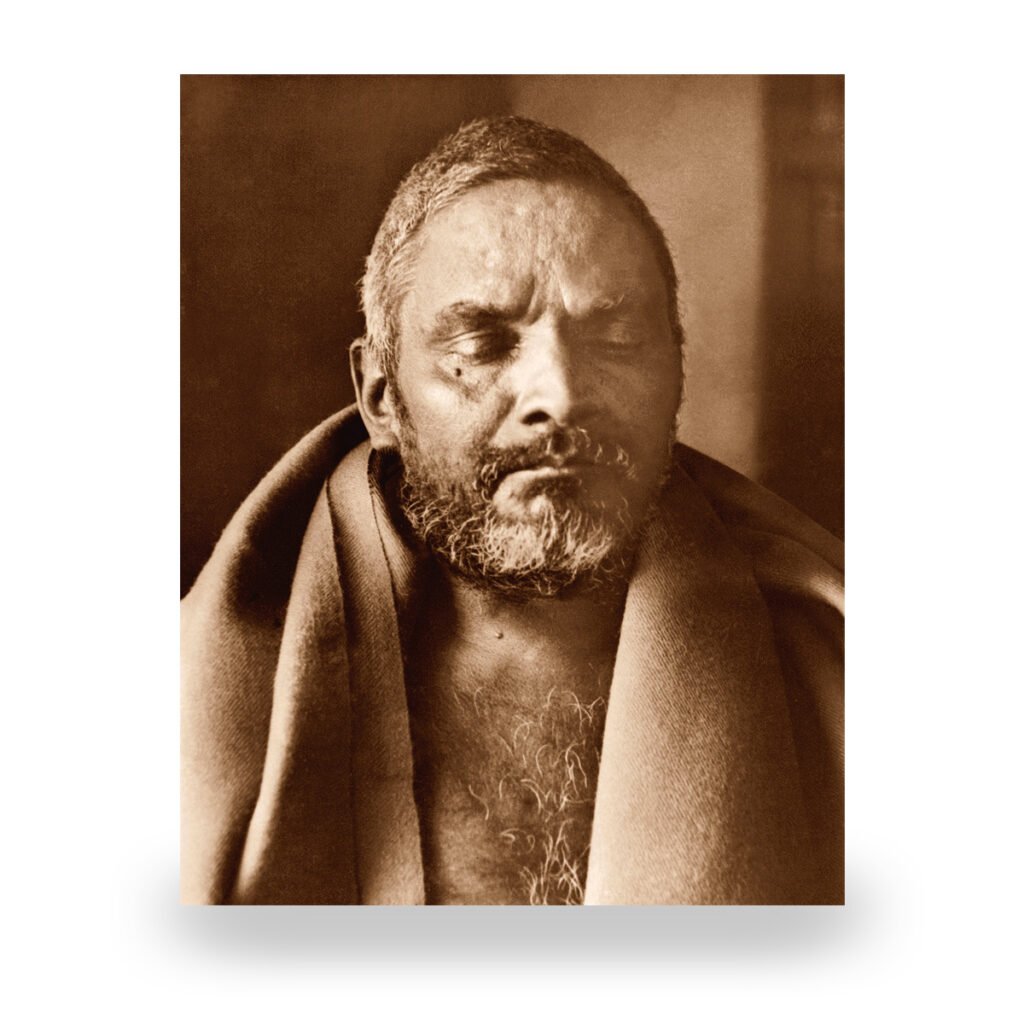
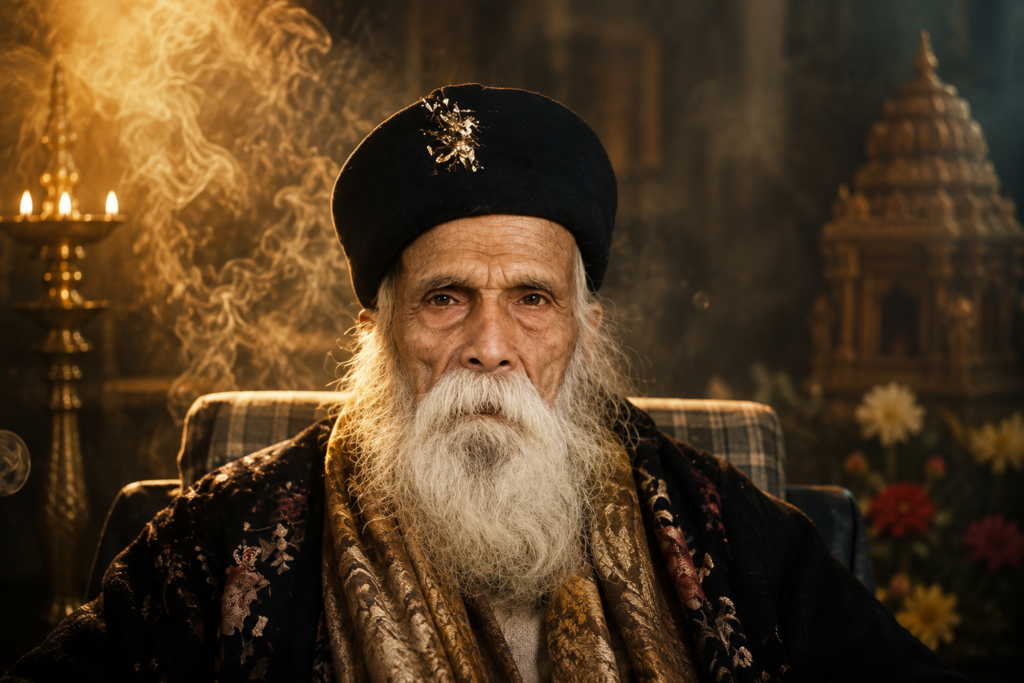
Sri Jothi Mouna Nirvana Swami: The Silent Saint Who Brought Kailasa to Kasavanpatti
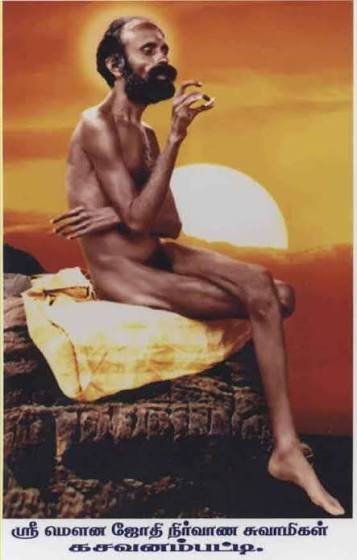
Kailasa Nathar of Kasavanpatti: The Silent Saint Who Taught Without Words
Introduction
Throughout India’s spiritual history, there have been saints who transformed lives through powerful sermons, sacred scriptures, and profound philosophical teachings.
Yet there exists another, far rarer kind of enlightened master.
A saint who never preached.
Never argued.
Never sought disciples.
Never attempted to prove his spiritual greatness.
Instead, he taught through silence.
Among the countless Siddhars and yogis who have walked the sacred soil of Tamil Nadu, one such extraordinary soul continues to live in the hearts of devotees—
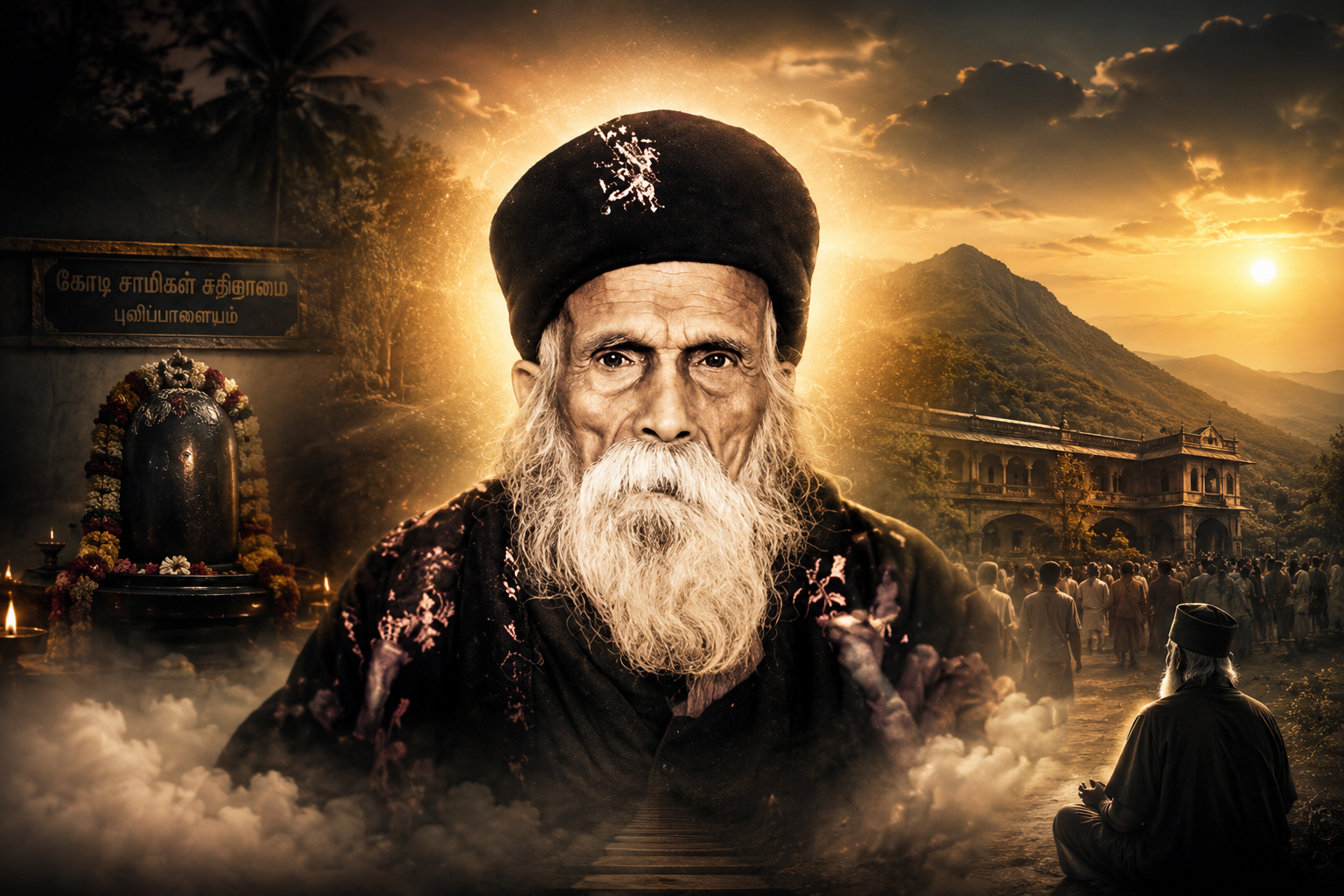
Sri Jothi Mouna Nirvana Swami, affectionately remembered as the Kailasa Nathar of Kasavanpatti.
His story is unlike that of any other saint.
No one knows where he was born.
No one knows who his parents were.
No one knows why he arrived.
Yet thousands believe his presence alone transformed an ordinary village into a place of profound spiritual peace.
Can Silence Become a Spiritual Teaching?
Most people assume that wisdom must be spoken.
That enlightenment must be explained.
That spiritual realization requires words.
But India’s ancient Siddha tradition tells a different story.
Some realized masters communicate without speech.
Their silence becomes scripture.
Their presence becomes meditation.
Their very existence becomes a teaching.
Devotees often describe an extraordinary experience after sitting near such saints.
Without receiving any advice…
Without asking any questions…
Without hearing a single word…
The endless noise inside the mind begins to fade.
Anxiety softens.
Confusion slowly disappears.
The heart feels lighter, as though an invisible burden has been lifted.
This mysterious transformation is precisely how devotees remember Sri Jothi Mouna Nirvana Swami.
A Village Hidden from History
Nestled in the Dindigul district of Tamil Nadu lies the quiet village of Kasavanpatti.
At first glance, it appears no different from countless villages scattered across the Tamil countryside.
There are no grand palaces.
No magnificent fortresses.
No celebrated royal monuments.
History books rarely mention its name.
Life flows here with remarkable simplicity.
Yet beneath this quiet landscape lies a spiritual legacy that has drawn seekers for generations.
For it was here that a mysterious saint lived almost unnoticed, silently reshaping the lives of everyone who came into his presence.
The Saint Without an Identity
One of the greatest mysteries surrounding Sri Jothi Mouna Nirvana Swami is that almost nothing is known about his earthly identity.
Who were his parents?
Where was he born?
Which community did he belong to?
What was his childhood like?
No reliable historical record answers these questions.
Even his original name has been lost to time.
To many devotees, however, this absence of information is not a weakness in his story.
It is part of its deepest message.
The world identifies people by birth, family, wealth, education, and social status.
A Siddhar transcends all such identities.
His life is remembered not because of where he came from…
But because of what he awakened within others.
When a Place Becomes Kailasa
People often say that a sacred place becomes holy because a temple is built there.
But sometimes the opposite happens.
A place becomes sacred simply because a realized soul chooses to remain there.
That is exactly what devotees believe happened in Kasavanpatti.
Wherever Sri Jothi Mouna Nirvana Swami walked, the atmosphere itself seemed to change.
The restless became calm.
The troubled found hope.
Even those who arrived out of curiosity often left with a quietness they could not explain.
The land itself appeared transformed.
Gradually, people stopped seeing Kasavanpatti as just another village.
To them, it became a living Kailasa—a place where the silent presence of the Divine could still be felt.
The Arrival That No One Could Explain
Nearly eighty-five years ago, when life moved at a slower pace and the forests surrounding Kasavanpatti remained largely untouched, something extraordinary happened.
One day…
Without announcement.
Without companions.
Without any known destination.
A young boy quietly appeared near the edge of the village.
No one saw where he had come from.
No one knew how long he had been walking.
There was no family searching for him.
No belongings.
No explanation.
Only a child wrapped in complete silence.
The villagers had no idea that this mysterious boy would one day be revered as Sri Jothi Mouna Nirvana Swami, a saint whose wordless presence would become one of Tamil Nadu’s most remarkable spiritual legacies.
In the next chapter, we will explore the mysterious arrival of the silent young boy in Kasavanpatti, why villagers first mistook him for a mad child, and how that misunderstood stranger gradually revealed himself to be one of the most extraordinary yogis of modern Tamil spiritual history.
The Mysterious Arrival of the Silent Boy
Nearly eighty-five years ago, Kasavanpatti was a village where life flowed in harmony with nature.
There were no busy roads.
No electric lights illuminating the nights.
The rhythm of daily life followed the rising and setting of the sun.
Fields stretched toward the horizon.
Dense groves bordered the village.
The sounds of birds, rustling leaves, and temple bells were far more common than the noise of people.
It was into this peaceful landscape that a mystery quietly arrived.
Not with celebration.
Not with prophecy.
Not with disciples announcing the coming of a saint.
But in complete silence.
A Child Appears Without a Past
One morning, villagers noticed a young boy wandering near the edge of the village where cultivated land met the surrounding forest.
He appeared to be no more than ten or twelve years old.
No one had seen him arrive.
No one recognized his face.
No one came looking for him.
There were no relatives searching nearby.
No stories explaining where he had come from.
It was as though the child had simply emerged from nature itself.
For the villagers, he was a complete stranger.
For history, he would remain an eternal mystery.
The Boy Who Owned Nothing
The child’s appearance puzzled everyone.
He wore no proper clothing.
He carried no belongings.
He possessed nothing that could identify him.
To ordinary eyes, this looked like extreme poverty.
But those who later reflected on his life believed it represented something entirely different.
He seemed to have no awareness of the body as something that required decoration or protection.
He carried himself with complete naturalness, as though worldly possessions had never held any meaning for him.
Even at such a young age, he displayed an extraordinary detachment that was impossible to explain.
The Silence That Could Not Be Understood
Perhaps the most striking thing about the boy was not his appearance.
It was his silence.
He never introduced himself.
He never asked for food.
He never begged.
He never cried.
He never complained.
Children of his age usually filled the air with laughter, questions, arguments, and endless curiosity.
But this child remained wrapped in an unbroken stillness.
It was not the silence of fear.
It was not the silence of loneliness.
It was not the silence of confusion.
It was a silence so complete that many villagers found it unsettling.
Some later said it felt like standing beside a deep ocean.
Calm on the surface.
Unfathomable beneath.
Mistaken for a Mad Boy
The villagers struggled to understand him.
His gaze rarely rested on the people around him.
Instead, his eyes seemed fixed upon something invisible—something far beyond the ordinary world.
His movements were slow and effortless.
He showed no interest in the concerns that occupied everyone else.
Naturally, many reached the simplest conclusion.
“He must be mad.”
Some laughed at him.
Others mocked him.
A few treated him as nothing more than a wandering lunatic.
Children followed him through the village, teasing him for amusement.
Some even threw stones in his direction.
Yet the mysterious boy never reacted.
He never became angry.
He never defended himself.
He never returned harshness with harshness.
Instead, he accepted every insult with the same peaceful expression.
It was a response that no ordinary child could have given.
The Strength Hidden Within Silence
Looking back, devotees believe these early incidents revealed one of the greatest truths about Sri Jothi Mouna Nirvana Swami.
His silence was never weakness.
It was mastery.
Every insult disappeared into his stillness without leaving a trace.
Every act of cruelty dissolved before reaching his heart.
While others tried to disturb him, nothing seemed capable of disturbing the peace that already existed within him.
The villagers could not understand what they were witnessing.
They saw only an unusual child.
They did not yet recognize the presence of a realized soul.
When Wisdom Recognized Wisdom
As months passed, not everyone continued to dismiss the boy.
Among the elders of Kasavanpatti were men and women whose lives had been shaped by decades of experience, devotion, and quiet observation.
Unlike the younger villagers, they did not judge him by appearances.
Instead, they watched.
They noticed that the boy never harmed anyone.
He never argued.
He never showed greed.
He never displayed fear.
His silence carried an unusual depth.
One elder is said to have remarked,
“This is not the emptiness of madness… this silence is full of something we cannot yet understand.”
Slowly, suspicion gave way to curiosity.
Curiosity became respect.
Respect gradually blossomed into reverence.
The villagers began to feel that this mysterious child had not wandered into Kasavanpatti by accident.
Perhaps he had been sent there.
Perhaps the village itself had been chosen.
A Village Accepts Its Silent Saint
Eventually, the elders welcomed the boy into the heart of the village.
No ceremonies were held.
No titles were given.
No one declared him a saint.
He simply became part of the community.
The villagers tried to care for him as they would any child.
They offered him clothes.
They hoped to protect him from the harshness of the world.
But each time they dressed him, he quietly removed the garments without a single word.
He neither resisted nor explained himself.
His actions alone conveyed his message.
At last, the villagers understood.
This child was living in a state far beyond ordinary social customs.
They stopped trying to change him.
Instead, they chose to accept him exactly as he was.
That acceptance marked the beginning of one of the most extraordinary relationships between a village and a saint in modern Tamil spiritual history.
In the next chapter, we will explore how the silent boy gradually became the spiritual heart of Kasavanpatti, why every home welcomed him without hesitation, and how his mysterious way of life transformed the village forever.
The Silent Life of Sri Jothi Mouna Nirvana Swami
As the years passed, the mysterious boy was no longer seen as an outsider.
Without asking for acceptance…
Without seeking recognition…
Without speaking a single word…
He gradually became the very soul of Kasavanpatti.
The villagers stopped wondering where he had come from.
Instead, they began asking a different question.
“Who is this extraordinary being living among us?”
No one had an answer.
Yet everyone felt his presence.
A Child of the Village
The people of Kasavanpatti never formally adopted him.
There were no ceremonies.
No declarations.
No religious titles.
It simply happened naturally.
The silent boy became part of every household.
He wandered freely through the village without hesitation.
He never knocked on doors.
He never asked permission.
He never announced his arrival.
He simply walked in.
Sometimes he sat quietly on a veranda.
Sometimes he rested inside a kitchen for hours.
At other times, he silently watched the everyday rhythm of family life before getting up and leaving just as quietly as he had entered.
Remarkably, no one questioned him.
No one chased him away.
The villagers no longer saw him as a stranger.
He had become one of their own.
More than that…
He had become the silent heartbeat of the village itself.
The Temple That Became His Home
Although he had no permanent residence, there was one place where villagers often found him.
On the western side of Kasavanpatti stood a small Amman Temple.
When night fell and the village slowly drifted into silence, the young saint would quietly enter the temple.
He would lie down near the sanctum with the innocence of a child resting in the lap of a mother.
To onlookers, it was a deeply moving sight.
There was no ritual.
No elaborate worship.
Only complete surrender.
During the day, he could often be seen sitting peacefully on the temple steps.
Sometimes he gazed toward the distant hills.
Sometimes he closed his eyes in profound stillness.
At other times, he simply watched life unfold around him without becoming part of its noise.
The temple was not merely a shelter.
It was an extension of his inner silence.
Living With Almost Nothing
The villagers gradually observed another remarkable aspect of his life.
His needs were almost nonexistent.
He never asked for food.
If someone offered him a simple meal, he accepted only enough to sustain the body.
A handful of plain rice.
A little cooked greens.
Nothing more.
He never sought rich food.
He never displayed preference.
He never complained.
To him, eating appeared to be a necessity—not a pleasure.
Even milk or tea was consumed without attachment.
He did not sip slowly or savor the taste.
He drank quietly and moved on.
Watching him, the villagers realized something profound.
Most people live to satisfy the body.
He merely maintained it.
His relationship with food reflected complete mastery over desire.
A Life Beyond Possessions
Material possessions seemed meaningless to him.
He never collected anything.
He owned no house.
No clothing beyond what was absolutely necessary.
No ornaments.
No bedding.
No wealth.
Nothing that the world normally associates with security.
Yet he appeared completely fulfilled.
His happiness depended on nothing outside himself.
In a society where people struggled endlessly to acquire more, the silent saint demonstrated another possibility.
That true contentment begins where desire ends.
Without delivering a single discourse, he quietly challenged the very foundations of material attachment.
The Silence That Changed People
What drew people to Sri Jothi Mouna Nirvana Swami was not spectacular miracles.
It was something far more subtle.
People began noticing changes within themselves after spending time near him.
They would arrive carrying worries about family disputes, financial burdens, illness, or personal sorrow.
Yet after sitting silently in his presence for a few minutes, many described an unexpected transformation.
The mind became quieter.
Fear slowly dissolved.
Anxiety lost its grip.
Old emotional burdens seemed lighter.
No advice had been given.
No blessing had been spoken.
Nothing outwardly had happened.
Yet inwardly, everything felt different.
Many devotees later believed that the Swami’s silence itself possessed the power to heal.
The Language Beyond Words
Modern psychology often speaks about the calming influence of presence.
Ancient yogic traditions speak of something even deeper.
They describe enlightened beings whose inner stillness naturally influences everyone around them.
Devotees believed Sri Jothi Mouna Nirvana Swami embodied this ancient truth.
He did not communicate through speech.
His language was silence.
His teaching was presence.
His blessing was simply allowing others to sit beside him.
Many left without fully understanding what had happened.
They only knew they felt different.
Lighter.
Calmer.
More peaceful.
And for countless devotees, that silent transformation became the greatest miracle of all.
A Mystery That Deepened With Time
As years turned into decades, the villagers no longer questioned whether the silent saint was extraordinary.
They had witnessed enough.
Enough peace.
Enough quiet transformations.
Enough unexplained experiences.
The boy whom many had once mistaken for a mad wanderer had become a living embodiment of compassion.
Yet one aspect of his life continued to puzzle everyone.
Despite living with almost no worldly needs, despite showing complete mastery over every desire…
He accepted one thing that seemed impossible to understand.
Cigarettes.
To outsiders, it appeared contradictory.
To devotees, however, it became one of the most mysterious expressions of his boundless compassion.
In the next chapter, we will explore the fascinating mystery of why Sri Jothi Mouna Nirvana Swami accepted cigarettes from devotees, how this puzzled generations of visitors, and why many believe he silently absorbed the suffering and karma of others through an act that defied ordinary understanding.
The Mystery of the Cigarettes: A Silent Act of Compassion
Among the many stories associated with Sri Jothi Mouna Nirvana Swami, one has puzzled devotees and skeptics alike for decades.
How could a saint who had completely renounced worldly pleasures…
A yogi who lived with almost no possessions…
A master who ate only enough to sustain the body…
Accept cigarettes?
To an ordinary observer, it seemed like a contradiction.
To those who lived beside him, however, the answer lay far beyond appearances.
A Question That Everyone Asked
Visitors who came to Kasavanpatti often noticed something unexpected.
The Swami never requested luxurious food.
He never asked for money.
He never sought comfort.
Even milk or tea was accepted only occasionally and without attachment.
Yet when someone offered him a cigarette, he would sometimes accept it.
For newcomers, the sight was confusing.
Many wondered,
“How can a realized Siddhar smoke?”
Some questioned his spiritual stature.
Others silently judged what they did not understand.
But those who had spent years in his presence would gently smile.
They believed the answer was hidden in a deeper spiritual truth.
Beyond Habit and Addiction
Those closest to Sri Jothi Mouna Nirvana Swami never described him as someone addicted to cigarettes.
They observed something entirely different.
He never demanded them.
He never searched for them.
He never became restless when none were available.
There was no dependency.
No craving.
No attachment.
He accepted only what devotees placed before him.
To those around him, this distinction was important.
His actions did not resemble habit.
They resembled sacrifice.
A Silent Burden He Chose to Carry
According to the traditions preserved by his devotees, the Swami’s acceptance of cigarettes symbolized something profound.
Many believed that whenever a devotee approached him carrying suffering, illness, emotional pain, or the heavy burden of past karma, the Swami silently accepted not only the offering placed in his hands but also the unseen suffering carried within that person’s heart.
The cigarette became more than an object.
It became a symbol of compassion.
A silent exchange.
The devotee left lighter.
The saint quietly carried what others could no longer bear.
Whether understood literally or spiritually, this belief remains deeply rooted among those who experienced his grace.
Healing Without Touch
Unlike many saints who blessed devotees by placing a hand upon their heads or offering sacred ash, Sri Jothi Mouna Nirvana Swami rarely relied on outward rituals.
He did not prescribe elaborate spiritual practices.
He did not chant long mantras.
He did not perform dramatic ceremonies.
Instead, he healed through presence.
People would sit beside him in silence.
Minutes would pass.
Sometimes hours.
No words were exchanged.
Yet many later described remarkable changes.
Persistent fears faded.
Mental unrest settled.
Relationships burdened by conflict slowly healed.
Some believed long-standing illnesses improved after receiving his silent grace.
Whether one interprets these experiences as miracles, the power of faith, or the calming influence of an enlightened presence, they became an inseparable part of the Swami’s legacy.
The Miracle of Inner Peace
The greatest transformation people experienced was often invisible.
It did not make newspaper headlines.
It could not be photographed.
It left no physical evidence.
Yet it changed lives.
Visitors who arrived carrying unbearable emotional pain frequently returned home with a peace they had not known for years.
Some spoke of sleeping peacefully for the first time in months.
Others found themselves forgiving people they had hated for decades.
Many discovered that problems which had once seemed overwhelming no longer controlled their minds.
Sri Jothi Mouna Nirvana Swami had not solved their external circumstances.
He had transformed the way they experienced them.
That inner change became the greatest miracle.
A Saint Who Never Claimed Miracles
Perhaps the most remarkable aspect of his life was that he never claimed supernatural powers.
He never encouraged people to speak about miracles.
He never tried to convince anyone of his greatness.
If someone praised him, he remained silent.
If someone doubted him, he remained equally silent.
His life reflected one of the oldest principles of the Siddha tradition:
True spiritual power never seeks recognition.
It simply radiates.
Recognized by Great Masters
As the years passed, news of the silent saint reached many respected spiritual masters across Tamil Nadu.
Among those traditionally believed to have held him in the highest regard were Yogi Ramsuratkumar of Tiruvannamalai and Sri Gnanananda Swamigal of Thirukoyilur.
Devotees recount that both revered saints spoke of Sri Jothi Mouna Nirvana Swami with profound humility, expressing that before such an elevated soul, they considered themselves like small waves before an infinite ocean of grace.
Whether remembered as a historical statement or preserved through devotional tradition, the sentiment reflects the extraordinary reverence with which the silent saint was regarded by many seekers.
Yet despite such admiration, Sri Jothi Mouna Nirvana Swami never sought recognition.
He never established an ashram.
He never invited crowds.
He never promoted his name.
For him, silence was not merely a practice.
It was his identity.
It was his teaching.
It was his way of dissolving the ego that so often separates human beings from the Divine.
In the next chapter, we will explore the final days of Sri Jothi Mouna Nirvana Swami, the extraordinary events surrounding his Mahasamadhi on 22 October 1982, and the remarkable signs in nature that devotees believe honored the departure of one of Tamil Nadu’s greatest silent Siddhars.
Mahasamadhi of Sri Jothi Mouna Nirvana Swami: When Nature Bowed to a Silent Saint
Every enlightened master leaves the physical world.
But not every departure is remembered as death.
In the Siddha tradition, there is a profound belief that realized beings do not merely die—they consciously transcend the limitations of the body through Mahasamadhi, merging completely with the Infinite.
For devotees of Sri Jothi Mouna Nirvana Swami, that sacred moment arrived in the early hours of 22 October 1982.
Yet even in his final moments…
He remained exactly as he had lived.
Silent.
Peaceful.
Free.
The Final Morning
There were no announcements.
No gathering of disciples.
No farewell discourse.
No prediction that his earthly journey was coming to an end.
The saint who had spent decades transforming lives without uttering a single sermon chose to leave this world in the very same way he had lived—
without creating even the slightest disturbance.
As dawn broke over Kasavanpatti, Sri Jothi Mouna Nirvana Swami quietly left his physical body.
There was no struggle.
No visible suffering.
No fear.
Devotees who witnessed those final moments later recalled something unforgettable.
His face radiated an extraordinary calm.
It was not the stillness of death.
It was the serenity of complete fulfillment.
Many described it as though he had simply entered a deeper state of meditation.
Not an Ending, But Completion
For ordinary people, death often brings grief, uncertainty, and unanswered questions.
For a Siddhar, devotees believe it is different.
Mahasamadhi is understood as the conscious completion of a divine mission.
The physical body is left behind, but the spiritual presence continues to guide those who seek it.
This was exactly how the people of Kasavanpatti understood the departure of their beloved Mouna Guru.
No one spoke of loss alone.
Instead, many felt they had witnessed the fulfillment of a life lived in perfect union with the Divine.
The saint who had arrived without a known beginning had departed without fear of an end.
When the Sky Suddenly Changed
One of the most remarkable traditions associated with Sri Jothi Mouna Nirvana Swami’s Mahasamadhi concerns what happened during his final rites.
According to devotees, the entire day had been clear.
The sky was bright.
There were no signs of rain.
As preparations began to perform the Vedic Samadhi rites, something unexpected occurred.
Dark clouds gathered over the area.
Within moments, heavy rain began to fall.
Not across the entire region.
But directly over the sacred site where the saint was being laid to rest.
For the villagers, this was no ordinary change in weather.
Many believed nature itself had come to offer its final homage.
The rain was not seen as a storm.
It was remembered as the tears of the heavens.
A silent farewell from creation itself.
Whether understood as a miraculous event or a deeply meaningful memory preserved through devotion, this account continues to be shared with reverence by those who honor the Swami’s life.
The Eagle That Circled the Samadhi
Another extraordinary event has become part of the oral tradition surrounding the saint’s Mahasamadhi.
As the final rites continued, devotees witnessed a majestic Brahminy kite soaring above the Samadhi.
The bird circled the sacred site once.
Then again.
And a third time.
After completing the third circle, it quietly disappeared into the sky.
No one spoke.
No explanation was offered.
For those present, words were unnecessary.
Many believed that even the natural world had recognized the passing of a realized master.
Across India’s spiritual traditions, birds have often symbolized freedom, transcendence, and the soul’s journey beyond earthly limitations.
Whether viewed symbolically or as a miraculous sign, the image of the bird circling the Samadhi remains one of the most cherished memories associated with Sri Jothi Mouna Nirvana Swami.
The Silence That Never Ended
Although the saint’s physical form was no longer present, devotees soon realized something remarkable.
The silence they had experienced in his presence had not disappeared.
Those who visited his Samadhi continued to describe the same overwhelming peace.
Many arrived carrying worries.
They left carrying stillness.
The place itself seemed to preserve the atmosphere that had surrounded the saint throughout his earthly life.
Nothing had changed.
Except that the teacher could no longer be seen.
Kasavanpatti: A Living Kailasa
Today, Kasavanpatti is far more than a quiet village in Dindigul district.
For thousands of devotees, it is a living pilgrimage destination.
People do not visit merely to see a shrine.
They come to experience something they believe cannot be explained.
The silence.
The peace.
The feeling that time itself slows down.
Many visitors say that no elaborate rituals are necessary.
No complicated prayers.
No lengthy chants.
Simply sitting quietly near the Samadhi becomes a form of meditation.
Perhaps that is the greatest legacy Sri Jothi Mouna Nirvana Swami left behind.
He proved that the highest spiritual teaching does not always come through words.
Sometimes…
Silence itself becomes the Guru.
Conclusion: The Saint Who Brought Kailasa to Earth
Some saints build magnificent temples.
Some compose timeless scriptures.
Some establish institutions that continue for centuries.
Sri Jothi Mouna Nirvana Swami chose another path.
He built no temple.
He sought no fame.
He founded no organization.
He left behind no philosophical writings.
Instead, he transformed human hearts.
He taught that true spirituality is not measured by miracles or public recognition but by the peace one awakens in others.
From a mysterious child who appeared without a past…
To a silent yogi who became the spiritual heartbeat of Kasavanpatti…
To a revered Siddhar whose Mahasamadhi continues to draw seekers decades later…
His entire life remains a testament to the power of silence.
Even today, those who visit Kasavanpatti often leave with the same realization:
Some saints speak through words.
Some teach through miracles.
But a rare few…
Teach simply by being.
And among those rare souls stands Sri Jothi Mouna Nirvana Swami—the Kailasa Nathar of Kasavanpatti, whose silence continues to echo in the hearts of all who seek inner peace.