
Puravipalayam Kodi Swamigal: The Mysterious Siddhar Who Returned to Guide Humanity
Kodi Swamigal: The Mysterious Journey of a Siddhar Who Returned to Earth
Introduction
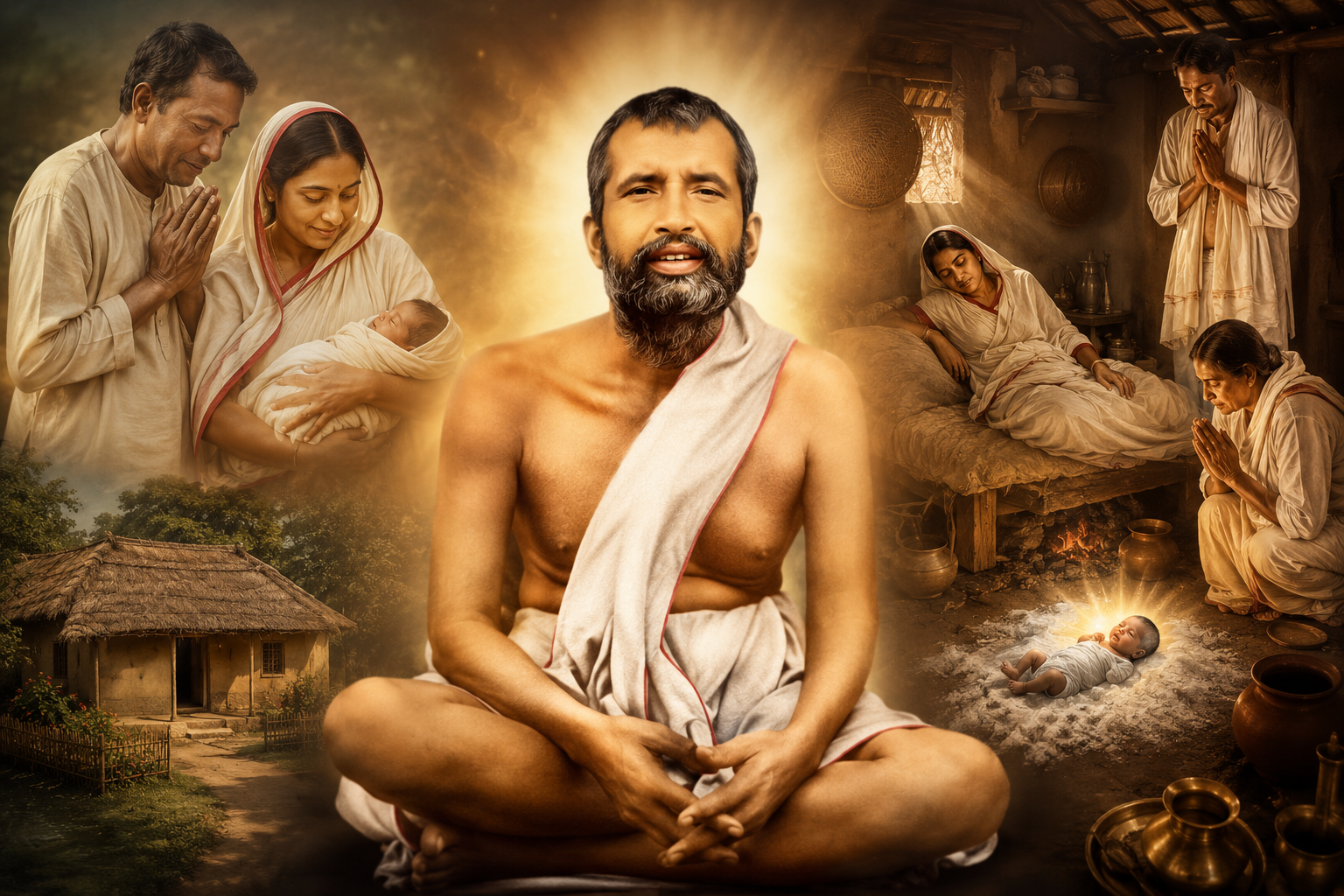
Throughout India’s spiritual history, there have been saints who attained enlightenment through years of intense tapas, unwavering devotion, and profound self-realization. Yet, among them exists another extraordinary class of spiritual beings—masters whom many devotees believe did not become Siddhas during this lifetime, but were already realized souls who consciously chose to be born again for the welfare of humanity.
Such lives cannot be understood through ordinary historical records alone.
They belong to the realm where history, devotion, and spiritual tradition meet.
One such enigmatic saint is Puravipalayam Kodi Swamigal, a Siddhar whose life continues to inspire awe, faith, and deep contemplation among countless devotees across Tamil Nadu.
His story is not merely the biography of a saint.
It is the story of a soul that appeared without seeking recognition, transformed thousands of lives through silent grace, and departed without leaving behind the answers to the many mysteries that surrounded him.
Do Siddhas Return to Earth?
For centuries, India’s Siddha tradition has preserved a fascinating belief.
It is said that certain Siddhars, after attaining the highest state of spiritual realization, are not bound by the cycle of birth and death like ordinary human beings. Yet, out of boundless compassion, they voluntarily assume another human birth whenever humanity needs spiritual guidance.
These realized beings do not return to accumulate karma.
They return to dissolve the karma of others.
They do not seek disciples, fame, or institutions.
Instead, they quietly appear among ordinary people, touching lives through their presence alone before disappearing once again into silence.
Many devotees believe that Kodi Swamigal belonged to this rare lineage of enlightened masters.
A Saint Without a Conventional History
Unlike kings, scholars, or political leaders, the lives of many Siddhars are surrounded by mystery.
The details that historians usually consider important—their birthplace, family background, parents, education, and childhood—often remain unknown or deliberately fade into obscurity.
The reason, devotees believe, is deeply symbolic.
A Siddhar’s true identity is never the body they were born into.
It is the divine consciousness that works through that body.
Their lives are remembered not because of where they were born, but because of the countless lives they transformed.
Their legacy is not preserved in monuments.
It is preserved in human hearts.
Kodi Swamigal perfectly embodies this timeless tradition.
Even today, very little is known with certainty about his early years.
What remains alive instead are the countless experiences of those who encountered him—stories of miraculous healings, impossible predictions, silent blessings, and life-changing encounters that continue to be shared from one generation to the next.
A Life That Defies Explanation
There are some stories that are meant to be heard.
Others are meant to be experienced.
The life of Kodi Swamigal belongs to the latter.
He spoke very little.
He never attempted to prove his greatness.
He never announced himself as a saint or Siddhar.
Yet, people who met him often left transformed.
Some found healing after years of suffering.
Some received unexpected prosperity.
Others experienced an inner peace that no words could adequately explain.
Without preaching elaborate philosophies, Kodi Swamigal demonstrated that the greatest spiritual teachings are often communicated through silence.
The Beginning of an Extraordinary Journey
The modern chapter of Kodi Swamigal’s life begins not in a grand temple or an ancient monastery, but on the windswept shores of Dhanushkodi during the early 1940s.
India was still under British rule.
The freedom movement was gathering momentum.
Amid this turbulent period of history, an ordinary railway police officer would unknowingly encounter a mysterious ascetic whose arrival would alter the course of his life forever.
That meeting would become the first documented chapter in the remarkable spiritual journey of the saint who would later be known throughout Tamil Nadu as Puravipalayam Kodi Swamigal.
In the next part, we will explore the extraordinary encounter between Railway Police Sub-Inspector Varadarajulu and the mysterious ascetic meditating on the sands of Dhanushkodi—an encounter that many devotees believe was divinely ordained and that marked the beginning of Kodi Swamigal’s public spiritual mission.
The Mysterious Saint of Dhanushkodi: The First Recorded Appearance of Kodi Swamigal
If there is one moment that forever changed the destiny of Puravipalayam Kodi Swamigal’s devotees, it was an encounter that took place on the lonely shores of Dhanushkodi in the early 1940s.
It began as an ordinary day.
It ended as the beginning of a spiritual legend.
India Under British Rule
The year was around 1940.
India was still under British colonial rule. Across the nation, the call for independence was growing stronger with each passing day. While political leaders fought for the country’s freedom, another silent revolution was unfolding—one that sought to awaken the human spirit rather than political power.
In the coastal town of Dhanushkodi, few could have imagined that a mysterious ascetic had already begun attracting quiet attention.
His presence would soon alter the lives of everyone who came near him.
Varadarajulu: The Officer Who Was Chosen
Among those living in Dhanushkodi was Varadarajulu, a Sub-Inspector in the Railway Police.
His responsibilities were demanding.
He supervised security along the railway network stretching from Mandapam to Dhanushkodi, protecting one of the most strategically important coastal regions of British India. The route included busy railway lines, ports, and ship-building areas that required constant vigilance.
Every day followed the same routine.
Trains.
Inspections.
Official duties.
Nothing suggested that his ordinary life was about to take an extraordinary turn.
Yet destiny often arrives without warning.
A Mysterious Ascetic on the Sand Dunes
One day, while waiting at the Dhanushkodi railway station, Varadarajulu overheard an unusual conversation.
People were speaking about a strange holy man.
Near St. Antony’s Church, on a lonely sand dune, an unknown ascetic had reportedly been standing on one leg in deep meditation for several days.
No one knew where he had come from.
No one knew his name.
Curiosity quickly drew Varadarajulu toward the place.
What he witnessed there would remain etched in his memory forever.
The Face From a Dream
As he approached the sand dune, Varadarajulu stood frozen.
The saint before him seemed strangely familiar.
Only a few days earlier, he had experienced a vivid dream in which a radiant spiritual master had appeared before him. The face, the posture, and the serene expression had remained deeply impressed upon his mind.
Now that very same figure stood before him.
Motionless.
Silent.
Immersed in meditation.
To Varadarajulu, this could not have been a coincidence.
He felt an overwhelming certainty that an unseen divine force had arranged this meeting long before he arrived at the railway station that day.
It was not merely a chance encounter.
It was a calling.
An Invitation That Changed Everything
After nearly an hour, the ascetic slowly opened his eyes.
There were no dramatic introductions.
No lengthy conversations.
No declarations of spiritual greatness.
With folded hands and deep humility, Varadarajulu made a simple request.
“Swami, would you kindly come to my home?”
Without hesitation…
Without asking any questions…
Without offering any explanation…
The saint quietly accepted.
That single decision would transform an ordinary household into a place forever remembered by devotees.
Miracles Within the Household
For several days, the mysterious saint stayed in Varadarajulu’s home.
Soon, events began unfolding that the family believed could only be described as acts of divine grace.
For many years, Varadarajulu and his family had prayed for the blessing of children.
Despite every effort, their prayers had remained unanswered.
After the saint’s arrival, that long-awaited blessing finally came.
The family, who had nearly abandoned hope, was filled with gratitude.
Another extraordinary event soon followed.
Varadarajulu’s elderly mother had been confined to bed for a prolonged period because of illness.
According to traditional accounts preserved by devotees, her health improved dramatically during the saint’s stay, and she eventually recovered completely.
To the family, these were not coincidences.
They believed they were witnessing the compassionate grace of an enlightened Siddhar.
The Birth of Unwavering Faith
From that day onward, Varadarajulu no longer regarded the mysterious visitor as an ordinary wandering monk.
He worshipped him as a living embodiment of the Divine.
Yet the saint himself remained exactly the same.
He neither encouraged praise nor sought followers.
He simply continued to live in profound silence, allowing his presence—not his words—to transform those around him.
News of these extraordinary happenings gradually spread beyond Dhanushkodi.
More people began arriving for darshan.
Many came out of curiosity.
Many returned with unwavering faith.
None realized that this mysterious ascetic would one day become known throughout Tamil Nadu by a name that reflected the blessings he so often bestowed—
Kodi Swamigal.
In the next chapter, we will discover how a few simple words spoken by the silent saint—“Kodi Varum… Thedi Varum” (“Crores will come… They will seek you”)—became legendary, earning him the name Kodi Swamigal, while astonishing miracles continued to draw devotees from every corner of Tamil Nadu.
Why He Became Known as "Kodi Swamigal"
As news of the mysterious saint spread from village to village, people expected long spiritual discourses, complex philosophies, or elaborate rituals.
Instead…
They encountered a man of profound silence.
Kodi Swamigal rarely spoke.
He did not gather disciples.
He never advertised miracles.
He did not ask anyone to change their religion, abandon their family, or follow complicated spiritual practices.
Yet, those who came before him often left feeling that their lives had somehow changed.
The Saint Who Spoke Only When Necessary
Visitors quickly noticed something extraordinary.
Kodi Swamigal would often remain silent for hours.
Sometimes an entire day would pass without him uttering more than a few words.
But whenever he did speak…
Every sentence seemed to carry an unusual power.
Many devotees later recalled that he answered questions they had never spoken aloud.
Others said he revealed their deepest worries before they had a chance to explain them.
For Kodi Swamigal, conversation was never casual.
Every word appeared purposeful.
Every blessing seemed to arrive exactly when it was needed.
“Kodi Varum… Thedi Varum…”
Among all the words associated with Kodi Swamigal, one blessing became legendary.
He would often look at devotees and simply say:
“Kodi varum… Thedi varum…”
“Crores will come… They will seek you.”
At other times, he would bless someone by saying:
“Kodi kodiyaaga vaazhvaai.”
“May you prosper beyond measure.”
The word “Kodi” in Tamil carries more than one meaning.
It literally refers to ten million (one crore), symbolizing immeasurable abundance.
Spiritually, devotees interpreted it as a blessing that transcended money—an abundance of health, peace, opportunities, wisdom, and divine grace.
Remarkably, many who received these blessings later believed that their lives changed in unexpected ways.
Some found financial stability after years of hardship.
Others recovered from illnesses.
Families that had struggled for generations experienced unexpected harmony.
Whether viewed as miracles or extraordinary coincidences, these stories spread rapidly across Tamil Nadu.
Before long, people stopped referring to him simply as “Swami.”
He became known everywhere as Kodi Swamigal—the saint whose blessings multiplied like countless crores.
A Siddhar Who Never Stayed in One Place
Unlike many saints who established permanent ashrams, Kodi Swamigal lived like the wandering Siddhars of ancient Tamil tradition.
His footsteps crossed numerous sacred towns.
Among the places closely associated with his travels are:
- Tiruchirappalli
- Vayalur
- Salem
- Chennai
- Palani
- Coimbatore
- Pollachi
- Puravipalayam
He rarely announced his arrival.
He rarely explained his departure.
Sometimes he stayed for only a few days.
At other times, for several months.
To devotees, it seemed as though he moved only when guided by a higher will.
Every place he visited eventually became a center of remarkable spiritual experiences.
The Judge Who Wanted Proof
Not everyone accepted Kodi Swamigal as a realized master.
Some remained skeptical.
Among them was a respected judge in Chennai.
He had heard many astonishing stories about the saint but found them difficult to believe.
Instead of dismissing the claims outright, he decided to test them.
He arranged for Kodi Swamigal to be placed inside a closed room.
Then, according to traditional accounts preserved by devotees, the room was filled with thick sambrani (benzoin incense) smoke until breathing became nearly impossible.
The door was locked.
Hours passed.
The judge expected the saint to emerge exhausted—or perhaps not emerge at all.
The Miracle That Silenced Doubt
Nearly two hours later, the door was finally opened.
The smoke slowly drifted out.
Inside sat Kodi Swamigal.
Exactly as he had been before.
Calm.
Unmoved.
Peacefully seated in meditation.
There were no signs of distress.
No struggle for breath.
No indication that he had suffered in any way.
The judge was left speechless.
What had begun as a test ended as an act of surrender.
According to devotees, that single incident transformed a skeptic into a lifelong devotee.
It also reinforced a belief shared by many—that Kodi Swamigal had mastered states of consciousness far beyond ordinary human limitations.
A Presence That Changed Lives
Stories like these continued to spread across Tamil Nadu.
Yet Kodi Swamigal never attempted to build a reputation around miracles.
If people praised him, he remained silent.
If people doubted him, he remained equally silent.
His life reflected one of the central principles of the Siddha tradition:
True spiritual power never seeks recognition.
It simply exists.
For countless devotees, the greatest miracle was not a supernatural event.
It was the profound peace they experienced simply by sitting in his presence.
That silent grace became the reason thousands continued searching for him wherever he traveled.
Their journey would eventually lead to Coimbatore, where an extraordinary new chapter in Kodi Swamigal’s life was about to unfold—one that would ultimately guide him to Puravipalayam, the place forever associated with his enduring spiritual legacy.
The Coimbatore Years: Extraordinary Mystical Events Before Puravipalayam
By the early 1960s, Kodi Swamigal had already become a revered yet mysterious figure across Tamil Nadu.
He never established an ashram.
He never announced where he would travel next.
He appeared unexpectedly, stayed wherever divine will seemed to guide him, transformed lives through his silent presence, and then quietly moved on.
Few realized that one such journey would eventually lead him to Puravipalayam, the place forever associated with his spiritual legacy.
Before that historic chapter began, however, Kodi Swamigal spent a remarkable period in Coimbatore, where several unforgettable incidents further strengthened the faith of his devotees.
Arrival in Coimbatore
It was January 1961.
Kodi Swamigal arrived in Coimbatore without fanfare.
Rather than seeking recognition or comfort, he quietly accepted hospitality from devotees whose homes would soon become sacred places in their memories.
One of the first residences where he stayed belonged to Jagadambika, the sister of Arunachalam and Ekambaram.
Their house, located on Appusamy Road, opposite Nirmala College, became a temporary abode for the silent Siddhar.
Kodi Swamigal occupied a small room on the upper floor.
For the family, hosting him was more than an honor—it felt like a blessing beyond measure.
Little did they know that they were about to witness an event that defied ordinary explanation.
The Meditation Inside a Water Tank
One day, devotees Ekambaram and Ambikainathan arrived at the house hoping to receive the Swamigal’s darshan.
To their surprise, he was nowhere to be found.
They searched every room.
They checked the terrace.
They looked around the entire property.
There was no sign of him.
Then, they noticed something extraordinary.
Inside the house’s large water storage tank, Kodi Swamigal was seated in deep meditation.
It was the middle of summer.
The afternoon sun scorched the city with intense heat.
Yet the Swamigal remained completely immersed in meditation beneath the cool waters, showing no sign of discomfort.
When he finally emerged, he did so with the same serenity that always surrounded him.
He neither explained his actions nor invited questions.
The devotees stood speechless.
Was this merely an act of physical endurance?
Or had they witnessed a Siddhar whose mastery extended far beyond the ordinary limits of the human body?
For those present, the answer was obvious.
This was no ordinary ascetic.
News Begins to Spread
Stories of the mysterious saint meditating inside a water tank quickly spread throughout the neighborhood.
People who had never heard of Kodi Swamigal suddenly became curious.
Some came seeking miracles.
Others came with questions.
Many simply wished to see the saint whose presence was already becoming legendary.
Among those who heard about him was an influential local landowner—
the Neykkarapatti Zamindar.
The Zamindar decided to meet the saint personally.
That first meeting would change his life forever.
The Zamindar’s Invitation
As soon as the Zamindar met Kodi Swamigal, he was deeply moved.
There was no lengthy conversation.
No philosophical debate.
No attempt by the Swamigal to impress him.
The silent presence of the Siddhar alone was enough to awaken profound devotion.
With folded hands, the Zamindar respectfully requested,
“Swami, please bless my home by staying there.”
Kodi Swamigal accepted without hesitation.
Once again, he demonstrated a remarkable quality that devotees often noticed throughout his life.
He never chose places based on wealth or status.
He simply accepted sincere devotion.
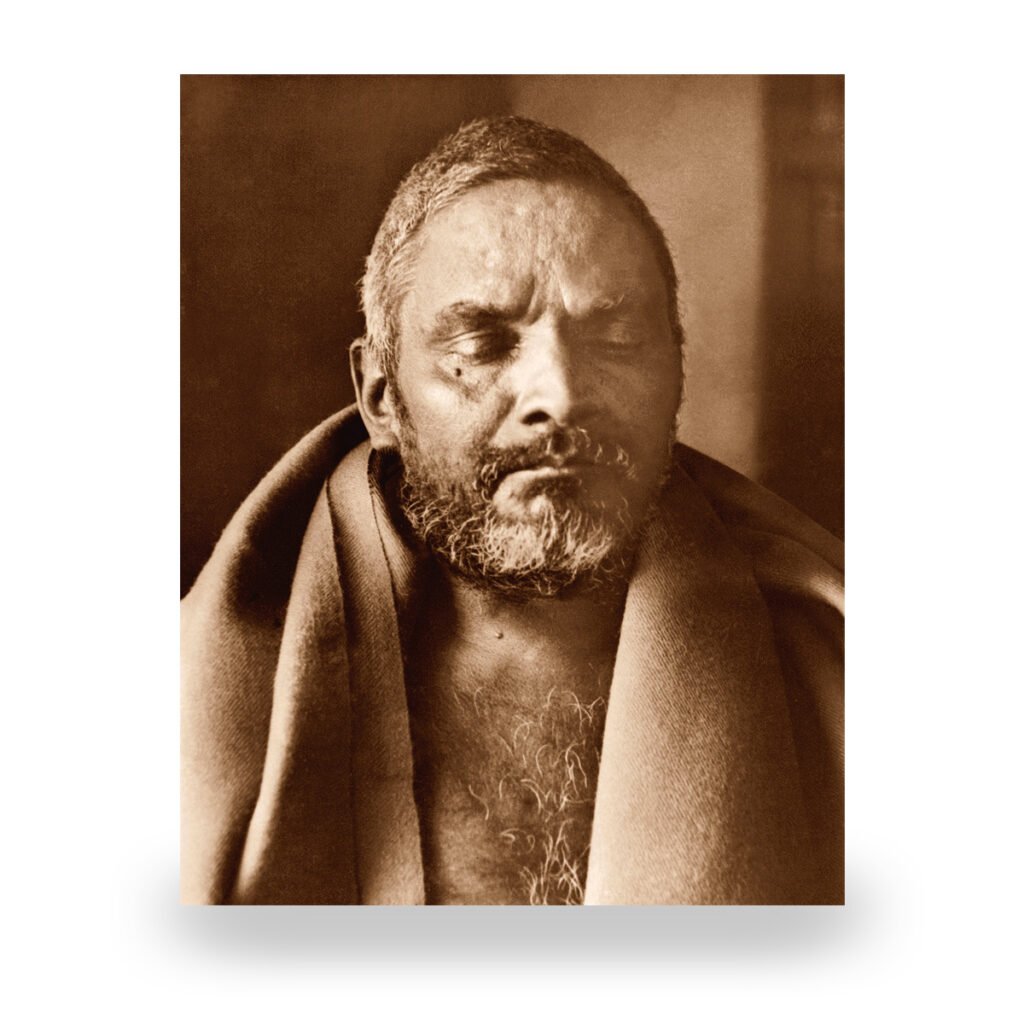
The Only Famous Photograph
During his stay at the Neykkarapatti Zamindar’s residence, an unusual event took place.
For many years, Kodi Swamigal had maintained long jata (matted hair), a traditional appearance often associated with wandering ascetics.
The Zamindar repeatedly requested that he allow his hair to be shaved.
Eventually, Kodi Swamigal agreed.
His matted locks were removed, and his head was completely shaved.
This transformation became historically significant because it was during this period that one of the most well-known photographs of Kodi Swamigal was taken.
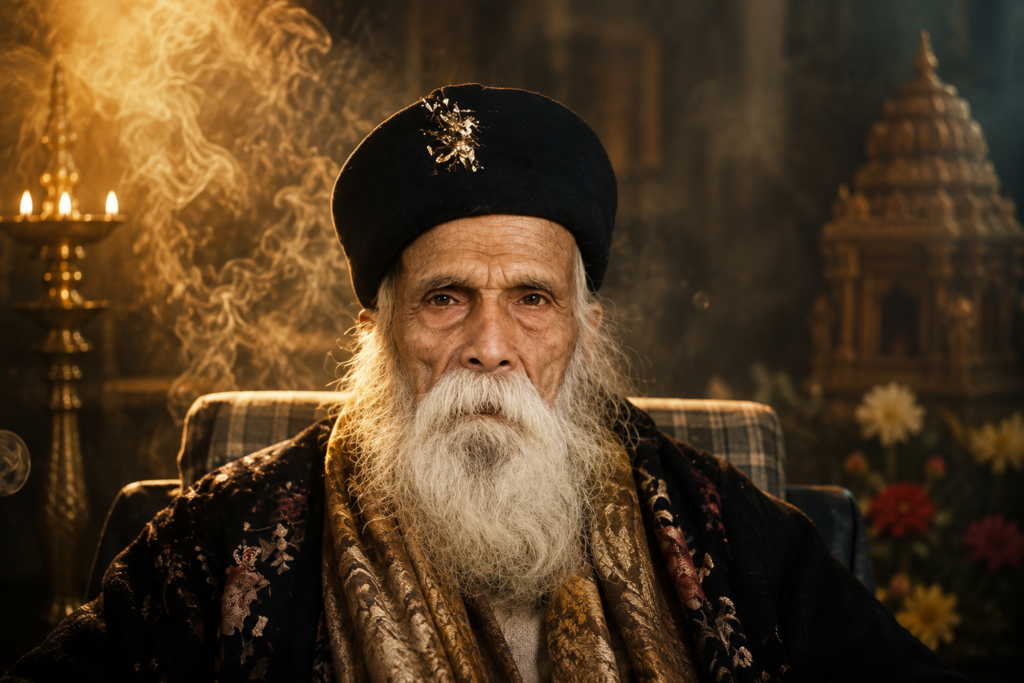
Captured at the Zamindar’s residence on Race Course Road in Coimbatore, the image remains one of the rare visual records of the saint and continues to be revered by devotees today.
The Journey Continues
After leaving the Zamindar’s residence, Kodi Swamigal stayed for some time at a devotee’s farmhouse in Singanallur.
As always, people flocked to wherever he stayed.
Many later recalled that simply seeing him brought an indescribable sense of peace.
Eventually, he moved to a place known locally as Kozhi Bungalow, a property connected to the Puravipalayam Zamindar family.
Few realized the importance of this move.
What seemed like another temporary stop would soon become the bridge to the most significant chapter of Kodi Swamigal’s earthly life.
The Road to Puravipalayam
The Puravipalayam Zamindar soon came to receive the Swamigal’s blessings.
Overwhelmed by reverence, he humbly invited him to come and stay at the Puravipalayam Palace.
Kodi Swamigal responded with characteristic simplicity.
“Yes… I will come.”
To an ordinary listener, these were just a few words.
But to devotees, they marked the beginning of destiny.
That quiet acceptance would transform Puravipalayam into one of Tamil Nadu’s most revered spiritual centers.
It was there that Kodi Swamigal would spend the next thirty-two years in almost complete seclusion, silently guiding thousands of devotees through nothing more than his divine presence.
In the next chapter, we will explore the extraordinary 32 years Kodi Swamigal spent inside a single room at Puravipalayam Palace—a period filled with countless miracles, silent blessings, and one of the most remarkable spiritual legacies in modern Tamil Siddha history.
Puravipalayam Palace: The Silent Siddhar Who Never Left His Room for 32 Years
When Kodi Swamigal accepted the invitation of the Puravipalayam Zamindar, no one could have imagined that a quiet room inside an old palace would soon become one of Tamil Nadu’s most revered spiritual destinations.
It was not an ashram.
It was not a monastery.
It was not a temple built by kings.
Yet for more than three decades, thousands of people would travel from every corner of India to receive the blessings of the silent Siddhar who lived there.
A Room Chosen by the Siddhar
Upon arriving at the Puravipalayam Palace, Kodi Swamigal did not ask for luxury or comfort.
Instead, he calmly walked through the palace grounds, observing everything in complete silence.
After a few moments, he climbed to the upper floor.
There, he selected a small, modest room.
Without ceremony, he entered.
He sat down.
That simple act would become one of the greatest mysteries surrounding his life.
From that day onward, Kodi Swamigal chose to remain in that room.
Not for weeks.
Not for months.
But for the next thirty-two years.
Three Decades Without Leaving
According to the traditional accounts preserved by devotees, from 1962 until his Mahasamadhi in 1994, Kodi Swamigal never descended from that upstairs room.
For thirty-two uninterrupted years, he remained there.
He never walked through the palace gardens.
He never visited nearby villages.
He never travelled again.
Yet, somehow, the world came to him.
What began as a private room gradually transformed into a sacred space where countless people sought solace, guidance, and divine grace.
For devotees, it was no longer just a room.
It had become a living sanctuary.
A Saint Beyond Human Needs
Perhaps the greatest mystery surrounding Kodi Swamigal was not the room itself.
It was the way he lived within it.
Devotees who spent years around him often made extraordinary observations.
They said they never saw him eating regular meals.
No one remembered seeing him ask for water.
No one could recall witnessing ordinary daily routines that every human being depends upon.
Whether these accounts are understood literally or symbolically, they have become an enduring part of the saint’s traditional biography and the faith of his followers.
Even more remarkable were the descriptions of his presence.
Visitors often said that instead of the natural odor associated with the human body, a gentle fragrance resembling sacred sandalwood, flowers, or temple incense seemed to surround him.
To devotees, this was not unusual.
In many Siddha and yogic traditions, such fragrances are regarded as signs of an elevated spiritual state.
The Siddhar Who Read Hearts
Thousands came before Kodi Swamigal carrying burdens they had never shared with anyone.
Some sought relief from illness.
Others prayed for children.
Many arrived overwhelmed by financial hardship, family conflicts, or emotional suffering.
Yet something extraordinary was repeatedly reported.
Before they could explain their problems, Kodi Swamigal already seemed to know.
He did not ask questions.
He did not request long explanations.
Often, he simply looked at a devotee for a few moments.
Sometimes he uttered only a single sentence.
Sometimes he remained completely silent.
Yet many visitors later believed they had received exactly the guidance they needed.
For them, Kodi Swamigal did not look at faces.
He looked directly into the heart.
Miracles That Could Never Be Counted
It is impossible to determine how many miracles devotees attribute to Kodi Swamigal.
Some speak of incurable illnesses that disappeared after receiving his blessings.
Others describe impossible financial problems resolving unexpectedly.
Families who had lived in conflict for years spoke of finding peace after a single darshan.
There were accounts of devotees escaping life-threatening accidents after following his simple instructions.
Some believed he appeared in dreams to guide them during moments of crisis.
Others felt his unseen protection even when they were hundreds of kilometers away.
Whether one views these stories as miracles, spiritual experiences, or expressions of unwavering faith, one fact remains undeniable:
His influence spread far beyond the walls of the palace.
Without advertisements.
Without public speeches.
Without organized campaigns.
His name traveled entirely through the experiences of those whose lives they believed he had touched.
A Place Where All Were Equal
One of the most remarkable aspects of Kodi Swamigal’s life at Puravipalayam was the diversity of those who came seeking his blessings.
The palace welcomed people from every background.
Rich and poor.
Educated and uneducated.
Farmers, laborers, government officials, business leaders, artists, judges, politicians, and spiritual seekers all waited together for a glimpse of the silent Siddhar.
Caste, religion, language, and social status carried no meaning before him.
To Kodi Swamigal, every visitor was simply another soul seeking peace.
Perhaps that was his greatest teaching.
Not delivered through sermons.
But demonstrated through the way he embraced humanity itself.
Silence Became His Greatest Sermon
Many saints teach through words.
Kodi Swamigal taught through silence.
People often arrived hoping to hear profound spiritual instructions.
Instead, they encountered stillness.
At first, some found the silence unsettling.
But gradually, many realized that the absence of words invited them to listen to something deeper—their own inner consciousness.
For countless devotees, a few silent moments in his presence became more transformative than hours of conversation.
His room at Puravipalayam became a place where people did not merely seek answers.
They discovered a different way of asking life’s deepest questions.
The Siddhar Who Never Truly Left
As the years passed, the small room in Puravipalayam witnessed an endless stream of pilgrims.
Generations came and went.
Children who once visited with their parents returned years later with families of their own.
The silent Siddhar remained unchanged.
Until one afternoon in October 1994, when another extraordinary chapter in his journey quietly came to an end—or perhaps, as devotees believe, simply changed form.
In the next chapter, we will explore Kodi Swamigal’s Mahasamadhi on 10 October 1994, the sacred Shiva Lingam established at his shrine, and why thousands of devotees continue to experience his living presence at Puravipalayam even today.
Mahasamadhi of Kodi Swamigal: The Siddhar Whose Presence Lives On
Every realized master leaves behind a legacy.
Some leave books.
Some establish monasteries.
Some create spiritual institutions that continue for generations.
Kodi Swamigal chose a different path.
He left behind almost nothing that the world would normally call an achievement.
No philosophical writings.
No recorded discourses.
No organization bearing his name.
No effort to build a movement around himself.
Instead, he left something far more profound—
an experience that thousands of devotees believe can still be felt today.
The Final Day
It was 10 October 1994.
The afternoon was calm.
Inside the familiar room at Puravipalayam Palace, the Siddhar who had spent more than three decades in silence prepared for his final earthly journey.
At approximately 3:30 PM, Kodi Swamigal entered Mahasamadhi.
For ordinary people, death marks the end of life.
But within the Siddha and yogic traditions, Mahasamadhi carries a very different meaning.
It is believed to be the conscious departure of a realized master who willingly leaves the physical body after completing his earthly mission.
To his devotees, Kodi Swamigal did not “die.”
He simply withdrew from the physical form that had served as an instrument of divine grace.
A Saint Beyond the Physical Body
Throughout his life, Kodi Swamigal had shown little attachment to the body.
He never appeared concerned with comfort or recognition.
His identity was never rooted in the physical form people saw before them.
Perhaps that is why his devotees found comfort even after his Mahasamadhi.
They believed that while the body had become still, the saint’s presence had not disappeared.
Instead, they felt it had become even more accessible.
For them, Kodi Swamigal had not gone anywhere.
He had simply become invisible.
The Sacred Samadhi Shrine
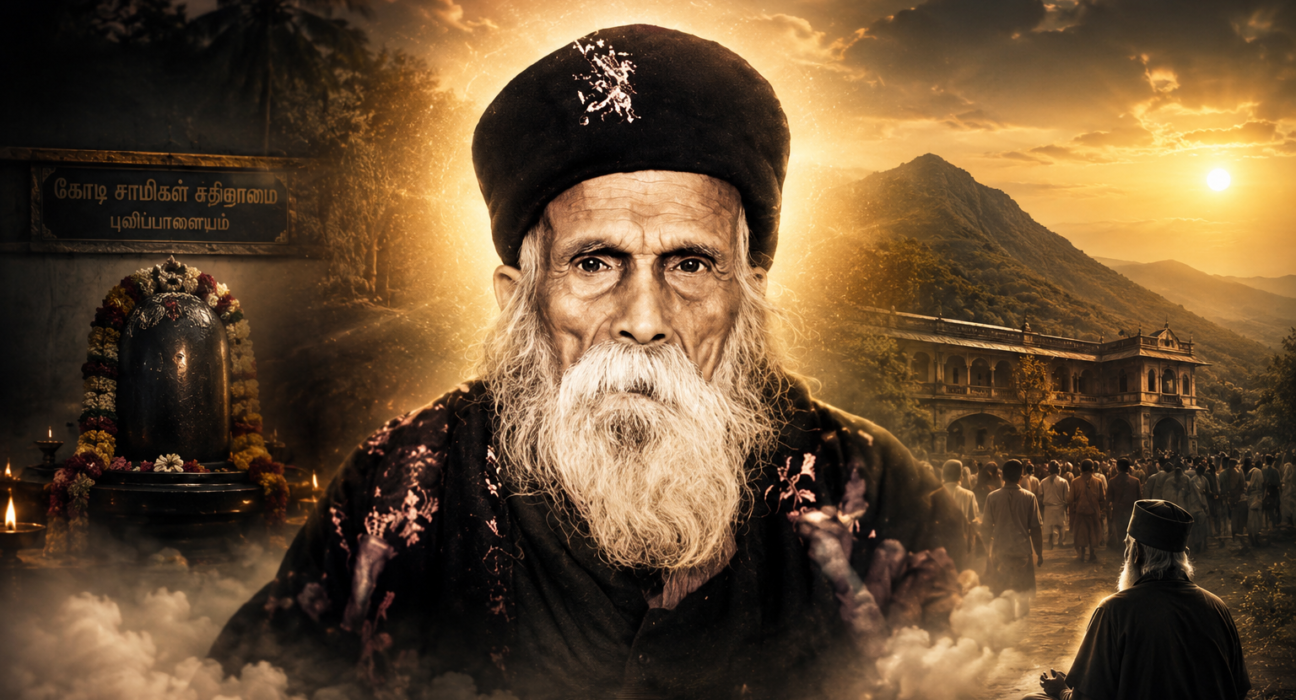
Following his Mahasamadhi, a sacred Shiva Lingam was consecrated at his Samadhi.
Today, this shrine stands as the spiritual heart of Puravipalayam.
Devotees believe that the Siddhar’s spiritual energy continues to radiate through the consecrated Lingam, making it not merely a memorial, but a living center of grace.
Pilgrims often describe an unusual stillness upon entering the shrine.
Many speak of an atmosphere filled with peace—a silence that feels alive rather than empty.
Whether understood as faith, spiritual experience, or the lingering influence of an extraordinary life, the Samadhi continues to draw seekers from across India.
Why Thousands Still Visit
More than three decades after his Mahasamadhi, Kodi Swamigal’s shrine remains a place of unwavering devotion.
Pilgrims arrive with prayers for healing, family harmony, financial relief, spiritual guidance, and inner peace.
Among the most significant days are Amavasya (New Moon) and Pournami (Full Moon), when large numbers of devotees gather to offer prayers and meditate in the presence of the Samadhi.
Many visitors believe that sincere prayers offered here are answered in unexpected ways.
Some describe profound inner calm.
Others share stories of personal transformation, unexpected opportunities, or relief from long-standing struggles after seeking the Swamigal’s blessings.
While such experiences are matters of individual faith, they continue to strengthen the deep bond between the Siddhar and his devotees.
The Timeless Message of Kodi Swamigal
Unlike many spiritual teachers, Kodi Swamigal did not leave behind elaborate doctrines.
Yet his life itself became a teaching.
His silence reminded people that truth does not always require words.
His humility demonstrated that greatness never seeks recognition.
His compassion showed that spirituality is measured not by miracles, but by the ability to relieve the suffering of others.
Perhaps that is why people from every religion, caste, language, and social background continue to visit Puravipalayam.
In his presence, such distinctions seemed to disappear.
Everyone was simply a seeker.
Everyone was equally worthy of grace.
Conclusion: The Siddhar Who Never Truly Left
There are saints who are remembered because history recorded them.
And there are saints who are remembered because their presence continues to live in the hearts of the people.
Kodi Swamigal belongs to the second kind.
His life remains wrapped in mystery.
His origins are still unknown.
His miracles continue to be shared through the voices of devotees rather than history books.
Yet perhaps that mystery is exactly what makes his story so powerful.
He arrived quietly.
He lived in silence.
He transformed countless lives without seeking fame.
And when his earthly mission was complete, he departed just as quietly as he had come.
Today, the room in Puravipalayam Palace, the sacred Samadhi Shrine, and the countless stories passed down by devotees continue to keep his memory alive.
For believers, Kodi Swamigal is not merely a saint of the past.
He is a living Siddhar whose grace transcends time, silently guiding those who seek him with faith.
As the Siddha tradition has always reminded us, some enlightened beings never truly leave the world.
They simply become invisible to the eye, while remaining forever present to the heart.