
Swami Sivananda: From Dr. Kuppuswami to a World-Renowned Spiritual Master
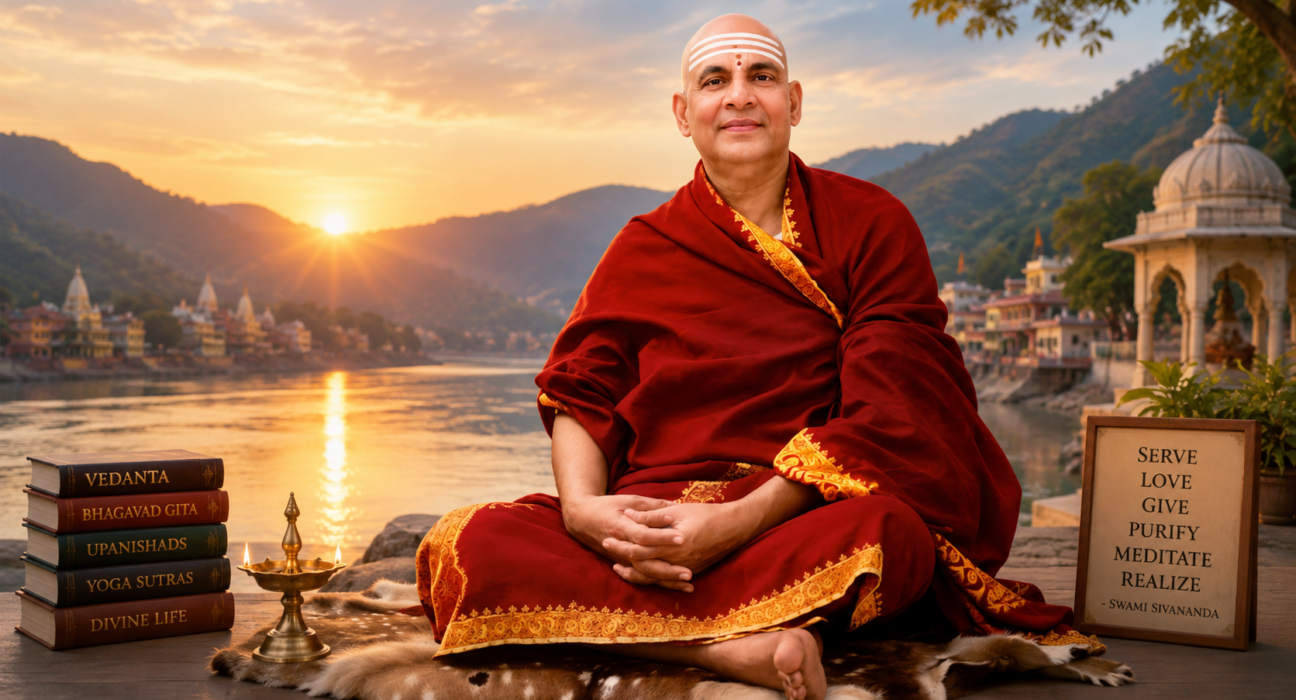
Swami Sivananda: The Doctor Who Became a Light for the World
From the Banks of the Tamiraparani to a Life of Selfless Service
Throughout the history of India, countless saints have appeared in different corners of the country, illuminating the path of spirituality for humanity.
Yet only a few have crossed regional boundaries to become revered across the world.
Among those rare spiritual giants stands Swami Sivananda Saraswati—a saint who was born in a small village in Tamil Nadu, served as a compassionate physician in Malaysia, renounced worldly life in search of Truth, and ultimately established one of the world’s most influential spiritual organizations from the banks of the sacred Ganges.
His life was not merely the story of a monk.
It was the extraordinary transformation of a successful doctor into a world teacher whose message continues to inspire millions across continents.
Swami Sivananda never asked people to blindly follow religion.
Instead, he taught a simple but profound principle:
“Selfless service is the foundation of spiritual life. Through service comes purity of heart; through purity comes Yoga and Vedantic wisdom; through wisdom comes the direct realization of the Self.”
These were not merely words.
He lived every one of them.
His life itself became his greatest sermon.
A Child Born on the Banks of the Tamiraparani
The story begins in the picturesque village of Pattamadai, nestled along the fertile banks of the sacred Tamiraparani River in present-day Tamil Nadu.
Known for its rich spiritual traditions, Pattamadai has produced scholars, saints, and seekers for generations.
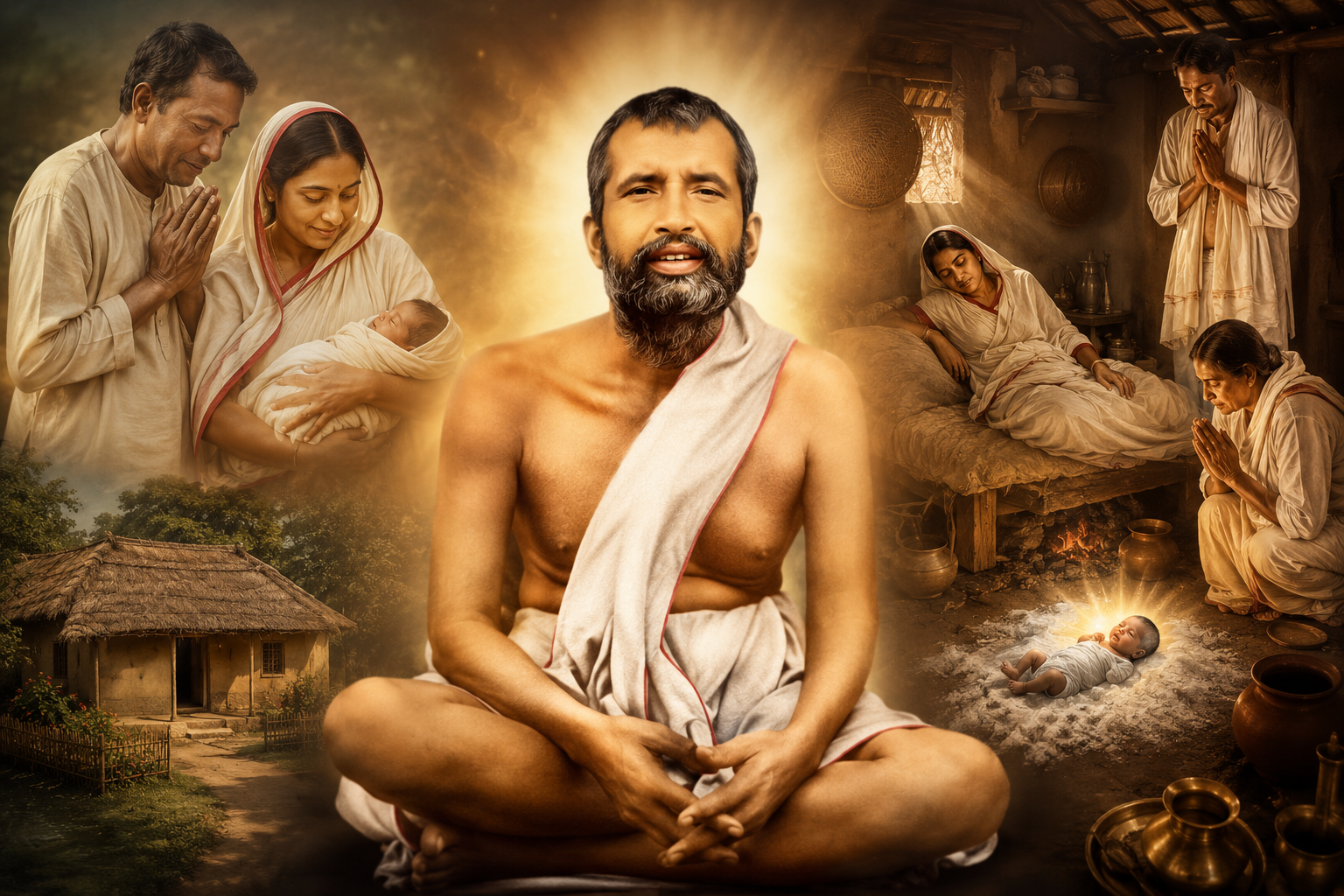
It was here that a devout Shaivite couple, P. S. Vengu Iyer and Parvathi Ammal, welcomed their third and youngest son into the world on 8 September 1887.
They named him Kuppuswami.
Neither the family nor the villagers could have imagined that this cheerful young boy would one day become one of India’s greatest spiritual masters and guide seekers around the globe.
Compassion Came Naturally
Even as a child, Kuppuswami displayed qualities that set him apart.
He possessed remarkable intelligence, boundless energy, and, above all, a heart overflowing with compassion.
Whenever his mother gave him sweets or snacks, he rarely kept them for himself.
Instead, he eagerly shared them with his brothers, friends, and even stray dogs, cats, and birds.
Watching others eat brought him greater joy than satisfying his own hunger.
It was an early glimpse of the selfless spirit that would later define his entire life.
He also delighted in helping his father with daily worship.
Every morning, the young Kuppuswami gathered sacred Bilva leaves and fresh flowers for the family’s Shiva puja, treating even these small acts as expressions of devotion.
An Exceptional Student
Kuppuswami excelled not only in kindness but also in academics.
At the Raja High School in Ettayapuram, he consistently ranked among the brightest students.
Teachers admired his extraordinary memory, quick understanding, and natural leadership.
He also possessed a melodious singing voice.
One memorable occasion came in 1901, when Lord Ampthill, then Governor of Madras Presidency, visited the region.
During the official reception at the railway station, it was young Kuppuswami who was chosen to sing the welcome song before the distinguished gathering.
Even at an early age, he displayed the confidence and grace that would later make him an inspiring public speaker and spiritual teacher.
Beyond Books
After completing school, Kuppuswami enrolled at SPG College in Tirunelveli.
His interests extended far beyond academics.
He actively participated in debates, cultural events, and theatrical performances.
In 1905, he even portrayed Helena in Shakespeare’s A Midsummer Night’s Dream, revealing both his confidence and versatility.
These experiences nurtured his ability to communicate with people from diverse backgrounds—a gift that would later help him share spiritual wisdom with audiences around the world.
A Brilliant Medical Student
After completing his initial college studies, Kuppuswami entered medical school in Tiruchirappalli.
Medicine soon became his passion.
Unlike many students who limited themselves to textbooks, he believed that real learning happened beside patients.
During holidays, while others returned home, Kuppuswami stayed back in the hospital.
He eagerly assisted senior doctors, observed surgeries, studied diseases firsthand, and learned directly from practical experience.
This relentless dedication made him one of the most knowledgeable students in his class.
His professors often remarked that he possessed clinical knowledge far beyond what was expected of a medical student.
By the time he graduated, he had established himself as an exceptionally gifted young physician.
A Doctor with a Mission
After earning his medical degree, Dr. Kuppuswami began working at a hospital in Tiruchirappalli.
Yet medicine, for him, was never merely a profession.
It was a form of service.
Determined to educate ordinary people about health and hygiene, he launched a 32-page medical journal titled The Ambrosia.
The magazine carried articles on preventive healthcare, healthy living, and medical awareness.
Remarkably, the venture was financed not by wealthy sponsors but through a modest loan of ₹150 from his mother.
Months later, when she needed the money for a family function, Kuppuswami joyfully repaid every rupee.
Throughout the journal’s publication, he refused to seek donations or financial assistance, preferring to maintain complete independence and integrity.
A New Chapter Begins
Around this period, Kuppuswami experienced a profound personal loss with the passing of his father.
Soon afterward, an opportunity arrived that would change the course of his life forever.
He received an invitation to work as a doctor in British Malaya.
Accepting the offer, the young physician boarded the steamship S.S. Tara in 1913, leaving behind his homeland with little idea that this journey would eventually lead him—not merely to another country—but toward one of the greatest spiritual awakenings of modern India.
The Awakening That Changed a Doctor into a Saint
When Dr. Kuppuswami left India in 1913, he carried with him a medical degree, exceptional talent, and a heart full of compassion.
What he did not know was that this journey to British Malaya would become the turning point of his destiny.
He had set out to heal bodies.
Instead, life was preparing him to heal souls.
A Difficult Voyage Across the Sea
Travelling overseas was no small undertaking in the early twentieth century.
Coming from a deeply orthodox South Indian Brahmin family, Kuppuswami found it extremely difficult to eat the food served aboard the ship.
His mother, with the foresight only a loving parent possesses, had prepared homemade snacks before his departure.
Those simple provisions sustained him throughout much of the long voyage.
By the time the ship finally reached Singapore, he was physically exhausted and severely weakened.
Yet his determination remained unshaken.
Soon after arriving, he met Dr. Ayyangar, who introduced him to A. G. Robinson, the manager of a large rubber estate in Malaya where a doctor was urgently needed.
“I Can Manage Three Hospitals”
Robinson was known as a strict and intimidating administrator.
His commanding presence alone was enough to make many applicants nervous.
After reading Kuppuswami’s recommendation letter, he looked at the young doctor and asked bluntly:
“Can you manage an entire hospital by yourself?”
Without hesitation, Kuppuswami replied:
“Not just one—I can manage three.”
The confidence in his voice impressed Robinson immediately.
He appointed Dr. Kuppuswami as the estate physician with a monthly salary of 150 dollars.
It was an excellent position for a young doctor, but the work proved far more demanding than he had imagined.
A Doctor Loved by Everyone
The hospital served workers from many different backgrounds.
Patients arrived with injuries, tropical diseases, infections, and chronic illnesses.
Dr. Kuppuswami worked tirelessly, often treating patients from dawn until late into the night.
His reputation spread quickly—not only because of his medical expertise but because of his extraordinary compassion.
He treated rich and poor alike.
He never allowed a patient’s financial condition to determine the quality of care.
Those who could not afford treatment were never turned away.
Many times, after curing a poor patient, he would quietly give them money from his own pocket so they could buy nutritious food and regain their strength.
He also cared for wandering monks, ascetics, and beggars with the same respect he showed everyone else.
To him, every patient was a living manifestation of God.
The Question That Changed Everything
From the outside, Dr. Kuppuswami appeared to have achieved everything.
He had a respected profession.
A stable income.
The admiration of society.
Yet deep within, an unsettling question continued to grow.
Every day he treated disease.
Every day patients recovered.
Yet he noticed something profound.
Even when their bodies became healthy, many remained anxious, fearful, unhappy, and spiritually empty.
Gradually, a realization dawned upon him.
Medicine could cure the body.
But who would heal the mind?
Who would remove ignorance, fear, attachment, and suffering?
Who could offer lasting peace?
These questions slowly transformed his understanding of service.
Healing physical illness was noble.
But helping people discover lasting inner peace—that, he realized, was an even greater form of healing.
A Book That Awakened His Soul
During this period, an extraordinary book came into his hands.
It was Jiva-Brahma Aikya Vedanta Rahasyam, written by Swami Satchidananda of Kadapa.
The book profoundly affected him.
For the first time, his intellectual curiosity turned into an intense spiritual quest.
He began studying the works of Swami Vivekananda, Adi Shankaracharya, Swami Rama, and writings associated with the Theosophical Society.
The Bhagavad Gita, Ramayana, Mahabharata, and Bhagavata Purana became his constant companions.
But he did not keep this knowledge to himself.
He organized devotional gatherings, delivered talks, sang kirtans, and practised yoga and meditation every single day.
The successful physician was slowly becoming a spiritual seeker.
Returning Home
The call of the Himalayas grew stronger with each passing year.
Finally, Dr. Kuppuswami made a life-changing decision.
He would leave behind his flourishing medical career and return to India—not in search of fame or fortune, but in search of Truth.
In 1923, he sailed back to India.
Curiously, he did not return to his hometown.
Instead, after arriving in Madras, he left his belongings at a friend’s house and immediately began a pilgrimage across the sacred land of India.
His first destination was Kashi, where he offered worship at the holy shrine of Lord Vishwanath.
During his travels, he met a humble postmaster who recognized the sincerity of his spiritual longing.
The postmaster gave him simple yet life-changing advice:
“Go to Rishikesh.”
Those two words altered the course of modern spiritual history.
Meeting the Guru
On 8 May 1924, Dr. Kuppuswami arrived in Rishikesh, nestled in the foothills of the Himalayas.
He had come searching for a Guru.
Soon, he met Swami Vishwananda Saraswati, the head of the Kailash Ashram.
Their meeting was extraordinary.
Neither required lengthy conversations.
Each recognized something profound in the other.
The seeker found his Master.
The Master found his disciple.
Swami Vishwananda initiated Dr. Kuppuswami into Sannyasa, giving him the monastic name that the world would forever remember:
Swami Sivananda Saraswati.
The successful doctor had disappeared.
A saint had been born.
A Life of Intense Tapas
Renunciation did not mean comfort.
Swami Sivananda embraced a life of extraordinary discipline.
The doctor who had once lived comfortably in Malaya now resided in a tiny hut beside the Ganges.
Days of complete fasting became common.
Sometimes roasted grains and Ganga water were his only food.
During the freezing Himalayan winters, he stood waist-deep in the icy waters of the Ganges before sunrise, chanting the Divine Name for hours.
He meditated up to twelve hours a day, dedicating every breath to spiritual realization.
Yet even amid such intense austerities, he never abandoned service.
Whenever monks or pilgrims fell ill, he treated them without charge.
If they were too weak to walk, he carried them on his own back to the nearest hospital.
For Swami Sivananda, meditation and service were never separate—they were two expressions of the same Divine Love.
Building a Global Spiritual Movement from a Tiny Hut
When Swami Sivananda embraced the life of a monk, he did not withdraw from the world.
Instead, he discovered a higher way of serving it.
His intense meditation was matched only by his boundless compassion.
While striving for the highest spiritual realization, he continued to care for the sick, feed the hungry, and comfort those who had nowhere else to turn.
His life proved that true spirituality is never an escape from humanity—it is the highest expression of love for humanity.
Service Never Stopped
Even after taking sannyasa, Swami Sivananda never forgot that he had once been a physician.
The ochre robes had changed his appearance, but not his heart.
Whenever wandering monks, pilgrims, or poor villagers fell ill, he treated them without expecting anything in return.
If a sick sadhu was too weak to beg for food, Swami Sivananda would personally go out with a begging bowl, collect alms, cook the food, and feed him.
If someone was too ill to walk, he would lift the patient onto his own shoulders and carry them to the nearest hospital.
Acts of compassion such as these became a daily part of his spiritual practice.
For him, serving humanity was worshipping God Himself.
A Small Hospital for Pilgrims
Using money he received from an insurance settlement, Swami Sivananda established a small charitable medical centre at Lakshman Jhula in 1927.
The clinic primarily served wandering monks, pilgrims, and the poor who had no access to medical care.
The same hands that spent hours in meditation also prepared medicines, dressed wounds, and comforted suffering patients.
In Swami Sivananda’s vision, Yoga and service were inseparable.
His deep spiritual practices and extraordinary spirit of selfless service eventually culminated in the highest state of realization—Nirvikalpa Samadhi, the direct experience of absolute oneness with the Divine.
A Pilgrim Across India
Following years of intense spiritual practice, Swami Sivananda undertook extensive pilgrimages across India.
He travelled to sacred shrines, met revered saints, and immersed himself in the country’s rich spiritual traditions.
During his journey through South India, he visited:
- Rameswaram
- Sri Aurobindo Ashram, Puducherry
- Sri Ramana Ashram, Tiruvannamalai
One particularly memorable moment occurred when he met Bhagavan Sri Ramana Maharshi.
Tradition records that Swami Sivananda’s first visit coincided with Ramana Maharshi’s birthday celebrations.
Immersed in ecstatic devotion, he led devotional singing before Ramana and the assembled devotees, creating an atmosphere charged with spiritual bliss.
These pilgrimages strengthened his conviction that India’s timeless wisdom belonged not merely to one community or one nation—but to the entire world.
The Birth of the Divine Life Society
After completing his pilgrimages, Swami Sivananda returned to Rishikesh in 1936.
By then, seekers from different parts of India had begun gathering around him.
They requested systematic guidance in spiritual life.
Swami Sivananda realized that an organization dedicated to spreading practical spirituality was needed.
His search for a suitable place ended unexpectedly.
He came across an old, abandoned cowshed near the banks of the Ganges.
Most people saw a dilapidated structure.
Swami Sivananda saw the beginning of a spiritual revolution.
The building contained only four small rooms.
One room was still filled with hay for cattle.
The remaining rooms were neglected and barely usable.
Together with a few devotees, he cleaned the entire structure and began conducting spiritual classes in a single room.
Within a year, every room was filled with seekers.
From this humble beginning emerged The Divine Life Society, one of the most influential spiritual organizations of the twentieth century.
A Vision That Reached the World
What began in a cowshed soon blossomed into a remarkable spiritual institution.
Over the years, the ashram expanded to include:
- Charitable hospitals
- Ayurvedic dispensaries
- Temples
- Meditation halls
- Printing presses
- Publishing houses
- Educational centres
- Residential facilities for spiritual aspirants
Every donation received by the ashram was used for charitable purposes.
Medical care, feeding the poor, spiritual education, and public welfare remained at the heart of every activity.
Swami Sivananda demonstrated that an ashram should not merely be a place for meditation—it should become a centre for transforming society through compassion and wisdom.
The Saint Who Wrote for the World
Swami Sivananda possessed an extraordinary ability to communicate profound spiritual truths in simple language.
Throughout his lifetime, he authored nearly 300 books covering every aspect of spiritual life.
His writings explored:
- Yoga
- Vedanta
- Meditation
- Karma Yoga
- Bhakti Yoga
- Jnana Yoga
- Health
- Ethics
- Daily spiritual practice
These books were translated into numerous languages and continue to guide seekers around the world.
His simple teachings became timeless principles:
Serve. Love. Give. Purify. Meditate. Realize.
Another of his well-known messages encouraged people to:
“Know Yourself and Be Free.”
And perhaps his most practical instruction was:
“Do good. Do it now.”
These concise teachings carried the essence of his entire philosophy.
Responding to a World in Crisis
When the Second World War plunged humanity into fear and uncertainty, Swami Sivananda sought a way to uplift people’s hearts.
On 3 December 1943, he initiated the continuous chanting of the Maha Mantra, encouraging devotees to keep the sacred names of God resounding day and night.
The uninterrupted chanting became a source of comfort and hope during one of history’s darkest periods.
Believing that physical health and spiritual growth must go hand in hand, he also founded the Sivananda Ayurvedic Pharmacy in 1945, preparing authentic medicines from rare Himalayan herbs to serve the wider community.
A Global Spiritual Mission
Swami Sivananda’s vision continued to expand.
He established organizations that promoted harmony among religions and unity among spiritual seekers.
He founded institutions for the training of monks, sincere aspirants, and householders alike.
In 1948, he established the Yoga-Vedanta Forest Academy, offering systematic instruction in Yoga, Vedanta, meditation, and spiritual discipline.
Students from different countries, religions, and cultures began arriving in Rishikesh.
For Swami Sivananda, spirituality was universal.
It belonged to humanity—not to any single nation, caste, or creed.
A Master of Integral Yoga
Unlike teachers who emphasized only one path, Swami Sivananda presented a balanced and practical approach.
His teachings beautifully integrated:
- Karma Yoga — Selfless service
- Bhakti Yoga — Loving devotion
- Jnana Yoga — Self-knowledge
- Raja Yoga — Meditation and mental discipline
This comprehensive approach, later known as Integral Yoga, enabled people from every walk of life to pursue spiritual growth according to their temperament while maintaining balance in daily life.
His teachings continue to influence Yoga traditions across the world today.
The Saint Who Illuminated Millions of Lives
By the early 1950s, Swami Sivananda was no longer known only within the Himalayan town of Rishikesh.
His books were reaching readers across continents.
His disciples came from different countries, religions, cultures, and walks of life.
Doctors, scientists, monks, householders, students, and political leaders all found inspiration in his simple yet transformative teachings.
The young doctor from Pattamadai had become a global spiritual teacher.
Yet despite his growing influence, Swami Sivananda remained the same humble monk who believed that true greatness lay in serving others.
Expanding a Global Mission
As the Divine Life Society flourished, Swami Sivananda continued establishing institutions that would preserve and spread India’s spiritual wisdom.
In 1947, the Society entered a period of rapid expansion.
The following year, he founded the Yoga-Vedanta Forest Academy, where sincere seekers received systematic training in Yoga, Vedanta, meditation, ethics, and spiritual discipline.
In 1950, he undertook a spiritual tour of Sri Lanka, carrying his message of selfless service, disciplined living, and universal brotherhood beyond India’s borders.
Everywhere he travelled, he inspired people to cultivate compassion, purity, and inner strength rather than merely perform religious rituals.
His influence steadily grew, and pilgrims from around the world began arriving at the Sivananda Ashram in Rishikesh seeking guidance directly from the Master.
Institutions Built for Humanity
Swami Sivananda believed that spirituality must uplift every aspect of human life.
Under his guidance, the ashram developed into a remarkable centre of service.
Hospitals expanded.
A charitable eye hospital was established.
Publishing houses printed spiritual books in multiple languages.
Research institutions were founded to ensure that authentic yogic and Vedantic wisdom could reach future generations.
His vision was clear:
Spirituality should never remain confined within monastery walls.
It should educate, heal, inspire, and serve society.
By the end of the 1950s, thousands of seekers from every corner of the globe had become part of the growing Divine Life family.
A Teacher for Every Seeker
One of Swami Sivananda’s greatest strengths was his ability to make profound spiritual truths accessible to ordinary people.
He never encouraged complicated philosophies for their own sake.
Instead, he expressed the essence of Sanatana Dharma through practical guidance that anyone could follow.
Among his most celebrated teachings are:
Serve. Love. Give. Purify. Meditate. Realize.
Another timeless instruction was:
Bear insult. Bear injury. This is the highest Sadhana.
He also reminded seekers:
Adapt. Adjust. Accommodate.
And perhaps his most direct message:
Do good. Do good immediately.
These simple teachings continue to guide millions because they transform spirituality from an abstract idea into a way of life.
The Guru Who Changed Abdul Kalam’s Life
Among the countless people influenced by Swami Sivananda was a young man who would later become one of India’s most respected leaders—Dr. A. P. J. Abdul Kalam.
As a young graduate, Kalam cherished a single dream.
He wanted to become a fighter pilot.
When he failed the Indian Air Force selection examination, he was devastated.
The dream that had shaped his life seemed to have collapsed overnight.
Confused and heartbroken, he travelled to Rishikesh, where he met Swami Sivananda.
The saint listened patiently before offering a few simple words that would change Kalam’s life forever:
“You were not created to become a pilot. You have been created for something greater. Move towards that purpose.”
Those words transformed despair into determination.
Kalam later acknowledged this meeting as one of the most significant turning points of his life.
Instead of giving up, he continued his journey, eventually becoming one of India’s foremost aerospace scientists and later the 11th President of India.
Sometimes a single sentence from a realized master is enough to redirect an entire destiny.
His Final Days
As the years passed, Swami Sivananda witnessed the remarkable growth of the movement he had begun in a small abandoned cowshed.
His disciples carried his message across the world.
His books reached millions.
His institutions continued to expand.
Yet he remained detached from fame and recognition.
For him, everything belonged to the Divine.
On 14 July 1963, on the sacred banks of the River Ganga in Rishikesh, Swami Sivananda attained Mahasamadhi, leaving behind not merely an organisation but a living spiritual tradition that continues to inspire seekers throughout the world.
The Legacy of Swami Sivananda
Swami Sivananda demonstrated that genuine spirituality is not confined to caves or monasteries.
It can flourish in hospitals, schools, publishing houses, charitable institutions, and in every act of kindness.
His life beautifully united contemplation with action.
He showed that one could meditate deeply while tirelessly serving humanity.
His teachings gave birth to a worldwide spiritual movement, and many renowned teachers—including Swami Chidananda, Swami Krishnananda, Swami Vishnudevananda, and Swami Satyananda Saraswati—carried his message to every continent.
Today, countless Yoga schools and Vedanta centres trace their inspiration directly or indirectly to Swami Sivananda’s vision.
His nearly 300 books continue to guide spiritual aspirants in dozens of languages, making him one of the most influential modern exponents of Yoga and Vedanta.
His Message for the Modern World
In an age driven by stress, competition, and material success, Swami Sivananda’s teachings are more relevant than ever.
He reminded humanity that lasting happiness cannot be found through wealth alone.
True peace comes from:
- Serving others selflessly.
- Living a disciplined life.
- Keeping the body healthy.
- Purifying the mind.
- Remembering God in every action.
- Seeing the Divine in every living being.
His philosophy was never about escaping the world.
It was about transforming the world through inner transformation.
Conclusion
Swami Sivananda’s journey began in the quiet village of Pattamadai, where a compassionate child named Kuppuswami learned the joy of sharing with others.
It continued through the hospitals of Malaysia, where he healed countless patients with extraordinary dedication.
It reached its highest expression in Rishikesh, where he renounced everything to seek the Truth and eventually founded one of the world’s greatest spiritual movements.
He proved that a doctor can heal bodies.
A saint can heal souls.
But a realized master can awaken humanity itself.
Even today, as the sacred waters of the Ganga continue to flow through the Himalayas, Swami Sivananda’s message continues to flow through the hearts of millions around the world:
Serve all. Love all. Give more than you take. Purify yourself through selfless service. Realize the Divine within.
That is why Swami Sivananda is remembered not merely as a saint, but as a timeless light whose wisdom will continue to guide generations yet to come