
Guruvayur Temple: The Complete Guide to Guruvayurappan, Miracles, Rituals & Darshan

Guruvayur: The Sacred Abode Where Lord Krishna Appears as a Divine Child
The Complete Guide to Guruvayur Temple, Its Miracles, Rituals, Healing Traditions, and Timeless Spiritual Legacy
There are countless temples dedicated to Lord Vishnu across India.
Each is sacred.
Each has its own unique history.
Yet among them, one temple occupies a place unlike any other.
Here…
The Supreme Being who sustains countless universes does not appear as the majestic ruler of Vaikuntha…
Nor as the mighty Krishna of Kurukshetra…
Instead…
He reveals Himself as an enchanting divine child, overflowing with innocence, compassion, and irresistible charm.
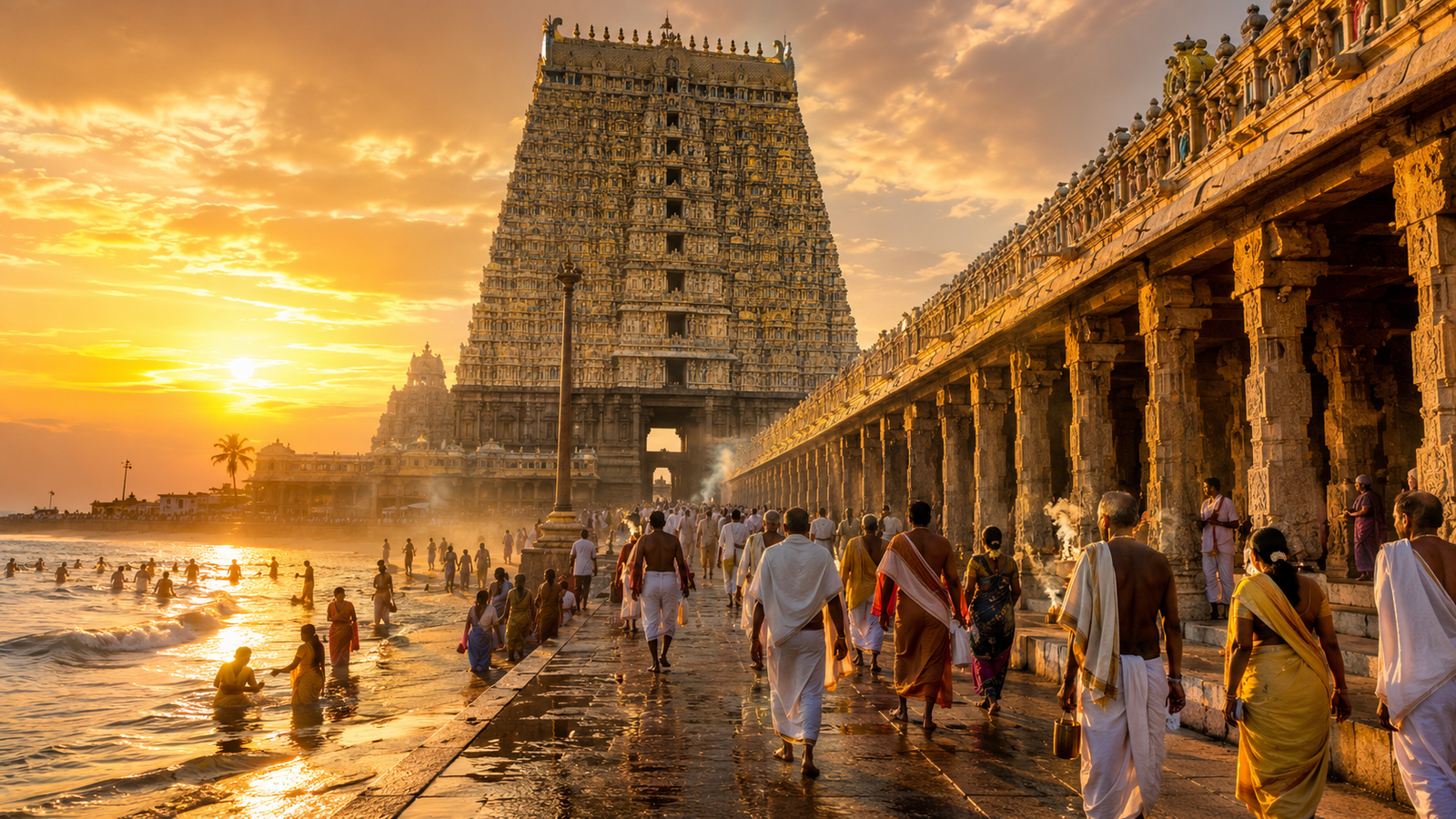
This sacred shrine is Guruvayur, lovingly called the “Dwaraka of the South.”
For centuries, millions of devotees have traveled here seeking healing, children, prosperity, peace of mind, and above all, the loving presence of Guruvayurappan—Lord Krishna in His eternal child form.
Saints…
Poets…
Scholars…
Kings…
And ordinary devotees have all proclaimed that Guruvayur is not merely a temple.
It is a place where Krishna responds to sincere devotion with extraordinary grace.
In this comprehensive guide, we will explore:
- The divine origin of Guruvayur Temple
- Why the deity is considered one of the most sacred Krishna idols in existence
- The hidden spiritual symbolism of Guruvayurappan
- Why devotees never leave without visiting Mammiyoor Shiva Temple
- The temple’s unique traditions that continue unchanged after centuries
Let us begin with the extraordinary story behind one of India’s most beloved temples.
The Legend Behind Guruvayur
According to the Guru Pavanapura Mahatmyam described in the Narada Purana, the story begins at the end of the Dvapara Yuga.
Before departing from the earthly world, Lord Krishna revealed a remarkable prophecy to His devotee Uddhava.
He declared that the magnificent city of Dwaraka would soon disappear beneath the sea.
But one priceless treasure would survive.
His sacred idol.
Krishna instructed that when the floods subsided, the idol should be recovered and installed in a place chosen by the gods themselves.
Exactly as foretold…
The idol floated upon the waters after Dwaraka was submerged.
The responsibility of finding a suitable home for it was entrusted to Guru Brihaspati, the preceptor of the gods, and Vayu, the Wind God.
How Guruvayur Got Its Name
Guru and Vayu searched across the land for the perfect location.
Eventually they arrived in present-day Kerala.
Near a serene lotus pond, they found Lord Shiva deeply absorbed in meditation.
Recognizing the sacred nature of the idol, Shiva advised them to consecrate it at that very location.
According to tradition, the celestial architect Vishwakarma built the temple, and Guru together with Vayu installed the deity there.
Thus, the place came to be known as:
Guru + Vayu + Oor (Place)
Guruvayur.
Even today, devotees remember that the temple itself was established through the combined blessings of Vishnu, Shiva, Guru Brihaspati, and Vayu.
The Ancient Idol Worshipped Across the Ages
The deity worshipped at Guruvayur is unlike any ordinary temple idol.
According to temple tradition, it was originally worshipped by Lord Mahavishnu in Vaikuntha, later by Lord Brahma, and eventually by Lord Krishna Himself before being installed at Guruvayur.
The idol is believed to be carved from a rare sacred stone traditionally referred to as Pathala Anjanam, a material revered in temple lore for its spiritual significance.
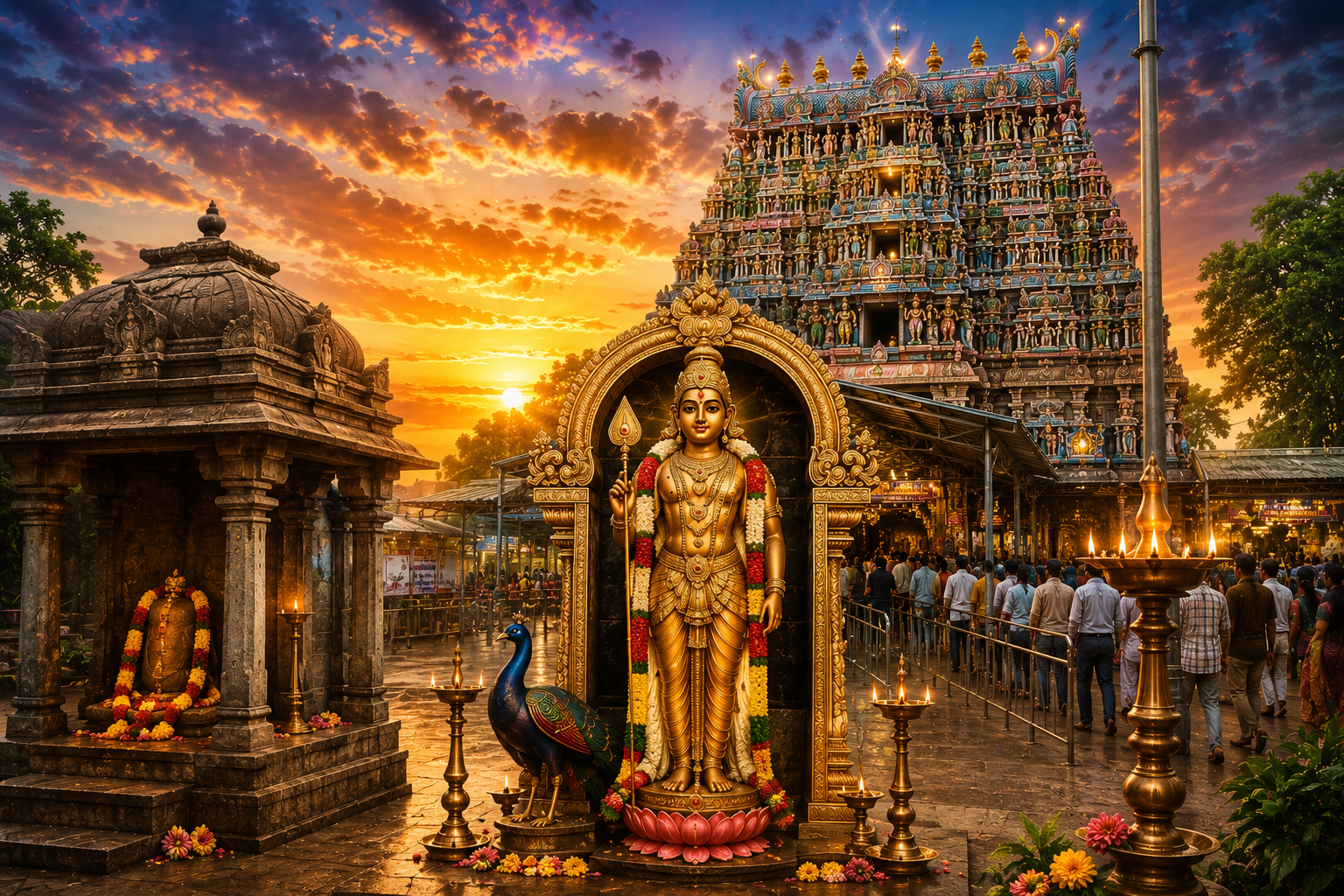
Standing gracefully in the Sthanaka posture, Guruvayurappan bears:
- The conch (Shankha)
- The discus (Chakra)
- The mace (Gada)
- The lotus (Padma)
His divine form is adorned with:
- Tulsi garlands
- Pearl necklaces
- The Kaustubha gem
- The Vaijayanti garland
- Sacred sandal paste
- A magnificent crown and ornaments
Yet despite this royal appearance…
Devotees lovingly call Him Unnikrishnan—Little Krishna.
Why Guruvayurappan Appears as a Child
Temple tradition narrates a touching story from Krishna’s birth.
When Lord Krishna manifested before Vasudeva in prison, He initially revealed His supreme four-armed divine form.
Vasudeva feared that King Kamsa would immediately recognize the child as the prophesied destroyer of his kingdom.
He prayed to Krishna to conceal His divine majesty.
In response, Krishna transformed into an ordinary infant.
Devotees believe the form worshipped at Guruvayur reflects that sacred moment when the Infinite chose the simplicity of a child out of compassion for humanity.
The Sacred Kalabham Offering
One of the most cherished offerings at Guruvayur is the fragrant sandal paste known as Kalabham.
This sacred preparation combines:
- Saffron
- Kasturi (musk)
- Gorochana
- Agaru (aloeswood)
- Red sandalwood
These ingredients are blended with rose water to create an aromatic sandal paste that is offered to Guruvayurappan before being distributed as prasadam to devotees.
Many devotees treasure this prasadam as a symbol of Krishna’s blessings.
Why Every Pilgrim Must Visit Mammiyoor Shiva Temple
One of Guruvayur’s most beautiful traditions reflects the harmony between Shaivism and Vaishnavism.
Because Lord Shiva guided Guru and Vayu in selecting the sacred site for the temple, pilgrims believe that a visit to Guruvayur is incomplete without worshipping Lord Shiva at Mammiyoor Temple, located approximately two kilometers away.
Only after offering prayers at both temples is the pilgrimage traditionally considered complete.
This timeless custom beautifully illustrates the unity of Hindu spiritual traditions rather than division between them.
Why Guruvayur Continues to Inspire Millions
Every temple has a story.
Every deity has a legend.
But Guruvayur offers something deeply personal.
Here, devotees do not merely stand before God.
They stand before the Divine Child.
The Lord who ruled Dwaraka…
Who guided the Bhagavad Gita…
Who revealed the Universal Form…
Now smiles with the innocence of a little boy, inviting every devotee into an intimate relationship of love, trust, and surrender.
That is the enduring magic of Guruvayur.
The Miracles of Guruvayur: Healing, Narayaneeyam, and the Divine Grace of Guruvayurappan
In the previous chapter, we explored the divine origins of Guruvayur Temple, the sacred idol installed by Guru and Vayu, and why millions lovingly worship Guruvayurappan as the eternal child Krishna.
But Guruvayur is more than an ancient temple.
For centuries, devotees have believed it to be a place where prayers are answered, incurable illnesses find relief, and lives are transformed through unwavering faith.
Some of these stories have become inseparable from the temple’s spiritual history.
Let us explore the miracles that made Guruvayur one of India’s most revered pilgrimage destinations.
Guruvayur – A Temple of Healing
Across Kerala, there are many temples associated with healing.
Yet devotees often regard Guruvayur as one of the foremost sanctuaries for those seeking relief from physical and emotional suffering.
People visit the temple praying for:
- Recovery from chronic illnesses
- Marriage blessings
- Healthy children
- Relief from mental distress
- Peace within the family
- Overall well-being
Generations of devotees have attributed their answered prayers to Guruvayurappan’s grace, making healing one of the temple’s defining traditions. These accounts are matters of faith and devotion.
The Story of King Janamejaya
One of the earliest legends connected with Guruvayur concerns King Janamejaya, the son of King Parikshit and grandson of Abhimanyu.
According to the Puranic tradition, Janamejaya was determined to avenge his father’s death at the hands of the serpent Takshaka.
He performed the famous Sarpa Yajna, a great sacrificial ritual intended to destroy all serpents.
Although driven by vengeance, the act eventually brought heavy karmic consequences.
The king was afflicted with a severe disease described in the tradition as leprosy.
Despite numerous treatments, he found no relief.
Finally, following the guidance of Lord Dattatreya, Janamejaya worshipped Guruvayurappan with sincere devotion.
The tradition says that through the Lord’s grace, he recovered from his illness.
For devotees, this story symbolizes an important spiritual truth:
Healing begins when anger gives way to surrender.
Narayaneeyam – A Masterpiece Born in Guruvayur
No work is more closely associated with Guruvayur than the Narayaneeyam.
Composed in the sixteenth century by the great scholar Melpathur Narayana Bhattathiri, it remains one of the most celebrated devotional poems in Sanskrit.
The Narayaneeyam is a condensed retelling of the Bhagavata Purana, distilling its vast spiritual teachings into 1,036 verses arranged in one hundred cantos.
More than literature…
It is considered an offering of devotion.
The Guru Who Suffered
Bhattathiri’s revered teacher, Achyuta Pisharati, suffered from a debilitating rheumatic illness.
Unable to bear his Guru’s pain, Bhattathiri prayed that the suffering might be transferred to himself.
Tradition holds that his prayer was fulfilled.
The Guru recovered…
But Bhattathiri became severely afflicted by the disease.
Despite the passage of time, his condition did not improve.
One Hundred Days Before Guruvayurappan
Seeking guidance, Bhattathiri approached the saint Thunchaththu Ramanujan Ezhuthachan.
He was advised to travel to Guruvayur and praise Lord Krishna through the stories of the Bhagavata Purana.
Accepting this advice, Bhattathiri came to Guruvayur.
Each day, he composed and recited verses before Guruvayurappan.
For one hundred consecutive days, he continued this offering of devotion.
As the work reached its conclusion, tradition says that his illness disappeared completely.
The verses he offered before Guruvayurappan became immortal as the Narayaneeyam.
Even today, devotees gather at Guruvayur to recite the Narayaneeyam, believing that it brings spiritual strength, inner peace, and divine grace.
The Saint Who Spread Guruvayur’s Glory
Although Guruvayur has been revered for centuries, one scholar played an important role in introducing its spiritual greatness to many devotees in Tamil Nadu.
That scholar was Sri Anantarama Dikshitar.
Renowned for his profound discourses on the Narayaneeyam, he inspired countless people to visit Guruvayur and develop devotion to Guruvayurappan.
His talks attracted thousands of listeners and deepened appreciation for the temple’s spiritual heritage.
Guruvata Purisha Pancharatnam
Sri Anantarama Dikshitar also composed a Sanskrit hymn known as the Guruvata Purisha Pancharatnam, praising Guruvayurappan.
He taught his disciples that sincere recitation of this hymn cultivates peace of mind and spiritual prosperity.
Many devotees continue this practice as part of their daily worship.
A Child’s Recovery
A well-known account associated with Sri Anantarama Dikshitar tells of a young boy who suffered from persistent headaches.
Medicines had brought no relief.
The boy’s grandfather eventually took him to Guruvayur.
For three days, they stayed near the temple and recited the Guruvata Purisha Pancharatnam before Guruvayurappan.
According to the tradition preserved by devotees, the child’s headache disappeared completely on the third day.
Stories like this continue to strengthen the faith of countless pilgrims.
Faith That Continues Today
Even now, many devotees pray from their homes before images of Guruvayurappan while reciting the Narayaneeyam or Guruvata Purisha Pancharatnam.
For believers, these sacred hymns are more than poetry.
They become a means of remembering Krishna, cultivating hope, and finding strength during difficult times.
Whether the transformation is physical, emotional, or spiritual, devotees see every blessing as an expression of Guruvayurappan’s compassion.
More Than Physical Healing
The greatest miracle associated with Guruvayur may not be the healing of disease.
It is the healing of the human heart.
People arrive burdened with fear…
Anxiety…
Loss…
Grief…
And many leave carrying something different.
Faith.
Hope.
And a renewed sense of trust in the Divine.
Perhaps that is why Guruvayur has remained a living center of devotion for so many centuries.
The Complete Guruvayur Pilgrimage Guide: Sacred Rituals, Festivals, and Darshan Tips
Every year…
Millions of devotees arrive at Guruvayur carrying hopes, prayers, and gratitude.
Some come seeking good health.
Some pray for children.
Others simply long for a glimpse of Guruvayurappan.
Yet what makes this temple truly unique is not only its ancient history or miraculous traditions.
It is the remarkable way in which every ritual has become an expression of love between the devotee and the Divine Child.
From Tulabharam to Annaprasanam…
From the spectacular elephant race to the quiet predawn darshan…
Every act of worship at Guruvayur carries profound spiritual meaning.
Aanayottam – The Famous Elephant Race
Among Kerala’s temple traditions, few are as spectacular as Aanayottam, the ceremonial elephant race.
This unique event marks the beginning of the annual temple festival.
Contrary to what many imagine, it is not an ordinary competition.
The elephants maintained by the Guruvayur Devaswom are released from a designated point and race toward the temple.
The first elephant to reach the temple earns the sacred privilege of carrying Guruvayurappan’s Thidambu (the ceremonial representation of the deity) during the temple processions throughout that year’s festival.
For devotees, the event symbolizes eagerness to serve the Lord rather than a contest of strength.
Nirmalya Darshan – The Most Sacred Moment of the Day
The temple opens in the early hours of the morning, long before sunrise.
One of the most cherished experiences is the Nirmalya Darshan, when devotees behold Guruvayurappan before the previous day’s decorations are removed.
At around 3:00 a.m., the Lord is seen in this serene and intimate form.
Many devotees consider this the most spiritually powerful darshan of the entire day.
Following this, sacred oil used during the rituals and the abhisheka tirtham are distributed as prasadam.
For many pilgrims, witnessing Nirmalya Darshan even once is the fulfillment of a lifelong dream.
Tulabharam – Offering One’s Gratitude
One of Guruvayur’s best-known offerings is Tulabharam, in which devotees symbolically offer items equal to their own body weight.
Depending on their vow, they may offer:
- Bananas
- Butter
- Sugar
- Jaggery
- Coconuts
- Fruits
- Grains
- Coins
- Silver
- Gold
- Many other permitted offerings
Devotees make this offering with heartfelt prayer, believing that surrendering something precious before Guruvayurappan lightens the burdens carried within the heart.
The Lesson Behind Tulabharam
Temple tradition preserves a beautiful story illustrating the importance of sincerity.
A devotee once came to perform Tulabharam using bananas.
Before the offering, his mother asked him to remove his expensive silk garment so it would not be damaged.
The weighing began.
No matter how many bananas were placed on the scale…
The balance would not settle.
Finally, a priest suggested placing the silk garment itself on the scale.
Only then did the balance become equal.
The story reminds devotees that true offerings require complete surrender—not merely external gifts.
Sacred Rituals for Children
Guruvayur is especially beloved by families with young children.
Several unique rituals are performed here.
Annaprasanam – The First Feeding
Parents who pray for children often vow that, once blessed with a child, they will bring the infant to Guruvayur for the first ceremonial feeding of solid food.
Around the sixth month, the child is seated and fed the Lord’s prasadam in a sacred ceremony.
Devotees believe this blessing invokes Guruvayurappan’s protection and supports the child’s healthy growth.
Adimai Kidathal (Nadai Thallal)
Another cherished tradition involves placing a child gently upon the temple pathway before the sanctum.
The child is symbolically offered to Guruvayurappan, acknowledging that every child ultimately belongs to the Divine.
A family member then receives the child and offers prayers for long life, health, and protection.
Kundumani Offering
Near the temple flagstaff stands a vessel filled with Kundumani seeds.
Parents encourage their children to scoop up the seeds and return them to the vessel.
This simple act symbolizes vitality, attentiveness, and healthy development.
It remains a charming tradition cherished by generations of families.
Offering Prayers for Healing
Devotees who recover from illness often express gratitude by offering symbolic representations of the healed body part.
Eyes.
Hands.
Legs.
Or other organs are fashioned in wood, silver, or gold and presented at the temple.
This offering reflects thankfulness rather than obligation and continues to be an important expression of faith.
Twelve Divine Forms Every Day
One of Guruvayur’s most distinctive traditions is that Guruvayurappan is worshipped in twelve different forms throughout the day, each revealing a different aspect of Lord Krishna.
Among them are:
- Vishwaroopan during Nirmalya Darshan
- Vatha Rogagnan during the oil anointing
- Gokulanathan
- Santhana Gopalan
- Gopikanathan
- Yashoda Balan
- Vanamala Krishnan
- Sarvalankara Bhushanan
- Sarvamangala Nayakan
- Mohana Sundaran
- Vrindavana Charan
- Shesha Shayanan during the final night worship
This continuous transformation beautifully portrays Krishna’s many divine dimensions within a single day.
A Temple That Endured History
Like many ancient temples, Guruvayur faced periods of hardship.
Historical records and temple tradition recount attacks, fires, and repeated reconstruction over the centuries.
The temple was restored through the devotion and generosity of countless devotees, allowing its spiritual traditions to continue uninterrupted.
The contributions of saints such as Melpathur Narayana Bhattathiri, Poonthanam, Vilwamangalam Swamiyar, Kurur Amma, and Vasudevan Namboothiri further strengthened Guruvayur’s place as one of India’s foremost centers of Krishna devotion.
How to Get Darshan Easily
Because Guruvayur attracts enormous crowds throughout the year, waiting times for the general queue can range from about one hour to several hours, depending on the day and festival season.
The source material also notes the availability of a paid special darshan option that provides a faster entry route for eligible pilgrims, though temple arrangements and fees may change over time. Visitors should always confirm current procedures with the temple administration before planning their visit.
Final Reflection
Guruvayur is not simply another temple dedicated to Lord Krishna.
It is a place where the Infinite chooses the innocence of a child.
Where scholars composed immortal hymns.
Where saints found healing.
Where parents place their children at the feet of God.
Where elephants race for the privilege of serving the Lord.
And where millions continue to discover that devotion is not measured by elaborate rituals—
But by the sincerity of one’s heart.
Whether you come seeking health…
Peace…
A child…
Or simply the joy of seeing Unnikrishnan smile…
Guruvayur welcomes every devotee with the same timeless grace.
Once you have stood before Guruvayurappan in the soft glow of the sanctum lamp, you understand why generations have lovingly called this sacred temple “The Dwaraka of the South.”