
Sri Bhaskara Raya: The Great Sri Vidya Master Behind the Lalitha Sahasranama Commentary
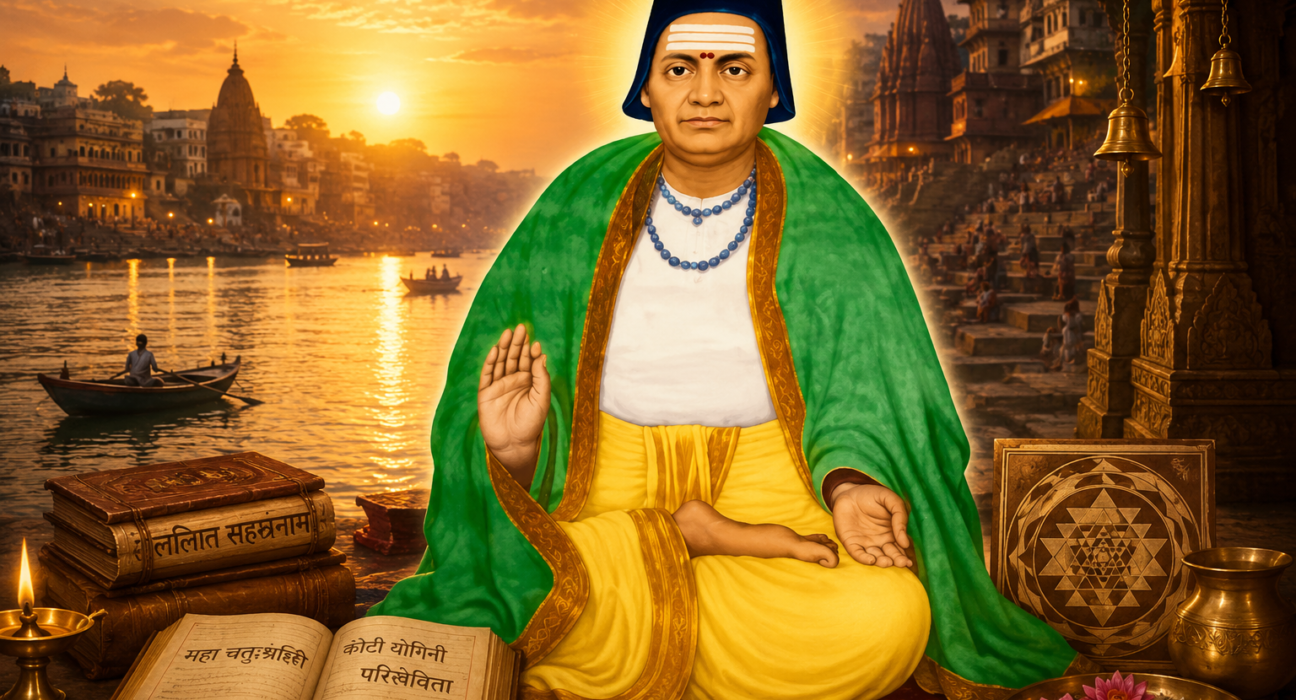
Sri Bhaskara Raya: The Great Sri Vidya Master Who Unveiled the Mystery of the 64 Crore Yoginis
Introduction
Among the countless spiritual masters who have illuminated the path of Sanatana Dharma, only a few have left behind a legacy so profound that even centuries later, their names continue to inspire us.
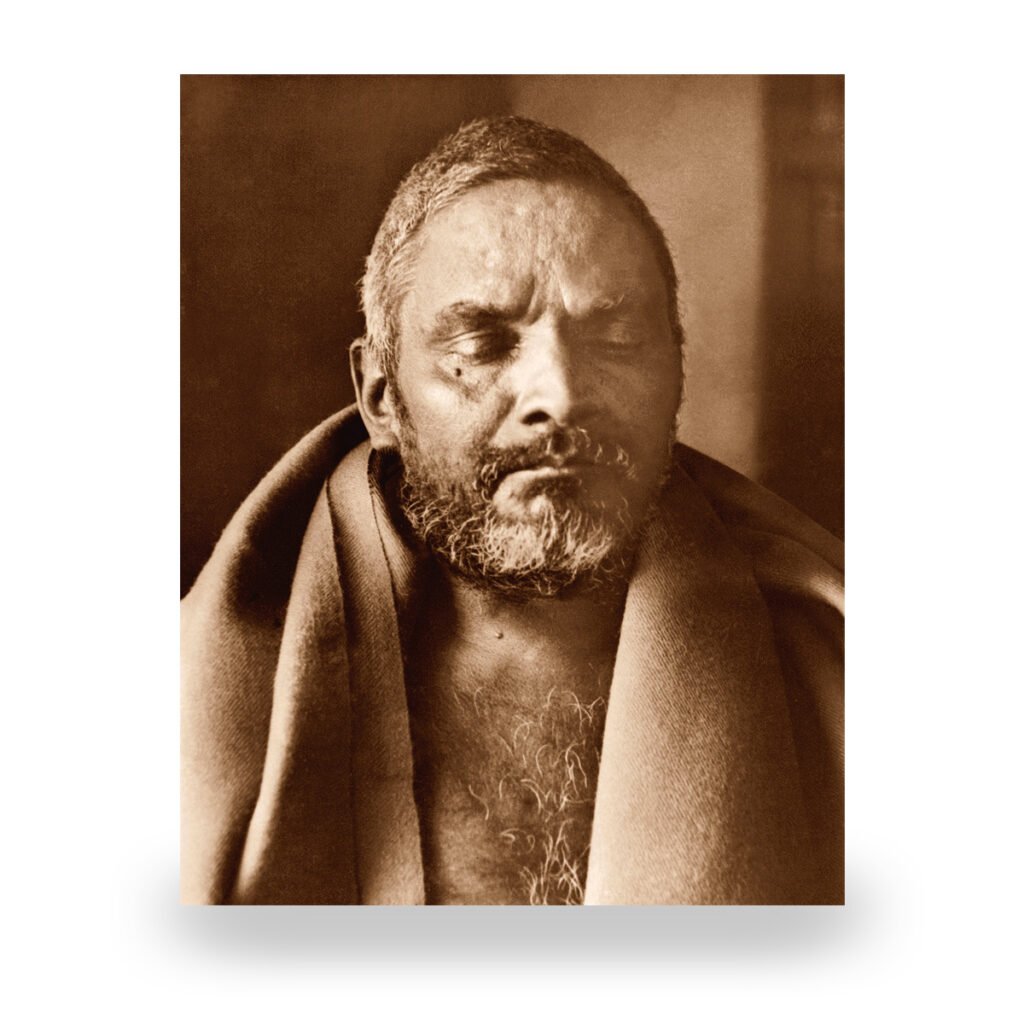
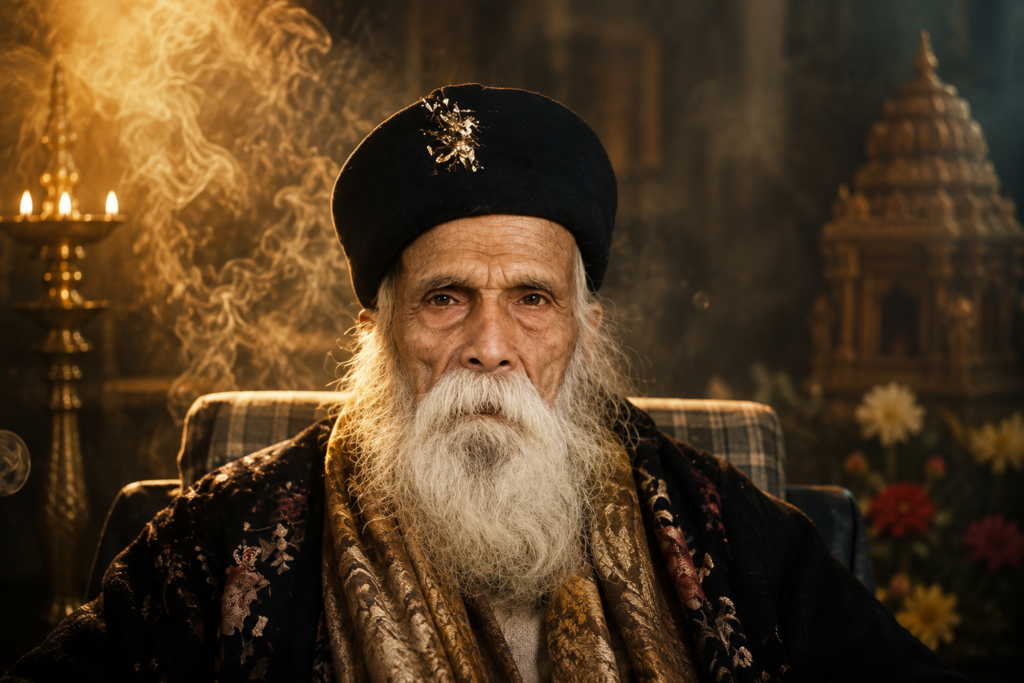
One such extraordinary saint is Sri Bhaskara Rayar, one of the greatest exponents of Sri Vidya, a scholar without equal, a realized upasaka, and the celebrated commentator on the Lalitha Sahasranama.
His life was not merely filled with scholarship—it was marked by miracles, divine experiences, and an unwavering devotion to the Divine Mother.
Who was Sri Bhaskara Raya?
How did he become one of the greatest authorities on Sri Vidya?
Why do devotees believe that Goddess Lalitha herself spoke through him?
Let us explore the extraordinary life of this remarkable spiritual master.
The Question That Shook Kashi
The sacred city of Kashi echoed with Vedic chants as scholars gathered inside a grand yajna hall.
Among them sat a quiet Sri Vidya upasaka.
Some learned scholars decided to test his knowledge.
One of them asked:
“The Lalitha Sahasranama praises the Divine Mother as Maha Chatushshashti Koti Yogini Parisevita—She who is served by sixty-four crore Yoginis.
Can you tell us the names, forms, weapons, and histories of all those Yoginis?”
Silence filled the hall.
The saint closed his eyes.
After a few moments he calmly said,
“Write.”
What followed astonished everyone present.
The names, origins, symbols, powers, and characteristics of the Yoginis flowed effortlessly from his lips.
The scribes struggled to keep pace.
Their hands became tired.
Yet his narration never stopped.
Soon the entire city of Kashi began asking:
Who was this man?
A scholar?
A mystic?
Or simply an instrument of the Divine Mother herself?
That saint was Sri Bhaskara Raya.
The Profound Tradition of Sri Vidya
To understand Bhaskara Raya, one must first understand Sri Vidya.
According to the Agamas and Tantric traditions, Goddess Parvati once requested Lord Shiva to reveal the highest spiritual wisdom.
Lord Shiva then disclosed the deepest secrets of:
- Sri Vidya Mantras
- Sri Chakra worship
- Yogini philosophy
- Initiation methods
- Internal worship
- The supreme mystery of Tripura Sundari
This sacred tradition later became known as Sri Vidya Upasana, one of Hinduism’s most profound spiritual paths.
The sage Dattatreya is traditionally believed to have explained these teachings in eighteen thousand verses.
His disciple Parashurama condensed them into six thousand aphorisms known as the Parashurama Kalpa Sutra, one of the foundational texts of the Sri Vidya tradition.
Across generations, many realized masters preserved this sacred lineage.
Among them, Sri Bhaskara Raya occupies an unparalleled position.
Adi Shankaracharya’s Divine Prophecy
A remarkable tradition associated with Sri Bhaskara Raya begins centuries before his birth.
It is said that Adi Shankaracharya once intended to write a commentary on the Lalitha Sahasranama.
He instructed a disciple to bring the sacred text.
Instead, the disciple repeatedly returned with the Vishnu Sahasranama.
Three times the same incident occurred.
Confused, the disciple explained:
“Master, every time I reached for the Lalitha Sahasranama, a young girl standing inside the room handed me the Vishnu Sahasranama instead.”
Realizing that this was no ordinary event, Adi Shankara entered the room himself.
No one was there.
Then a divine voice is said to have proclaimed:
“In the future, one destined soul shall be born.
He shall come to Kashi.
He alone will reveal the true meaning of My thousand names.”
Accepting this as the Divine Mother’s will, Adi Shankaracharya never wrote a commentary on the Lalitha Sahasranama.
Centuries later, devotees believe that the prophecy found its fulfillment in Sri Bhaskara Raya, whose celebrated commentary Saubhagya Bhaskara remains one of the greatest works on the Lalitha Sahasranama.
The Birth of an Extraordinary Scholar
Sri Bhaskara Raya was born around 1683 CE.
Traditional accounts differ regarding his birthplace, with some placing it in present-day Hyderabad, while others associate his origins with Maharashtra.
His father, Gambhira Raya, was an accomplished scholar deeply versed in Vedanta, mantra shastra, and the sacred scriptures.
Growing up in such an environment, Bhaskara Raya displayed extraordinary brilliance from childhood.
By the age of seven, he had mastered:
- Vedanta
- Mimamsa
- Nyaya
- Vyakarana (Grammar)
- Numerous branches of Sanskrit learning
Scholars of his time reportedly declared:
“There is no branch of knowledge unknown to him.”
Yet his greatness lay not merely in intellectual brilliance.
It rested in direct spiritual realization.
The Miracle of the Sixty-Four Crore Yoginis
While visiting Kashi, Bhaskara Raya practiced Sri Vidya according to traditional tantric methods.
Some scholars objected to his form of worship and challenged him publicly.
They demanded that he explain the mysterious reference to the sixty-four crore Yoginis.
Accepting the challenge peacefully, Bhaskara Raya entered meditation on the banks of the Ganga.
Then, in an uninterrupted stream, he described the Yoginis one after another.
Witnesses believed they were hearing knowledge beyond ordinary human memory.
Among those present was Kumkumananda Swamigal.
After observing the event, he declared:
“These words are not coming from Bhaskara Raya.
The Divine Mother herself is seated upon his shoulder and speaking through him.”
Another scholar, Narayana Bhatta, longed to witness this vision.
According to tradition, Kumkumananda sprinkled sanctified water upon his eyes.
Instantly, Narayana Bhatta experienced the divine vision of Goddess Lalitha.
The challenge ended in complete surrender.
The Miracle of the Child
Another remarkable event is associated with Chandrasena Jadhav, a regional ruler in Karnataka connected with the Maratha military lineage.
Although blessed with wealth and power, he remained childless.
When Bhaskara Raya visited his kingdom, the ruler sought his blessings.
The saint assured him:
“You shall be blessed with a son.”
In time, the queen conceived.
Meanwhile, Bhaskara Raya’s disciple Narayana Deva, renowned for his spiritual powers, visited the kingdom.
When asked about the unborn child, he unknowingly predicted:
“A daughter will be born.”
Learning of Bhaskara Raya’s earlier blessing, the disciple became upset and, according to traditional accounts, declared that the child would become neither male nor female.
History preserved in devotional tradition says that the child was indeed born with ambiguous gender characteristics.
Years later, when Bhaskara Raya returned, the grief-stricken king fell at his feet.
The saint responded with compassion.
He acknowledged the role of karma but declared:
“My word shall never become false.”
The River That Changed Its Course
Bhaskara Raya then began intense Surya Upasana on the banks of the Krishna River.
Every morning he offered Arghya to the rising Sun.
Seeing the elderly guru walk daily to the river, his disciples suggested moving the ashram closer to the riverbank.
Bhaskara Raya smiled and replied:
“The river itself will come.”
According to tradition, something extraordinary happened.
The Krishna River altered its course and flowed toward the ashram.
After the completion of his worship, the child is believed to have transformed into a healthy male.
Local tradition still points to the old and new channels of the Krishna River as reminders of this miracle.
Bhaskara Raya later documented aspects of his Surya worship in a work known as Drucha Bhaskaram.
Bhaskara Raya in Tamil Nadu
The fame of Bhaskara Raya eventually reached the Maratha rulers of Thanjavur.
Recognizing his greatness, the king invited him to Tamil Nadu.
Bhaskara Raya accepted the invitation.
At that time, his guru Gangadhara Vajapeyi resided near Thiruvalangadu on the southern bank of the Kaveri River.
Desiring to remain close to his guru, Bhaskara Raya settled nearby.
The Thanjavur ruler gifted him a prosperous village.
That village eventually came to be known as Bhaskararajapuram.
Here, Bhaskara Raya spent many years immersed in Sri Vidya worship, spiritual teaching, and scriptural writing.
His Final Days
In the final years of his life, Bhaskara Raya resided at Thiruvidaimarudur, the sacred Madhyarjuna Kshetra.
After a lifetime devoted entirely to the Divine Mother, he peacefully attained union with Her.
Devotees do not regard this as death.
They believe it was the day he merged forever with Goddess Lalitha.
His Samadhi continues to be revered by seekers who follow the Sri Vidya tradition.
The Enduring Legacy of Sri Bhaskara Raya
Was Bhaskara Raya merely a scholar?
Could any ordinary person recite the mysteries of sixty-four crore Yoginis?
Could a river truly alter its course for a saint?
Can the words of a realized master transform destiny itself?
For devotees, the answer lies not in intellectual debate but in spiritual experience.
They believe Bhaskara Raya never claimed greatness for himself.
He was simply the chosen instrument through whom the Divine Mother expressed Her infinite wisdom.
Even today, his writings continue to guide serious practitioners of Sri Vidya, while his Samadhi remains a place of deep silence, devotion, and meditation.
For those who seek more than information—for those who seek transformation—the life of Sri Bhaskara Raya stands as an eternal reminder that true worship begins not in rituals alone, but within the heart.
Conclusion
Sri Bhaskara Raya’s life represents the perfect union of scholarship, devotion, spiritual realization, and divine grace. His commentaries on the Lalitha Sahasranama, his mastery of Sri Vidya, and the many sacred traditions surrounding his life continue to inspire seekers across India.
Whether one approaches him as a philosopher, a saint, or a realized master, his legacy remains one of the brightest lights in the history of Shakta spirituality—a beacon guiding devotees toward the compassionate embrace of the Divine Mother.