
Swami Rama: The Himalayan Yogi Who United Ancient Yoga and Modern Science
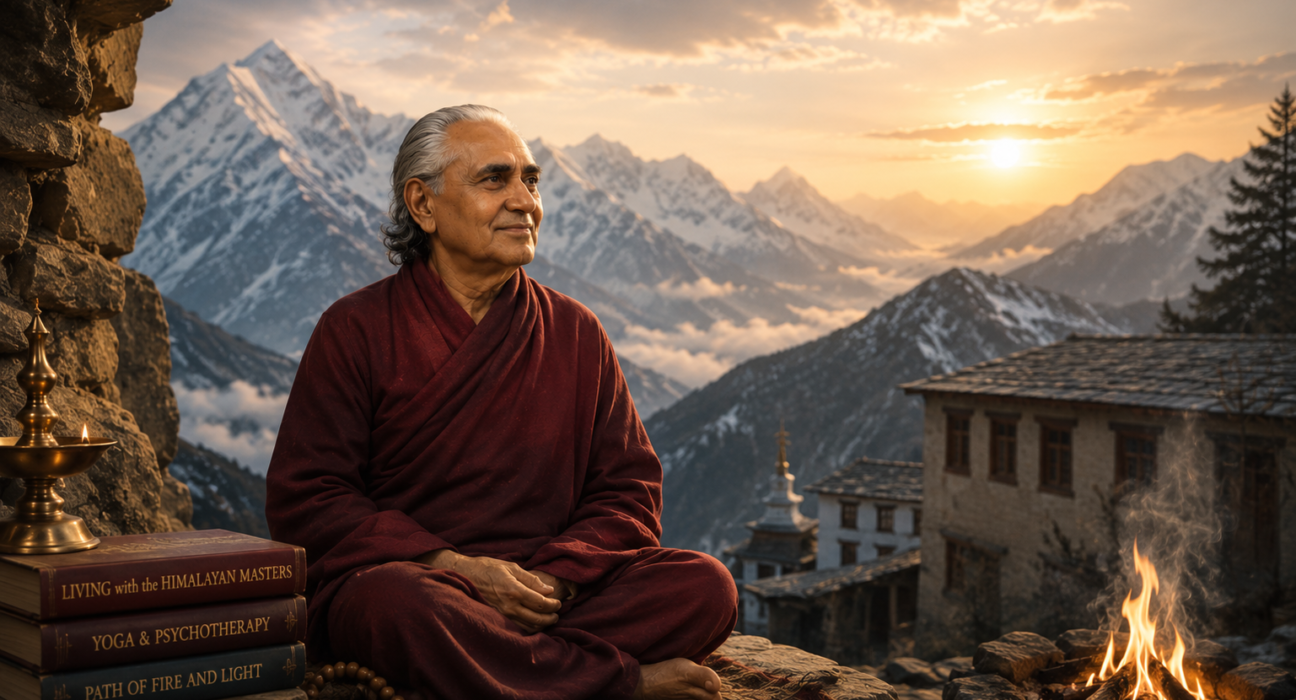
Swami Rama: The Himalayan Yogi Who Bridged Ancient Spiritual Wisdom and Modern Science
When a Great Soul Leaves, Does Their Light Ever Truly Fade?
Throughout history, countless people have been born, lived ordinary lives, and disappeared into the pages of time. Their names fade, their achievements are forgotten, and generations move on.
But every so often, a rare soul arrives with a purpose far greater than personal success.
Their entire existence becomes an offering to humanity.
Even after their physical departure, their presence continues to inspire millions, illuminating the path for those seeking truth.
One such extraordinary master was Swami Rama—the legendary Himalayan yogi whose life transformed the world’s understanding of yoga, meditation, consciousness, and human potential. Revered as both a mystic and a spiritual scientist, he became one of the first yogis to demonstrate that ancient yogic practices could stand up to modern scientific investigation.
His story is not merely the biography of a monk.
It is the remarkable journey of a child who overcame immense suffering, mastered the hidden sciences of the Himalayas, and dedicated his life to proving that the greatest power a human being can discover lies within.
A Child Born for a Higher Purpose
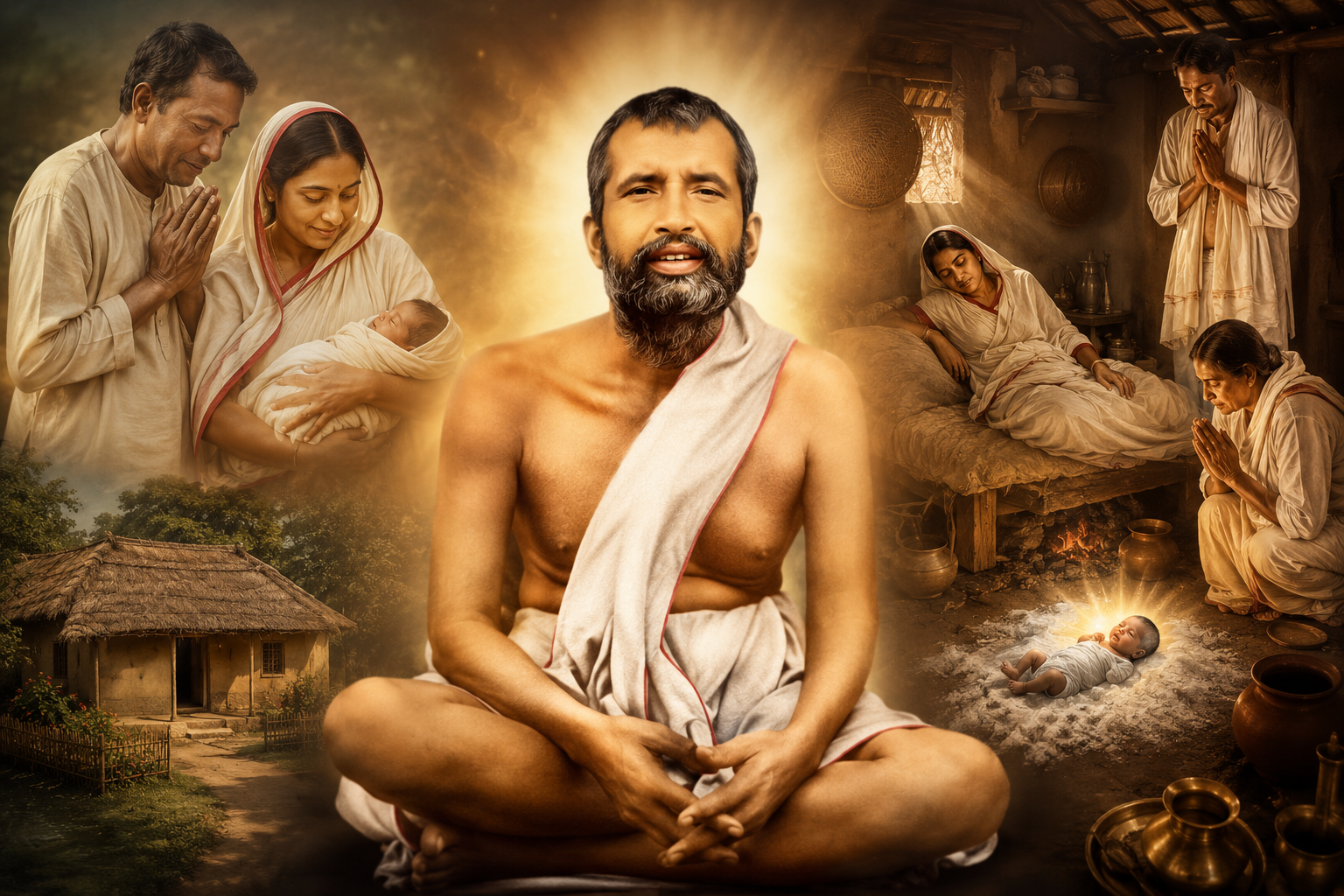
Swami Rama was born in 1925 in the small Himalayan village of Toli, in present-day Uttar Pradesh, India. His birth name was Brij Kishore Dhasmana.
Although he entered the world like any other child, destiny had already chosen an extraordinary path for him.
His early years were marked by heartbreaking tragedy.
While still very young, he lost both of his parents, leaving him an orphan before he could truly understand the meaning of family.
For most children, such a loss would have become a lifelong wound.
For Brij Kishore, however, suffering became the beginning of spiritual awakening.
Instead of allowing grief to consume him, the hardships of his childhood ignited an intense inner search—a search that would ultimately lead him to the highest peaks of Himalayan wisdom.
The Guru Who Changed Everything
At a time when the young boy had nowhere to turn, fate brought him into the care of a great Himalayan master known as Bengali Baba.
More than a guardian, Bengali Baba became his spiritual father.
Under his compassionate guidance, the orphaned child received an education unlike anything available in the ordinary world.
Rather than being trained only in scriptures, he was immersed in an ancient tradition that had been carefully preserved for centuries by Himalayan sages.
He learned:
- Yoga in its original form
- Deep meditation techniques
- Vedantic philosophy
- Breath control (Pranayama)
- Self-discipline
- The science of the mind
These teachings were never meant to create miracles for public display.
Their true purpose was to awaken the limitless potential hidden within every human being.
Under his guru’s watchful eye, Brij Kishore slowly transformed into the spiritual seeker the world would later know as Swami Rama.
Drawn to the Silence of the Himalayas
Unlike other children, Swami Rama showed little interest in games, entertainment, or worldly pleasures.
The mountains called to him.
The silent caves of the Himalayas became his classrooms.
The snow-covered peaks became his temples.
While children of his age were occupied with everyday life, he immersed himself in contemplation, meditation, and yogic disciplines.
The Himalayan wilderness became a living university where nature itself served as the teacher.
Every cave offered silence.
Every mountain offered solitude.
Every meditation session brought him closer to understanding the mysteries of consciousness.
It was here that the foundations of one of history’s greatest yogis were laid.
A Journey Beyond the Known World
By the age of 21, Swami Rama’s thirst for spiritual knowledge had become impossible to satisfy through ordinary study alone.
Seeking the highest truths, he traveled into the remote regions of Tibet, where he encountered his Param Guru—a meeting that would forever transform his spiritual life.
This was not simply another teacher.
It was the beginning of a new level of initiation into the deepest traditions of Himalayan yoga.
Here, Swami Rama received teachings that were rarely shared outside secret lineages.
These practices were considered so advanced that only a handful of qualified disciples were entrusted with them throughout history.
The Secret Science of Consciousness
Among the extraordinary yogic disciplines he mastered was a practice traditionally known as Parakaya Pravesha—the mystical ability described in yogic literature as consciously leaving the physical body and re-entering it through complete mastery of awareness.
Such accounts have appeared in ancient Indian spiritual traditions for centuries and are regarded by practitioners as advanced yogic attainments. These descriptions are part of traditional spiritual literature and are matters of faith and yogic belief rather than established scientific fact.
Whether viewed symbolically or literally, these teachings reveal something far more important than supernatural abilities.
They point toward an ancient understanding of consciousness that suggests the human mind is capable of far greater control than most people ever imagine.
For Swami Rama, yoga was never about displaying extraordinary powers.
It was about mastering the mind.
That principle would later become the central message of his life and teachings.
The Making of a Himalayan Master
By the end of his early years, the orphaned child from a small Himalayan village had already accomplished what many seekers spend an entire lifetime pursuing.
He had endured unimaginable loss.
He had found an enlightened master.
He had immersed himself in the timeless wisdom of the Himalayas.
And he had begun unlocking dimensions of human consciousness that few people even knew existed.
Yet this was only the beginning.
In the next chapter of his remarkable journey, Swami Rama would rise to one of Hinduism’s highest spiritual positions before making a decision that stunned the religious world—a decision that would ultimately change the course of his life forever.
The Young Shankaracharya Who Walked Away from Power
By his early twenties, Swami Rama had already undergone years of rigorous spiritual discipline in the Himalayas. His profound knowledge of the Vedas, mastery of yogic sciences, and extraordinary inner maturity earned him widespread respect among India’s spiritual leaders.
At the remarkably young age of 24, he was appointed as the Shankaracharya of the Karvirpitham, one of the revered seats of the Advaita Vedanta tradition.
For most spiritual aspirants, such an appointment would have been the culmination of a lifetime of effort.
For Swami Rama, it was merely another stage in a much greater journey.
A Spiritual Leader Ahead of His Time
The position of Shankaracharya carries immense responsibility.
It is not simply a title of religious authority but a role dedicated to preserving the teachings of Adi Shankaracharya while guiding countless seekers on the path of spiritual realization.
Despite his youth, Swami Rama approached this responsibility with remarkable wisdom.
He believed that spirituality should never become trapped in rigid traditions or empty rituals.
Instead, it should transform human lives.
During his tenure, he initiated several meaningful reforms aimed at restoring the true spirit of Sanatana Dharma.
He questioned customs that had lost their original purpose and encouraged people to look beyond ritualistic practices toward genuine inner transformation.
One of his most progressive contributions was advocating greater participation for women in devotional life and worship, emphasizing that divine grace belongs equally to every sincere seeker.
His message was simple yet revolutionary:
God does not belong to any caste, gender, or community. The Divine belongs to everyone.
Why He Chose to Leave Everything Behind
Most people spend their lives chasing recognition, influence, and authority.
Swami Rama possessed all three.
Yet none of them satisfied the deeper calling within him.
In 1952, he made a decision that astonished many of his contemporaries.
He voluntarily renounced the prestigious position of Shankaracharya.
There was no controversy.
No political struggle.
No personal ambition.
He simply realized that administrative leadership was not the purpose for which he had come into the world.
His true mission lay elsewhere—in the silent heights of the Himalayas.
So he walked away from power and returned to the mountains that had shaped him since childhood.
Eleven Months in Complete Darkness
Back in the Himalayas, Swami Rama embraced an even more demanding phase of spiritual practice.
He secluded himself in a tiny cave measuring approximately six feet long and four feet wide.
There were no comforts.
No distractions.
No audience.
Only silence.
For eleven continuous months, he remained in that confined space, absorbed in deep meditation.
To the outside world, the cave appeared dark and empty.
But for Swami Rama, it became an inner universe.
Freed from external stimulation, he turned his awareness inward, exploring the vast dimensions of consciousness described in the ancient yogic traditions.
Such retreats have long been regarded in Himalayan lineages as opportunities to transcend the restless movements of the mind and experience profound states of inner stillness.
Whether one interprets these accounts spiritually or psychologically, they reflect an extraordinary commitment to self-discipline and contemplation.
A Vow That Changed the Course of His Life
When Swami Rama emerged from his long retreat, those around him sensed that something had fundamentally changed.
His years of meditation had deepened not only his spiritual insight but also his sense of purpose.
He made a solemn inner resolve:
“From this moment onward, my life is no longer for myself. Every breath, every thought, and every action shall be dedicated to the welfare of humanity.”
This was not merely an inspiring statement.
It became the guiding principle of everything he would do for the rest of his life.
Unlike many mystics who chose to remain hidden in remote mountains, Swami Rama felt called to carry the wisdom of the Himalayas beyond the caves and monasteries—to people everywhere who were searching for meaning, healing, and inner peace.
A New Mission Beyond the Himalayas
With the blessings of his revered guru, Swami Rama prepared for a journey unlike any undertaken by previous Himalayan masters.
His destination was not another sacred mountain or ancient monastery.
It was the modern Western world.
At a time when many in the West viewed meditation and yoga as little more than exotic beliefs—or dismissed them altogether—Swami Rama believed that ancient spiritual wisdom and modern science could complement rather than oppose each other.
His vision was bold.
He wanted to demonstrate that the practices preserved for centuries in the Himalayas were not based solely on faith but could also be explored through careful observation and scientific inquiry.
In 1969, he traveled to the United States, carrying with him not only the traditions of the Himalayan sages but also a mission that would forever change the global perception of yoga and meditation.
A Meeting Between Two Worlds
What happened next became one of the most fascinating chapters in modern spiritual history.
Inside an American research laboratory, scientists would witness demonstrations that challenged many of their assumptions about the limits of the human body and mind.
The experiments that followed would make headlines around the world and establish Swami Rama as one of the first yogis to engage directly with modern scientific research on meditation and consciousness.
But what exactly did the scientists observe?
And why did those experiments continue to be discussed decades later?
Those remarkable events unfold in the next chapter.
The Experiments That Changed the World’s View of Yoga
When Swami Rama arrived in the United States in 1969, yoga was still widely misunderstood in the Western world.
To many, it was little more than a form of stretching, relaxation, or an exotic spiritual practice from the East.
Ancient yogic claims about mastering the mind and body were often dismissed as myths or religious exaggerations.
Swami Rama did not respond with arguments.
He responded with evidence.
Instead of debating philosophers, he accepted an invitation to work alongside scientists.
His goal was simple yet revolutionary:
To demonstrate that the disciplined practices of Himalayan yoga could be examined through scientific observation.
Inside the Menninger Foundation
One of the world’s leading research institutions studying human consciousness at the time was the Menninger Foundation in Kansas, USA.
Its researchers were curious about whether advanced meditation practitioners truly possessed unusual control over their bodies—or whether such stories were simply legends.
Swami Rama agreed to participate in a series of laboratory experiments.
Every test was conducted using scientific instruments designed to monitor physiological activity.
The researchers expected to study meditation.
What they witnessed instead challenged many of their existing assumptions about the relationship between the mind and the body.
Demonstrating Extraordinary Mind-Body Control
During these experiments, Swami Rama demonstrated an exceptional degree of voluntary control over certain physiological processes that are ordinarily considered involuntary.
According to published accounts associated with these studies, researchers observed demonstrations involving:
- Significant voluntary influence over heart activity.
- The ability to alter temperature in different areas of the body.
- Entering deep meditative states while maintaining unusual levels of awareness.
These demonstrations attracted considerable attention because they suggested that advanced mental training might influence bodily functions to a degree not widely appreciated at the time.
While some interpretations remain debated within the scientific community, the experiments became an important milestone in the scientific study of meditation and biofeedback.
A Moment That Captured Global Attention
News of the experiments spread rapidly.
For many people in the West, this was the first time a Himalayan yogi had entered a scientific laboratory and willingly subjected his practices to measurement.
The media portrayed Swami Rama as a remarkable figure whose demonstrations challenged conventional ideas about human potential.
More importantly, researchers and physicians began taking meditation more seriously as a subject worthy of scientific investigation.
Today, decades later, meditation, mindfulness, and biofeedback are studied in universities, hospitals, and neuroscience laboratories around the world.
While many discoveries have emerged since then, Swami Rama’s participation in these early investigations helped spark broader interest in exploring the science of meditation.
Science and Spirituality Are Not Opposites
Perhaps the greatest lesson from these experiments was not whether extraordinary abilities were possible.
It was Swami Rama’s deeper message.
He consistently taught that science and spirituality are not enemies competing for truth.
Instead, they are two complementary approaches to understanding reality.
Science explores the external world through observation and experimentation.
Spirituality explores the inner world through direct experience.
When combined, they offer a more complete understanding of human life.
This philosophy distinguished Swami Rama from many teachers of his era.
He never asked people to abandon reason in favor of blind belief.
Instead, he encouraged sincere inquiry, disciplined practice, and personal experience.
Founding the Himalayan Institute
Inspired by this vision, Swami Rama established the Himalayan Institute in 1969.
His dream was not simply to create another yoga school.
He envisioned a center where the timeless wisdom of the Himalayan tradition could meet modern education, healthcare, and scientific research.
The Institute became a place where students could learn:
- Classical yoga
- Meditation
- Breathwork (Pranayama)
- Philosophy
- Holistic health
- Personal transformation
Over the years, the Himalayan Institute expanded its reach beyond the United States, inspiring seekers across North America, Europe, and Asia.
For countless students, it became more than an educational institution.
It became a place to discover a more balanced way of living—one that united physical health, mental clarity, and spiritual growth.
Beyond Miracles: The True Purpose of Yoga
As Swami Rama’s reputation spread, many people became fascinated by stories of extraordinary yogic abilities.
Some came hoping to witness miracles.
Others wanted supernatural experiences.
Swami Rama gently redirected their attention.
He reminded them that such phenomena were never the true goal of yoga.
According to him, miraculous experiences—whether real or imagined—could easily become distractions.
The real miracle was something far greater.
It was transforming one’s own mind.
A restless mind could become peaceful.
A fearful mind could become courageous.
A selfish heart could become compassionate.
That, he taught, was the highest achievement of yoga.
A New Chapter Begins
While Swami Rama’s influence was growing across the Western world, another calling remained close to his heart.
He wanted the wisdom of yoga to be expressed not only through meditation but also through compassionate service.
This vision eventually brought him back to India, where he established hospitals, educational institutions, and humanitarian projects that continue to serve thousands of people today.
His next chapter would prove that true spirituality is measured not by mystical experiences alone—but by the lives we uplift.
Compassion in Action: Swami Rama’s Mission to Heal Humanity
After introducing the wisdom of Himalayan yoga to the Western world, Swami Rama could have remained an internationally celebrated spiritual teacher.
He had earned global recognition.
His books were reaching thousands of readers.
His lectures attracted seekers from across the world.
Yet, despite his growing influence, his heart remained deeply connected to India—especially to the people living in the remote Himalayan regions, where poverty, illness, and lack of education continued to affect countless lives.
For Swami Rama, spirituality was never complete unless it expressed itself as selfless service.
Meditation without compassion, he believed, was incomplete.
Inner awakening had to blossom into love for humanity.
Returning Home with a Greater Vision
In 1989, Swami Rama returned to India with a mission that extended far beyond teaching meditation.
His dream was to create institutions where healthcare, education, and spirituality would work together for the well-being of society.
This vision led to the establishment of the Himalayan Institute Hospital Trust in Dehradun.
Unlike many hospitals built primarily as medical centers, this institution was founded on a simple but profound belief:
Every human being deserves compassionate care, regardless of wealth or social status.
Thousands of people living in remote Himalayan villages had little or no access to quality healthcare.
For many families, even basic medical treatment was beyond reach.
Swami Rama sought to change that reality.
A Legacy of Healing
Over the years, the Himalayan Institute Hospital evolved into far more than a medical facility.
It became a center of hope.
Doctors, nurses, educators, and volunteers worked together to provide healthcare, education, and community development for people who had long been neglected.
The institution has served countless patients, supported educational initiatives, and improved the quality of life for families throughout the Himalayan region.
Through these efforts, Swami Rama demonstrated a truth often forgotten in spiritual discussions:
Serving humanity is one of the highest forms of worship.
His life became living proof that spirituality does not belong only in monasteries or mountain caves.
It belongs in hospitals.
Schools.
Villages.
And every place where suffering can be reduced through compassion.
Stories of Extraordinary Experiences
Many disciples have shared accounts of unusual experiences they attributed to Swami Rama.
Some described remarkable healings.
Others spoke of profound inner transformations after meeting him.
There are also stories of him seemingly perceiving the thoughts of seekers, inspiring deep meditative states through his presence, or offering guidance that changed the course of their lives.
These accounts form an important part of his spiritual legacy and are cherished by many devotees. However, they are based on personal testimonies and traditions rather than independently verified scientific evidence.
Interestingly, Swami Rama himself rarely encouraged people to focus on such stories.
Whenever attention turned toward miracles, he redirected it toward inner growth.
“The Greatest Miracle Is Mastering Your Mind”
When people praised his extraordinary abilities, Swami Rama often responded with remarkable humility.
He reminded seekers that supernatural powers were never the purpose of yoga.
Instead, he taught that the greatest achievement is mastering one’s own mind.
He would explain that a person who has conquered anger, fear, greed, jealousy, and ego has accomplished something far greater than performing any miracle.
According to him:
- A peaceful mind is more powerful than extraordinary abilities.
- Self-discipline is greater than public admiration.
- Inner freedom is the highest success.
This teaching remains one of the defining characteristics of his philosophy.
Rather than encouraging dependence on a guru, he encouraged people to discover the limitless strength already present within themselves.
Three Principles That Can Transform a Life
Although Swami Rama delivered countless lectures and authored numerous books, the essence of his teaching can be summarized in three timeless principles:
1. Love
See every human being as part of the same universal family.
Move beyond divisions of religion, nationality, race, or status.
True spirituality begins with unconditional compassion.
2. Serve
Live not only for personal success but also for the well-being of others.
Every act of selfless service becomes a form of worship.
3. Remember the Divine
Maintain awareness of the Divine in every breath, every action, and every moment of life.
Spirituality is not confined to meditation sessions—it is a way of living.
These three principles became the foundation of Swami Rama’s lifelong mission and continue to inspire seekers across the world.
Books That Continue to Inspire Millions
Swami Rama’s teachings reached far beyond his personal disciples through his writings.
Among his most influential works are:
- Living with the Himalayan Masters
- Yoga and Psychotherapy
- Path of Fire and Light
These books introduced readers around the world to the philosophy, discipline, and transformative potential of authentic Himalayan yoga.
For many, they became more than spiritual books.
They became lifelong companions on the journey of self-discovery, inspiring deeper questions about identity, purpose, and the true nature of consciousness.
The Final Journey
On November 13, 1996, Swami Rama left his physical body.
For his disciples, it was a moment of profound sorrow.
Yet, according to the spiritual tradition he represented, the passing of a realized master is not viewed as an end but as a transition.
His physical presence disappeared.
His influence did not.
The institutions he founded continue to serve humanity.
His students continue to share his teachings.
His books continue to awaken new generations of seekers.
And his message continues to echo across the world:
“You are children of the Divine. Infinite potential already exists within you. Discover it, cultivate it, and allow it to transform your life.”
Swami Rama’s Eternal Legacy
Swami Rama’s life cannot be measured merely by the years he lived.
His true legacy lies in the countless lives he transformed.
He showed that the greatest journey is not toward distant mountains but toward the unexplored depths of our own consciousness.
He demonstrated that science and spirituality can enrich one another rather than remain in conflict.
He proved that meditation and service are not separate paths but complementary expressions of the same truth.
Most importantly, he reminded humanity that every person possesses immense inner potential waiting to be awakened.
His message remains as relevant today as it was during his lifetime:
Conquer the mind, and the world within you will change.
And when the inner world changes, the outer world naturally follows.
Final Reflection
Swami Rama was more than a Himalayan yogi.
He was a bridge between ancient wisdom and modern science.
A teacher who united meditation with compassionate action.
A spiritual pioneer who invited humanity to look beyond fear, beyond limitation, and beyond the restless mind.
His life reminds us that enlightenment is not reserved for a chosen few.
It begins the moment we turn inward with sincerity, discipline, and love.
For those willing to undertake that journey, Swami Rama’s teachings continue to serve as a timeless guide—illuminating the path toward peace, purpose, and self-realization.