
Bamakhepa Baba: The Divine Mad Saint Who Lived Only for Mother Tara
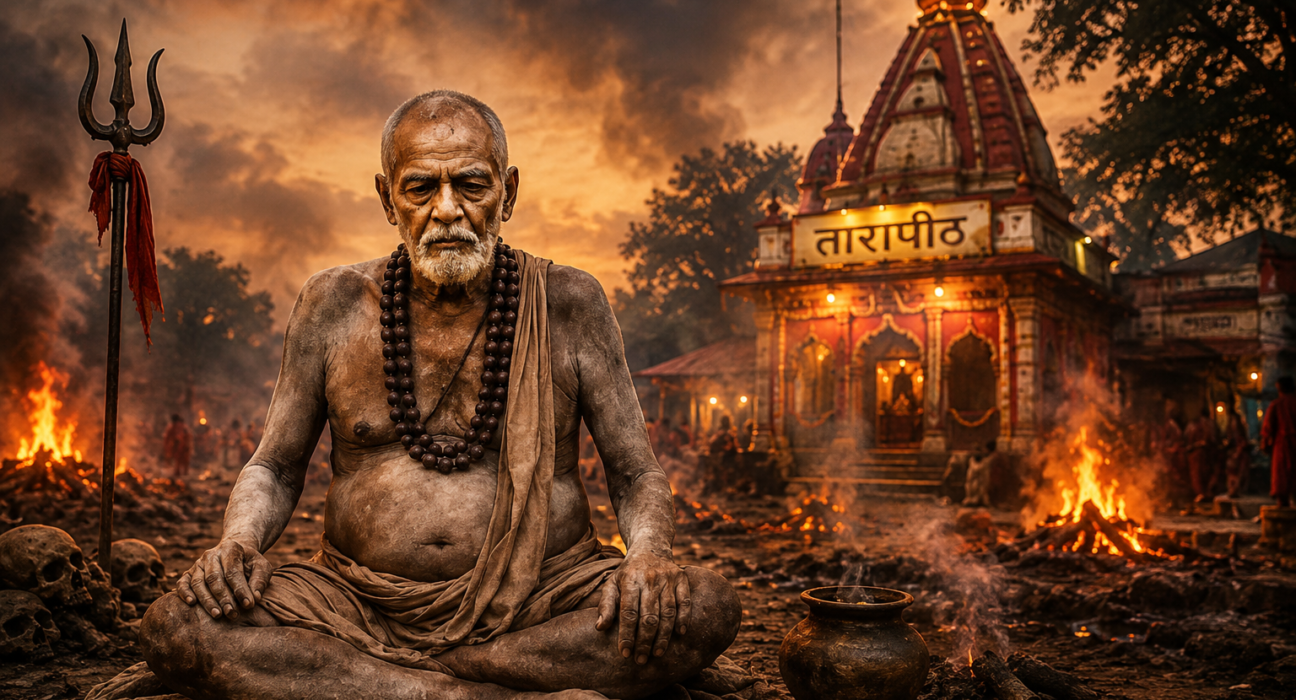
Bamakhepa Baba: The Divine Mad Saint Who Lived Only for Mother Tara
The Divine Madness That the World Could Never Understand
There are many kinds of madness in this world.
Some become consumed by wealth. Others spend their entire lives chasing power, fame, or worldly pleasures. Many devote every waking moment to acquiring property, building businesses, or securing social status. Society often celebrates such obsessions as ambition and success.
But every once in a while, a soul is born whose “madness” is unlike anything the world has ever witnessed.
It is not directed toward possessions or recognition.
It is directed toward God.
Such people become so completely absorbed in the Divine that ordinary human reasoning can no longer explain their lives. Their actions appear strange. Their words seem irrational. Their behavior confuses even the wisest scholars. Yet behind every unconventional act lies an extraordinary spiritual truth that only a few fortunate souls are able to perceive.
Among these rare beings stands one of India’s most extraordinary mystics—Bamakhepa Baba, the legendary saint of Tarapith, whose life became a living expression of unconditional love for Mother Tara.
To many, he was merely a madman wandering through cremation grounds, laughing loudly, speaking to an unseen presence, and behaving in ways that defied every social norm.
To those who truly understood him, however, he was nothing less than Mother Tara’s own beloved child.
His life was not simply the story of a saint.
It was an intimate conversation between a devotee and the Divine Mother—a conversation that continues to inspire spiritual seekers even today.
A Love Beyond Human Understanding
Many devotees worship God.
Many perform rituals.
Many recite sacred scriptures.
But only a handful reach a state where God becomes more real than the physical world itself.
History offers a few remarkable examples of such souls.
Among them is Sri Ramakrishna Paramahamsa, whose boundless devotion transformed Goddess Kali from a stone idol into his living Mother. He laughed with Her, wept before Her, argued with Her, and experienced Her presence every moment of his life.
In much the same way, Bamakhepa Baba experienced Mother Tara.
For him, Tara was not merely one of the Ten Mahavidyas described in ancient Tantric scriptures.
She was his breath.
She was his joy.
She was his sorrow.
She was his food, his sleep, his strength, and his entire existence.
Every heartbeat echoed a single name.
Tara… Tara… Tara…
He could not imagine life apart from Her.
The separation of even a single moment felt unbearable.
This overwhelming divine love eventually earned him the name by which history remembers him.
Bamakhepa.
In Bengali, Khepa means “mad.”
Not mad because his mind was broken.
Mad because his heart belonged entirely to God.
Understanding Tarapith Before Understanding Bamakhepa
To understand Bamakhepa Baba, one must first understand the sacred land that shaped him.
Hidden in the Birbhum district of West Bengal lies Tarapith, one of the most revered centers of Shakta worship in India.
Unlike many famous pilgrimage centers known primarily for their magnificent architecture, Tarapith is renowned for something far deeper—its intense spiritual vibration.
For centuries, saints, siddhas, yogis, and Tantric masters have journeyed to this sacred place seeking the grace of Mother Tara, the compassionate form of the Divine Mother who is believed to protect, nourish, and liberate sincere devotees.
The temple itself is only one part of Tarapith’s spiritual landscape.
Just beyond it lies an ancient cremation ground—a place most people fear even to enter after sunset.
Yet for countless Tantric practitioners, this cremation ground is regarded as one of the holiest meditation sites in India.
It symbolizes the ultimate truth that every human being must one day confront: the impermanence of the physical body.
It is here that fear dissolves.
It is here that ego dies.
It is here that seekers strive to encounter the Divine beyond life and death.
For most visitors, the cremation ground evokes anxiety.
For Bamakhepa Baba, it became home.
The Child Who Was Different
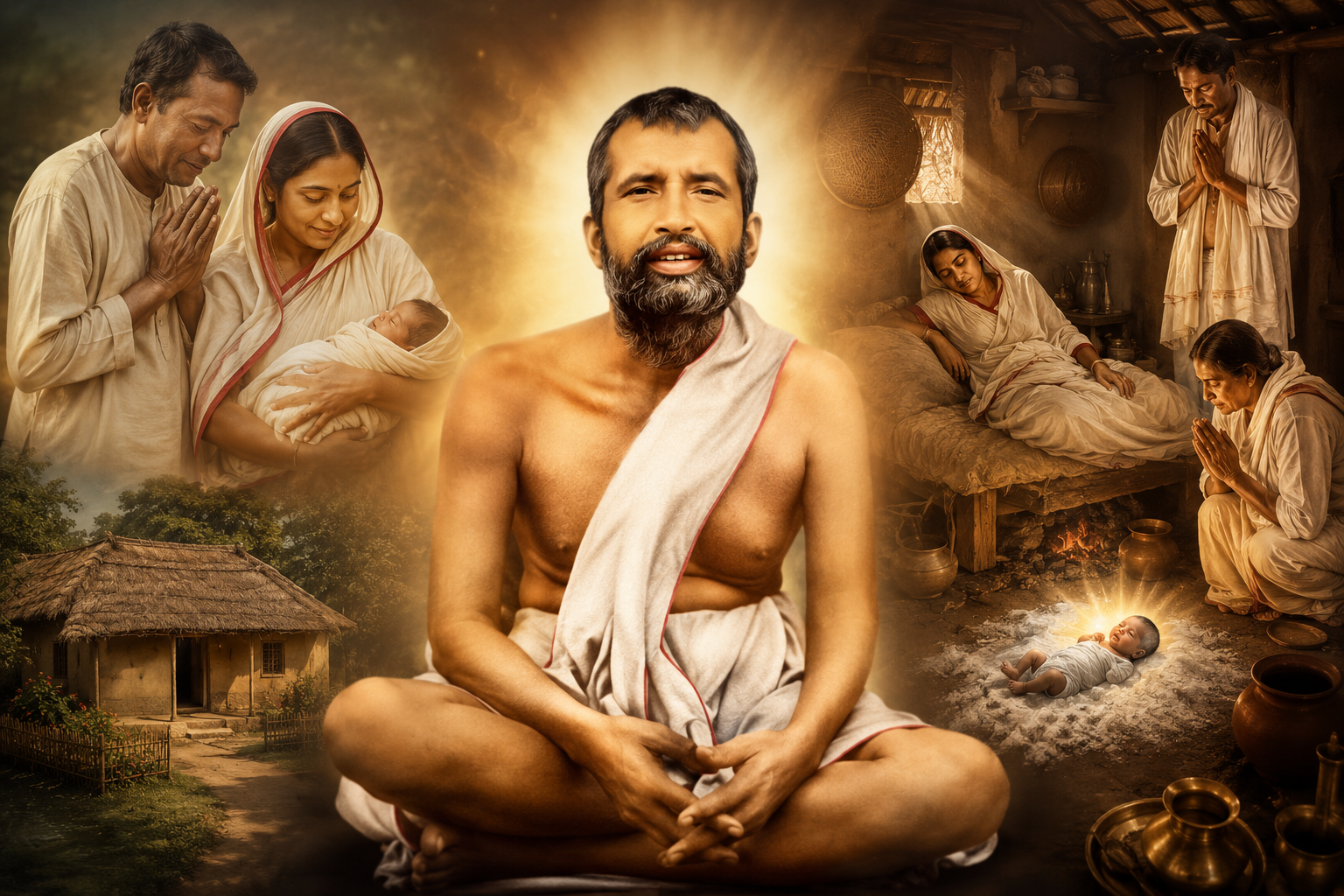
In the peaceful village of Atla, near Tarapith, a boy named Bama was born in 1838 into the family of Sarbananda Chattopadhyay and Rajkumari Devi.
From the very beginning, it became clear that this child was unlike the others.
While children of his age spent their days playing games, chasing one another through village streets, and dreaming of ordinary adventures, Bama preferred solitude.
He loved silence.
He loved prayer.
He loved spending time with the Divine.
His unusual behavior soon became the subject of endless conversation throughout the village.
At night, after everyone had fallen asleep, the young boy would quietly leave his home and enter neighboring houses.
But he was not stealing valuables.
Instead, he would lovingly carry away the family’s worship idols.
Taking them to the nearby riverbank, he would bathe them, decorate them with wildflowers gathered from the forest, and spend the entire night talking to them as though they were living companions.
At dawn, worried families would discover that their sacred images had disappeared.
Search parties would spread across the village.
Eventually, they would find young Bama peacefully worshipping the idols beside the river, completely unaware that anyone considered his actions unusual.
At first, the villagers were angry.
But the sincerity in the child’s eyes often melted their frustration.
It was impossible to mistake his devotion for mischief.
Still, few could understand him.
Most concluded that something must be wrong with the boy.
Gradually, people stopped calling him simply “Bama.”
Instead, they began referring to him as Bama Khepa—the mad Bama.
Little did they realize that the madness they mocked would one day be revered as one of the highest expressions of divine love.
When Society Misunderstands the Mystic
Throughout history, genuine mystics have rarely been understood during their lifetime.
Their actions seldom fit society’s expectations.
They often abandon comforts that others desperately seek.
They smile in hardship.
They remain peaceful amid insults.
They see beauty where others see fear.
Bama was no exception.
The villagers believed he had lost his senses.
Yet from another perspective, it was the world that had forgotten its true purpose.
While everyone else was running toward temporary pleasures, this young boy was running toward eternity.
Even before reaching adulthood, his heart had already surrendered itself completely to Mother Tara.
He longed for only one thing—to see Her, to serve Her, and to spend every moment at Her divine feet.
This longing would soon reshape his entire destiny.
It would lead him away from ordinary village life and toward the sacred land of Tarapith, where one of India’s greatest spiritual journeys was about to begin
The Journey to Tarapith and the Awakening of a Mystic
In the first part of this series, we explored the extraordinary childhood of Bama—the young boy whose love for God was so intense that the world mistook it for madness.
While other children played with toys, he spent his nights worshipping village deities beside a river. While society called him insane, Mother Tara was silently preparing him for a destiny unlike any other.
Yet every great saint must pass through suffering before reaching divine realization.
Bama’s journey was no different.
A Family’s Pain
As the years passed, Bama’s devotion only grew stronger.
He became increasingly detached from worldly life. Daily responsibilities, earning a livelihood, social relationships, and even personal comfort meant very little to him.
His thoughts revolved around only one being.
Mother Tara.
The villagers continued mocking him.
Whenever they saw his unusual behavior, they laughed.
Some pitied him.
Others openly declared that the boy had lost his mind.
No criticism hurt Bama.
But every insult pierced the heart of his mother.
Like any loving parent, she wished to see her son respected by society. Instead, she watched him become the subject of ridicule throughout the village.
She could no longer bear it.
The Room That Became His First Ashram
One day, overwhelmed by sorrow and frustration, Bama’s mother made a difficult decision.
She locked him inside a small room and firmly instructed him not to leave again.
From her perspective, she was protecting her son.
If he remained inside the house, perhaps people would stop mocking him.
Perhaps life would become normal again.
But what appeared to be a prison to others became a sacred sanctuary for Bama.
The outside world disappeared.
Silence took its place.
Inside that lonely room, something extraordinary began to unfold.
Hour after hour…
Day after day…
He sat immersed in meditation.
He repeated Mother Tara’s name without interruption.
Food became unimportant.
Sleep almost disappeared.
The solitude that would have driven most people into despair became nourishment for his soul.
His room slowly transformed into his first monastery.
His first meditation cave.
His first temple.
Without realizing it, his mother had unknowingly created the perfect environment for his spiritual transformation.
Divine Preparation Through Solitude
Throughout history, periods of isolation have often marked the beginning of profound spiritual awakening.
Lord Buddha left the palace to meditate alone.
Ramana Maharshi sat silently in the temple of Arunachala.
Sri Ramakrishna entered states of intense spiritual absorption inside the Dakshineswar temple.
Likewise, Bama’s forced isolation became a hidden blessing.
The darkness surrounding him no longer felt frightening.
It became comforting.
Silence became his closest companion.
Every passing day deepened his connection with Mother Tara.
Looking back, it almost seems as though the Divine Mother Herself was preparing him.
One day, he would spend years meditating in one of India’s most feared cremation grounds.
Before that destiny arrived, he first had to become completely comfortable with loneliness, darkness, and inner stillness.
The locked room was merely the beginning.
The cremation ground would become the next classroom.
The Call of Mother Tara
As months passed, Bama’s longing became unbearable.
Meditation alone was no longer enough.
He had worshipped Mother Tara in his heart.
He had spoken to Her in silence.
Now he wished to stand before Her.
He wanted only one thing.
To reach Tarapith.
To fall at the feet of the Divine Mother.
To surrender his entire life to Her.
One day, unable to contain this longing any longer, Bama broke open the locked door and ran from home.
He did not look back.
He ran straight toward Tarapith.
Toward the Mother who had been calling him since birth.
Tears at the Feet of the Divine Mother
When Bama finally entered the sacred temple of Mother Tara, something remarkable happened.
He collapsed before the Goddess.
Tears flowed uncontrollably.
Years of longing burst forth in a single moment.
He cried not for wealth.
Not for success.
Not for health.
Not for miracles.
Instead, he prayed with complete surrender.
“Mother… I have lived every moment remembering You. My life has no meaning apart from You. If You wish, take this life now. Let me remain forever at Your feet.”
His cries echoed through the temple.
The devotees who witnessed this scene were deeply moved.
Many who had once dismissed him as insane suddenly found themselves questioning everything they believed.
Could madness produce such purity?
Could insanity create such complete self-surrender?
The answer slowly became obvious.
This was not madness.
This was devotion in its purest form.
The Guru Appears
In almost every great spiritual tradition, there comes a moment when the disciple is ready.
And when that moment arrives…
The Guru appears.
Standing among the devotees that day was a highly accomplished Tantric master named Kailashpati Baba.
Unlike the others, he did not see a disturbed young man.
He saw an extraordinary soul burning with genuine spiritual longing.
He recognized something that ordinary eyes could not perceive.
Mother Tara Herself had brought this young seeker to him.
Walking toward the weeping Bama, Kailashpati Baba gently lifted him from the temple floor.
He comforted him.
Blessed him.
Then, in one of the most significant moments of Bama’s life, he accepted him as his disciple.
With that single act, everything changed.
The wandering devotee had found his master.
Learning the Sacred Path
Under Kailashpati Baba’s guidance, Bama entered an entirely new stage of spiritual life.
His Guru introduced him to the profound traditions of Tantra—not as rituals of power, but as sacred disciplines leading to direct realization of the Divine Mother.
He learned:
- The mysteries of mantra.
- The science of meditation.
- Sacred Tantric disciplines.
- Inner worship.
- Complete surrender to Mother Tara.
Every teaching pointed toward one truth.
The goal was never supernatural powers.
The goal was union with the Divine.
Unlike many who seek Tantra for occult abilities, Bama desired only one blessing.
To love Mother Tara more completely.
His Guru recognized this rare purity.
Because of it, he entrusted Bama with the deepest spiritual practices reserved only for worthy disciples.
The Cremation Ground Becomes Home
After completing his initial training, Bama began living in the place most people feared more than death itself.
The cremation ground beside Tarapith.
Day and night, funeral pyres burned.
Smoke rose endlessly into the sky.
Jackals howled through the darkness.
Ash covered the earth.
The air carried constant reminders of mortality.
To ordinary people, it was terrifying.
To Bamakhepa, it was sacred.
He did not see death.
He saw Mother Tara’s presence everywhere.
The cremation ground was not a place of fear.
It was Her dwelling.
Every flame reminded him that the body is temporary.
Every funeral reminded him that only the soul is eternal.
Every moment spent there dissolved another layer of ego.
Slowly, the young boy once mocked as “mad” was transforming into one of India’s greatest saints.
The Saint of the Cremation Ground and the Miracles That Changed Everything
After accepting Bama as his disciple, Kailashpati Baba guided him through the profound disciplines of Tantra and complete surrender to Mother Tara.
But true spiritual realization is never measured by the number of scriptures one studies or the rituals one performs.
It is revealed through one’s state of consciousness.
For Bamakhepa, that transformation unfolded in one of the most unlikely places imaginable—the sacred cremation ground of Tarapith.
Living Where Others Feared to Enter
To most people, a cremation ground represents sorrow, fear, and death.
It is a place visited only out of necessity.
People arrive grieving, perform the final rites of a loved one, and leave as quickly as possible.
But to Bamakhepa, the cremation ground was something entirely different.
It was Mother Tara’s sacred kingdom.
The burning funeral pyres, the drifting smoke, the silence of the night, the cries of jackals, and the endless reminder of life’s impermanence never frightened him.
Instead, they filled him with peace.
He believed that where the ego ends, the Divine begins.
The cremation ground stripped away every illusion of worldly life.
There, wealth had no value.
Status carried no importance.
Beauty disappeared into ashes.
Only the soul remained.
That was precisely why many great Tantric masters throughout history had chosen cremation grounds as places of meditation.
Bamakhepa embraced this path completely.
While others sought luxurious temples, he found paradise among the funeral fires.
A Saint Hidden Behind the Appearance of a Madman
Visitors who encountered Bamakhepa for the first time were often startled.
Nothing about him resembled the image of a respected holy man.
His clothes were worn and untidy.
His hair was long and unkempt.
Ash from the cremation ground covered much of his body.
He laughed loudly without warning.
Sometimes he spoke as though someone invisible stood beside him.
At other times he remained completely silent for hours.
To ordinary eyes, he appeared unpredictable.
Some were afraid to approach him.
Others dismissed him as a wandering lunatic.
Yet those who spent even a little time in his presence began noticing something extraordinary.
Beneath his unusual appearance radiated an indescribable peace.
His laughter carried a strange innocence.
His silence felt more powerful than words.
His eyes reflected a depth that seemed impossible to describe.
Gradually, many realized that they were not standing before a madman.
They were standing before someone whose awareness existed far beyond ordinary human understanding.
Every Breath Belonged to Mother Tara
There was only one constant in Bamakhepa’s life.
Mother Tara.
Everything else faded into the background.
Every conversation eventually became a conversation with Her.
Every prayer became Her name.
Every breath carried Her presence.
For Bamakhepa, Mother Tara was not merely the deity worshipped inside the temple.
She was alive.
She walked beside him.
She listened when he spoke.
She comforted him when he suffered.
She laughed with him.
She guided every step of his life.
Those who observed him carefully often noticed that he behaved not like a devotee worshipping a distant goddess, but like a child living with his own mother.
There was no fear in his devotion.
No formality.
Only unconditional love.
That childlike intimacy became the very foundation of his spiritual greatness.
When His Mother Left the World
Just as Bamakhepa’s spiritual life was reaching new heights, another painful chapter unfolded.
His earthly mother—the woman who had protected him despite never fully understanding him—passed away.
The loss was immense.
She had endured endless criticism from society because of her son’s unusual behavior.
She had worried constantly about his future.
Although she sometimes tried to restrain him, her actions were always born from love.
Now she was gone.
For any son, such a loss is heartbreaking.
For Bamakhepa, it became one of the greatest emotional tests of his life.
But Mother Tara had another purpose hidden within this sorrow.
Through this tragedy, She was about to reveal to the world who Bamakhepa truly was.
The Flood That Could Not Stop Him
According to local custom, the deceased had to be taken across the river to the cremation ground at Tarapith.
But on the day of his mother’s funeral, relentless rain had swollen the river into a violent flood.
The current was terrifying.
No one dared to cross.
Villagers stood helplessly, wondering how the final rites could possibly be performed.
Then, without hesitation, Bamakhepa stepped forward.
He gently lifted his mother’s body onto his shoulders.
Ignoring every warning, he walked directly toward the raging river.
The villagers were horrified.
Many believed they were about to witness two deaths instead of one.
The floodwaters roared with tremendous force.
Yet Bamakhepa never slowed his pace.
He walked forward with complete faith.
And then, according to the traditional accounts preserved by devotees of Tarapith, something astonishing happened.
Instead of sweeping him away, the raging river seemed to yield before him.
He crossed safely.
The impossible had become possible.
For many who witnessed the event, it was the first unmistakable sign that an unseen divine power protected him.
The Rain That Refused to Fall
The miracle did not end at the river.
Dark clouds continued pouring rain over the cremation ground.
Everywhere, the earth was soaked.
The funeral pyre should have been impossible to light.
Yet as Bamakhepa prepared to perform his mother’s final rites, another extraordinary event unfolded.
The rain continued falling all around the cremation ground.
But the exact spot where his mother’s body rested remained untouched.
The wood remained dry.
The funeral pyre burned without difficulty.
To those present, it appeared as though nature itself had paused in reverence.
Many who had once ridiculed Bamakhepa stood speechless.
The man they had mocked throughout his life no longer appeared insane.
They now saw someone who lived under the direct grace of Mother Tara.
The village’s perception changed forever.
From that day onward, increasing numbers of people began addressing him not as a madman, but as Mother Tara’s own child.
The Madness They Could Finally Understand
Society often judges spiritual greatness too quickly.
When a saint behaves differently, people laugh.
When they speak with God, people question their sanity.
When miracles unfold, the same people suddenly become believers.
Bamakhepa’s life reflected this timeless pattern.
Nothing about him had truly changed.
He had always loved Mother Tara with complete surrender.
Only the eyes of the people had changed.
The divine was finally becoming visible to those who had once refused to see it.
Yet Mother Tara had one more lesson to teach.
A lesson that would forever establish Bamakhepa’s unique place in the history of Tarapith.
It would unfold not during meditation.
Not inside the cremation ground.
But inside Her own temple.
And it would prove beyond doubt that the relationship between Mother Tara and Bamakhepa was unlike anything the world had ever witnessed
.
When Mother Tara Declared, “He Is My Child”
By now, the people of Tarapith had begun to realize that Bamakhepa Baba was no ordinary ascetic.
His fearless life in the cremation ground, his unwavering devotion, and the miraculous events surrounding his mother’s funeral had changed the opinions of many.
Yet some still struggled to understand him.
To them, his behavior remained unpredictable.
Too unconventional.
Too wild.
Too different from the disciplined image they expected of a holy man.
Mother Tara, however, had already accepted him completely.
Now She would reveal that truth to everyone.
Love Beyond Ritual
Religion often emphasizes rules.
How to pray.
When to pray.
What to offer.
How to dress.
How to conduct every ritual perfectly.
These disciplines are valuable because they help cultivate reverence and devotion.
But there is another path.
A path where love becomes so complete that every formal boundary disappears.
A small child does not ask permission before embracing its mother.
It does not wonder whether it is standing in the correct place or following proper etiquette.
It simply runs into her arms.
That was Bamakhepa’s relationship with Mother Tara.
He never considered himself a great saint.
He never saw himself as a learned Tantric master.
He saw himself only as Her child.
And a child behaves differently from a formal worshipper.
The Incident That Shocked the Temple
One day, as was customary, the priests prepared the sacred offering for Mother Tara.
Freshly prepared food was placed before the Goddess inside Her temple.
The rituals had not yet been completed.
The offering had not yet been ceremonially presented.
Nearby, Bamakhepa sat absorbed in deep meditation.
Suddenly, he opened his eyes.
Without hesitation…
Without asking permission…
Without considering the reactions of those around him…
He walked directly toward the offering.
Then, in full view of everyone present, he began eating the food that had been prepared for Mother Tara.
The temple fell silent.
The priests were horrified.
Devotees stared in disbelief.
To them, this was not merely improper.
It was sacrilege.
The Anger of the Priests
The priests immediately rushed toward Bamakhepa.
They believed he had committed a serious offense against temple tradition.
How could anyone eat food before it had been offered to the Goddess?
Unable to control their anger, they scolded him harshly.
Some accounts even describe that he was physically beaten and driven away from the temple.
Throughout the entire ordeal, Bamakhepa offered no explanation.
He did not argue.
He did not defend himself.
He quietly left the temple.
To the priests, justice had been served.
The disturbance was over.
But Mother Tara had witnessed everything.
And before the next sunrise, She would answer on behalf of Her beloved child.
The Dream That Changed Tarapith Forever
That very night, the chief temple trustee received an extraordinary dream.
Mother Tara appeared before him.
Her expression was not one of gentle compassion.
She was deeply displeased.
According to the traditional accounts preserved at Tarapith, the Divine Mother questioned him with unmistakable anger.
“How could you allow My child to be beaten?”
The trustee stood speechless.
Then Mother Tara revealed the truth that no one in the temple had understood.
The food Bamakhepa had eaten was not stolen.
It had reached its rightful destination.
Because to Her, there was no separation between the Mother and the child who had surrendered everything.
She then issued a command that would permanently change one of Tarapith’s sacred traditions.
From that day onward…
Bamakhepa must be fed first.
Only after he had eaten would food be formally offered to Mother Tara.
A Tradition That Continues Even Today
For many devotees, this incident remains one of the most moving chapters in the history of Tarapith.
It was not merely a miracle.
It was a public declaration.
Mother Tara Herself had acknowledged Bamakhepa before the entire temple.
The priests who once believed they were protecting religious discipline now understood a deeper truth.
Ritual has immense value.
But pure love is greater still.
Rules guide the devotee toward God.
Love dissolves the distance between them.
The tradition established after this event continues to be remembered by devotees of Tarapith even today.
It stands as a timeless reminder that the Divine recognizes sincerity before ceremony.
The Living Presence of Mother Tara
From that point onward, Bamakhepa’s place within Tarapith became unquestionable.
Pilgrims no longer came merely to visit the temple.
Many came hoping to receive the blessings of the mysterious saint who wandered freely between the shrine and the cremation ground.
Some sought healing.
Others came seeking spiritual guidance.
Many arrived simply to witness the man whom Mother Tara had publicly called Her own child.
Those fortunate enough to spend time with him often described experiences that were impossible to explain.
His words seemed simple.
Yet they transformed lives.
Sometimes he remained completely silent.
Yet people left with their deepest doubts answered.
His laughter echoed through the cremation ground like the carefree joy of a child.
His tears flowed with the intensity of someone whose heart belonged entirely to the Divine Mother.
Every aspect of his life pointed toward one truth.
He had ceased living for himself.
Only Mother Tara remained.
Beyond the Search for Miracles
Many people remember saints because of miracles.
They seek extraordinary stories.
Supernatural powers.
Unexplained events.
While Bamakhepa’s life certainly contains many such accounts, they are not the reason devotees continue to honor him.
His greatest miracle was not crossing a flooded river.
Nor was it the dream of Mother Tara.
His greatest miracle was something far rarer.
He completely erased the boundary between himself and God.
He demonstrated that the highest form of spirituality is not the pursuit of mystical powers.
It is the complete surrender of one’s ego.
When the ego disappears…
Only Divine Love remains.
That was Bamakhepa’s true realization.
And that realization transformed an ordinary village boy into one of India’s most beloved saints.
The Eternal Legacy of Mother Tara’s Beloved Child
Some saints leave behind books.
Some establish great monasteries.
Others build temples that stand for centuries.
Bamakhepa Baba left behind something far greater.
He left behind a living example of what complete surrender to God truly looks like.
His life was not a philosophy to be studied.
It was spirituality in its purest form.
He did not preach complicated doctrines.
He did not establish a new religion.
He did not seek fame, disciples, or recognition.
Instead, he taught the world through the way he lived.
Every breath he took belonged to Mother Tara.
Every step he walked was guided by Her grace.
Every joy and every hardship became another opportunity to express his unconditional love for the Divine Mother.
The Saint Who Never Wanted Greatness
One of the most remarkable qualities of Bamakhepa Baba was his complete absence of spiritual pride.
History remembers him as one of India’s greatest Tantric saints.
Yet he never claimed greatness for himself.
He never announced that he had attained enlightenment.
He never tried to impress people with miraculous powers.
In fact, he often behaved in ways that drove people away rather than attracting them.
He preferred the company of Mother Tara to the admiration of human beings.
That humility became one of the clearest signs of his spiritual realization.
For truly enlightened souls, recognition has no value.
The only recognition that matters is the loving glance of the Divine.
For Bamakhepa, that was enough.
The Meaning Behind His “Divine Madness”
Even today, many people wonder why saints like Bamakhepa behaved so differently from ordinary society.
Why did they laugh without reason?
Why did they ignore social customs?
Why did they wander through cremation grounds instead of living in temples?
The answer lies in the transformation of consciousness.
A person deeply attached to the world naturally follows the world’s expectations.
But someone who has surrendered completely to God no longer acts from social conditioning.
Such a person lives from an entirely different state of awareness.
What appears to be madness is often freedom.
Freedom from fear.
Freedom from ego.
Freedom from greed.
Freedom from the endless desire for recognition.
Bamakhepa had crossed that invisible boundary.
He no longer lived according to the opinions of society.
He lived only according to the will of Mother Tara.
That is why history remembers him not as a madman…
But as a Divine Mad Saint.
The Living Spirit of Tarapith
More than a century after his earthly life, the presence of Bamakhepa Baba continues to be deeply woven into the spiritual atmosphere of Tarapith.
Pilgrims who travel to the sacred temple often feel that his story cannot be separated from Mother Tara’s shrine.
His samadhi has become a place of prayer for countless devotees.
Many visit not merely to ask for material blessings, but to seek courage, devotion, and inner transformation.
The cremation ground where he once meditated remains one of the most revered spiritual sites in India.
For seekers walking those sacred paths, it is difficult not to remember the saint who transformed fear into devotion and death into a doorway to the Divine.
Whether one views the miraculous accounts surrounding his life through the lens of faith, symbolism, or history, one truth remains undeniable:
Bamakhepa completely transformed the spiritual identity of Tarapith.
Today, his name is spoken with the same reverence as the sacred land itself.
Lessons Every Spiritual Seeker Can Learn
The life of Bamakhepa Baba offers timeless lessons that extend far beyond any particular tradition or form of worship.
1. True Devotion Requires Total Surrender
Bamakhepa did not seek God only during prayer.
He lived in God’s presence every moment.
His life reminds us that spirituality is not limited to rituals or festivals—it is a way of living.
2. Society Often Misunderstands Genuine Spirituality
Many saints were mocked before they were revered.
People judged Bamakhepa by his appearance.
Mother Tara judged him by his heart.
His story teaches us to look beyond outward appearances and recognize sincerity wherever it exists.
3. Love Is Greater Than Ritual
Temple rituals have profound spiritual significance.
Yet Bamakhepa’s life illustrates that rituals reach their highest purpose only when filled with genuine love.
His relationship with Mother Tara was not built on fear or obligation.
It was built on trust, intimacy, and unconditional surrender.
4. The Ego Must Die Before the Soul Can Awaken
The cremation ground where Bamakhepa spent much of his life symbolizes more than physical death.
It represents the death of pride, attachment, and false identity.
Only when the ego is reduced to ashes can the light of the Divine shine without obstruction.
5. God Sees the Heart
People called him mad.
Some insulted him.
Others drove him away.
Yet Mother Tara saw only the purity of his devotion.
Her acceptance reminds every spiritual seeker that sincere love for God can never go unnoticed.
A Conversation That Never Ended
Many biographies conclude when the subject leaves the physical world.
Bamakhepa’s story feels different.
It does not end.
Because the conversation between the saint and Mother Tara never truly stopped.
It continues wherever a devotee calls upon Her with absolute faith.
It continues wherever someone chooses love over ego.
It continues whenever a seeker dares to surrender completely to the Divine.
That is why Bamakhepa Baba remains far more than a historical figure.
He is a living inspiration.
A reminder that God is not distant from those who approach with the innocence of a child.
Conclusion
The world once dismissed Bamakhepa Baba as a madman.
Time revealed that his madness was, in reality, the highest form of divine love.
He owned nothing.
He desired nothing.
He feared nothing.
His entire existence revolved around one eternal truth:
Mother Tara alone was enough.
His journey from a misunderstood village boy to the beloved saint of Tarapith reminds us that the greatest spiritual treasures are often hidden beneath the simplest lives.
Perhaps that is why his story continues to touch hearts across generations.
Because deep within every human being lies the same longing that burned within Bamakhepa—a longing to return to the Divine Source.
If we remember his life with sincerity, perhaps we too can begin that journey.
And in moments of despair, confusion, or loneliness, we may discover the same truth that transformed Bamakhepa Baba’s life:
When everything else disappears…
The Divine Mother never leaves Her child.