


Every month, whenever we read in the newspapers that lakhs of devotees visit Tiruvannamalai to perform Girivalam (circumambulation of Arunachala Hill) on the Full Moon day, we too feel a desire that one day we should also undertake this sacred walk.
But along with that desire come many questions:
- Why do people perform Girivalam?
- Where should the Girivalam begin and where should it end?
- What are the eight Lingams located along the Girivalam path, and where are they situated?
- Can we wear footwear while doing Girivalam?
- Is it better to go during the day or at night?
- Can we go alone, or should we go with a group?
- Will I be able to complete the entire 14-kilometre journey?
Until a few days ago, I had all these same doubts.
With the help of friends and by learning about Girivalam through the internet and YouTube, I finally undertook the pilgrimage.
By the grace and compassion of Lord Annamalaiyar, I was able to complete it successfully.
I am sharing this information with the hope that it will be useful, especially for those who are planning to do Girivalam for the first time.
First, we should understand the history behind how this Girivalam tradition came into existence.
The Tiruvannamalai Girivalam is closely connected with the Karthigai Maha Deepam festival.
Once, while Lord Shiva was immersed in deep meditation at Mount Kailash, Goddess Parashakti playfully covered His eyes.
The entire universe was plunged into darkness, causing immense suffering to all living beings.
To atone for this act, Goddess Parvati descended to Earth and performed penance as Goddess Kamakshi on the banks of the Kampa River in Kanchipuram.
One day, when a flood threatened to wash away the Shiva Lingam she had been worshipping, Goddess Parvati embraced the Lingam tightly to her chest.
As a result, her sins were washed away.
Lord Shiva then appeared before her.
Parvati prayed that she should never again be separated from Him and requested a place on the left half of His divine body.
Lord Shiva instructed her to go to Tiruvannamalai and perform penance there.
Accordingly, Goddess Uma came to Tiruvannamalai and began her austerities.
On a sacred Full Moon day during the Karthigai month, when the Krittika star coincided with Pournami, a brilliant divine light appeared at the summit of Arunachala Hill.
A divine voice instructed the Goddess to circumambulate the hill by keeping it on her left side.
After completing the Girivalam, Lord Shiva welcomed her, granted her the left half of His body, and manifested as Ardhanarishvara, the divine form of Shiva and Shakti united.
The place where this divine event occurred is today’s Ner Annamalai Temple, situated along the Girivalam route.
To commemorate this event, the sacred Maha Deepam is lit every year at Tiruvannamalai.
This is how the sacred practice of Girivalam originated.
This history teaches us that if we undertake Girivalam with the sincere feeling that we are walking around the holy feet of Lord Shiva, we will certainly receive its spiritual benefits.
Now, let us address the common questions people have about performing Girivalam.
Every month, when we read in the newspapers that lakhs of devotees undertake the sacred Girivalam (circumambulation of Arunachala Hill) at Tiruvannamalai on the Full Moon day (Pournami), many of us feel a deep desire that, at least once in our lifetime, we too should perform this sacred pilgrimage.
But along with that desire come countless questions.
- Why do people perform Girivalam?
- Where should the Girivalam begin, and where should it end?
- What are the Eight Sacred Lingams (Ashta Lingams) located along the Girivalam path, and where are they situated?
- Can we wear footwear while doing Girivalam?
- Is it better to go during the daytime or at night?
- Can we go alone, or is it better to go with two or three companions?
- Will I really be able to complete the entire 14-kilometre walk?
Until a few days ago, I had exactly the same doubts.
With the help of my friends, and by learning about Girivalam through the internet and YouTube, I finally undertook this sacred journey.
By the boundless grace and compassion of Lord Annamalaiyar, I was able to complete the Girivalam successfully.
I am making this video with the hope that the information I share will be especially useful for those who are planning to perform Girivalam for the very first time.
Before anything else, we should understand the history behind how this sacred tradition of Girivalam came into existence.
The practice of Girivalam at Tiruvannamalai is closely connected with the Karthigai Maha Deepam festival.
Once, while Lord Shiva was immersed in deep meditation at Mount Kailash, Goddess Parashakti playfully covered His eyes with her hands.
At that very moment, the entire universe was plunged into darkness, and as a result, all living beings suffered immensely.
To atone for this cosmic mistake, Goddess Parvati descended to Earth and performed severe penance as Goddess Kamakshi on the banks of the Kampa River in Kanchipuram.
One day, when a flood in the river threatened to wash away the Shiva Lingam she was worshipping, Goddess Parvati embraced the Lingam tightly against her chest to protect it.
Through this act of unwavering devotion, the effects of her sin were removed.
Pleased with her devotion, Lord Shiva appeared before her.
Goddess Parvati prayed that she should never again be separated from Him and requested a place on the left half of His divine body.
Lord Shiva instructed her to go to Tiruvannamalai and continue her penance there.
Following His command, Goddess Uma went to Tiruvannamalai and performed intense austerities.
Then, on a sacred Full Moon day in the month of Karthigai, when the Krittika star coincided with Pournami, a brilliant divine light appeared at the summit of Arunachala Hill.
A divine voice instructed the Goddess to circumambulate the sacred hill by keeping it to her left.
Obeying the divine command, she performed the Girivalam.
After completing the circumambulation, Lord Shiva welcomed her, granted her the left half of His body, and manifested as Ardhanarishvara, the divine form in which Shiva and Shakti exist as one.
The place where this divine event took place is today’s Ner Annamalai Temple, located along the Girivalam route.
To commemorate this sacred event, the Karthigai Maha Deepam is lit every year atop Arunachala Hill.
This is how the sacred tradition of Tiruvannamalai Girivalam came into existence.
This history teaches us that if we undertake Girivalam with the sincere feeling that we are walking around the sacred feet of Lord Shiva Himself, we will surely receive its spiritual blessings.
Now, let us look at the common questions people have about performing Girivalam.
Anyone who has devotion and a reasonable level of physical fitness can undertake Girivalam.
The very first question that comes to everyone’s mind is:
Should we first have the darshan of Lord Annamalaiyar in the temple and then begin Girivalam? Or should we complete the Girivalam first and then visit the temple?
The answer depends on whether you plan to do the Girivalam during the day or at night.
There is no scriptural rule that says Girivalam must be performed only at night or only during the daytime.
It is entirely your personal choice.
If you don’t mind the heat and can comfortably walk during the day, you may perform Girivalam in daylight.
If you are not used to walking in the hot sun, it is better to start your Girivalam around 5:00 PM.
Those who are not accustomed to walking barefoot may find it difficult to walk even one kilometre without footwear.
In that case, completing the entire Girivalam may become very difficult.
Therefore, it is perfectly practical to wear rubber slippers or comfortable walking shoes.
Traditionally, elders have advised devotees to perform Girivalam barefoot.
However, in those days, the Girivalam path was not covered with tar roads or concrete blocks as it is today.
If your devotion is sincere, wearing slippers or shoes will help you comfortably complete the entire 14-kilometre pilgrimage.
This is especially important for first-time pilgrims.
So, depending on the time you plan to perform Girivalam, decide whether to have the darshan of Lord Annamalaiyar before or after the pilgrimage.
You can make this decision based on the temple timings.
The temple is open from 5:00 AM to 12:30 PM, and again from 3:30 PM to 8:00 PM.
If you enter the temple before 8:00 PM, you can remain inside until the Ardha Jama Pooja, which concludes around 9:30 PM.
One small difficulty with beginning Girivalam in the evening is that by around 8:30 PM, you would have already covered about half the route.
By then, you would have visited many of the temples, while the remaining ones would still lie ahead.
After 8:30 PM, most of the temples along the route are generally closed.
Some of the Lingams face different directions, making them difficult to view once the shrines are closed.
Many of the Lingams are protected behind iron grills, but even then, devotees can stand outside and offer their prayers.
Whether or not you are able to see the Lingam clearly, simply standing at these sacred places itself is considered a great spiritual blessing.
Along the Girivalam path are the Eight Sacred Lingams (Ashta Lingams):
- Indra Lingam
- Agni Lingam
- Yama Lingam
- Niruthi Lingam
- Varuna Lingam
- Vayu Lingam
- Kubera Lingam
- Eesanya Lingam
These Lingams are believed to have been consecrated and worshipped by the Ashta Dikpalakas, the guardians of the eight directions.
That is why each Lingam bears the name of the guardian deity of its respective direction.
The Ashta Dikpalakas are also known as the protectors of the eight cardinal directions.
They preside over the eight directions:
- East
- Southeast
- South
- Southwest
- West
- Northwest
- North
- Northeast
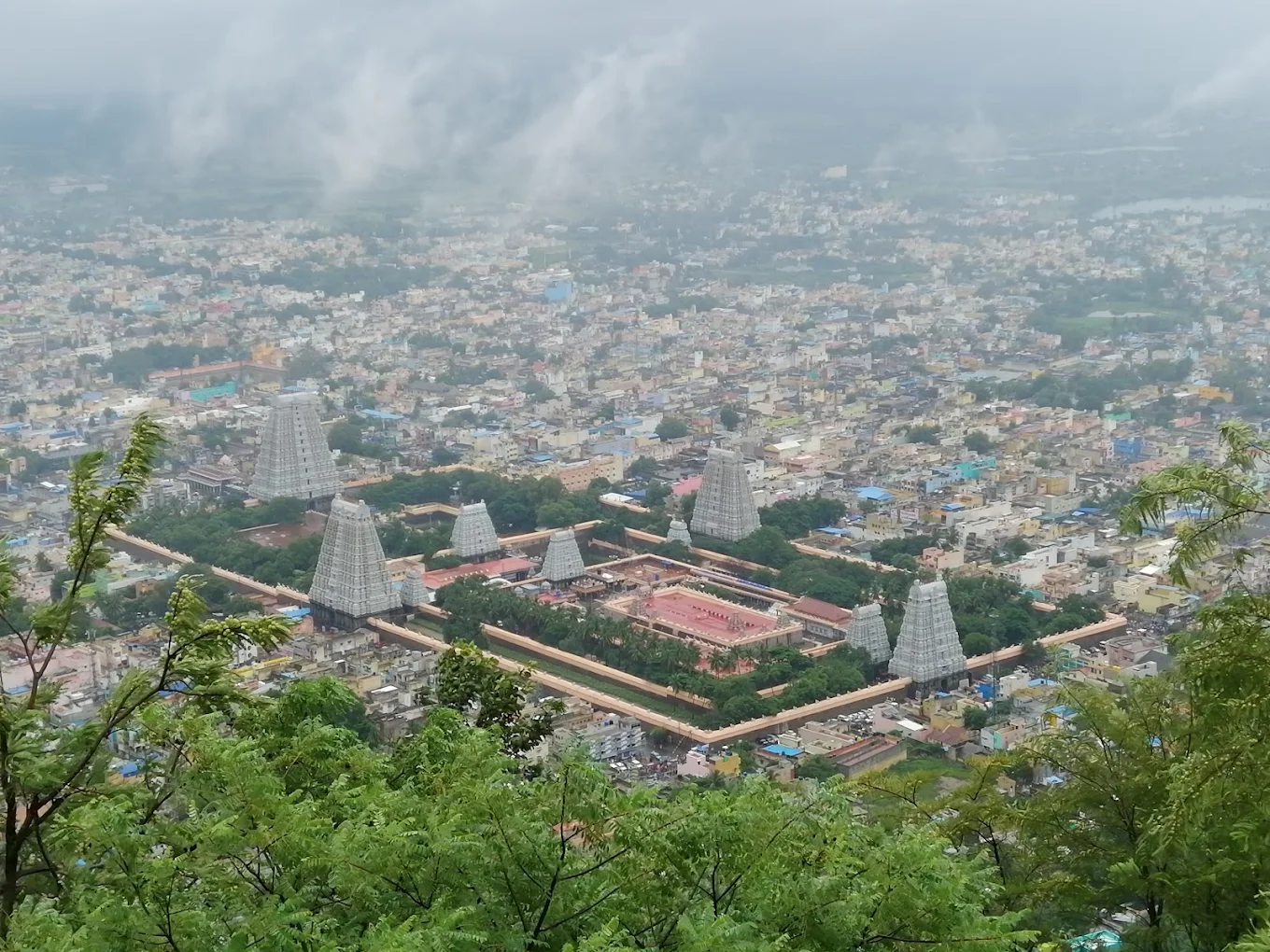
With Arunachala Hill at the centre, these eight Lingams are installed in an octagonal pattern around the sacred mountain.
Visiting these Eight Lingams is considered one of the most important aspects of performing Girivalam.
Apart from these, the Girivalam route is also home to numerous Jeeva Samadhi shrines of great saints and yogis, temples dedicated to various deities, the Ner Annamalai Temple, Idukku Pillaiyar Temple, Adi Annamalai Temple, the temple where Saint Manikkavachakar sang the Tiruvempavai, and more than thirty other important temples.
Now, let’s move on to the next common question.
The next common question is:
Where should we begin the Girivalam, and where should we conclude it?
Although there are various opinions on this, one practice is almost universally accepted:
Wherever you begin your Girivalam, that is where you should finish it.
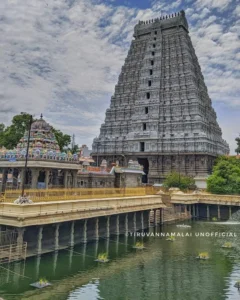
For example, if you first have the darshan of Lord Annamalaiyar and then begin your Girivalam, it is considered best to start from the Rajagopuram (main eastern entrance of Arunachaleswarar Temple) and conclude your pilgrimage at the same Rajagopuram.
If, instead, you choose to begin your Girivalam from one of the Ashta Lingams, then you should complete the circumambulation at that very same place.
It is also regarded as especially auspicious to begin the Girivalam from a Vinayagar (Ganesha) temple or from the Samadhi shrine of a Siddhar.
Many people also ask:
“How long does it take to complete the Girivalam?”
If you stop at every important temple along the route, offer your prayers peacefully, take short breaks whenever needed, and walk at a relaxed pace, it will take around six hours to complete the entire pilgrimage.
The total distance is approximately 14 kilometres.
Some people are even able to complete it in just two hours.
However, according to traditional spiritual teachings, Girivalam should never be treated like a race. It should be performed slowly, calmly, and with complete devotion—just as a pregnant woman walks carefully and gently.
A good plan would be to enter the Arunachaleswarar Temple around 3:30 PM, have the darshan of Lord Annamalaiyar, Goddess Unnamulai Amman, and the other shrines within the temple.
Then, around 5:00 PM, come out through the Rajagopuram and begin your Girivalam.
Walking at a peaceful pace, you can complete the Girivalam and return to the Rajagopuram by around 12:30 AM or 1:00 AM.
There is no need to worry about walking at midnight.
Every single night, large numbers of devotees undertake Girivalam.
Throughout the route, you will find shops, temples, saints and sadhus, and regular police patrols, so there is generally nothing to fear.
You also don’t have to worry about locating the Eight Lingams.
There will always be many devotees walking ahead of you and behind you, and plenty of signboards guide the way.
So, finding the route is never a problem.
Another common misconception is that Girivalam should only be performed on Pournami (Full Moon) or Amavasya (New Moon).
There is no such religious restriction.
Although the tradition of Girivalam originated on a Full Moon day and many devotees therefore prefer to visit on Pournami, you may perform Girivalam on any day that is convenient for you. There is absolutely nothing wrong with that.
As far as possible, avoid carrying unnecessary belongings during the pilgrimage.
There are plenty of shops in front of the temples along the route.
You can buy flowers, lamps, and other offerings whenever you need them.
There are also numerous shops throughout the Girivalam path where you can easily purchase drinking water.
If it looks like it might rain, simply carry an umbrella with you.
There is one more part remaining.
The file continues with a detailed step-by-step guide to the Girivalam route, explaining the important temples and sacred places in the exact order you encounter them during the 14 km walk. It ends with a concluding message to devotees.
Once you begin the Girivalam, the first shrine you will encounter is Indra Lingam.
This temple is located very close to the Rajagopuram of the Arunachaleswarar Temple.
The next shrine is Agni Lingam.
This temple is situated slightly away from the main Girivalam road, inside a small side lane.
After passing Agni Lingam, you will come across Agni Theertham (the sacred water tank).
It is believed that this is the place where Perur Adheenam Adiguru Santhalingar received initiation (Deeksha) from the great sage Thava Yogi Adi Siva Prakasar.
As you continue, you will reach the Jeeva Samadhi of Mahaan Seshadri Swamigal.
This is an immensely powerful spiritual place and is considered a must-visit during the Girivalam.
Directly opposite the Samadhi is a Mariamman Temple.
Across from that is a Dakshinamurthy Temple.
Proceeding further, you will arrive at Sri Ramanashramam.
After visiting the Ashram, if you walk a short distance along the road opposite it, you will reach the Yogi Ramsuratkumar Ashram.
After receiving his blessings and returning to the Girivalam path, you will soon arrive at Yama Lingam.
Continuing further, on your left you will find the Aishwarya Isvara Temple.
Next comes the Durvasa Maharishi Temple.
After that, you will see Nandikeswara facing the sacred Arunachala Hill.
A little further ahead is another Nandi shrine.
Next comes a Sacred Footprint Shrine (Thiruppadam).
After that is Niruthi Lingam.
Then comes another Sacred Footprint Shrine.
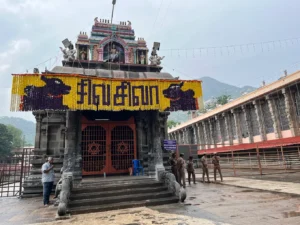
Next is the Ner Annamalai Temple.
This is the very place where Lord Annamalaiyar appeared before Goddess Parvati after she completed the Girivalam.
For this reason, it is regarded as the place that gave birth to the tradition of Giripradakshina (Girivalam).
It is also believed that on Tamil New Year’s Day and on a particular day during the month of Avani, the rising sun shines directly upon the main deity of this temple from over the summit of Arunachala Hill.
Continuing onward, you will come to the Gautama Maharishi Temple.
Next is Surya Lingam.
Then comes Varuna Lingam.
A little further inside on the right is the Adi Annamalai Temple, an important shrine that should not be missed.
After that is a temple that many devotees are unaware of.
It is the sacred place where Saint Manikkavachakar composed the Tiruvempavai hymns.
It is also the place sanctified by the divine footprints of Manikkavachakar.
Next come Vayu Lingam followed by Chandra Lingam.
A short distance beyond Chandra Lingam, on the left, you will see another Nandi shrine.
Then comes Kubera Lingam.
Next is the famous Idukku Pillaiyar Temple.
Finally, you will reach Eesanya Lingam.
After offering your prayers there, return to the Rajagopuram, the place where you began your Girivalam, and complete your sacred pilgrimage.
I sincerely hope this information proves useful to you.
Do make an effort to undertake Girivalam at least once.
It will surely become a deeply meaningful and unforgettable spiritual experience.