
Bhagavan Nityananda: The Mysterious Yogi Who Lived as a Walking Divine Presence
Introduction
There are rare souls whose lives seem to exist beyond the boundaries of ordinary human understanding.
Their stories are filled with mystery, extraordinary spiritual experiences, miracles, silence, and an overwhelming presence that continues to touch people long after they have left the physical world.
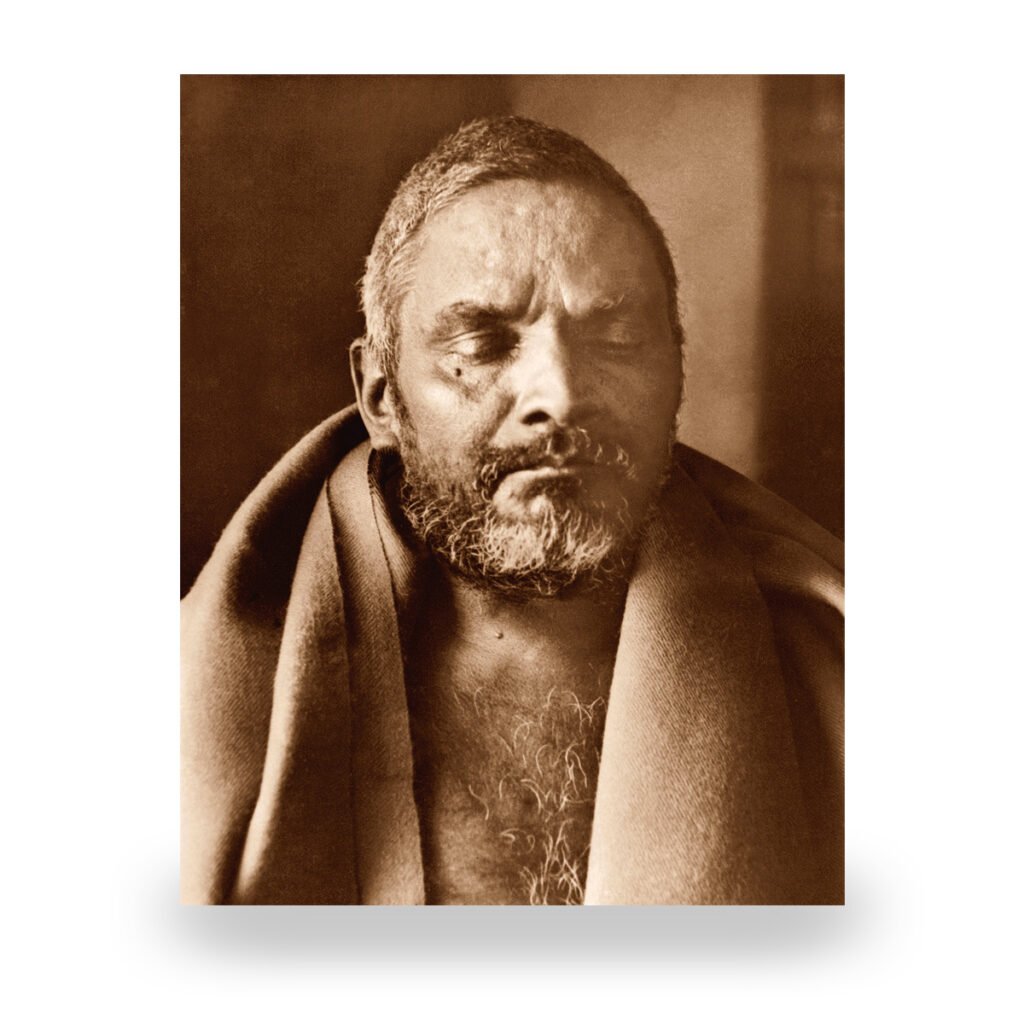
Bhagavan Sri Nityananda was one such extraordinary yogi.
Known as Bhagavan Sri Nityananda of Ganeshpuri, he remains one of the most enigmatic spiritual figures of modern India. His life was filled with unanswered questions—beginning with the mystery of his birth and continuing through his travels, spiritual experiences, miracles, teachings, and eventual Mahasamadhi.
Perhaps the greatest mystery of all is that Nityananda himself never seemed interested in explaining who he was.
The Photograph of Two Great Yogis
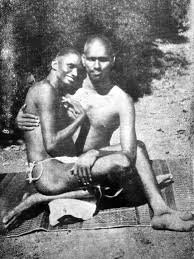
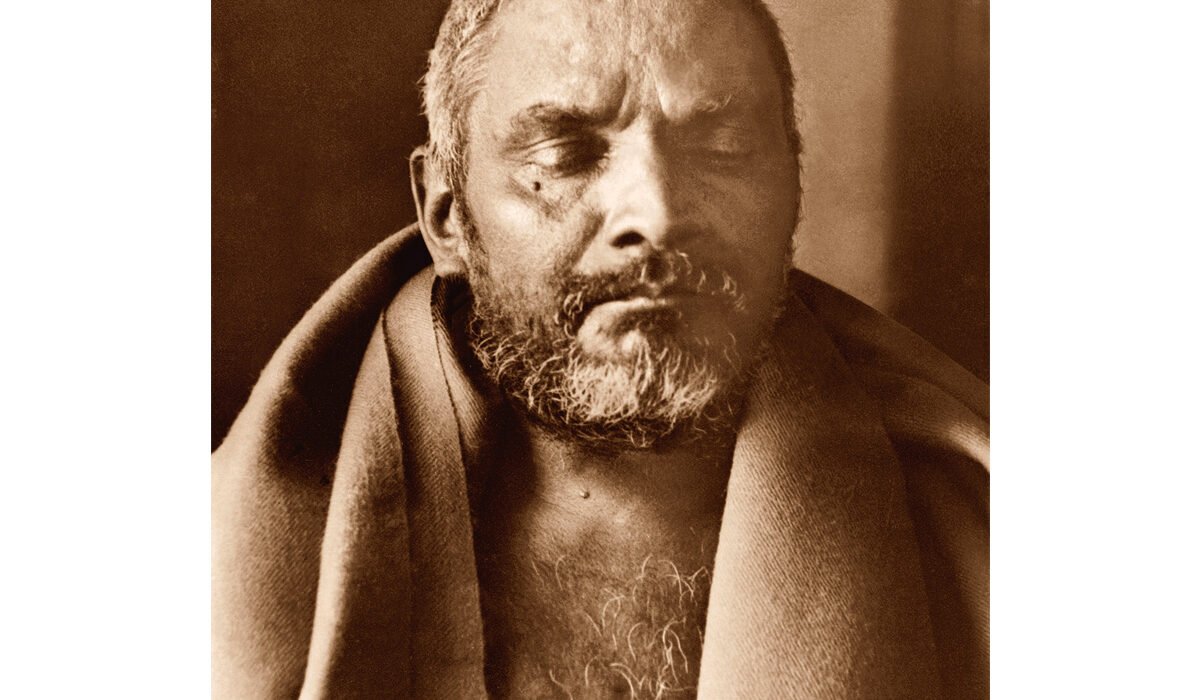
The photograph that inspired this story shows two remarkable yogis.
One is Vadakarai Sivananda Paramahamsa, standing like a mother carrying a child.
In his hands is Bhagavan Sri Nityananda, who would later become renowned as the Bhagavan of Ganeshpuri.
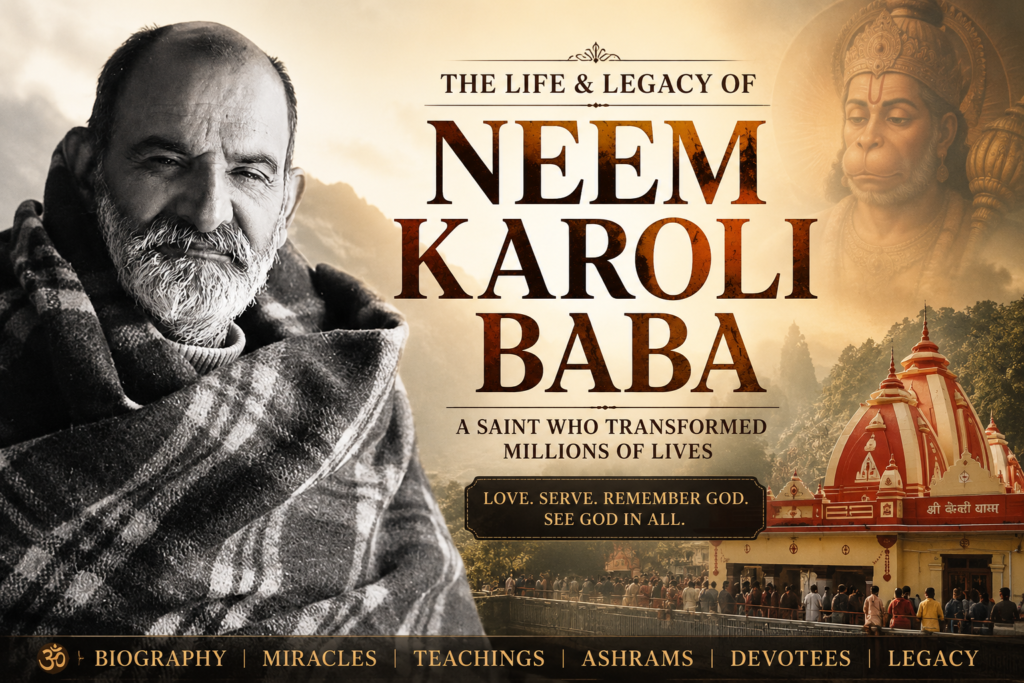
Interestingly, the physical appearance of Nityananda and the famous yogi Neem Karoli Baba is often said to have been remarkably similar. Their spiritual temperament, too, has been described as having certain striking similarities.
But while photographs and stories give us glimpses of Nityananda’s physical presence, his true origins remain shrouded in mystery.
The Mystery of Nityananda's Birth
The birth of Bhagavan Nityananda remains one of the greatest mysteries surrounding his life.
There are no definitive, well-established records explaining who his biological parents were.
Nityananda himself never appeared to consider his birth an important subject.
Whenever devotees questioned him about his origins, he reportedly gave a cryptic response:
“Two crows came, and two crows flew away.”
What exactly did he mean?
Was it a metaphor?
Was there a deeper spiritual meaning hidden within those words?
Or was he simply reminding people that the physical circumstances of one’s birth have little significance when compared with the purpose of one’s life?
The answer remains unknown.
Nityananda rarely encouraged people to become attached to such questions.
On one occasion, when a devotee asked about visiting his birthplace, Nityananda reportedly stopped him and asked, in effect:
“What is there to see there?”
For a person who lived so completely beyond ordinary worldly concerns, even his birthplace seemed insignificant.
Perhaps this is one of the lessons hidden within his life: the physical identity of a person may be easy to record, but the true nature of a realized being cannot be contained in a biography.
A Child Found in the Forest
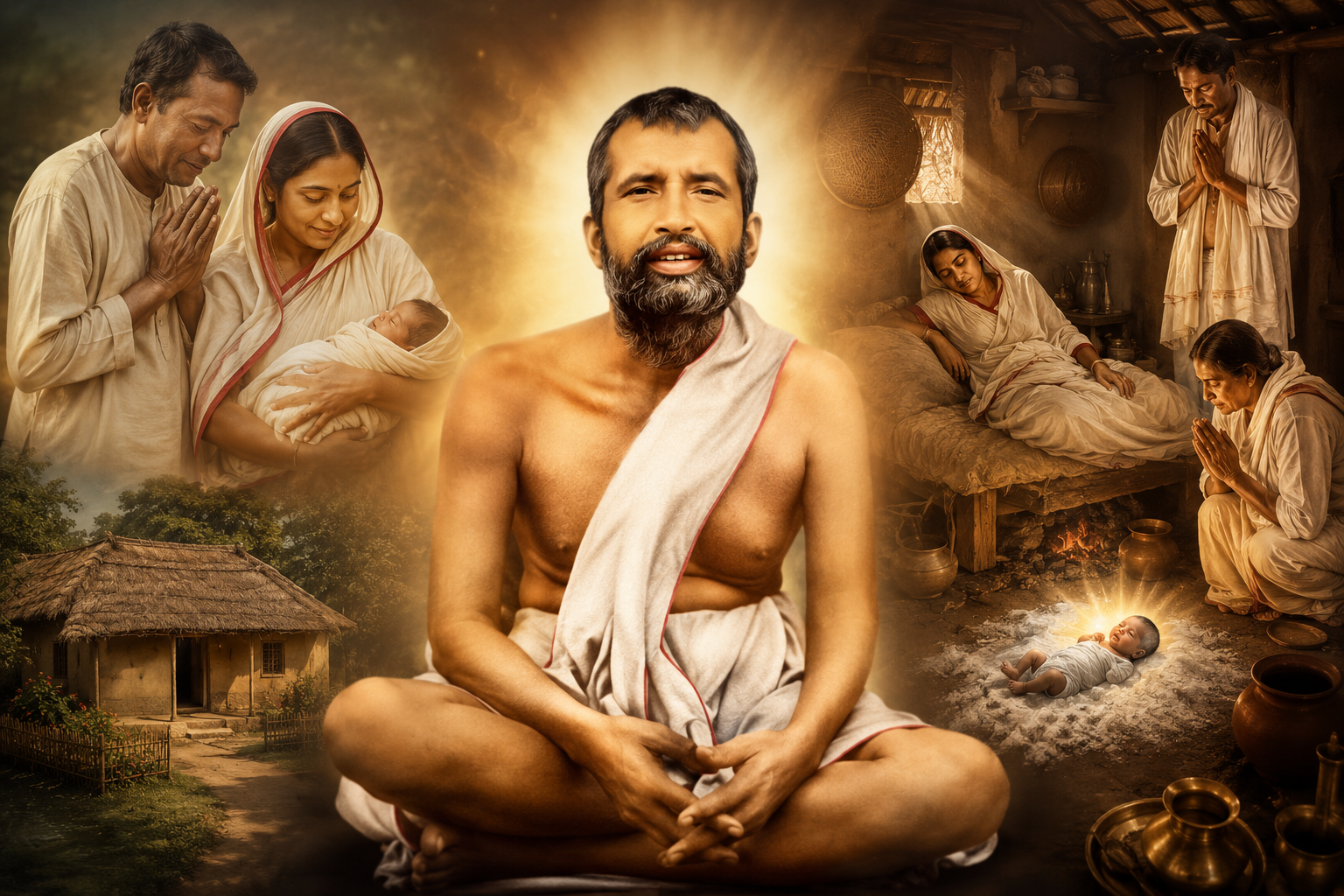
According to the traditional account of his early life, Nityananda’s childhood began under equally mysterious circumstances.
At the end of the 18th century, in a small village called Tunneeri in Kozhikode, Kerala, an elderly couple named Sathu Nair and Unniyamma Nair went into a nearby forest to collect firewood.
There, they discovered an abandoned child.
Although the couple already had children and lived in poverty, they decided to adopt the child.
They named him Raman.
The story is reminiscent of the traditional account of Periyalvar discovering Andal in a garden. Just as Andal was believed to have been found in extraordinary circumstances, this mysterious child too seemed to have entered the world without an ordinary explanation.
When Raman was about six years old, his adoptive father, Sathu Nair, passed away.
Unniyamma subsequently became seriously ill and realized that she could no longer care for the young boy.
She therefore entrusted Raman to Easwar Iyer, a wealthy lawyer and spiritual-minded man living in Avur.
Easwar Iyer already had one daughter and three sons, but he happily welcomed Raman into his family.
The boy grew up under his care.
The Thirteen-Year-Old Who Walked Toward the Himalayas
When Raman was around thirteen years old, he accompanied his adoptive father on a pilgrimage to Kashi.
After completing their pilgrimage, they prepared to return home.
But Raman had other plans.
He told his father that he could no longer return to Kerala.
Instead, he intended to continue traveling northward toward the Himalayas.
He also gave his adoptive father a promise:
When the time came, he would return to meet him again.
For Easwar Iyer, the announcement was heartbreaking.
His beloved son was leaving.
Yet the promise that Raman would return gave him some comfort.
He returned home alone.
Years passed.
The Return of Raman
Eventually, Easwar Iyer’s daughter was to be married.
The wedding date was fixed, and preparations began.
Although Easwar Iyer was busy with the arrangements, his heart remained focused on one thing.
Would Raman return for the wedding?
The wedding day finally arrived.
As the moment of the sacred wedding ceremony approached, a sudden commotion arose among the gathering.
Easwar Iyer looked up.
There stood the son he had loved and missed for years.
Raman had returned.
It was a moment of extraordinary emotional significance for the family.
But another transformation was soon to follow.
The Birth of the Name "Nityananda"
A few days later, Easwar Iyer became seriously ill.
He knew that his life was coming to an end.
Before his death, however, he had one profound spiritual desire.
He wished to receive the darshan of his chosen deity, Surya Narayana, the divine Sun.
Raman knew of his father’s longing.
One day, he is said to have granted Easwar Iyer a divine vision through which he experienced the presence of Surya Narayana.
Easwar Iyer was overwhelmed by spiritual bliss.
In that moment, he repeatedly uttered the name:
“Nityananda! Nityananda!”
He declared that Raman had brought him eternal bliss and that he was truly Nityananda—the embodiment of eternal bliss.
He then passed away in deep spiritual fulfillment.
From that time onward, Raman became known as Nityananda.
The Yogi Who Walked Across South India
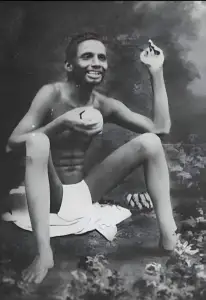
Nityananda travelled extensively through southern India.
His journeys took him through places including:
- Quilandy
- Kanyakumari
- Kozhikode
- Thalassery
- Kannur
- Kanhangad
- Kumbla
- Manjeshwar
- Nileshwar
- Udupi
Wherever he went, extraordinary stories began to surround him.
Devotees spoke of witnessing events that appeared impossible:
- Giving darshan to many devotees simultaneously
- Water appearing where it was desperately needed
- Living in unusual places, including treetops
- Sleeping on ropes
- Healing illnesses considered incurable
- People experiencing remarkable recoveries
- Extraordinary spiritual experiences occurring around him
Thousands of people believed that they had experienced the touch of his grace.
Yet Nityananda himself remained largely silent.
He often appeared absorbed in a state beyond ordinary consciousness and did not speak unnecessarily.
But those who came into contact with him frequently carried away experiences that they later shared with others.
Many such accounts were eventually recorded and passed from one generation to another.
Guruvanam: The Forest of the Guru
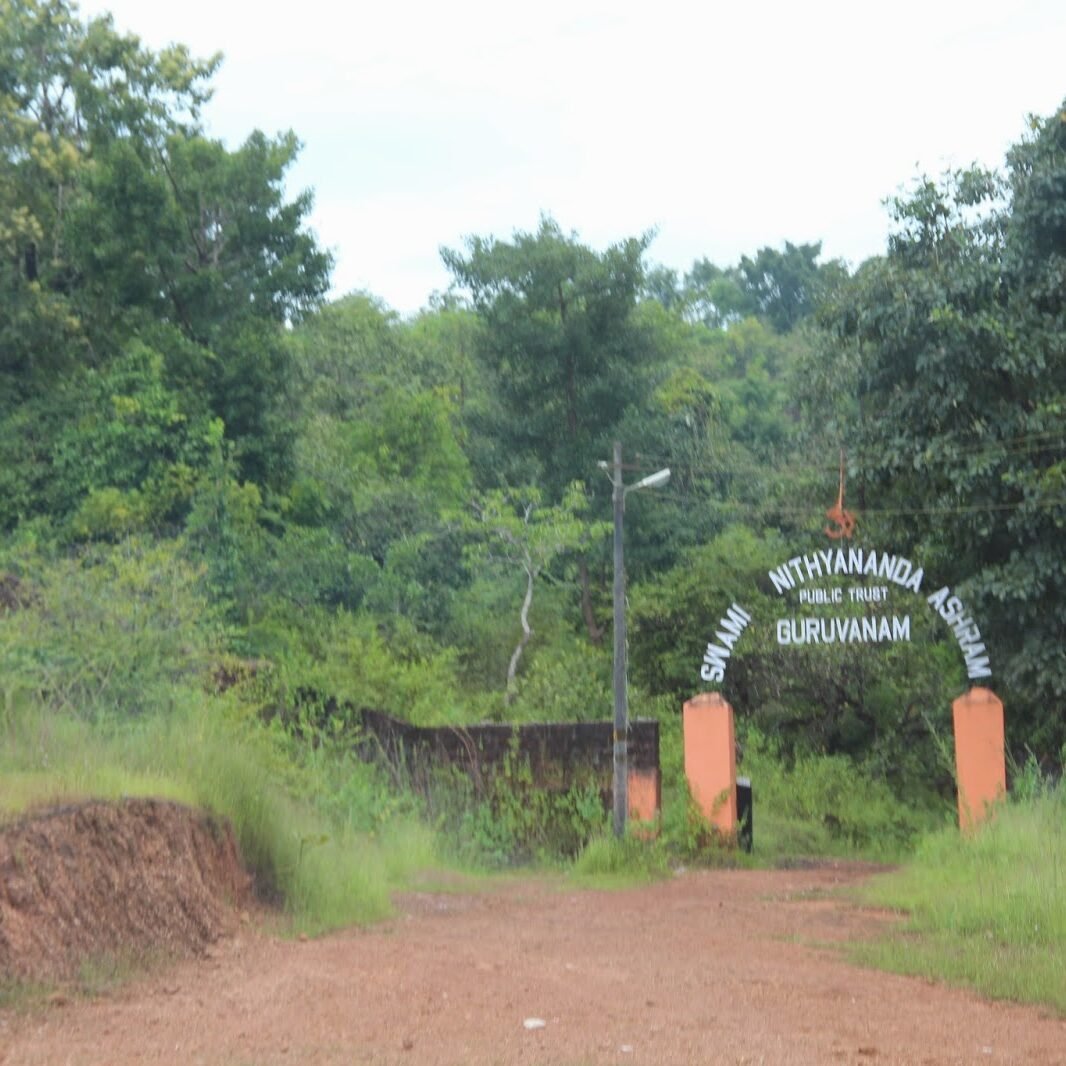
One of the most spiritually significant places associated with Nityananda is Guruvanam, near the area where the Kanhangad Ashram stands today.
During his younger years, Nityananda frequently visited a mountain located several kilometres from the ashram.
The region was surrounded by hills, forests and caves.
It was once known as Koriyam.
The area was believed to be inhabited by wild animals such as tigers and leopards, as well as poisonous snakes.
A tribal community known as the Koragas lived in these forests, and the area eventually came to be known as Koradavana.
After Nityananda began spending time there, it became known as Guruvanam—the Forest of the Guru.
According to tradition, the forest had a much deeper spiritual history.
It was believed to have been a dwelling place and meditation ground for siddhas and yogis of earlier times.
Nityananda later revealed this powerful spiritual centre to the wider world.
Even today, devotees believe that spiritually advanced beings continue to meditate there in subtle forms.
The Sacred Cave of Guruvanam
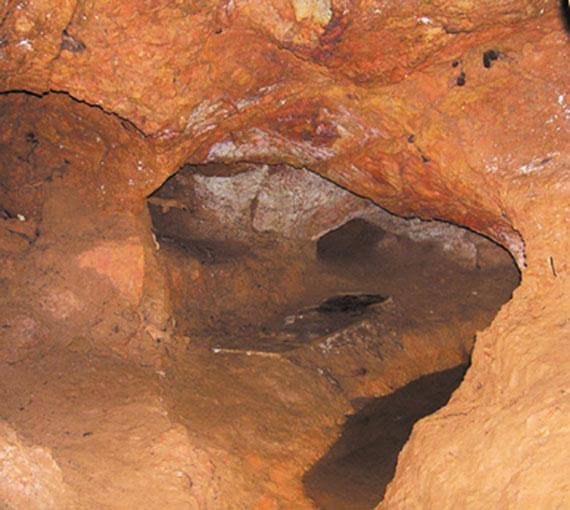
At the heart of Guruvanam lies a sacred cave where Nityananda spent considerable time.
The cave has become associated with numerous mysterious stories.
At its entrance, sacred padukas, or sandals representing the presence of the Bhagavan, have been installed and worshipped.
During the monsoon season, a small stream of water flows through the area.
Its source, according to local tradition, remains unexplained.
One story tells of a young boy who once asked Nityananda what was inside the cave.
Instead of answering, Nityananda took the boy by the hand and led him inside.
The boy reportedly experienced visions associated with the great heroes and sages of the Ramayana and Mahabharata, as well as the divine presence of Adishesha.
The story further claims that the boy lived for 104 years.
Whether one interprets such stories literally, symbolically, or spiritually, they form an important part of the oral tradition surrounding Guruvanam and Nityananda.
A Place Beyond One Lifetime
Another intriguing story concerns Nityananda’s relationship with Guruvanam itself.
When a devotee once asked him about his coming to the place, Nityananda reportedly indicated that this was not his first association with the forest.
This has been interpreted by devotees as suggesting that his connection with Guruvanam extended beyond a single lifetime.
For believers, it became another indication that Nityananda’s spiritual journey could not be understood merely through the events of one earthly life.
Papanashini Ganga
The Malaveeran Temple
According to the traditional account, tribal communities living in the region once approached Nityananda with a serious concern.
They believed that their clan deity, Malaveeran, had become angry and that their community was suffering as a result.
Nityananda advised them to establish a temple for Malaveeran at Guruvanam.
But he gave them an important instruction:
There should be no animal sacrifice.
Instead, he advised them to offer the first produce of their harvest to the deity.
The people followed his guidance.
According to the tradition, their difficulties gradually disappeared and they found peace.
Even today, daily worship and arati are performed at the Malaveeran shrine.
The Mystery of the Ashta Linga Temple
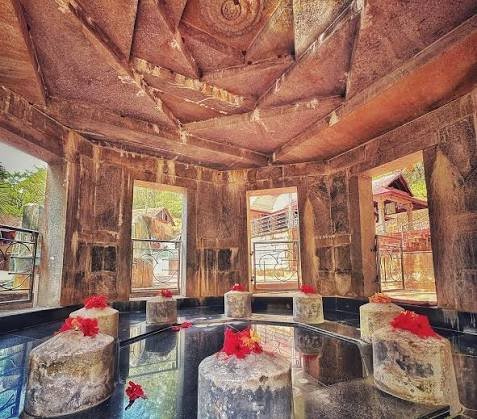
Another remarkable shrine at Guruvanam is the Ashta Linga Temple.
Here, eight distinctive Shiva Lingas were installed in a Navagraha-like arrangement.
The arrangement is believed to contain a deeper spiritual message.
The yogic tradition speaks of the Ashta Siddhis—the eight great spiritual powers.
But Nityananda’s teaching, as presented through this tradition, points toward something more important:
Even if a spiritual seeker attains extraordinary powers, the true goal should remain the inner journey.
Spiritual powers can easily become distractions.
The destination is not supernatural ability.
The destination is inward realization.
Perhaps this is why the Lingas were established outside the sacred cave where Nityananda meditated.
The symbolism is profound:
Do not become fascinated by powers. Turn inward
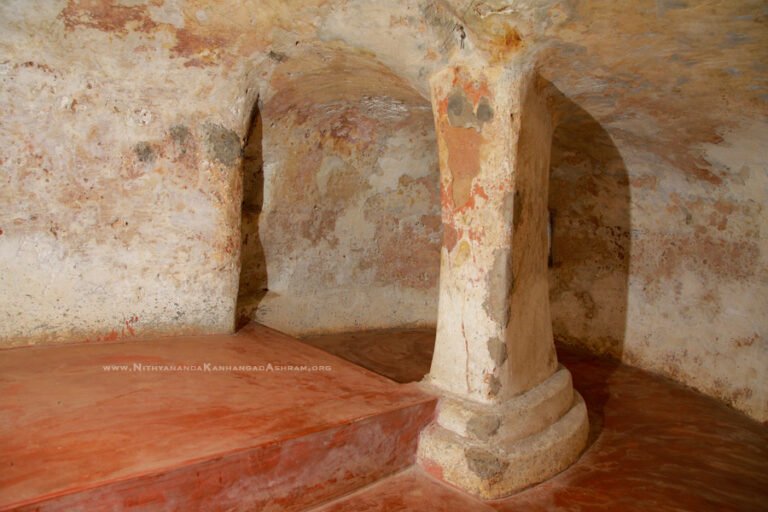
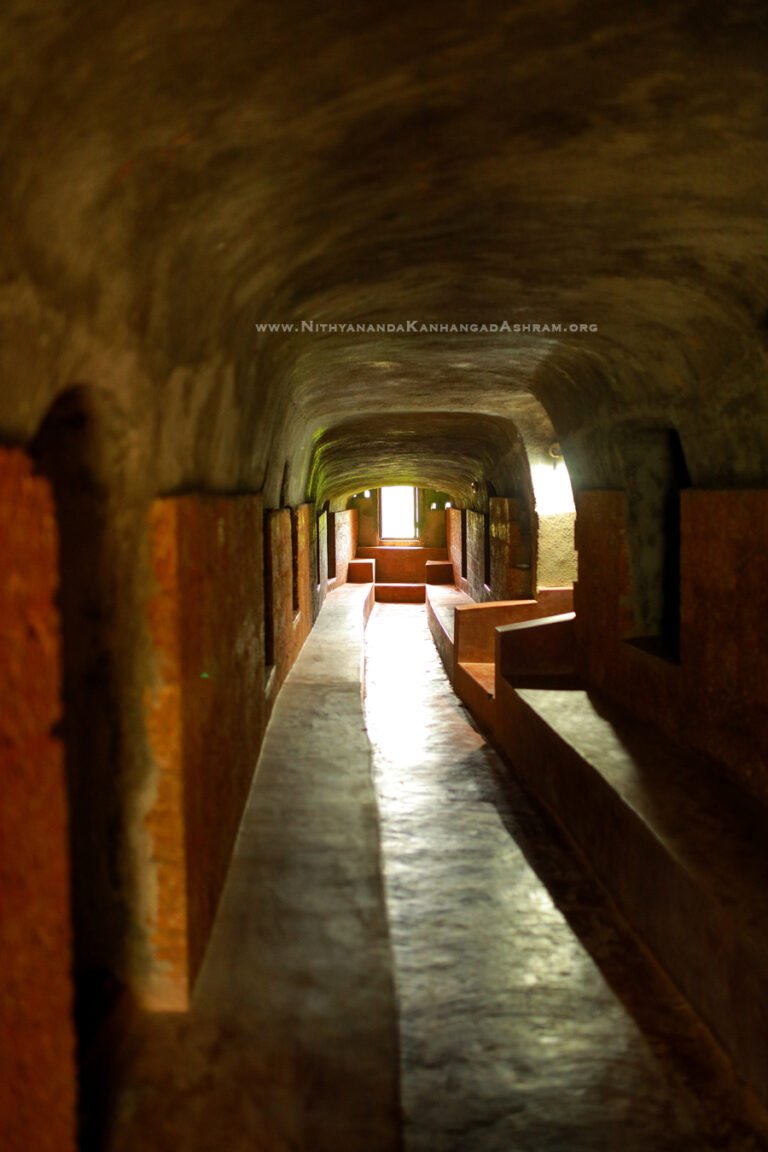
During the British era, Bhagawan Nithyananda began carving caves near the fort and hired local villagers to help with the construction. Although he apparently had no visible source of income, he miraculously provided the workers’ exact wages—sometimes producing money from his loincloth or directing workers to find it beneath trees or rocks.
This unusual activity led local officials to complain to the British authorities, accusing Nithyananda of encroaching on government land and using suspicious money. Captain David Gawne was sent to investigate. When he met Nithyananda, he was surprised to find that the saint could converse with him in English.
When questioned about the source of the money, Nithyananda took the officials to a swamp at Guruvan and said that a bag of money was lying beneath the water. Because of the dangerous wildlife, including a large alligator, nobody dared to verify it. Impressed by the encounter, Captain Gawne ordered the officials not to interfere with Nithyananda’s work and instead encouraged them to help him.
According to the tradition, Nithyananda later named the road leading to the Ashram “Gawne Road” in honour of the officer. The road is said to still carry that name today.
Nithyananda is traditionally believed to have carved 43 caves with his own hands. Devotees associate the number 43 with 27 stars, 9 planets and 7 celestial sages, and some connect the caves symbolically with the mysteries of the Sri Chakra.
When asked why he was carving the caves, Nithyananda reportedly gave a prophetic answer: the caves would become a place where future sanyasis could come for spiritual training, ultimately becoming a guiding centre for the liberation of humanity.
In essence, the story presents the caves not merely as physical structures, but as a spiritually significant centre whose creation was surrounded by miracles, mystery and a vision for the future.
Mahasamdhi
Conclusion
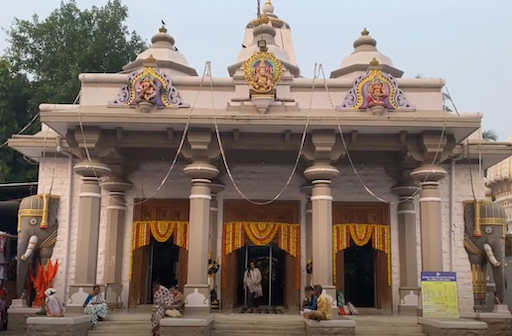
After coming to Ganeshpuri, Bhagawan Nithyananda never left this sacred land.
From helping the tribal communities with food, clothing and education, to welcoming people from every walk of life, his life was a living example of compassion without distinction. Beggars and millionaires, officials and ordinary villagers, yogis and seekers—all came before him, and all received his blessings.
He began his life in Ganeshpuri in a simple hut. As the number of devotees grew, that humble dwelling eventually became Kailash Bhavan—a place where countless people came seeking something that could not be bought, explained or easily understood.
Many yogis and sages simply sat in his presence, recognizing the power of his silence. Others received his grace without even knowing who he truly was. Bhagawan himself never tried to build a personality around his name. He once answered the question of who his Guru was with a profound statement:
“I have no Guru, and I have no disciples.”
He did not seek recognition, followers or fame. In fact, he rarely spoke about himself. Yet, the world came to know him through the lives of those who experienced his grace.
Even the photograph of Bhagawan with Swami Sivananda, shown earlier in this documentary, comes from one of his rare visits to Sivananda Ashram. But beyond photographs, stories and historical records, it was the transformation experienced by countless devotees that carried his name across generations.
On 8 August 1961, Bhagawan Nithyananda entered Mahasamadhi—a date he had already revealed to his devotees beforehand.
But for those who experienced him as a living presence, this was not an ending.
For a being who lived as Parabrahma, death could never be the final chapter.
Perhaps that is why, even today, Bhagawan Nithyananda continues to be remembered across the world—not merely because of the miracles attributed to him, nor because of the caves he carved, nor because of the stories surrounding his life…
…but because people continue to feel his presence.
He blessed those who knew him.
He blessed those who never knew him.
And perhaps, even today, his greatest work continues silently—in the lives of those who seek his grace.
Bhagawan Nithyananda did not leave behind merely an Ashram.
He left behind a presence.
A presence that cannot be measured by history, explained by words, or confined to a place.
And perhaps this is the true mystery of Bhagawan Nithyananda—
The body may have entered Mahasamadhi…
but the grace never did.