
Sathguru Gnani Vellingiri Swamigal: The Extraordinary Life, Miracles, Vasi Yoga & Jeeva Samadhi
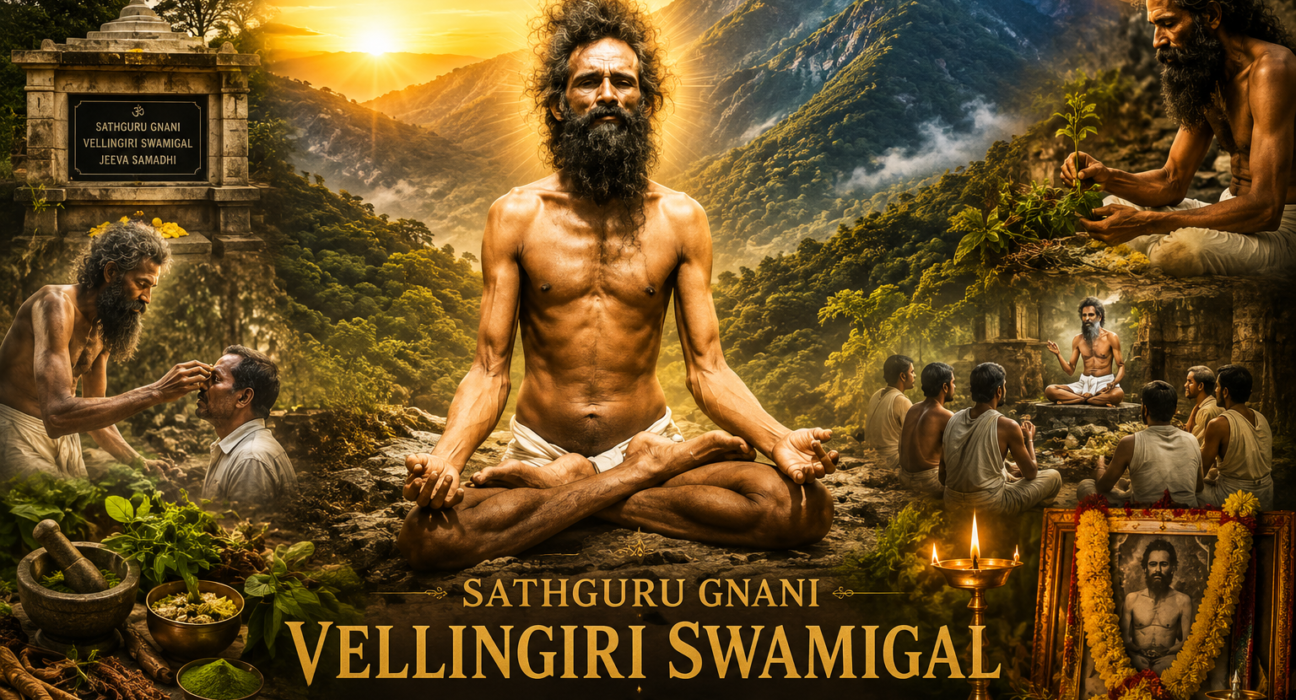
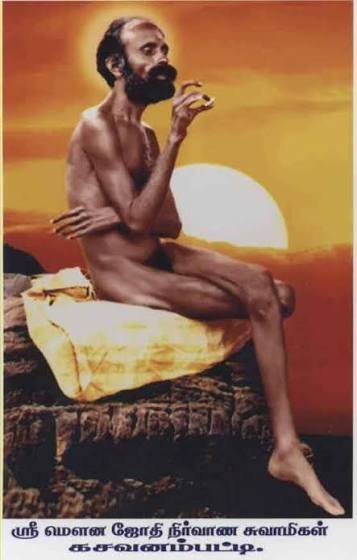
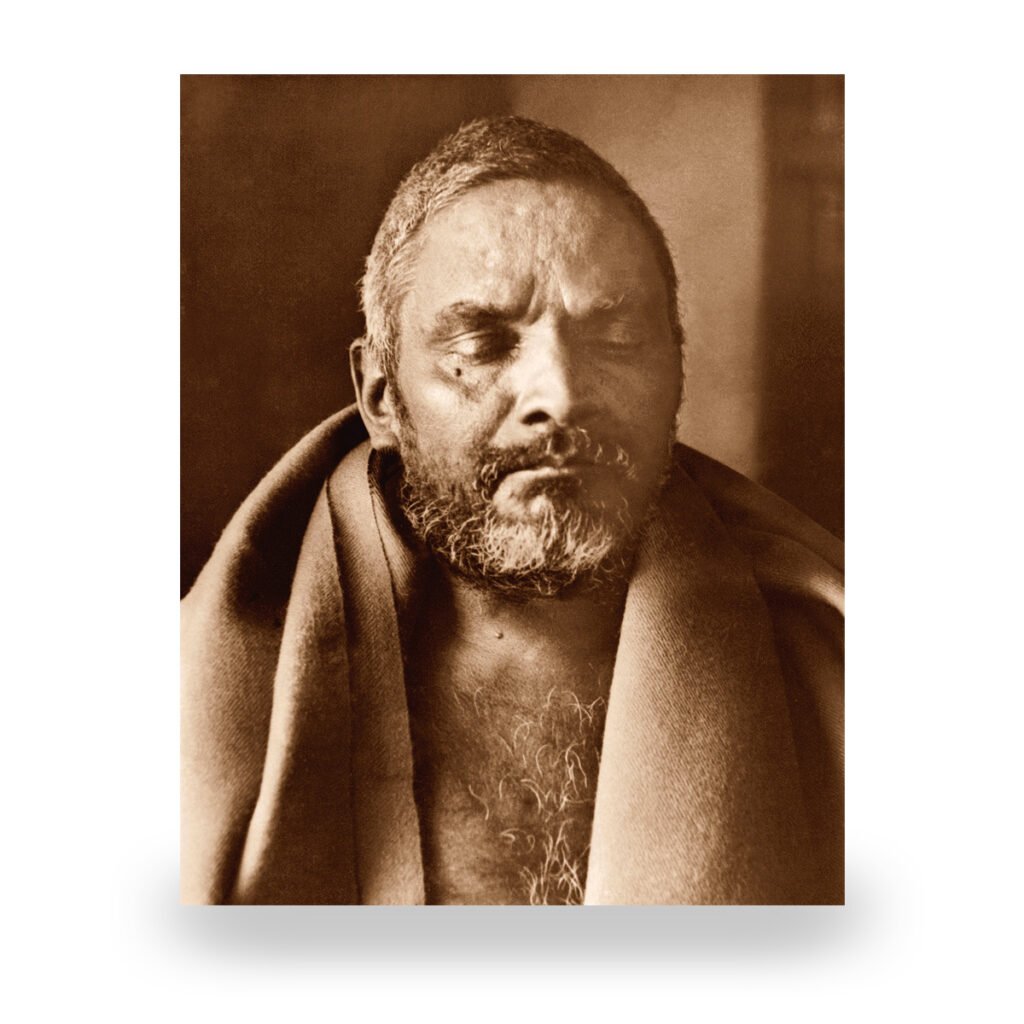
Sathguru Gnani Vellingiri Swamigal: The Siddhar Who Chose the Silence of the Mountains
The Extraordinary Life of a Modern Sage of Velliangiri Hills
Throughout history, humanity has admired great leaders, scholars, and saints.
Yet only a rare few transcend ordinary human life through unwavering tapas (spiritual austerity), transforming themselves into living embodiments of divine consciousness.
In the Siddhar tradition of South India, such realized beings are not remembered merely as saints—they are revered as awakened masters who experienced Shiva within themselves and became one with that eternal reality.
Among these extraordinary souls stands Sathguru Gnani Vellingiri Swamigal, a mystic whose life was marked by intense spiritual discipline, profound yogic attainment, selfless service, and unwavering compassion.
Even today, devotees believe that his grace continues to guide sincere seekers through the sacred Velliangiri Hills, often called the “Kailash of South India.”
A Divine Birth in Rural Tamil Nadu
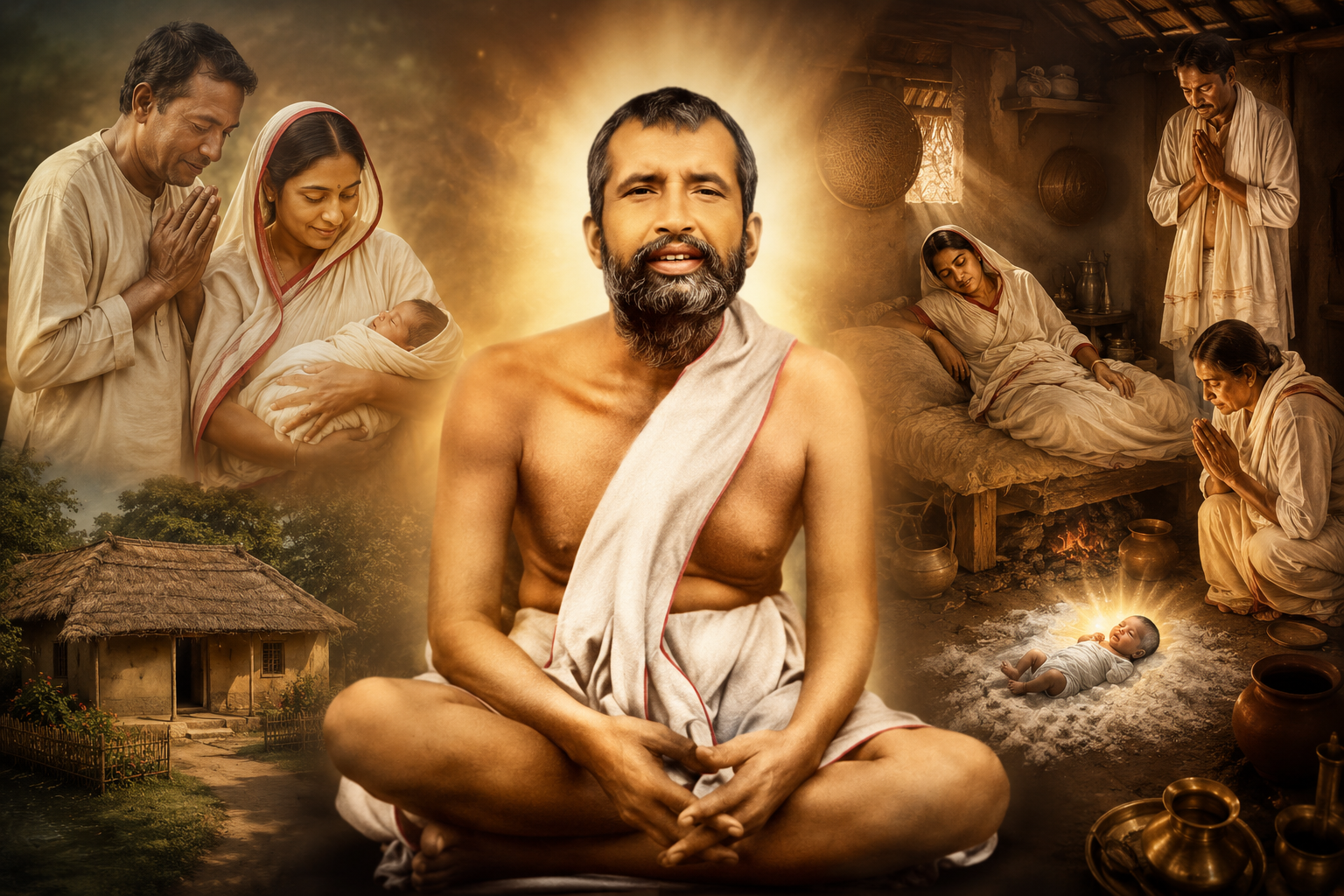
Sathguru Gnani Vellingiri Swamigal was born in the small village of Chinnakollappatti near Salem, Tamil Nadu.
Born to Chinnapaiya Gounder and Pachaiyammal, he was named Pethakka Gounder and was the fifth son of the family.
According to the spiritual tradition preserved by his disciples, he was not regarded as an ordinary child but as one born with a divine purpose.
Even during childhood, an intense spiritual yearning awakened within him.
While other children were occupied with ordinary pursuits, his mind constantly searched for the deeper meaning of existence.
That inner calling grew stronger with every passing year.
Finally, at just nine years of age, he made an astonishing decision.
He left home in search of a true spiritual master.
The Search for the Perfect Guru
His quest eventually led him to Courtallam, near the famous Five Falls (Aintharuvi).
There he met the enlightened sage Brahmasri Shankaranandar, who would become his Guru.
Accepting him with complete humility, the young seeker dedicated himself entirely to serving his master.
For years, he performed every task in the ashram with devotion.
He begged for alms, shared whatever food he received with his Guru, fellow disciples, and those serving in the ashram, and never neglected his duties.
Service became his meditation.
Humility became his strength.
Discipline became his way of life.
Mastering the Sacred Science of Vasi Yoga
Under the guidance of Brahmasri Shankaranandar, the young disciple received initiation into the highly revered Siddha practice of Vasi Yoga.
Unlike ordinary breathing techniques, Vasi Yoga is regarded in the Siddha tradition as an advanced spiritual science capable of transforming human consciousness.
Through years of disciplined practice, unwavering obedience, and deep meditation, he mastered the subtle principles of this sacred yogic path.
His Guru recognized that the disciple had matured spiritually.
He was no longer merely learning.
He had become a living vessel of the ancient Siddha wisdom.
The Guru’s Final Command
One day, his Guru called him close and offered words that would define the rest of his life.
He compared a spiritually mature disciple to a bird whose wings had fully developed.
A bird with wings should never remain confined within its nest.
Likewise, a realized seeker should not remain attached to the Guru’s physical presence.
Instead, he must fly freely across the world, sharing the liberating wisdom entrusted to him.
His Guru instructed him to teach Vasi Yoga to sincere seekers and help them free themselves from the cycle of suffering and ignorance.
Receiving this sacred command with folded hands, Vellingiri Swamigal bowed before his Guru and accepted the responsibility as his life’s mission.
Pilgrimage to Kailash
Blessed by his Guru, Vellingiri Swamigal embarked upon an extraordinary pilgrimage across northern India.
He travelled through countless sacred places and eventually reached the holy abode of Mount Kailash, the eternal seat of Lord Shiva.
During his deep meditation there, an inner revelation dawned upon him.
He perceived not only the remaining purpose of his earthly life but also the very place where his spiritual journey would ultimately culminate.
That place was not in the Himalayas.
It was in the sacred Velliangiri Hills of Tamil Nadu—revered by many as Then Kailayam, the “Southern Kailash.”
Returning to South India, he settled in a secluded cave amidst the Velliangiri Mountains, where he immersed himself in profound tapas and silent contemplation.
The Beginning of a Living Ashram
Guided by divine intuition and supported by a small circle of devoted followers, Vellingiri Swamigal later established a humble hermitage near Mullangadu, surrounded by forests and pristine natural beauty.
From this quiet sanctuary, he began what would become his life’s greatest work.
He taught Vasi Yoga to earnest disciples.
He offered spiritual guidance without distinction.
He healed the suffering through Siddha medicine.
He cultivated rare medicinal herbs.
And above all, he demonstrated that true spirituality is expressed not through miracles alone, but through simplicity, compassion, and complete surrender to the Divine.
This marked the beginning of a remarkable spiritual legacy that continues to inspire seekers long after his Jeeva Samadhi.
Vasi Yoga, Siddha Medicine, and a Life of Absolute Simplicity
As Sathguru Gnani Vellingiri Swamigal settled in the serene foothills of the Velliangiri Mountains, his hermitage gradually became a sanctuary for sincere seekers.
People came from different walks of life.
Some sought relief from physical illness.
Some searched for peace of mind.
Others longed to understand the deeper mysteries of yoga and the Siddha tradition.
Regardless of who approached him, the Guru welcomed everyone with the same compassion.
His only qualification for accepting a disciple was sincerity.
The Master of Vasi Yoga
At the heart of Vellingiri Swamigal’s teachings was the sacred science of Vasi Yoga.
In the Siddha tradition, Vasi Yoga is not merely a breathing technique.
It is regarded as the royal path for awakening the dormant spiritual force within the human body.
Having mastered this profound discipline under his Guru, Swamigal began transmitting it only to deserving seekers who demonstrated humility, discipline, and unwavering commitment.
He believed that spiritual wisdom should never become a commercial commodity.
Instead, it should be entrusted only to those prepared to transform themselves through practice.
For every disciple, Vasi Yoga became not simply a method of meditation but a complete way of life.
Guardian of Ancient Siddha Medicine
Alongside his yogic teachings, Vellingiri Swamigal possessed remarkable mastery over Siddha medicine.
He had carefully studied traditional herbal healing methods under accomplished Siddha masters and spent years identifying rare medicinal plants growing naturally around the Velliangiri Hills.
Rather than keeping this knowledge secret, he freely shared it with sincere students interested in preserving the ancient healing tradition.
He personally taught them:
- Identification of rare medicinal herbs
- Preparation of traditional Siddha medicines
- Herbal formulations for chronic illnesses
- Natural methods of restoring physical and mental balance
His ashram gradually evolved into a living center where spirituality and healing walked hand in hand.
A Living Forest of Healing Herbs
Swamigal believed that nature itself was humanity’s greatest physician.
Around the ashram, he cultivated nearly ninety-one varieties of rare medicinal herbs, ensuring that future generations would benefit from their healing properties.
These plants were not grown for profit.
They were preserved as sacred gifts meant for public welfare.
Every tree, every herb, and every flowering plant became part of his silent mission to protect both nature and humanity.
Long before environmental conservation became a global concern, Vellingiri Swamigal demonstrated that spiritual life begins with living in harmony with nature itself.
A Saint Who Never Rested
Although he had received very little formal education, Swamigal possessed astonishing knowledge of the Siddhar scriptures.
Late into the night, he would sing the mystical hymns of the Siddhars in his powerful voice while accompanying himself on the Tambura.
After every hymn, he patiently explained its hidden spiritual meaning to disciples gathered around him.
His devotees often remarked that they had never seen him sleep.
Throughout the day and night, he remained constantly engaged.
If he was not teaching, he was preparing herbal medicines.
If he was not meditating, he was serving visitors.
His life itself became a continuous meditation in action.
Feeding the Hungry Before Feeding Himself
One of the most remarkable aspects of Vellingiri Swamigal’s life was his extraordinary compassion.
He regularly travelled to the streets of Coimbatore, accepting charitable offerings from shopkeepers.
However, none of these offerings were used for his own comfort.
Instead, he carried the food back to the forests surrounding the ashram, where he personally fed tribal families and impoverished villagers living in the hills.
Even though he possessed the knowledge of Rasavada—the mystical Siddha science associated with transforming metals—he never used it for personal wealth.
His entire life reflected complete detachment from material possessions.
He accepted only what was necessary to serve others.
The Discipline of Saltless Living
Swamigal’s personal discipline astonished everyone around him.
He ate only one meal each day.
Even more remarkable, the meal contained no salt whatsoever.
He would not even touch salt with his hands.
Every afternoon, shortly before cooking, he would wait to see whether any visitor had arrived on the day’s only bus.
If someone unexpectedly appeared at the ashram, he immediately shared his entire meal with the guest.
On such days, he simply remained without food.
He never cooked twice.
Once the cooking vessels were emptied and cleaned, they would not be used again until the following day.
For him, hospitality was not a duty.
It was an expression of divine worship.
The Test of the Disciples
One day, several disciples decided to prepare the Guru’s meal themselves.
Knowing that Swamigal never consumed salt, they secretly added salt to the food.
Curious to see whether their Guru would notice, they later confessed what they had done and invited him to eat.
To their surprise, Swamigal quietly declined.
Without displaying anger or disappointment, he stepped outside the hermitage and sat in silence.
Then something extraordinary happened.
Addressing the Divine Mother in his own intimate and unconventional manner, he called out toward the sacred forest.
Within moments, a mysterious woman dressed in white appeared carrying a basket of freshly prepared food served on a banana leaf.
She lovingly invited the Guru to eat.
Swamigal gently replied that he no longer felt hungry and asked her to return.
As quietly as she had appeared, the woman vanished into the forest.
The bewildered disciples rushed to ask who she was.
Swamigal simply smiled and replied,
“When the proper time comes, you will understand.”
Many devotees later believed that the mysterious visitor was none other than Adi Shakti herself, responding to the heartfelt call of her devoted Siddhar.
Miracles Hidden Behind Simplicity
Although incidents like these became known among close disciples, Swamigal never encouraged publicity.
He neither claimed supernatural powers nor attempted to attract followers through miracles.
To him, every extraordinary experience was secondary.
The true miracle was the transformation of the human mind into a vessel of divine consciousness.
That remained the central purpose of his life.
And it was this quiet humility that drew even more sincere seekers to his forest hermitage.
Among them were two individuals whose arrival would profoundly influence the future preservation of his teachings.
The Silent Master, Dr. Nagaraj, and the Hidden World of Siddha Yoga
As word quietly spread about the saint living in the forests near the Velliangiri Hills, sincere seekers began making their way to his humble ashram.
Unlike many spiritual teachers who attracted crowds through public discourses or miracles, Sathguru Gnani Vellingiri Swamigal preferred silence.
He never advertised himself.
He never claimed greatness.
Those who were destined to meet him simply found their way.
Among them were two men whose lives would be transformed forever.
The Arrival of Two Doctors
In 1976, two devoted seekers arrived at the ashram.
One was Dr. Nagaraj, who would later become Vellingiri Swamigal’s foremost disciple.
The other was his close friend, Dr. Shantharam.
Both had heard whispers about the mysterious Siddhar living in the forests of Velliangiri.
Curiosity brought them there.
Faith made them return.
The moment they saw the Guru, they were struck by two remarkable qualities.
His body appeared extraordinarily simple and unassuming.
Yet his penetrating gaze seemed to look beyond the body and directly into one’s soul.
They sensed they were standing before someone extraordinary.
Six Months of Complete Silence
What happened next surprised them.
The Guru never welcomed them.
He never introduced himself.
He never preached.
Week after week, they travelled to the ashram every Sunday.
For nearly six months, Swamigal refused to speak a single word to either of them.
To an ordinary visitor, such silence might have seemed like rejection.
But for genuine seekers, silence itself became the teaching.
Without conversation, the Guru was observing them.
Would they continue to come without receiving attention?
Would they seek wisdom—or merely recognition?
Remarkably, despite never speaking to them, Swamigal always ensured they were fed before leaving the ashram.
His compassion spoke louder than words ever could.
The First Words
After six long months, the Guru finally broke his silence.
Looking directly at the two visitors, he asked a simple question:
“Why do you keep coming here?”
It was the first sentence they had ever heard from him.
Dr. Nagaraj replied honestly.
He explained that every visit to the ashram filled his heart with an indescribable peace.
He experienced a profound stillness that he had never found anywhere else.
The Guru quietly listened.
Then he instructed them to study “Siddha Vedam”, a work written by Swami Sivananda Paramahamsa on the science of Siddha Vidya.
As they studied, Swamigal personally explained its deeper meanings, revealing truths hidden beneath the surface of the text.
This continued for nearly one and a half years.
The Sacred Initiation
Finally, on Chitra Pournami in 1978, the long period of preparation came to an end.
Vellingiri Swamigal initiated both seekers into the sacred path.
Among them, Dr. Nagaraj displayed exceptional dedication.
His unwavering faith, humility, and commitment deeply pleased the Guru.
Recognizing his spiritual maturity, Swamigal accepted him as his principal spiritual disciple.
Over the years, he transmitted the complete science of Vasi Yoga, along with many subtle Siddha teachings that had been preserved through generations of realized masters.
But the greatest lessons were not taught through words.
They were revealed through direct experience.
A Month of Silence in Krishna Cave
Every year during the Tamil month of Margazhi, Swamigal undertook an extraordinary spiritual discipline.
He ascended into the Krishna Cave high in the Velliangiri Mountains.
There, amid freezing temperatures and complete isolation, he observed thirty days of total silence while remaining immersed in uninterrupted meditation.
His food for the entire month consisted of only thirty green gram balls, lovingly prepared by Dr. Nagaraj’s family—one for each day.
Nothing more.
No comforts.
No distractions.
Only tapas.
When the month concluded, Swamigal descended the mountain on the first day of the Tamil month of Thai.
On that day alone, he permitted Dr. Nagaraj to perform Pada Puja, honoring the Guru’s feet.
It was the only day in the entire year when anyone was allowed to touch them.
The Guru Walked Without Touching the Earth
On one occasion, Swamigal invited Dr. Nagaraj to accompany him into the Velliangiri Hills.
As they climbed the mountain paths, the doctor witnessed something beyond ordinary explanation.
At several places, it appeared as though the Guru’s feet barely touched the ground.
His movement resembled effortless gliding rather than walking.
Though the afternoon sun was scorching, Dr. Nagaraj was drenched in sweat.
Yet Swamigal remained completely unaffected.
Curious, the doctor asked,
“Swami, why do you not perspire while I am soaked?”
The Guru silently asked him to stand close.
Instantly, Dr. Nagaraj felt an extraordinary cool breeze surrounding his master’s body.
He realized that Swamigal’s yogic mastery had created an entirely different energetic atmosphere around him.
To the disciple, it was a glimpse into the profound yogic state described in the ancient Siddha tradition—a mastery over the very elements of nature.
The Three Divine Women
As they descended from the mountain, Swamigal suddenly stopped.
Looking ahead, he quietly told Dr. Nagaraj,
“Those who are waiting are not ordinary women. When I prostrate, you must do the same.”
A short distance away stood three mysterious women.
The Guru folded his hands and fell into full prostration, chanting,
“Thaaye Saranam” — “Mother, I surrender unto You.”
Dr. Nagaraj followed.
The moment they lifted their heads, the three women had disappeared without a trace.
Unable to contain his curiosity, the doctor asked who they were.
Swamigal smiled and replied,
“They were divine beings. They had come to take away the spiritual merit we had accumulated.”
Such incidents only strengthened the disciple’s conviction that his Guru perceived realities hidden from ordinary human sight.
A Guru Beyond Explanation
The deeper Dr. Nagaraj entered his Guru’s world, the more he realized that conventional logic could not fully explain what he witnessed.
Yet Swamigal never encouraged blind belief.
He never asked anyone to accept miraculous stories without inner transformation.
For him, every extraordinary event served only one purpose:
To awaken the disciple’s faith in the limitless possibilities of spiritual realization.
And still, even greater mysteries were yet to unfold.
Soon, Dr. Nagaraj would witness visions of Lord Murugan, hidden Siddhas beneath the Palani Temple, Kamadhenu herself, and healing miracles that challenged the very boundaries of modern medicine.
Divine Visions, Siddha Miracles, and the Boundless Grace of the Guru
For an ordinary seeker, the spiritual path begins with faith.
For a disciple who lives beside an enlightened master, faith gradually transforms into direct experience.
This was exactly what happened to Dr. Nagaraj, the foremost disciple of Sathguru Gnani Vellingiri Swamigal.
The years he spent serving his Guru became filled with extraordinary incidents that defied conventional explanation.
To outsiders, they appeared miraculous.
To the Guru, they were simply natural expressions of a mind that had become one with the Divine.
The Two Black Guardians
One day, Dr. Nagaraj’s family expressed a desire to visit the ancient Veerakali Amman Temple hidden deep inside the forests near the ashram.
The route passed through dense jungle where wild elephants frequently roamed.
Before they left, Swamigal smiled and simply said,
“Go without fear. Karuppan will accompany you.”
The family assumed he was referring to an unseen divine guardian.
As they entered the forest, two large black dogs suddenly appeared.
Without barking or showing aggression, they quietly walked ahead of the group as though guiding them.
Throughout the journey, the mysterious animals remained by their side.
Local devotees later recalled that whenever wild elephants approached, these dogs would roar with astonishing ferocity, forcing even elephant herds to retreat.
After safely escorting the devotees back, the dogs disappeared into the forest as silently as they had come.
Many believed they were no ordinary animals, but manifestations sent by the Guru through his yogic power.
The Hidden Siddhas of Palani
On another occasion, Dr. Nagaraj informed his Guru that he planned to visit the sacred Palani Murugan Temple.
Instead of immediately blessing the journey, Swamigal asked,
“Why do you wish to go there?”
The doctor replied honestly.
“I only wish to have the darshan of Lord Murugan. Beyond that, I know nothing.”
The Guru instructed him to postpone the pilgrimage.
Nearly a month later, he finally gave permission.
But along with his blessing came precise instructions.
He directed Dr. Nagaraj to meditate at certain locations around the temple and then silently contemplate the Guru.
Obediently following every instruction, the doctor entered deep meditation.
Suddenly, an astonishing vision unfolded.
He perceived great Siddhars engaged in eternal tapas beneath the sanctum of Dhandayuthapani Swamy.
The temple seemed alive with invisible worlds hidden beneath ordinary perception.
When Lord Murugan Appeared as a Child
The vision did not end there.
While still immersed in meditation, a young boy dressed in a simple green cloth appeared before him.
Stretching out his hand toward the sanctum, the child repeatedly said,
“Look at Murugan… Look at Murugan…”
The boy continued pointing toward the deity until the doctor fully absorbed the experience.
Then, just as mysteriously, he said,
“You have seen what you came to see. Now leave.”
Later, another elderly man appeared and guided him to a different meditation spot before vanishing without a trace.
When Dr. Nagaraj returned and narrated everything to Swamigal, the Guru smiled and gently said,
“Why did you let Him go? You should have asked Him for sacred ash. The one you went to see was standing right before you.”
Only then did the disciple realize that the mysterious child had been none other than Lord Murugan Himself.
Kamadhenu’s Extraordinary Test
Every year, Swamigal undertook intense meditation in the remote caves of the Velliangiri Hills.
During one such retreat, he experienced a vision of Kamadhenu, the celestial wish-fulfilling cow described in Hindu scriptures.
According to the tradition preserved by his disciples, Kamadhenu stood before him and offered her divine milk.
As Swamigal drank, she suddenly stopped and spoke.
“You still have attachment.”
The statement surprised the Guru.
He replied without hesitation,
“If caring for the welfare of the disciple who has surrendered to me is attachment, then I gladly accept that attachment. My disciple’s spiritual welfare is more important to me than even divine blessings.”
Having spoken these words, he respectfully declined any further celestial grace and returned to his ashram.
When Dr. Nagaraj later heard the incident, he wept.
He lamented that his Guru had sacrificed a divine blessing out of love for his disciple.
Swamigal simply smiled.
True compassion, for him, always came before personal spiritual attainment.
Witnessing the Seven Great Rishis
On a full-moon night, around 2:30 in the morning, Swamigal took Dr. Nagaraj to the banks of the Noyyal River.
He instructed him to sit in meditation facing east.
After some time, the Guru quietly said,
“Now look toward the sky.”
What the doctor witnessed left him speechless.
Seven brilliant stars appeared to move together in a mysterious formation.
They circled the region where the ashram stood before continuing toward the summit of the Velliangiri Hills.
Swamigal later revealed that these were none other than the Sapta Rishis, the seven immortal sages whose subtle presence continues to bless sacred places across Bharat.
For the disciple, it was yet another glimpse into realities hidden beyond ordinary human perception.
Healing Beyond Modern Medicine
Although countless miraculous stories surrounded him, Swamigal considered healing the suffering to be one of the highest forms of worship.
He possessed extraordinary knowledge of Siddha medicine, especially in treating illnesses that had resisted conventional treatment.
One patient suffering from severe psoriasis was asked to remain in the ashram for an entire week.
Swamigal personally prepared herbal decoctions, medicinal pastes, and strict dietary instructions.
Every day he carefully applied freshly ground herbal medicine with his own hands.
There was no trace of hesitation or disgust.
Only compassion.
By the end of the week, the man’s condition had dramatically improved, leaving those around him astonished.
To Swamigal, however, healing was never a miracle.
It was simply the natural power of nature, rightly understood and lovingly applied.
The Finger That Grew Back
Perhaps one of the most astonishing healing incidents witnessed by Dr. Nagaraj involved a tribal worker.
The man had accidentally severed one of his fingers with a sharp sickle while working in the forest.
Bleeding profusely, he rushed to the ashram in agony.
Swamigal calmly crushed fresh medicinal leaves, extracted their juice, applied it to the nearly severed finger, and wrapped it tightly using the same herbs.
He instructed the man not to remove the bandage for one week.
Turning to Dr. Nagaraj, he asked,
“If this patient came to your hospital, what would you do?”
The doctor explained that modern medicine would attempt to prevent infection but would most likely amputate the damaged portion of the finger.
Swamigal simply smiled.
One week later, when the bandage was removed, the finger had healed completely.
There was almost no visible sign that it had ever been severed.
For Dr. Nagaraj, it became one of the most unforgettable demonstrations of the depth of ancient Siddha medicine.
The Greatest Miracle
To many devotees, these stories appear extraordinary.
Yet those who lived with Vellingiri Swamigal often insisted that the greatest miracle was not healing disease…
Nor seeing divine beings…
Nor witnessing supernatural powers.
The greatest miracle was the transformation of an ordinary human life into one filled with compassion, fearlessness, simplicity, and unwavering devotion to God.
That was the true Siddhi of the Guru.
And it was this inner transformation that he sought to awaken in every disciple.
Jeeva Samadhi, the Living Legacy, and the Grace That Continues Forever
The life of Sathguru Gnani Vellingiri Swamigal was never about performing miracles.
Nor was it about attracting followers.
Every miracle, every vision, every act of healing, and every moment of silence pointed toward a single truth:
Real spirituality is the transformation of human consciousness into divine consciousness.
As the years passed, the Guru quietly began preparing for the final chapter of his earthly journey.
Unlike ordinary people, realized Siddhars do not fear death.
According to the Siddha tradition, they consciously choose the moment to merge with the Infinite.
Preparing the Successor
Among all his disciples, Dr. Nagaraj had earned a unique place in the Guru’s heart.
Years of unwavering devotion, selfless service, and disciplined Vasi Yoga practice had transformed him into the ideal disciple.
Recognizing his spiritual maturity, Vellingiri Swamigal gradually transmitted the complete science of Vasi Yoga to him.
Along with the yogic teachings, he entrusted many subtle Siddha disciplines, spiritual practices, and sacred responsibilities that had been preserved through the Guru–disciple lineage for generations.
Swamigal made it clear that spiritual knowledge was never personal property.
It existed only to benefit humanity.
Therefore, the responsibility of preserving and transmitting this wisdom now rested with his foremost disciple.
The Prophecy of His Departure
In 1985, nearly a year before his final union with the Divine, Swamigal called Dr. Nagaraj to his side.
With complete calmness, he revealed something astonishing.
He said that his earthly responsibilities had come to an end.
He entrusted every responsibility of the ashram to his disciple and instructed him to continue serving devotees through:
- Annadanam (free food distribution)
- Guru Pooja
- Spiritual guidance
- Preservation of Vasi Yoga
- Service to humanity
Then he quietly announced that he would attain Jeeveswara Aikyam the following year.
There was neither fear nor sadness in his voice.
Only certainty.
For an enlightened Siddhar, the departure from the physical body was not an ending.
It was simply another stage of eternal existence.
The Jeeva Samadhi of a Siddhar
Exactly as he had foretold, Sathguru Gnani Vellingiri Swamigal attained Jeeveswara Aikyam in 1986, during the Tamil month of Maasi, under the Punarpoosam (Punarvasu) Nakshatra.
His devotees did not regard this as death.
In the Siddha tradition, a realized master who consciously merges with the Supreme while remaining spiritually accessible to devotees is said to have entered Jeeva Samadhi.
A sacred shrine was established over the place where his physical body was interred.
To devotees, this shrine is not a memorial.
It is a living center of spiritual energy where the Guru’s grace continues to radiate.
A Disciple’s Greatest Offering
One of the greatest expressions of Guru Bhakti came from Dr. Nagaraj.
Moved by boundless devotion, he personally oversaw the construction and development of the Jeeva Samadhi shrine after the Guru’s Mahasamadhi.
For more than three decades, he dedicated his life to preserving everything that his Guru had established.
Every year, he ensured the continuation of:
- Guru Pooja celebrations
- Karthigai Deepam festival
- Daily Annadanam
- Spiritual gatherings
- Preservation of Vasi Yoga
- Service to devotees
He considered this service not a duty, but a sacred privilege bestowed by his Guru.
The Legacy Continues
Before Dr. Nagaraj left his physical body, he too fulfilled his Guru’s instructions.
He entrusted the administration of the Jeeva Samadhi and its spiritual activities to Jyothi Swami, ensuring the uninterrupted continuation of Guru Pooja and traditional worship.
Following Dr. Nagaraj’s passing, the responsibility for the ashram’s activities came under the dedicated leadership of Rajeshwari, his daughter.
Under her guidance and the collective efforts of the trust, the sacred mission envisioned by Vellingiri Swamigal continues without interruption.
A Living Ashram of Service
Today, the Sathguru Gnani Vellingiri Swamigal Charitable Trust continues the Guru’s vision through selfless service.
The Jeeva Samadhi remains open to devotees every day, welcoming seekers from all walks of life.
Among the ongoing spiritual activities are:
- Daily Annadanam for all visitors.
- Annual Guru Pooja celebrations.
- Karthigai Deepam Festival.
- Weekly Vasi Yoga training.
- Recitation of the Navakkari Mantra from the Tirumandiram for prosperity and spiritual upliftment.
- Special Margazhi spiritual observances.
- Traditional Siddha-based public welfare initiatives.
- Support for people suffering from illness and hardship.
These activities reflect the Guru’s lifelong conviction that spirituality finds its highest expression through compassion and service.
Why Devotees Still Feel His Presence
Unlike many historical saints whose influence belongs to the past, devotees believe that Vellingiri Swamigal remains spiritually active.
The Siddha tradition teaches that a realized master does not disappear after entering Jeeva Samadhi.
Instead, the Guru continues to guide sincere seekers from the subtle plane.
Countless devotees describe experiencing:
- Inner guidance during meditation.
- Unexpected protection during difficult times.
- Profound peace while visiting the Jeeva Samadhi.
- Spiritual transformation through the practice of Vasi Yoga.
- Unshakable faith arising simply by remembering the Guru.
Whether one interprets these experiences as mystical grace or the power of deep devotion, they continue to inspire thousands of pilgrims every year.
The Timeless Message of Vellingiri Swamigal
Perhaps the greatest lesson left by Sathguru Gnani Vellingiri Swamigal was not a miracle.
It was a way of living.
He taught that:
- Spirituality begins with humility.
- Service is greater than recognition.
- Nature is the greatest teacher.
- Compassion is the highest form of worship.
- The Guru’s grace becomes active only through sincere practice.
- Vasi Yoga is not merely a technique—it is a path toward realizing the Divine within.
His life reminds us that enlightenment is not reserved for a chosen few.
It is a possibility hidden within every human being.
This is a title
Conclusion
Sathguru Gnani Vellingiri Swamigal never sought fame.
He lived in silence.
He served without expectation.
He healed without seeking recognition.
He taught without discrimination.
And when his earthly mission was complete, he quietly entered Jeeva Samadhi, leaving behind not an organization built on personality, but a living spiritual tradition rooted in direct experience.
Today, his Jeeva Samadhi at the foothills of the sacred Velliangiri Mountains continues to draw seekers who yearn not merely for miracles, but for inner transformation.
For his devotees, the Guru has never departed.
He remains an eternal presence—guiding, protecting, and awakening all who approach him with humility, faith, and a sincere longing for Truth.
“A true Guru never dies. He simply becomes invisible to the eyes and visible to the heart.”.